
During pregnancy, especially in the third trimester, vaginal discharge increases naturally. This can make it difficult to distinguish between normal secretions and something more serious—like a rupture of membranes. Leaking amniotic fluid is not always a sudden gush; sometimes it's a slow, subtle trickle that can be mistaken for urine or increased discharge. Recognizing the signs early and knowing what to do next can prevent complications such as infection, preterm labor, or fetal distress.
Understanding Amniotic Fluid: Its Role and Importance
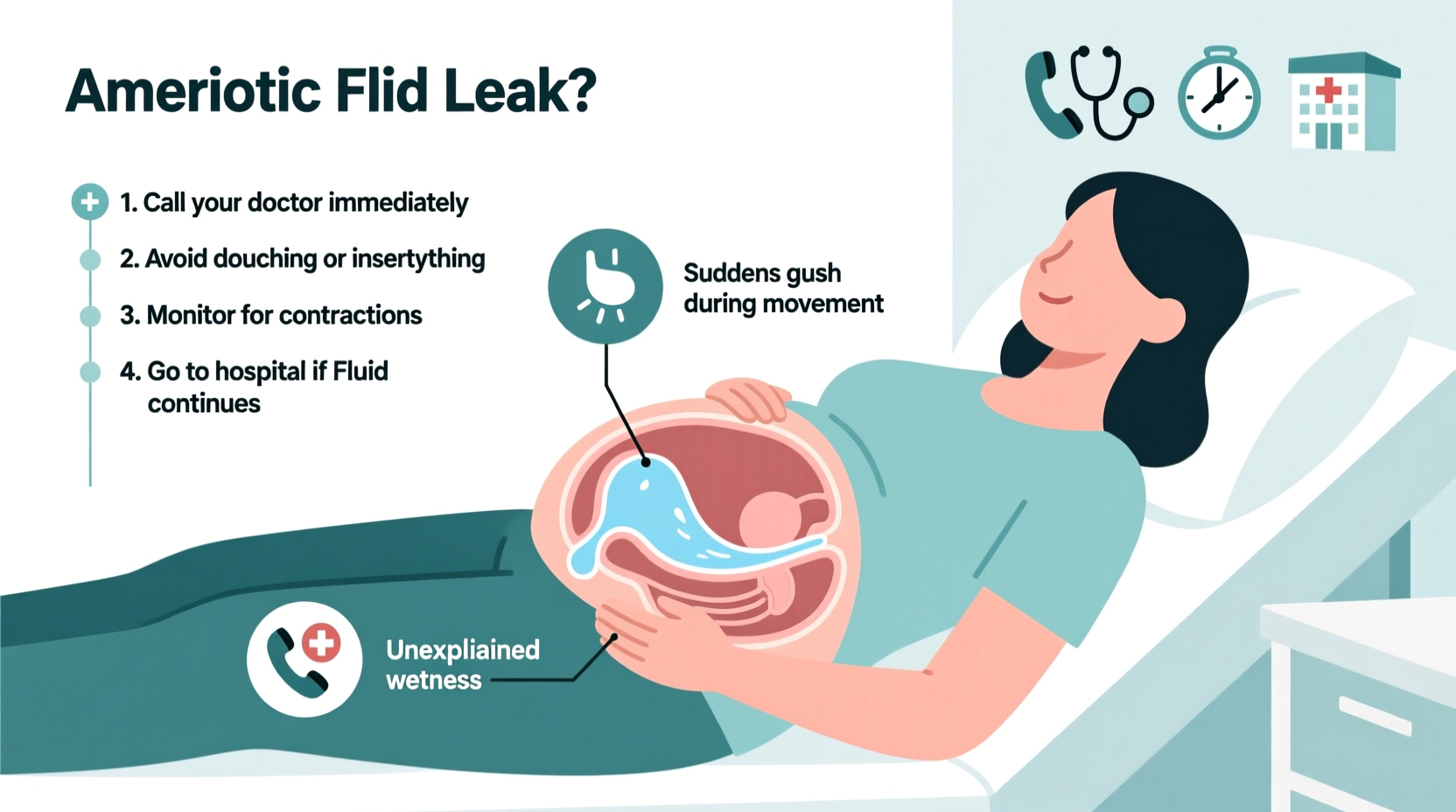
Amniotic fluid surrounds the developing fetus in the uterus, serving multiple vital functions. It cushions the baby from physical impact, helps regulate temperature, allows room for movement and musculoskeletal development, and plays a role in lung maturation. The fluid is produced initially by the mother and later by fetal urine and lung secretions. A normal volume ranges between 400 to 1200 milliliters in the third trimester.
When the amniotic sac ruptures prematurely—before the onset of labor—it's known as prelabor rupture of membranes (PROM). If this happens before 37 weeks, it’s termed preterm PROM (PPROM), which carries higher risks and requires immediate medical attention.
Key Signs That You May Be Leaking Amniotic Fluid
Distinguishing amniotic fluid from urine or normal discharge involves observing color, consistency, smell, and pattern of leakage. Here are the most reliable indicators:
- Continuous leakage: Unlike urine, which stops after voiding, amniotic fluid often leaks steadily and cannot be controlled by pelvic floor muscles.
- Clear, odorless fluid: Amniotic fluid is typically clear and may have a slightly sweet smell. It lacks the strong ammonia odor of urine.
- Fluid increases with movement: Leaking may worsen when standing, walking, or changing positions due to pressure on the amniotic sac.
- No associated urge: There’s no bladder sensation or urgency before the fluid comes out, unlike urination.
- Pale pink or green-tinged fluid: Any discoloration—especially green (suggesting meconium) or brown—requires urgent evaluation.
“Many women mistake amniotic fluid for a urinary leak, especially under stress. But continuous, uncontrollable wetness should never be ignored after 34 weeks.” — Dr. Lena Torres, Maternal-Fetal Medicine Specialist
How to Confirm Whether It’s Amniotic Fluid
If you suspect a leak, don’t try to self-diagnose definitively at home. However, certain observations and tests can help assess the likelihood while you prepare to contact your healthcare provider.
Step-by-Step Guide to Initial Assessment
- Note the time and circumstances: Record when the leakage started, whether it was during activity or rest, and if it has continued.
- Empty your bladder: Urinate to rule out residual urine leakage. Then lie down for 30 minutes. If fluid pools or leaks upon standing again, it may be amniotic fluid.
- Check the pad: Use a clean, dry sanitary pad. Observe the fluid’s appearance over time. Amniotic fluid tends to soak through pads quickly and reappears even after changing.
- Smell test: Urine usually has a sharp, ammonia-like odor. Amniotic fluid is generally odorless or faintly sweet.
- Avoid inserting anything into the vagina: No tampons, douches, or sexual activity, as these increase infection risk if membranes are ruptured.
| Fluid Type | Color & Clarity | Odor | Control | Triggers |
|---|---|---|---|---|
| Amniotic Fluid | Clear, possibly with white flecks (vernix) | Slight sweet or neutral | Uncontrollable, continuous | Standing, coughing, movement |
| Urine | Yellowish, may vary | Strong ammonia | Stoppable, intermittent | Laughing, sneezing, exertion |
| Vaginal Discharge | White or cloudy, creamy or mucous-like | Mild, non-offensive | Not typically soaking | Ovulation, arousal, late pregnancy |
Medical Confirmation and Next Steps
If home assessment suggests possible amniotic fluid leakage, contact your healthcare provider immediately. Do not wait, even if contractions haven’t started.
What to Expect at the Clinic or Hospital
Clinical evaluation typically includes:
- Speculum exam: A sterile speculum is used to visualize fluid pooling in the vaginal vault. No digital exams are done initially to avoid infection.
- pH testing: Nitrazine paper checks fluid pH. Amniotic fluid is alkaline (pH ~7.0–7.5), turning the paper blue, while normal vaginal secretions are acidic.
- Ferning test: A sample is dried on a slide. Amniotic fluid forms a fern-like crystallization pattern under the microscope.
- Ultrasound: To assess amniotic fluid volume and fetal well-being.
- Monitoring: Fetal heart rate and maternal temperature are checked for signs of distress or infection.
Real Example: Sarah’s Experience at 35 Weeks
Sarah, 29 weeks pregnant with her first child, noticed a constant dampness one morning. She thought she had a weak bladder. After emptying her bladder and lying down, she stood up and felt another gush. The fluid was clear and odorless. She called her OB-GYN, who advised her to come in immediately. At the clinic, a speculum exam revealed pooling, and the nitrazine test was positive. An ultrasound showed reduced fluid levels. Sarah was admitted for monitoring and received steroids to accelerate fetal lung development. She delivered safely at 36 weeks. Her prompt action prevented infection and allowed for optimal neonatal preparation.
FAQ: Common Questions About Amniotic Fluid Leakage
Can I leak amniotic fluid without losing my mucus plug?
Yes. The mucus plug and amniotic sac are separate structures. Loss of the mucus plug signals cervical changes but does not confirm membrane rupture.
Is it possible to stop leaking once it starts?
No. Once the amniotic sac is compromised, fluid will continue to leak until delivery. Even small tears can lead to ongoing loss.
What if I’m not full term? Will I have to deliver immediately?
Not necessarily. If you're between 34 and 37 weeks, many providers recommend induction. Before 34 weeks, expectant management with close monitoring, antibiotics, and corticosteroids may be used to delay delivery and improve outcomes.
Final Checklist: What to Do If You Suspect a Leak
- Stay calm and avoid panic.
- Change into clean, dry clothing and use a sanitary pad (not a tampon).
- Empty your bladder and lie down for 30 minutes.
- Stand up and observe if fluid leaks again.
- Note the color, smell, and amount of fluid.
- Contact your healthcare provider immediately or go to labor and delivery.
- Do not take baths, have sex, or insert anything into the vagina.
- Prepare your hospital bag if you’re near term.
Conclusion: Act Quickly, Stay Informed
Leaking amniotic fluid is a potentially serious condition that demands swift action. While it can be confusing to differentiate from other types of discharge, paying attention to the pattern, control, and characteristics of the fluid provides crucial clues. Never hesitate to seek medical evaluation—your response time can directly impact both your health and your baby’s. Trust your instincts. When in doubt, get checked. Timely intervention can prevent infections, support fetal development, and ensure a safer delivery process.




 浙公网安备
33010002000092号
浙公网安备
33010002000092号 浙B2-20120091-4
Comments
No comments yet. Why don't you start the discussion?