
Selecting the right business code—officially known as a North American Industry Classification System (NAICS) code or Standard Industrial Classification (SIC) code—is more than a bureaucratic formality. It affects tax filings, licensing, government contracting eligibility, insurance premiums, and even access to certain grants or loans. A mismatch between your actual operations and your assigned code can trigger audits, disqualify you from opportunities, or misrepresent your business in databases used by lenders and partners.
Despite its importance, many entrepreneurs choose codes arbitrarily or copy what competitors use without verifying accuracy. The process doesn’t have to be confusing. With the right approach, you can confidently identify and confirm the most accurate classification for your business activity.
Understanding Business Codes: NAICS vs. SIC
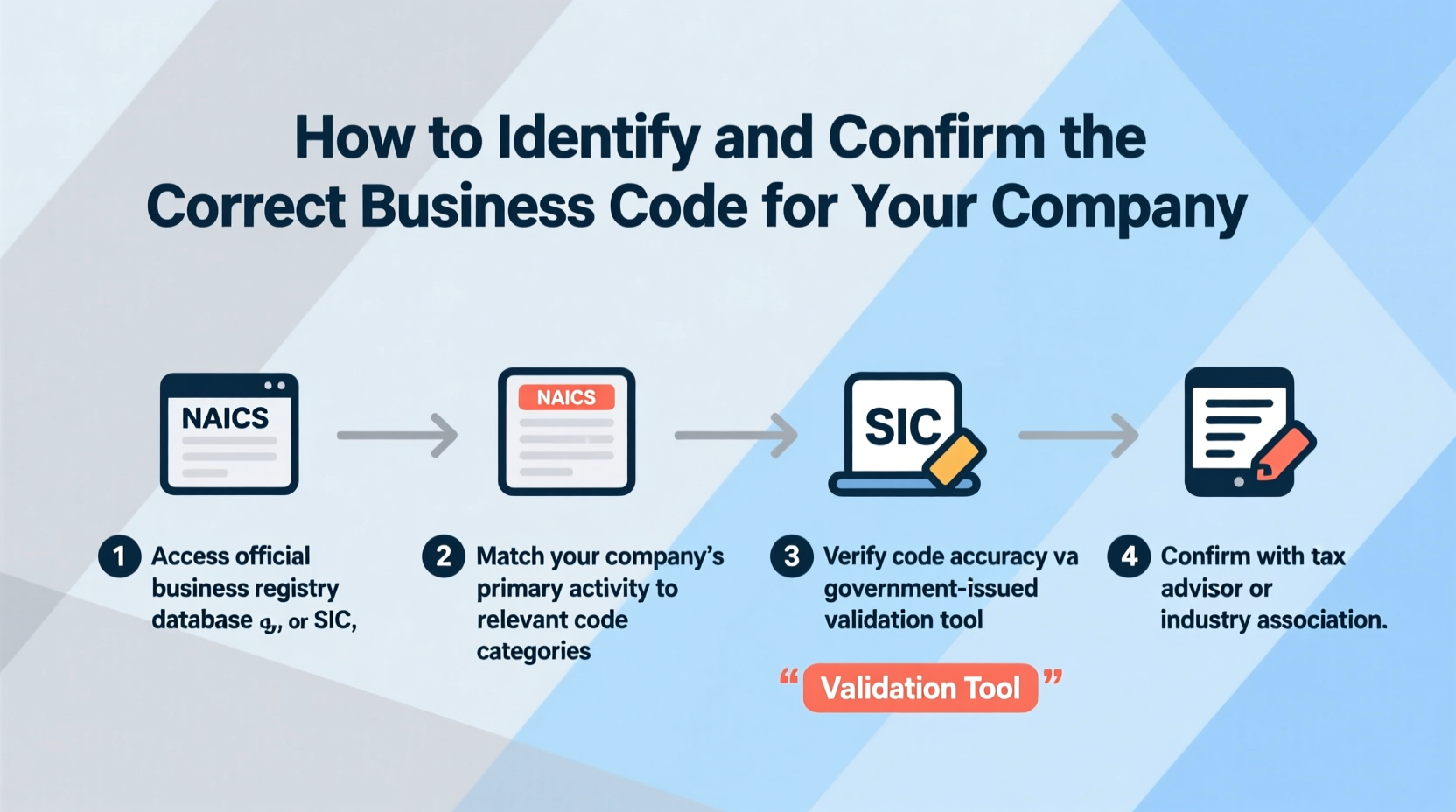
The two primary systems used in the U.S. are NAICS and SIC. While both categorize businesses by industry, they differ in structure, scope, and usage.
| Feature | NAICS | SIC |
|---|---|---|
| Full Name | North American Industry Classification System | Standard Industrial Classification |
| Last Updated | Revised every 5 years (latest: 2022) | Last major update: 1987 |
| Structure | 6-digit code | 4-digit code |
| Scope | Used across U.S., Canada, and Mexico | Primarily U.S.-based |
| Adoption | Federal agencies, IRS, Census Bureau | Limited; mostly legacy use |
Today, NAICS is the standard. The IRS, Small Business Administration (SBA), and Department of Labor all rely on it for data collection and program eligibility. While some older platforms still reference SIC codes, aligning with NAICS ensures broader compatibility and accuracy.
Step-by-Step Guide to Finding Your Correct NAICS Code
- Define Your Primary Business Activity
Identify the core service or product that generates the majority of your revenue. For example, a web design agency that also sells digital templates should classify based on design services if that’s the main income source. - Use the Official NAICS Search Tool
Visit the U.S. Census Bureau’s NAICS search page. Enter keywords related to your business—such as “graphic design,” “restaurant catering,” or “HVAC repair.” Review the results and read the official descriptions carefully. - Narrow Down by Detail Level
NAICS uses a hierarchical system:- Digits 1–2: Economic sector (e.g., 54 = Professional, Scientific, and Technical Services)
- Digits 3–4: Subsector (e.g., 5415 = Computer Systems Design)
- Digits 5–6: Industry group and specific industry (e.g., 541511 = Custom Computer Programming Services)
- Cross-Reference with Competitors
Look up similar businesses in public directories like OpenCorporates or SAM.gov (System for Award Management). See which codes they report. This isn’t definitive but provides useful context. - Verify with Government Databases
Confirm your selection using tools like the SBA Size Standards Tool or IRS forms such as Form 941 or 1065, where NAICS codes are often required. Consistency across filings strengthens legitimacy.
Common Mistakes and How to Avoid Them
- Using a Too-Broad Code: Choosing a general category like “Other Miscellaneous Retail” (459998) instead of a precise one undermines credibility and may affect loan terms.
- Mixing Multiple Revenue Streams: If you run a café with live music, your primary code should reflect food service (722511), not performing arts (711130), unless entertainment dominates revenue.
- Ignoring Updates: NAICS is revised every five years. A code valid in 2017 might no longer exist or could have shifted meaning.
- Copying Without Verification: Just because a competitor uses a certain code doesn’t mean it’s correct for their—or your—business model.
“Business owners often underestimate how much their NAICS code influences lending decisions. A mismatched code can make a lender question the stability or focus of the operation.” — Lisa Tran, Commercial Loan Officer at Midstate Bank & Trust
Real Example: Correcting a Misclassified Startup
Consider Maya’s digital marketing consultancy. Initially, she registered under NAICS 541840 (Advertising Agencies) because her work involved social media campaigns. However, after reviewing the description, she realized her core offering was analytics and strategy development—not ad placement.
She revisited the NAICS lookup tool and found 541613 (Marketing Consulting Services), which better described her advisory role. She updated her records with the SBA, revised her federal tax forms, and reapplied for a small business grant previously denied due to \"industry misalignment.\"
Within weeks, her application was approved. The grant officer noted that the corrected code clarified her business model and demonstrated professionalism in compliance.
Checklist: Confirming Your Business Code Is Accurate
- ✅ I’ve identified my primary source of revenue.
- ✅ I’ve searched the official NAICS database using relevant keywords.
- ✅ I’ve reviewed the full description of the candidate code(s).
- ✅ I’ve compared my selection with similar businesses in reliable directories.
- ✅ I’ve verified consistency across IRS, SBA, and state filings.
- ✅ I’ve documented my reasoning for future reference or audit purposes.
- ✅ I’ve scheduled an annual review date for reassessment.
Frequently Asked Questions
Can a business have more than one NAICS code?
Yes. The primary NAICS code should reflect your main revenue-generating activity. However, secondary codes can be added in federal registrations (like SAM.gov) to reflect other significant operations. Only one code should be used per tax form or application unless explicitly allowed.
What happens if I use the wrong code?
Mistakes aren’t automatically penalized, but discrepancies can raise red flags during audits or funding reviews. Incorrect codes may lead to disqualification from contracts, inaccurate market reporting, or higher insurance costs. Corrections should be made promptly via updated filings.
Where do I update my NAICS code?
You don’t register a NAICS code centrally. Instead, you report it wherever required: IRS forms, state business registrations, SBA applications, commercial licenses, and federal procurement systems. Update each individually to ensure consistency.
Conclusion: Accuracy Builds Credibility
Identifying and confirming the correct business code is not a one-time administrative task—it’s an ongoing component of sound business governance. An accurate NAICS code enhances your credibility with financial institutions, government agencies, and potential partners. It ensures you’re benchmarked against the right industry standards and positioned for opportunities tailored to your real operations.
Taking the time to research, verify, and maintain your classification pays dividends in compliance, eligibility, and professional reputation. Don’t guess. Don’t copy. Do the work once, document it well, and revisit it regularly.




 浙公网安备
33010002000092号
浙公网安备
33010002000092号 浙B2-20120091-4
Comments
No comments yet. Why don't you start the discussion?