
When shopping for a diamond ring, most buyers rely on the traditional 4 Cs—cut, color, clarity, and carat weight. While these metrics are essential, they only tell part of the story. Two diamonds with identical 4 C grades can look dramatically different in person due to subtle but critical factors that aren’t always captured on a grading report. To truly identify a high-quality diamond, you need to go deeper. Understanding light performance, symmetry nuances, certification reliability, and real-world visual appeal can make all the difference between a stone that merely scores well on paper and one that dazzles in sunlight.
Look Beyond Cut Grade: Analyze Light Performance
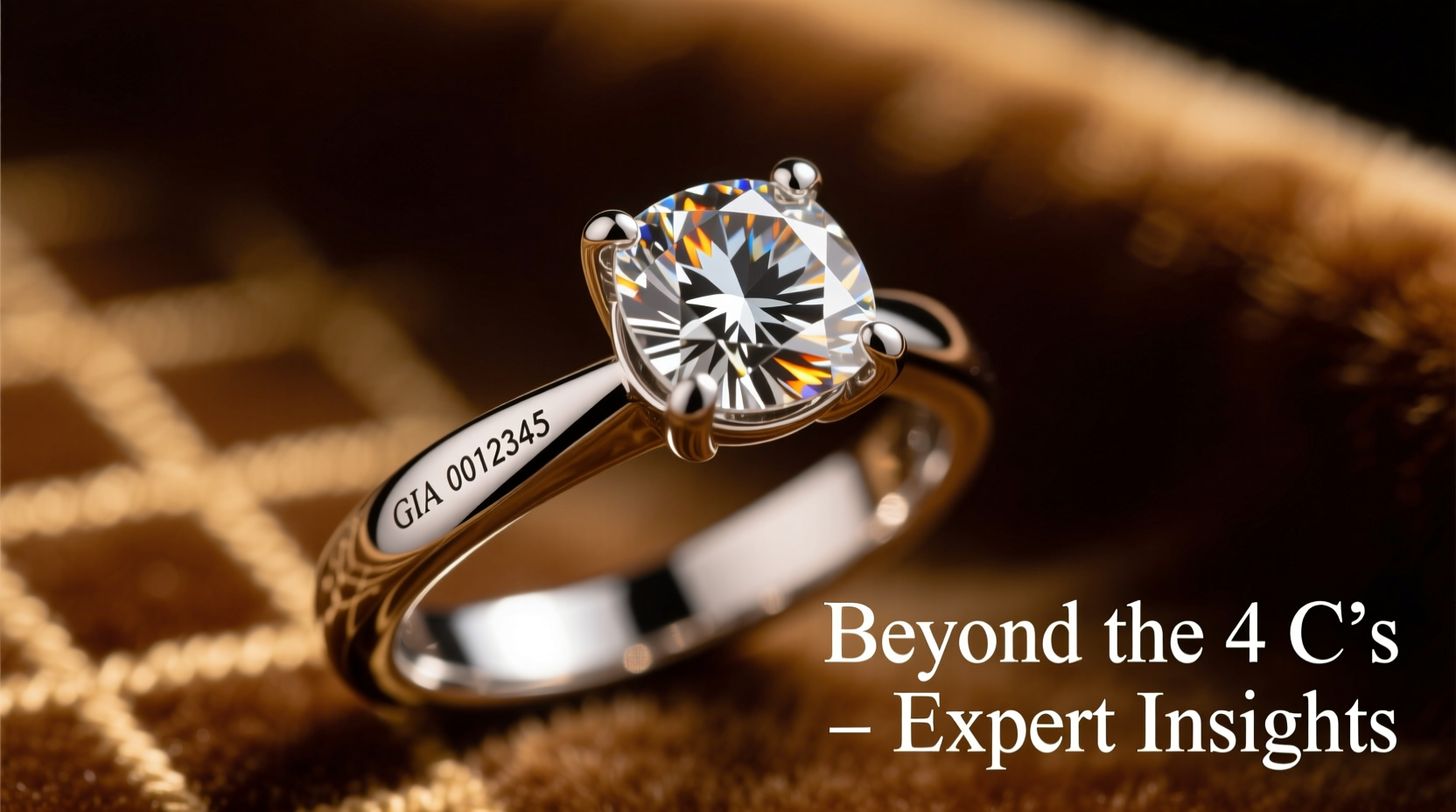
A diamond’s cut is often considered the most important of the 4 Cs because it directly influences brilliance, fire, and scintillation. However, even within the “Excellent” cut grade, there can be wide variation in actual performance. A top-tier diamond maximizes light return through precise facet alignment and optimal proportions.
To evaluate this, request an ASET (Angular Spectrum Evaluation Tool) or Idealscope image when purchasing online. These tools reveal how effectively a diamond interacts with light:
- Red areas indicate direct light return (brilliance).
- Green shows misdirected light.
- Black signifies light leakage.
A superior diamond will display a balanced pattern rich in red and minimal black, especially under the table. Avoid stones with large dark zones or uneven patterns, as they suggest poor optical symmetry—even if the GIA report lists “Excellent” cut.
Evaluate Certification: Not All Labs Are Equal
The credibility of a diamond’s grading report significantly impacts its perceived quality. While GIA (Gemological Institute of America) and AGS (American Gem Society) are widely respected for their strict, consistent standards, other labs like IGI or EGL USA often inflate grades.
For example, a GIA-certified VS2 clarity diamond may appear cleaner than an IGI-graded VS2 with visible inclusions. This inconsistency stems from differing tolerance levels across laboratories.
“GIA remains the gold standard in diamond grading. If two diamonds have the same specs but different labs, trust the GIA report.” — James Reynolds, Certified Gemologist & Appraiser
When comparing diamonds, prioritize those certified by GIA or AGS. If considering a stone from another lab, insist on magnified inclusion plots and videos to verify claims independently.
Diamond Grading Lab Comparison
| Lab | Reputation | Cut Accuracy | Clarity Consistency | Best For |
|---|---|---|---|---|
| GIA | Excellent | Very High | Very High | Investment-grade purchases |
| AGS | Excellent | Exceptional (uses numeric scale) | Very High | Precision-cut lovers |
| IGI | Fair to Moderate | Moderate | Inconsistent | Fashion jewelry, non-investment pieces |
| EGL USA | Moderate (regional variance) | Variable | Loose standards | Budget options (with caution) |
Assess Fluorescence: Subtle But Significant Impact
Fluorescence refers to a diamond’s tendency to emit a soft glow under ultraviolet (UV) light. About 25–35% of diamonds exhibit some level of blue fluorescence. While not inherently negative, it can influence appearance in specific contexts.
In higher-color diamonds (D-F), strong fluorescence may cause a hazy or oily appearance, reducing transparency. Conversely, in lower-color stones (I-J), moderate blue fluorescence can mask slight yellowness, making the diamond appear whiter in sunlight.
The key is balance. Medium or faint fluorescence is typically harmless. Avoid diamonds labeled “Very Strong” fluorescence unless you’ve seen them in person under natural and artificial lighting.
Real-World Example: The Hidden Flaw in an “Ideal” Diamond
Sophia was searching for an engagement ring and found a 1.2-carat round brilliant online with GIA Excellent cut, D color, and VVS2 clarity—on paper, nearly perfect. She purchased it based solely on the report. When it arrived, she noticed something off: the center looked lifeless compared to her friend’s slightly lower-graded ring.
Upon closer inspection with an ASET viewer, Sophia discovered significant light leakage around the girdle and a poorly aligned culet. Though the GIA didn’t penalize it heavily, the optical symmetry was flawed. After returning the stone, she bought a slightly warmer (F color) diamond with superior light performance and hearts-and-arrows symmetry. Despite costing less, it sparkled more vividly in daily wear.
This case underscores a vital truth: technical perfection doesn’t always translate to visual excellence.
Step-by-Step Guide to Evaluating a Diamond Beyond the 4 Cs
Follow this sequence when assessing any diamond, whether in-store or online:
- Verify the certificate source: Confirm it’s from GIA or AGS. Request a copy of the full report.
- Review high-resolution imagery: Look for 360° videos and magnified stills showing inclusions and surface features.
- Analyze light performance tools: Ask for ASET, Idealscope, or H&A (Hearts and Arrows) images if available.
- Check for fluorescence: Prefer None to Medium; avoid Very Strong unless personally approved.
- Inspect symmetry and polish: Even with Excellent grades, examine facet alignment in zoomed photos.
- Compare face-up appearance: Use side-by-side video comparisons with similar-sized diamonds.
- Consult an independent appraiser (optional): For high-value purchases, get a second opinion pre-purchase.
Frequently Asked Questions
Does a higher price always mean a better diamond?
No. Pricing is influenced by brand markup, certification lab, and marketing. A well-chosen GIA-graded SI1 diamond can outperform a flashy but poorly cut Internally Flawless stone from a less reliable lab.
What is Hearts and Arrows, and does it matter?
Hearts and Arrows (H&A) is a pattern visible in ideal-cut diamonds with exceptional symmetry. When viewed through special viewers, eight hearts appear from the bottom and eight arrows from the top. While not necessary, true H&A indicates extreme precision in cutting and usually correlates with excellent light performance.
Can I trust online retailers without seeing the diamond in person?
Yes—but only if they provide comprehensive visuals (360 videos, ASET images), GIA/AGS reports, and a clear return policy. Stick to reputable vendors with third-party reviews and gemological transparency.
Final Checklist Before Purchase
- ✅ Certificate from GIA or AGS
- ✅ Video or 360° view of the actual stone
- ✅ ASET or Idealscope image available
- ✅ No cloudiness or haze under natural light
- ✅ Fluorescence rated None to Medium
- ✅ Symmetry and polish both Excellent
- ✅ Inclusion plot matches visible characteristics
- ✅ Reputable seller with return window (minimum 14 days)
Conclusion: See the Diamond, Not Just the Data
Identifying a high-quality diamond goes far beyond memorizing the 4 Cs. It requires a discerning eye, access to advanced evaluation tools, and awareness of how grading inconsistencies can mislead even informed buyers. The most breathtaking diamonds aren’t necessarily the ones with perfect numbers—they’re the ones that come alive when held up to the light.
Take your time. Demand transparency. Compare options side by side. Whether you're choosing a lifelong symbol of love or a timeless heirloom, your diligence will be reflected in every sparkle.




 浙公网安备
33010002000092号
浙公网安备
33010002000092号 浙B2-20120091-4
Comments
No comments yet. Why don't you start the discussion?