
For millions of people with sensitive skin, wearing earrings can be more than just a fashion statement—it's a daily challenge. Redness, itching, swelling, and even infections are common reactions when the wrong materials touch delicate earlobes. Enamel jewelry is prized for its vibrant colors and glossy finish, but not all enamel earrings are safe for sensitive ears. The key lies in understanding what makes an earring truly hypoallergenic and how to spot trustworthy options amidst misleading marketing claims.
This guide cuts through the confusion, offering clear, actionable steps to help you confidently choose enamel earrings that protect your skin without sacrificing style.
Understanding Hypoallergenic Claims
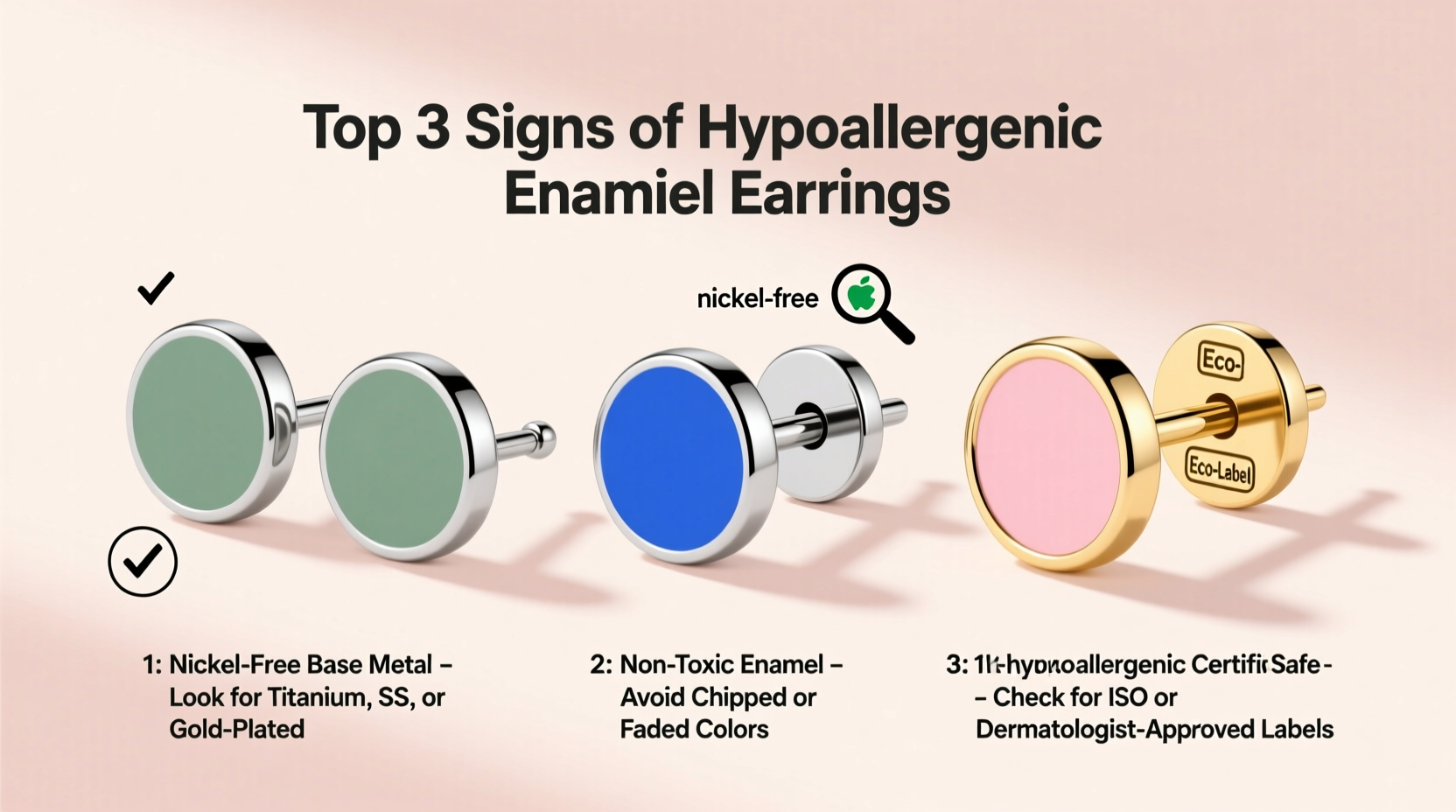
The term “hypoallergenic” suggests a reduced likelihood of causing allergic reactions, but it’s not regulated by the FDA or any major consumer safety body. This means brands can use the label freely, even if their products contain trace allergens. For people with metal sensitivities—especially to nickel, cobalt, or chromium—this lack of oversight can lead to painful consequences.
Hypoallergenic enamel earrings must meet two criteria: the base metal must be non-reactive, and the enamel coating must be fully sealed and free of micro-cracks that could expose the underlying metal. Many cheap enamel pieces use brass or nickel alloys as a base, then coat them with colored glass paste. Over time, wear and moisture can erode the enamel, exposing allergenic metals beneath.
“Even a small amount of nickel exposure can trigger a reaction in highly sensitive individuals. True hypoallergenic jewelry starts with inert base metals.” — Dr. Lena Torres, Dermatologist & Contact Allergy Specialist
Step-by-Step Guide to Identifying Safe Enamel Earrings
Selecting safe earrings isn’t about guesswork—it’s about verification. Follow this five-step process to ensure your next pair won’t irritate your ears.
- Check the Base Metal Composition: Look for earrings made from surgical-grade stainless steel, titanium, niobium, or 14k+ solid gold. These metals are naturally resistant to corrosion and rarely contain nickel. Avoid terms like “nickel-free plating” unless backed by certification—plating wears off.
- Verify Enamel Application Method: High-quality enamel is either vitreous (fused at high heat) or cold enamel (resin-based). Vitreous enamel is more durable and less likely to chip. Cold enamel may yellow or crack over time, increasing risk of metal exposure.
- Look for Third-Party Certifications: Reputable brands often display certifications such as EU Nickel Directive compliance, ASTM F138 (for surgical steel), or ISO 10993 (biocompatibility testing).
- Inspect Craftsmanship Closely: Use a magnifying glass or bright light to examine the surface. Cracks, bubbles, or uneven coloring suggest poor quality control. Pay special attention to the back of posts and clasps—areas most prone to chipping.
- Research the Brand’s Transparency: Trusted makers disclose material sources, manufacturing processes, and allergy testing. Brands that publish lab reports or offer customer support for sensitivity concerns are more reliable.
Material Comparison: What Works and What Doesn’t
Not all metals labeled “hypoallergenic” perform equally. The table below compares common base metals used in enamel earrings based on biocompatibility, durability, and suitability for sensitive ears.
| Base Metal | Nickel Risk | Durability | Best For Sensitive Ears? |
|---|---|---|---|
| Surgical-Grade Stainless Steel (316L) | Very Low | High | Yes |
| Titanium | None | Very High | Excellent choice |
| Niobium | None | Moderate | Excellent choice |
| Sterling Silver (.925) | Moderate (often alloyed with nickel) | Medium | Use only if certified nickel-free |
| Brass with Enamel Coating | High (if coating fails) | Low-Medium | Not recommended |
Real Example: Sarah’s Experience with a “Safe” Earring
Sarah, a teacher from Portland, had worn earrings since childhood but began experiencing persistent earlobe irritation after switching to a new brand of colorful enamel studs advertised as “perfect for sensitive ears.” Within days of wearing them, her lobes swelled and developed crusty patches. She returned the earrings and contacted the company, only to discover the base metal was brass plated with a thin layer of rhodium—a temporary barrier.
After consulting a dermatologist, she underwent patch testing and confirmed a nickel allergy. Her doctor advised her to avoid any jewelry without verified base metal disclosure. Since then, Sarah only purchases from brands that list exact materials and provide independent lab results. “I learned the hard way,” she says. “Now I check every detail before buying, and my ears haven’t reacted once.”
Checklist: How to Verify Hypoallergenic Enamel Earrings
- ✅ Base metal is surgical steel, titanium, niobium, or solid gold (14k or higher)
- ✅ No mention of “plated” or “coated” unless over a known hypoallergenic base
- ✅ Product description explicitly states “nickel-free,” “cadmium-free,” and “lead-free”
- ✅ Enamel is described as “vitreous” or “hard-fired” for maximum durability
- ✅ Brand provides contact information and responds to material inquiries
- ✅ Independent certifications or lab reports are available upon request
- ✅ Return policy allows exchanges if irritation occurs
Frequently Asked Questions
Can I wear enamel earrings if I’m allergic to nickel?
Yes, but only if the base metal is inherently nickel-free—such as titanium, niobium, or certified surgical steel—and the enamel is fully intact. Avoid any piece where the base metal isn’t clearly disclosed.
Is enamel itself allergenic?
Pure vitreous enamel (made from powdered glass fused at high temperatures) is non-allergenic. However, low-quality cold enamel (a polymer resin) may contain additives that degrade over time or trap moisture against the skin, increasing irritation risk.
How long do hypoallergenic enamel earrings last?
With proper care, high-quality enamel earrings can last years. Avoid exposing them to perfumes, lotions, chlorine, or saltwater. Clean gently with a soft cloth and store separately to prevent scratching.
Final Thoughts: Prioritize Safety Without Sacrificing Style
Beautiful earrings shouldn’t come at the cost of comfort or health. By learning to decode labels, inspect craftsmanship, and choose reputable makers, you can enjoy bold enamel designs without fear of reaction. The rise of transparent, ethical jewelry brands has made it easier than ever to find pieces that align with both your aesthetic and wellness needs.




 浙公网安备
33010002000092号
浙公网安备
33010002000092号 浙B2-20120091-4
Comments
No comments yet. Why don't you start the discussion?