
In an era where digital surveillance, data interception, and signal manipulation are increasingly possible, concerns about privacy have grown significantly. One emerging question among security-conscious individuals is whether their mobile device is involved in decoding signals—either through legitimate apps or unauthorized software. While phones aren't typically \"decoding signs\" in the mystical sense, they constantly process encoded digital signals: from Wi-Fi and Bluetooth transmissions to cellular data protocols. Understanding when this behavior crosses into suspicious or unauthorized territory is essential for maintaining personal privacy.
This guide breaks down what it means for a phone to \"decode signals,\" how to detect abnormal or covert decoding activities, and provides a structured approach using accessible tools and techniques. Whether you're troubleshooting performance issues or investigating potential surveillance, this information equips you with actionable knowledge.
What Does It Mean for a Phone to “Decode Signals”?
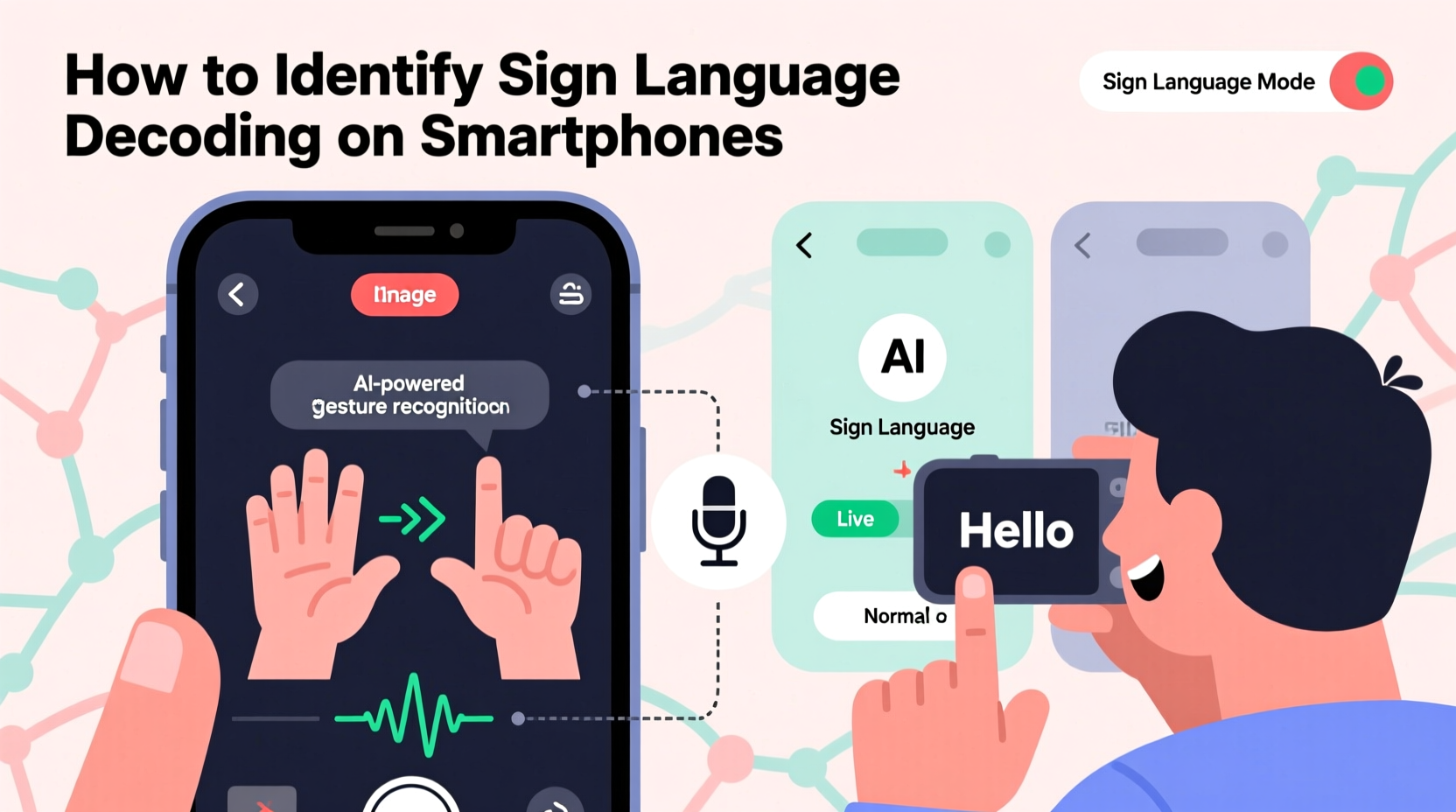
All smartphones inherently decode signals as part of normal operation. For example:
- Receiving encrypted messages over WhatsApp involves decoding end-to-end encrypted data.
- Connecting to a Wi-Fi network requires your phone to decrypt router signals using WPA2/WPA3 keys.
- GPS functionality decodes satellite timing signals to determine location.
These processes are expected and transparent within the system architecture. However, the concern arises when a device appears to be decoding signals outside standard operations—such as intercepting nearby Bluetooth devices, capturing unencrypted radio frequencies, or running background processes that suggest signal analysis without user consent.
“Modern smartphones are powerful signal processors. The key isn’t whether they can decode signals—it’s whether those actions are authorized and visible to the user.” — Dr. Lena Torres, Mobile Security Researcher at CyberShield Labs
Common Signs Your Phone May Be Decoding Unauthorized Signals
Certain behaviors may indicate that your phone is engaged in unintended or covert signal processing. These include:
- Unexplained battery drain: Signal decoding, especially via Bluetooth sniffing or RF monitoring, consumes significant power.
- Overheating during idle periods: Active decoding tasks keep the CPU and radios busy even when the screen is off.
- Elevated data usage: If decoded data is being transmitted remotely, it generates background traffic.
- Strange app permissions: Apps requesting access to location, microphone, or network state without clear purpose.
- Unusual network connections: Detection of unknown Bluetooth pairings or ad-hoc Wi-Fi networks.
Tools to Monitor and Detect Signal Decoding Activity
Several tools help users monitor whether their phone is actively processing or transmitting decoded signals. Most require no root access and are available on both Android and iOS platforms.
| Tool | Platform | Function | Detects Potential Decoding? |
|---|---|---|---|
| Netspot / Wi-Fi Analyzer | Android | Scans local wireless networks | Yes – detects rogue hotspots or packet capture attempts |
| Bluetooth Scanner (e.g., nRF Connect) | iOS & Android | Lists active BLE devices nearby | Yes – reveals if phone is scanning beyond normal range |
| AirShou (for network monitoring) | iOS (jailbroken) / Android | Logs outgoing/incoming packets | Yes – identifies unexpected data transmission patterns |
| Mobile Device Management (MDM) Profiles Checker | iOS | Checks for installed configuration profiles | Indirectly – MDMs can enable remote monitoring tools |
| SignalCheck Pro | Android | Monitors real-time cellular and RF strength | Yes – shows abnormal signal polling frequency |
Using these tools allows you to establish a baseline of normal behavior and detect deviations that might suggest unauthorized decoding.
Step-by-Step Guide: How to Investigate Suspicious Decoding Behavior
Follow this systematic process to determine whether your phone is decoding signals abnormally or potentially maliciously.
- Assess Baseline Performance
Record typical battery life, temperature, and data usage over 48 hours under normal use. - Review Installed Applications
Go to Settings > Apps and sort by battery or data usage. Remove any unfamiliar apps with high resource consumption. - Check Active Connections
Use a Bluetooth scanner app to see which devices your phone is connecting to. Disable auto-pairing features if unnecessary. - Analyze Network Traffic
Install a packet analyzer like Shark for Root (Android) or use built-in developer tools to log outgoing requests. - Monitor Background Processes
Enable Developer Options and check “Running Services” to view hidden background activities. - Scan for Spyware or Monitoring Software
Run reputable anti-malware apps such as Malwarebytes or Kaspersky Mobile Antivirus. - Test in Airplane Mode
Turn on Airplane Mode, then manually re-enable only essential services (e.g., Wi-Fi). Observe if unusual activity persists. - Factory Reset (if needed)
If anomalies continue, back up critical data and perform a factory reset to eliminate persistent threats.
“Many signal-decoding concerns stem from misunderstood system behaviors. Always rule out legitimate causes before assuming malicious intent.” — Marcus Reed, Digital Forensics Analyst
Real-World Example: Detecting Covert Tracking via Bluetooth LE
In early 2023, a journalist in Berlin noticed her phone frequently woke up at night and drained battery rapidly. She used nRF Connect to scan Bluetooth Low Energy (BLE) signals and discovered her device was repeatedly attempting to connect to a MAC address associated with a tracking beacon planted in her bag.
Further investigation revealed a third-party file-sharing app she had downloaded contained hidden code that activated BLE scanning every 90 seconds, logging nearby identifiers and uploading them via background sync. After uninstalling the app and resetting network settings, the behavior ceased entirely.
This case illustrates how seemingly minor decoding activity—like constant BLE scanning—can expose serious privacy breaches when analyzed systematically.
Frequently Asked Questions
Can a regular smartphone decode encrypted communications like SMS or calls?
No. Standard consumer phones cannot decode encrypted communications unless they are the intended recipient and possess the correct decryption keys. Law enforcement agencies may do so with legal authorization and specialized tools, but this is not feasible for average users or malicious actors via common apps.
Is it legal to monitor signal decoding on my own device?
Yes, monitoring your own device's activity is fully legal. However, capturing signals from other people’s devices (e.g., Wi-Fi packets, Bluetooth exchanges) without consent may violate wiretapping laws in many jurisdictions, including the U.S. Electronic Communications Privacy Act.
Do iPhones decode signals differently than Android phones?
The underlying principles are the same, but implementation differs. iOS restricts low-level hardware access more tightly than Android, making deep signal analysis harder without jailbreaking. However, both platforms handle standard decoding tasks securely and efficiently.
Final Checklist: Is My Phone Secure Against Unauthorized Decoding?
- ✅ Reviewed all installed apps and removed suspicious ones
- ✅ Checked for unknown Bluetooth or Wi-Fi connections
- ✅ Verified no unauthorized configuration profiles are installed (especially on iOS)
- ✅ Monitored battery and data usage for anomalies
- ✅ Scanned for malware using trusted antivirus tools
- ✅ Considered factory reset after persistent issues
- ✅ Disabled unnecessary permissions (location, microphone, camera) for non-critical apps
Conclusion: Take Control of Your Device’s Digital Behavior
Your smartphone is designed to interpret countless encoded signals daily—but understanding when that activity goes beyond normal function is crucial for protecting your privacy. By combining awareness, monitoring tools, and proactive checks, you can confidently assess whether your device is behaving as expected or showing signs of unauthorized decoding.




 浙公网安备
33010002000092号
浙公网安备
33010002000092号 浙B2-20120091-4
Comments
No comments yet. Why don't you start the discussion?