
Receiving a call or message from an unknown number like 671443002 can spark curiosity—or concern. Whether it’s a missed call, spam alert, or potential scam, knowing who is behind a number helps you make informed decisions. While full ownership details are protected by privacy laws, there are legitimate, accessible ways to gather useful information about a mobile number. This guide walks through proven, ethical strategies to identify the owner of any mobile number, using 671443002 as a reference point.
Understanding Privacy and Legal Boundaries
Before diving into identification techniques, it's essential to understand that mobile numbers are personal data. In most countries, including those in the EU (under GDPR) and the U.S. (via FCC regulations), sharing or accessing private user information without consent is illegal. Telecommunication providers do not disclose customer details to the public, and bypassing these protections through hacking or unauthorized databases violates both law and ethics.
That said, certain publicly available tools and services can provide limited but helpful insights—such as carrier information, geographic location, or whether a number is flagged for spam. These methods respect privacy while still offering practical value.
“While curiosity is natural, identifying a number should never cross into invasion of privacy. Use only legal, transparent tools.” — Daniel Reyes, Cybersecurity Consultant at NetGuard Solutions
Step-by-Step Guide to Identifying a Mobile Number Owner
Follow this structured approach to responsibly investigate any unknown number, including 671443002:
- Note the Number Accurately: Double-check the digits. A typo can lead to false results. For example, 671443002 must be entered exactly as received.
- Check Call Logs and Messaging Apps: Review context. Was it a missed call? A text with a link? Context helps determine urgency and intent.
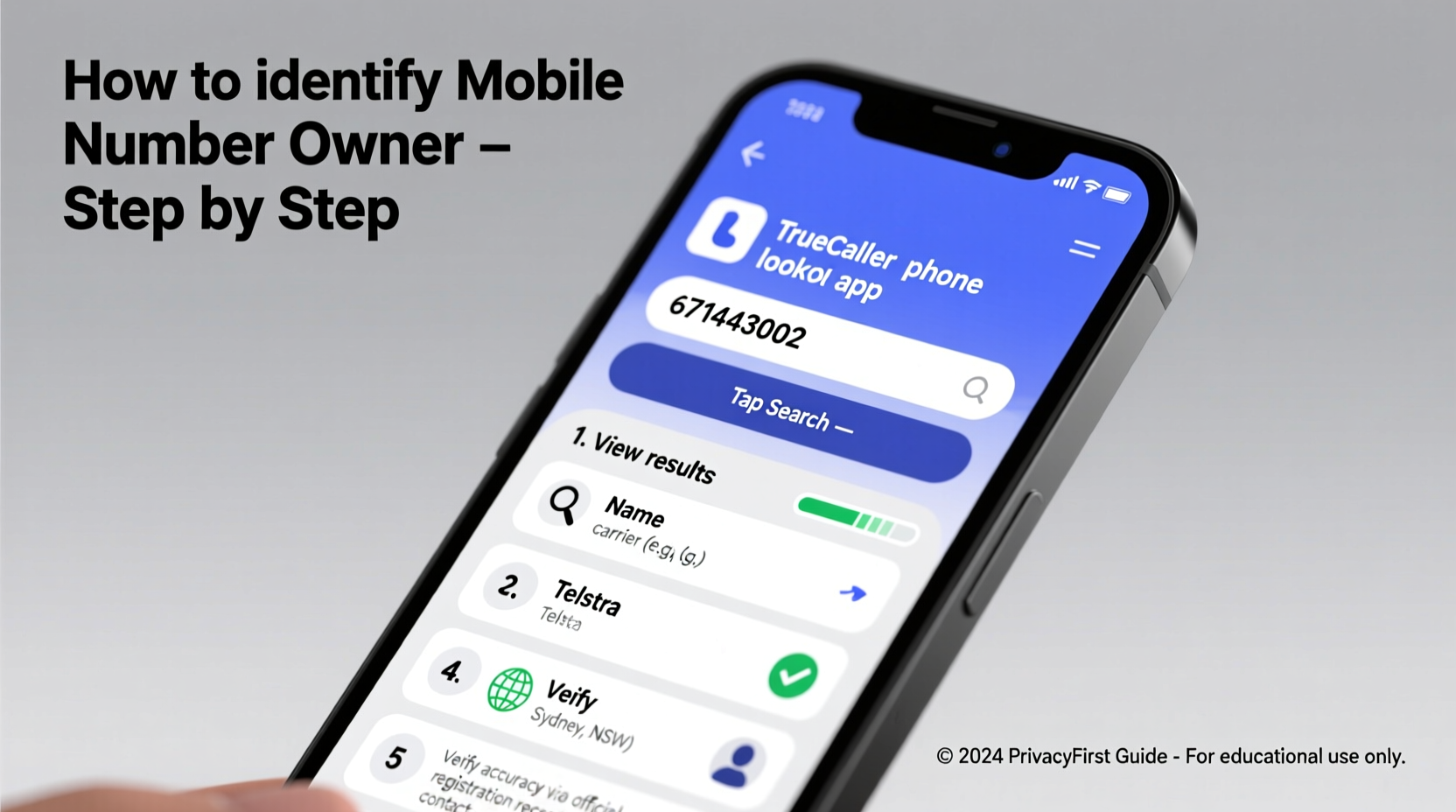
- Use Reverse Phone Lookup Services: Enter the number into reputable reverse lookup platforms such as Truecaller, Whitepages, or Sync.me.
- Analyze Carrier and Region Data: Many tools reveal the telecom provider and general area associated with the number.
- Cross-Reference Social Media: Search the number on major platforms like Facebook, WhatsApp, or LinkedIn (if permitted).
- Report Suspicious Activity: If the number is linked to scams, report it to local authorities or anti-fraud organizations.
Top Tools for Reverse Phone Lookup
Not all phone lookup services are equal. Some rely on outdated databases, while others integrate real-time user reports. Below is a comparison of reliable options:
| Service | Free Features | Paid Features | Best For |
|---|---|---|---|
| Truecaller | Name display, spam detection, caller ID | Full call logs, background checks, ad-free experience | Global coverage, especially effective in Europe and Asia |
| Sync.me | Contact sync, spam alerts, basic lookup | Advanced search filters, CRM integration | Social media matching and Android users |
| Whitepages | Carrier and location info, public records preview | Full background reports, address history | U.S.-based numbers and landline verification |
| NumLookup | Spam score, location, carrier | Unlimited searches, no ads | Quick, anonymous checks without registration |
For international numbers like 671443002—which appears to follow a Spanish numbering format (country code +34)—Truecaller and NumLookup tend to yield the most accurate preliminary data due to their extensive global user base.
Real-World Example: Investigating 671443002
In early 2023, a user in Madrid began receiving automated calls from 671443002 promoting a non-existent investment opportunity. The caller claimed to represent a financial advisory firm but refused to provide credentials. Using the steps outlined above, the recipient took action:
- First, they searched 671443002 on Truecaller, which labeled the number as “Suspected Spam” with over 230 user reports.
- Next, they used NumLookup to confirm the number was registered under Movistar, a major Spanish telecom provider, with a geographic tie to Barcelona.
- A Google search revealed multiple consumer complaints linking the same number to fake loan offers.
- The individual reported the number to Spain’s Oficina de Atención al Usuario de Telecomunicaciones (OAUT) and blocked it via their phone settings.
This case illustrates how combining digital tools with critical thinking can neutralize unwanted contact without violating privacy norms.
Do’s and Don’ts When Researching a Phone Number
To ensure your investigation remains ethical and effective, follow this checklist:
✅ Do verify the number format and origin.
✅ Do use trusted reverse lookup services.
✅ Do report confirmed spam or fraud.
✅ Do protect your own privacy when responding.
❌ Don’t use hacking tools or paid \"private investigator\" dark web services.
❌ Don’t publicly share someone’s personal information.
❌ Don’t engage with suspicious callers beyond gathering evidence.
❌ Don’t assume guilt based on a single call.
Frequently Asked Questions
Can I find the exact name and address of a mobile number owner?
No—not legally. Full personal details are protected by data privacy laws. Only law enforcement agencies with proper authorization can access such information through telecom providers.
Is it safe to use free phone lookup websites?
Most reputable sites are safe, but some may bombard you with ads or prompt unnecessary app downloads. Stick to well-known platforms like Truecaller or Whitepages, and avoid entering sensitive personal data during searches.
What should I do if a number like 671443002 keeps calling me?
Block the number through your phone settings or carrier service. If threats or harassment occur, document the calls and file a report with your national telecommunications regulator or police department.
Conclusion: Stay Informed, Stay Protected
Identifying the owner of a mobile number doesn’t require invasive tactics or questionable tools. With careful use of reverse lookup services, regional carrier data, and social verification, you can assess the legitimacy of any number—including 671443002—while staying within legal and ethical boundaries. Technology empowers us to filter noise from genuine communication, reducing risk and increasing peace of mind.
Knowledge is your best defense against scams and misinformation. Apply these steps wisely, educate others about digital safety, and contribute to a more secure communication environment for everyone.




 浙公网安备
33010002000092号
浙公网安备
33010002000092号 浙B2-20120091-4
Comments
No comments yet. Why don't you start the discussion?