
Mastering aim in first-person shooters (FPS) isn't just about reflexes or raw talent—it's a blend of muscle memory, consistent mechanics, and optimized settings. Among the most impactful yet often misunderstood variables is mouse sensitivity. Many players overlook its influence, defaulting to arbitrary settings without understanding how it shapes their accuracy, tracking, and flicking ability. Properly tuned sensitivity can transform erratic aim into precise, repeatable control. This guide breaks down the science and practice behind finding your ideal mouse sensitivity, backed by actionable steps, expert insights, and real-world testing methods.
The Role of Mouse Sensitivity in FPS Performance
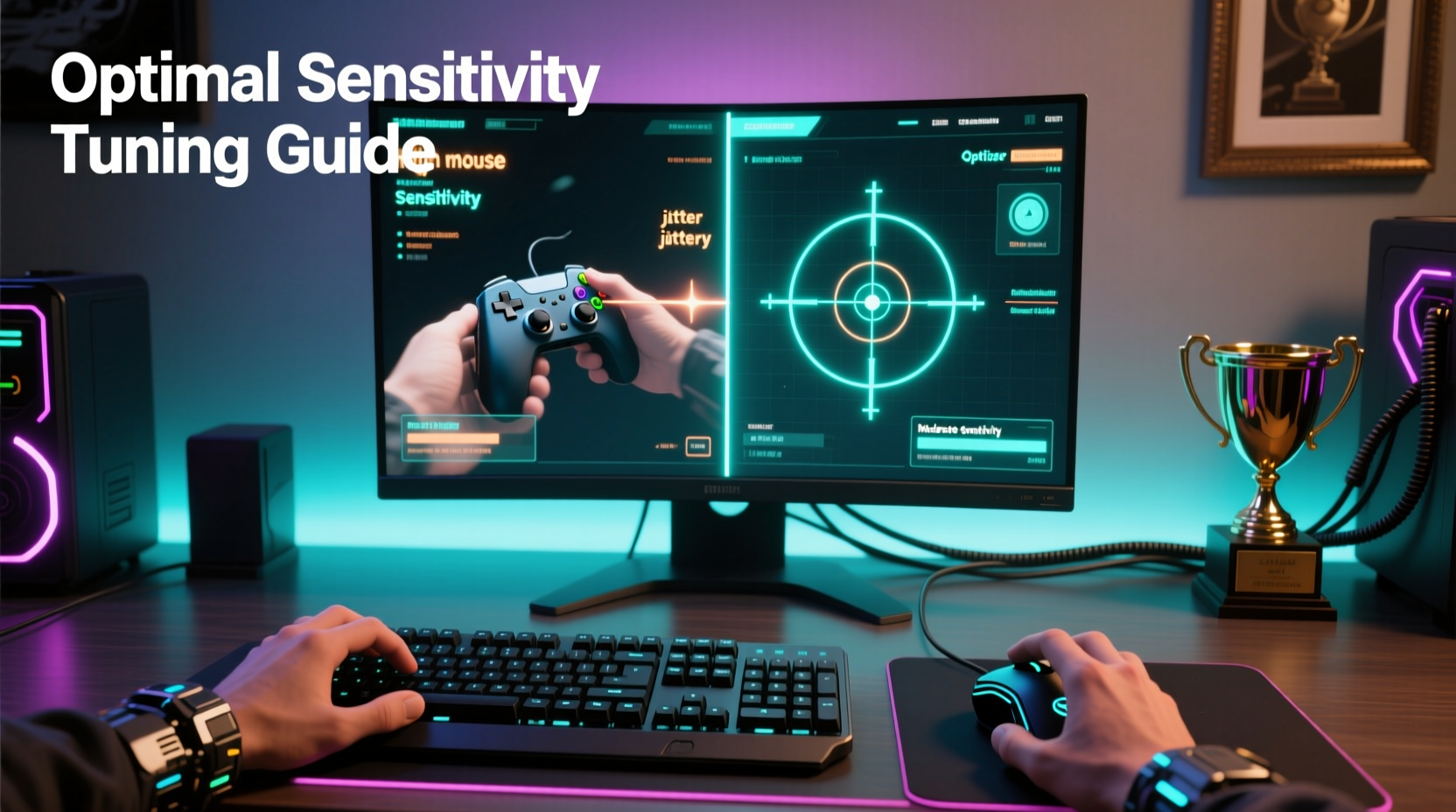
Mouse sensitivity determines how far your in-game crosshair moves in response to physical mouse movement. It’s typically measured as DPI (dots per inch) combined with in-game sensitivity multiplier. While higher sensitivity allows rapid 180-degree turns, it sacrifices precision. Lower sensitivity demands larger arm movements but offers superior micro-adjustments—critical for landing headshots or tracking fast-moving targets.
The goal isn’t to adopt the lowest or highest setting, but to find a balance where you maintain full control across all movement types: slow tracking, quick flicks, and mid-range repositioning. According to professional esports coach Daniel “Mizkif” Lee, “Consistency beats speed. A player with stable, predictable sensitivity will outperform someone with twitchy, inconsistent aim—even if they’re slower.”
“Your sensitivity should allow you to make small corrections without overshooting, and big movements without losing orientation.” — Alex “Raziel” Park, FPS Mechanics Analyst
Step-by-Step Guide to Finding Your Ideal Sensitivity
Tuning your sensitivity isn’t guesswork. Follow this structured process to identify a setting that aligns with your biomechanics and playstyle.
- Determine your current baseline: Note your current DPI and in-game sensitivity. Use tools like MouseTester or in-game console commands (e.g.,
cl_showpos 1in CS2) to monitor input. - Set a fixed DPI: Choose a DPI between 400 and 1600. Most pros use 400–800 DPI for consistency. Avoid dynamic DPI switching.
- Calculate cm/360 rotation: In games with viewmodel rotation (like CS2), measure how many centimeters of mouse travel produce a full 360-degree turn. Aim for 20–50 cm depending on desk size and arm usage.
- Test in controlled environments: Use aim trainers like Kovaak’s or Aim Lab. Start with basic tasks: static target snapping, smooth tracking, and drag flicking.
- Adjust incrementally: Change sensitivity in small steps (±0.1 in-game). Re-test after each change. Record performance metrics such as time-to-target and error rate.
- Validate in live gameplay: Apply your setting in actual matches. If you consistently overflick or struggle to track, adjust slightly lower. If turning feels sluggish, consider a minor increase.
Do’s and Don’ts of Sensitivity Tuning
| Do | Don’t |
|---|---|
| Use consistent DPI across devices | Switch DPI frequently during sessions |
| Train with one sensitivity long-term | Change sensitivity every few days chasing \"perfect\" settings |
| Match sensitivity to your desk size | Use ultra-low sensitivity on a cramped desk |
| Track progress in aim training apps | Rely solely on subjective feel without data |
| Warm up with sensitivity-specific drills | Jump straight into ranked matches cold |
Real-World Example: From Scattergun to Sniper
Jamal, a 22-year-old Apex Legends player, struggled with inconsistent aim despite hours of gameplay. He used 1600 DPI with a high in-game sensitivity, allowing quick turns but causing him to overshoot enemies during fights. His shots sprayed uncontrollably, and he rarely landed follow-up hits.
After analyzing his gameplay, he switched to 800 DPI and reduced his in-game sensitivity until his 360° turn required approximately 35 cm of mouse movement. He spent two weeks retraining muscle memory using Aim Lab’s “Tracking Endurance” and “Flick Accuracy” scenarios. Initially slower, he gradually regained speed while gaining precision.
Within a month, his kill-death ratio improved from 0.8 to 1.4. More importantly, teammates noted his improved target retention and ability to win close-range duels. Jamal didn’t become faster—he became more accurate, proving that effective sensitivity tuning enhances decision-making under pressure.
Optimizing Hardware and Environment
Your sensitivity only works as well as your setup supports it. Consider these factors when fine-tuning:
- Mousepad surface: A consistent, non-slip surface ensures uniform glide. Cloth pads offer control; hard pads provide speed. Choose based on preference, but stay consistent.
- Mouse weight and shape: Lighter mice reduce fatigue during extended tracking. Ergonomic designs support natural wrist angles, minimizing strain.
- Desk height and chair position: Elbows should rest at 90 degrees, forearms parallel to the floor. Poor posture leads to shaky aim and inconsistent movement.
- Monitor distance: Sit 60–80 cm from the screen. Closer distances magnify hand tremors; farther ones reduce visual precision.
Checklist: Optimizing Your Aim Setup
Before finalizing your sensitivity, run through this checklist to ensure optimal conditions:
- ✅ Set DPI to a fixed value (400–1600 recommended)
- ✅ Measure your 360° turn distance (target: 20–50 cm)
- ✅ Use a large, consistent mousepad surface
- ✅ Calibrate in-game mouse acceleration (disable unless intentionally used)
- ✅ Test in both aim trainers and live gameplay
- ✅ Train daily with focused warm-up routines
- ✅ Avoid changing settings mid-practice session
Common Myths About Sensitivity Debunked
Several misconceptions persist in the FPS community, often leading players astray.
Myth 1: Lower sensitivity is always better.
Reality: Too low can limit mobility and cause fatigue. The key is personal fit, not extremes.
Myth 2: You must use the same sensitivity as pro players.
Reality: Pros adapt to their body mechanics and years of training. Imitating them without context hinders development.
Myth 3: High DPI improves responsiveness.
Reality: Modern mice cap out at polling rates (usually 1000Hz), not DPI. Beyond 1600 DPI, gains are negligible. Stability matters more than number size.
Myth 4: You need different sensitivities for different games.
Reality: While game-specific adjustments may help, maintaining a core sensitivity across titles builds transferable muscle memory. Small tweaks (±10%) are sufficient.
FAQ: Sensitivity and Aim Training
How long does it take to adapt to a new sensitivity?
Most players see initial discomfort for 3–7 days. Full adaptation takes 2–4 weeks of consistent practice. Expect temporary drops in performance before improvement.
Should I use mouse acceleration?
In competitive play, no. Mouse acceleration disrupts muscle memory by making cursor speed dependent on movement velocity. Disable it (m_mousespeed 0 in many games) for consistent input.
Can I improve aim without an aim trainer?
You can, but slowly. Aim trainers isolate specific skills (tracking, flicking, reaction time) and provide measurable feedback. They accelerate learning significantly compared to relying solely on gameplay.
Conclusion: Precision Through Consistency
Improving aim in first-person shooters isn’t about chasing instant results—it’s about building a reliable foundation. Mouse sensitivity is one of the most powerful levers you control, directly influencing accuracy, control, and long-term skill growth. By methodically testing, measuring, and committing to a stable setting, you create the conditions for true mastery.
Start today: lock your DPI, calculate your 360° rotation, and commit to one sensitivity for at least three weeks. Track your progress in training scenarios and live matches. Over time, your aim will become second nature—not because you moved faster, but because every motion became more intentional.




 浙公网安备
33010002000092号
浙公网安备
33010002000092号 浙B2-20120091-4
Comments
No comments yet. Why don't you start the discussion?