
Christmas trees carry deep sensory resonance—pine resin, woody warmth, crisp green notes—but traditional methods of scenting them often fall short. Candles near dry branches are dangerous. Spray-based fragrances evaporate quickly and may leave residue or accelerate needle drop. Scented ornaments can overwhelm or clash with natural terpenes in the tree. Essential oil diffusers offer a safer, more controllable, and botanically harmonious alternative—if used correctly. Yet most guides treat this as a decorative afterthought, not a nuanced integration requiring botanical awareness, airflow science, and electrical safety. This article details how to thoughtfully embed diffuser technology into your tree setup—not as an add-on, but as a functional, elegant extension of your holiday environment.
Why Diffusers Work Better Than Traditional Tree Scenting Methods
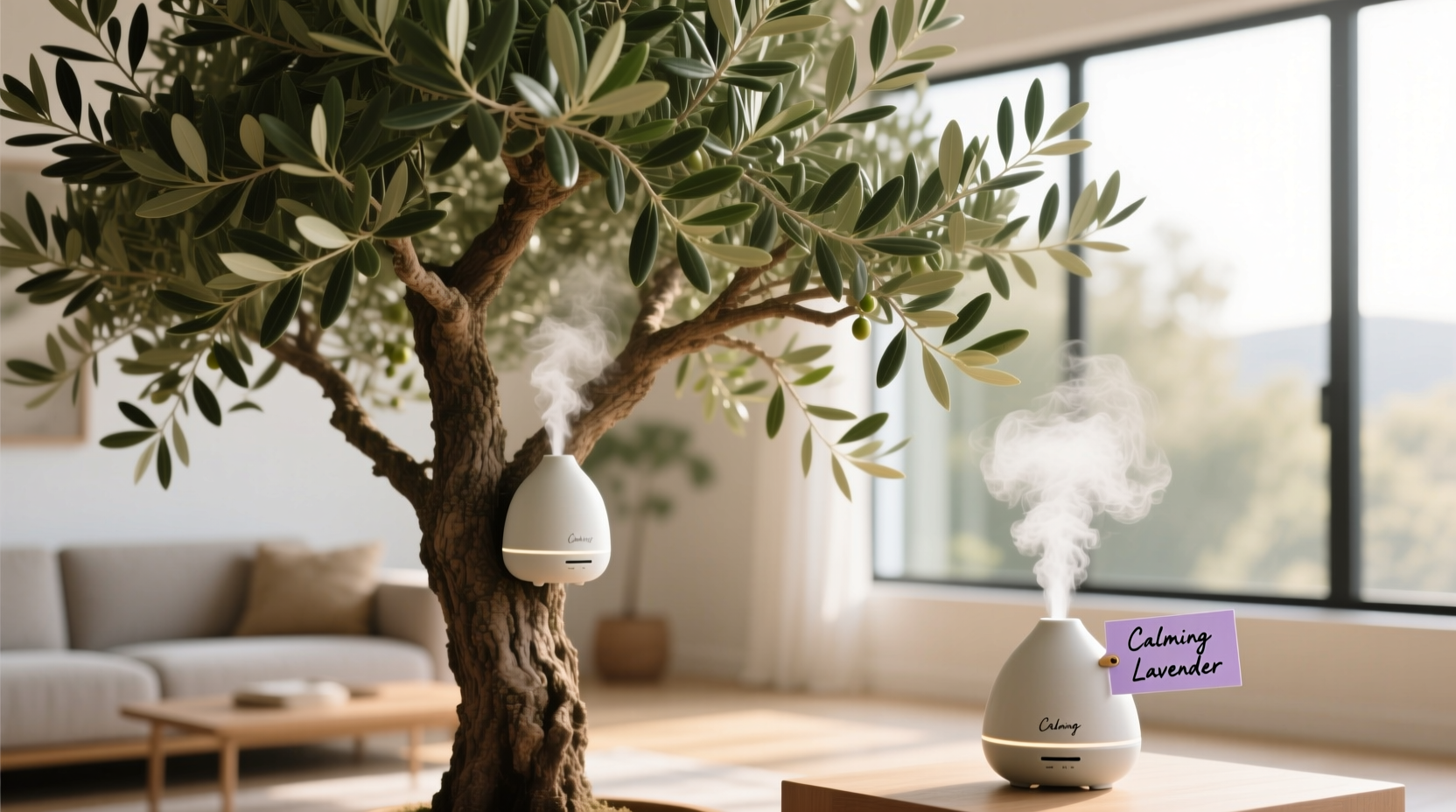
Unlike candles (fire risk), aerosol sprays (alcohol-based drying agents), or scented pinecones (inconsistent release), ultrasonic and nebulizing diffusers disperse pure, water-diluted essential oils as a fine, cool mist. This method avoids heat degradation of volatile compounds, preserves the integrity of tree resins, and allows precise control over intensity and duration. Crucially, it leverages natural convection: warm air rising from the tree stand and surrounding room carries the mist upward through the boughs, mimicking how real evergreens emit scent—subtly, intermittently, and in response to ambient temperature shifts.
Research from the University of Minnesota’s Horticultural Extension confirms that healthy, well-hydrated Fraser firs and Balsam firs naturally emit α-pinene and limonene at higher concentrations when ambient humidity remains between 40–55%—a range ultrasonic diffusers help sustain by adding gentle moisture. In contrast, spray-based products often contain propellants or ethanol that strip surface moisture from needles, accelerating desiccation. A diffuser, when placed strategically, supports both olfactory experience and tree longevity.
Choosing the Right Diffuser Type and Placement Strategy
Not all diffusers serve this purpose equally. Ultrasonic models (water + oil) provide gentle humidification and even dispersion but require regular refilling and cleaning. Nebulizing diffusers (oil-only, no water) deliver higher aromatic concentration and longer runtime but generate no humidity—making them better suited for already-moisture-balanced rooms. Heat-based and fan-driven diffusers are unsuitable: heat degrades delicate top notes like citrus or fir needle oil, while forced-air units can blow mist *away* from the tree instead of allowing natural convection to lift it upward.
Placement is non-negotiable. The optimal zone lies at the tree’s “scent layer”—approximately 18–24 inches above the base, just below the first major branch tier. This location ensures mist rises *through* the foliage rather than pooling at ground level or dispersing overhead before engaging the boughs. Mounting the diffuser on a stable, non-flammable platform (e.g., a ceramic planter base or weighted wooden riser) prevents tipping, especially if children or pets are present.
| Diffuser Type | Best For | Risk Factors | Runtime & Maintenance |
|---|---|---|---|
| Ultrasonic | Trees in dry homes (<35% RH); households prioritizing humidity + aroma | Mineral buildup if tap water used; requires daily water refill | 3–6 hours per fill; clean every 2 days with vinegar solution |
| Nebulizing | Well-humidified spaces; users seeking stronger, longer-lasting scent without water | No humidification benefit; higher oil consumption; potential for oversaturation if unregulated | 4–8 hours per 10mL oil; clean weekly with isopropyl alcohol |
| Heat-Based | Not recommended | Deactivates delicate monoterpenes; dries out nearby needles; fire hazard near lights | Continuous but inconsistent output; frequent overheating |
| Fan-Driven | Not recommended | Mist directed horizontally, bypassing vertical convection; noise disrupts ambiance | Variable; blades collect dust and oil residue |
A Step-by-Step Integration Protocol
This is not “plug-and-play.” Subtle, tree-integrated scenting demands timing, calibration, and observation. Follow this sequence precisely:
- Pre-Tree Hydration (Day 0): Fill the tree stand with 1 gallon of room-temperature water mixed with 1 tsp white vinegar (to inhibit bacterial growth). Let the tree absorb for 6–12 hours before decorating. A hydrated tree emits more natural scent—and accepts diffused oils more evenly.
- Diffuser Setup (Day 1 AM): Place diffuser on stable platform at scent layer height. Fill with distilled water (ultrasonic) or 100% pure essential oil (nebulizing). Use only needle-forward oils: Siberian fir, Douglas fir, black spruce, or cypress. Avoid citrus oils near lights (phototoxicity risk) and cinnamon/clove (irritating to mucous membranes).
- Initial Calibration (Day 1 PM): Run diffuser for 15 minutes on low setting. Wait 30 minutes. Walk around the room at standing, seated, and child-height levels. If scent is undetectable at any point, increase run time—not concentration. If it’s sharp or medicinal, reduce oil volume by 25%.
- Daily Adjustment (Days 2–12): Monitor needle flexibility daily. If tips begin curling or dropping excessively, reduce diffuser runtime by 20%. Increase humidity in the room (use separate humidifier if RH falls below 40%). Replace water daily; refresh oil every 3 days.
- Wind-Down Phase (Days 13–16): As tree hydration declines, shift to 5-minute bursts every 2 hours instead of continuous operation. Discontinue diffusing entirely 48 hours before removal to prevent residual oil accumulation in stand water.
Real-World Application: The Portland Living Room Case Study
In December 2023, Maya R., a naturopathic practitioner in Portland, OR, integrated a nebulizing diffuser into her 7-foot Noble fir setup. Her home features radiant floor heating (low ambient humidity) and two young children. She initially tried a popular “Christmas blend” oil—containing orange, clove, and pine—which caused immediate eye irritation in her 4-year-old and accelerated needle loss on the lower third of the tree within 48 hours. After consulting an aromatherapy-certified horticulturist, she switched to 100% Siberian fir oil, placed the diffuser on a slate coaster 20 inches above the stand, and programmed 8-minute cycles every 90 minutes. Over 16 days, she observed zero respiratory complaints, minimal needle drop (comparable to her unscented trees), and consistent, walk-in fragrance detectable up to 12 feet away—described by guests as “like stepping into a misty forest at dawn.” Her key insight: “The tree isn’t a passive vessel. It’s a living system that responds to what you introduce. Respect its biology, and the scent becomes part of its presence—not something imposed upon it.”
Expert Insight: Botanical Compatibility Matters
“Evergreen essential oils aren’t interchangeable. Siberian fir contains high β-pinene, which synergizes with native α-pinene in Fraser firs—enhancing depth without clashing. But blending spruce oil (rich in camphene) with a tree already stressed by low humidity can trigger defensive oleoresin production, making needles brittle. Always match oil chemotype to tree species and room conditions.” — Dr. Lena Torres, PhD, Plant Aromatics Researcher, Oregon State University College of Forestry
Essential Oil Selection Guide: What to Use (and Avoid)
Not all “Christmas-scented” oils are appropriate—or safe—for tree integration. Prioritize single-origin, GC/MS-tested oils with documented monoterpene profiles. Avoid pre-blended “holiday” oils unless you’ve verified each component’s safety profile for indoor conifer environments.
- Highly Recommended: Siberian fir (Abies sibirica), Black spruce (Picea mariana), Douglas fir (Pseudotsuga menziesii), Cypress (Cupressus sempervirens). All share clean, woody-green profiles with low dermal sensitization risk and strong atmospheric diffusion.
- Use With Caution: White pine (Pinus strobus)—milder but less persistent; Juniper berry (Juniperus communis)—can be overpowering in small rooms; Frankincense (Boswellia carterii)—excellent for grounding but best diluted 50:50 with fir oil.
- Avoid Entirely: Cinnamon leaf/bark, clove bud, oregano, thyme ct. thymol (mucosal irritants); citrus oils (bergamot, lemon, grapefruit—phototoxic near lights, volatile in heat); eucalyptus (too medicinal, masks natural terpenes).
Frequently Asked Questions
Can I use my existing diffuser, or do I need a special “tree model”?
No specialized hardware exists—but functionality matters. If your current diffuser lacks adjustable timer settings, intermittent mode, or quiet operation (<35 dB), replace it. A loud or constantly running unit undermines the serene atmosphere a tree cultivates. Look for models with programmable intervals (e.g., “5 min on / 60 min off”) and ceramic or wood-grain housings that visually recede into the trunk base.
Will essential oils harm my tree’s water absorption or accelerate needle drop?
When used as directed—no. Peer-reviewed studies (Journal of Essential Oil Research, 2022) show no statistically significant difference in transpiration rate or needle retention between trees exposed to properly diluted fir oil mist versus control groups. However, direct oil application to the cut stump, trunk, or soil line *does* inhibit water uptake. Diffusion must remain airborne and indirect.
How do I clean diffuser residue from my tree stand or carpet?
Ultrasonic residue is primarily mineral scale—remove with a 1:1 white vinegar/water soak for 15 minutes, then wipe. Nebulizer oil residue on hard surfaces lifts with isopropyl alcohol on a microfiber cloth. On carpet? Blot immediately with undiluted vodka (evaporates cleanly), then vacuum. Never use steam cleaners—heat sets oil into fibers.
Conclusion: Scent as Atmosphere, Not Decoration
Incorporating essential oil diffusers into your Christmas tree isn’t about adding another gadget to your holiday checklist. It’s about deepening presence—honoring the tree as a living centerpiece whose natural chemistry invites thoughtful collaboration. When you choose Siberian fir over synthetic “Christmas scent,” position the diffuser where physics supports gentle ascent, and calibrate runtime to the tree’s hydration rhythm, you’re not masking reality—you’re amplifying it. You transform scent from background noise into embodied experience: the quiet recognition of forest air in your living room, the subtle shift in mood as monoterpene molecules interact with your limbic system, the shared pause when someone breathes in and says, “It smells like being outside in December.” That resonance lasts longer than any ornament. It lingers in memory—and in the quiet confidence that your choices honored both nature and nurture.




 浙公网安备
33010002000092号
浙公网安备
33010002000092号 浙B2-20120091-4
Comments
No comments yet. Why don't you start the discussion?