
The holiday season is more than just festive decorations and cheerful gatherings—it’s an opportunity to cultivate warmth, balance, and positive energy in your home. Feng shui, the ancient Chinese art of harmonizing space with energy flow (chi), offers profound insights into how we arrange our environments. When applied thoughtfully, feng shui can elevate the spirit of your holiday decor, especially when it comes to one of the most symbolic elements: the Christmas tree.
Far from being merely ornamental, the Christmas tree acts as a powerful energetic anchor during the winter months. Its height draws energy upward, its evergreen nature symbolizes resilience, and its lights emit warmth in the darkest time of year. By aligning its placement and illumination with feng shui principles, you invite abundance, protection, and familial harmony into your home. This guide explores practical, meaningful ways to integrate feng shui into your tree setup—without sacrificing tradition or charm.
Understanding the Energetic Role of the Christmas Tree in Feng Shui
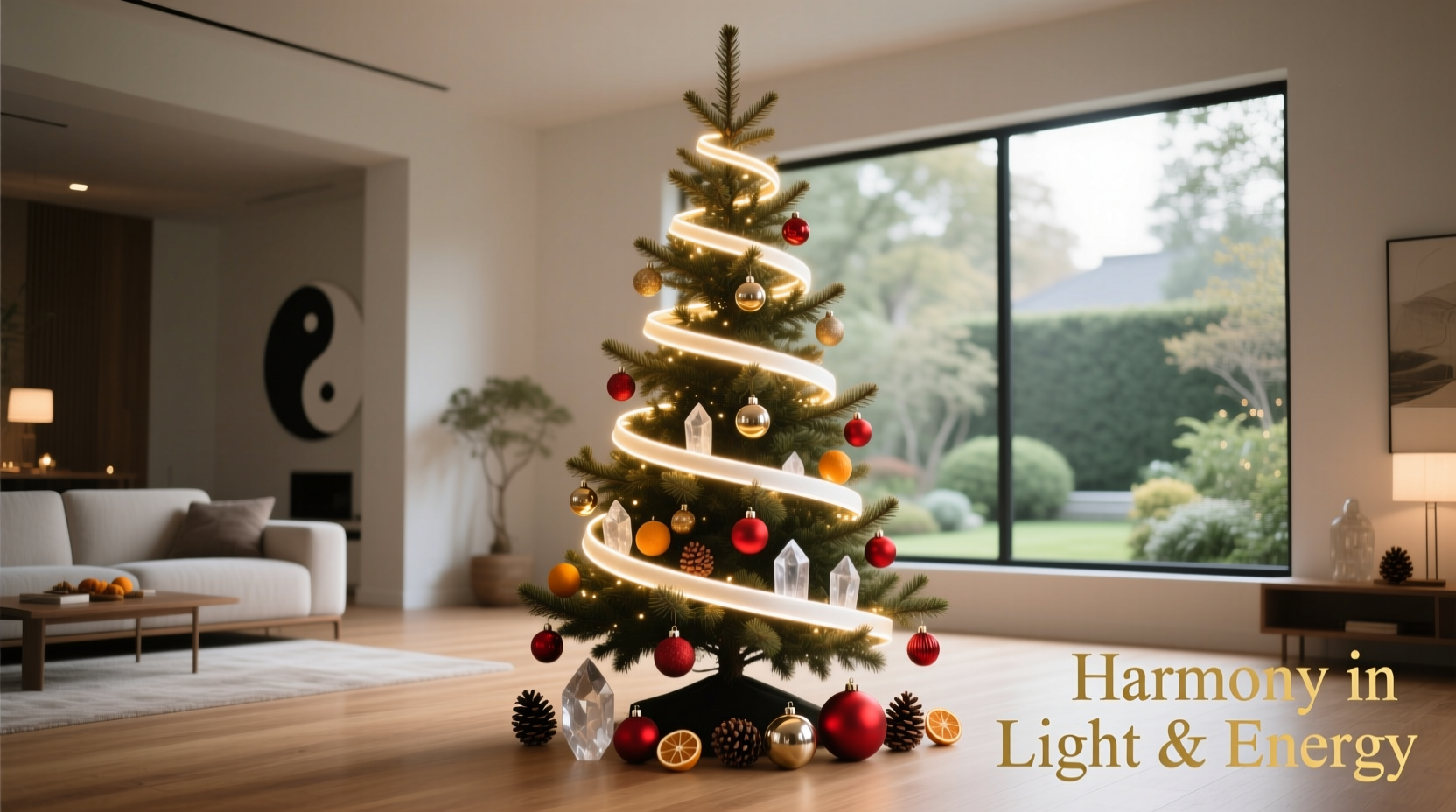
In feng shui, trees are seen as living conduits between earth and sky, absorbing negative energy and radiating positivity. The coniferous shape of a Christmas tree—narrow at the top, broad at the base—mirrors the ideal flow of chi: grounded, ascending, and expansive. During the winter solstice period, when daylight is shortest and energy tends to stagnate, a well-placed tree can act as a luminous beacon, reactivating dormant areas of your home.
The tree’s location matters deeply. In feng shui, every area of the home corresponds to a life aspect through the Bagua map—a grid overlay used to assess energetic zones. Placing your tree in the right sector enhances specific intentions:
- Northeast (Knowledge & Self-Cultivation): Ideal if you're focusing on learning, reflection, or spiritual growth this season.
- Southeast (Wealth & Abundance): A popular choice; amplifies prosperity and financial blessings.
- South (Fame & Reputation): Encourages recognition, joy, and celebration.
- Center (Health & Family Harmony): Supports overall household well-being and unity.
Avoid placing the tree in bedrooms or bathrooms, where sleep and privacy should remain undisturbed. Also steer clear of cluttered corners, as these indicate stagnant chi—adding a bright tree here may amplify chaos rather than clarity.
Strategic Placement: Aligning the Tree with Your Home’s Energy Map
To determine optimal placement, begin by sketching a simple floor plan of your main living area. Divide it into nine equal sections using the Bagua grid. Each section governs a different life domain. Once mapped, identify which area best supports your seasonal intentions.
For example, if family connection is your focus, place the tree in the East (Family & Health zone). If gratitude and generosity are central themes, the Southwest (Relationships & Love) could be meaningful. However, use caution: avoid positioning sharp branches directly facing seating areas or doorways, as they create \"poison arrows\"—direct lines of aggressive energy that can cause tension.
“During winter, homes naturally contract energetically. A centrally located, softly lit tree can become a heart-center, redistributing warmth and inviting movement.” — Li Wei Chen, Certified Feng Shui Consultant
Ensure the tree allows for smooth circulation around it. In feng shui, furniture and objects should never obstruct pathways. Guests should be able to walk freely without bumping into ornaments or stepping over cords. This physical ease translates into emotional openness—inviting conversation, laughter, and shared presence.
Step-by-Step Guide: Finding Your Tree’s Ideal Spot
- Determine your home’s commanding position—usually diagonally opposite the main entrance of the room.
- Overlay the Bagua map onto your floor plan, aligning the bottom edge with the wall containing the front door.
- Select a Bagua area that matches your holiday intention (e.g., abundance, joy, family).
- Choose a spot within that zone where the tree won’t block doors, windows, or major walkways.
- Verify that the ceiling above is unbroken—no exposed beams pressing down on the tree, which symbolically weighs on its energy.
- Stand back and observe: Does the space feel balanced? Is there room for light to reflect and move?
Lighting Flow: Enhancing Chi with Intentional Illumination
Light is one of the most dynamic tools in feng shui. It animates space, lifts mood, and activates energy. During winter, natural sunlight diminishes, making artificial lighting even more crucial. Christmas tree lights aren’t just decorative—they’re energetic catalysts.
Traditional incandescent bulbs emit a warmer, softer glow than LEDs, which some feng shui practitioners believe better mimics candlelight and supports emotional comfort. However, modern warm-white LEDs (2700K–3000K color temperature) are acceptable and safer. Avoid cool blue tones (above 4000K), which can feel sterile and disrupt relaxation.
String lights vertically from top to bottom, following the natural flow of chi down the tree. Wrap them evenly—not too sparse, not overcrowded—to maintain rhythm and balance. Consider layering: add small LED candles on nearby surfaces or string fairy lights along mantels to extend the radiant field.
Color Psychology in Lighting and Ornaments
Colors carry distinct vibrations in feng shui. While red and green dominate Christmas palettes, intentional use of other hues can deepen energetic impact:
| Color | Feng Shui Element | Energy Influence |
|---|---|---|
| Red | Fire | Passion, vitality, celebration |
| Green | Wood | Growth, renewal, healing |
| Gold/Yellow | Earth | Abundance, stability, gratitude |
| Silver/White | Metal | Clarity, precision, refinement |
| Blue | Water | Calm, introspection (use sparingly) |
Avoid excessive black or dark purple, which can absorb too much light and create heaviness. Instead, mix metallics like gold and silver to reflect light and multiply joyful energy. Hang round or spherical ornaments—they represent completeness and unity—over angular shapes, which may generate sharp chi.
Mini Case Study: Revitalizing a Stagnant Living Room
Sarah, a graphic designer in Portland, noticed her family felt unusually irritable during past holiday seasons. Though she loved decorating, the tree always ended up crammed into a corner near the kitchen doorway—a high-traffic area already prone to congestion. After consulting a feng shui layout, she realized the tree was sitting in the Southeast (Wealth) zone but was blocked by cabinets and poorly lit.
She relocated the tree to the center of the living room, anchoring it in the Health & Family area. She replaced cool-white LED strings with warm-glow lights and added golden pinecones and red satin ribbons. She also installed a dimmer switch to control brightness in the evenings.
Within days, Sarah reported improved conversations, fewer arguments, and a stronger sense of togetherness. Her children began gathering near the tree to read and play games—an organic shift in behavior she hadn’t expected. “It’s like the house exhaled,” she said. “Everything feels lighter now.”
Essential Checklist: Feng Shui-Friendly Tree Setup
Before turning on the lights, run through this checklist to ensure alignment with positive energy principles:
- ✅ Tree is placed in a Bagua zone that reflects your seasonal intention
- ✅ No sharp branches pointing toward people or doorways
- ✅ Lights follow vertical flow and are evenly distributed
- ✅ Bulb color temperature is warm (2700K–3000K)
- ✅ Cords are secured and hidden to prevent tripping and visual clutter
- ✅ Ornaments include rounded shapes and auspicious colors (red, gold, green)
- ✅ Tree allows for unobstructed movement around it
- ✅ Lights operate on a timer (on at dusk, off by midnight)
- ✅ Real tree is fresh and hydrated; artificial tree is clean and dust-free
- ✅ Space around the tree feels open, inviting, and joyful
Frequently Asked Questions
Can I use an artificial tree and still benefit from feng shui?
Absolutely. While a real evergreen carries stronger natural energy, an artificial tree can be equally effective if treated with care and intention. Clean it thoroughly before display, store it properly, and activate it with meaningful ornaments and lights. The key is mindfulness—not material.
Is it bad feng shui to have a tree near a mirror?
Not inherently—but be mindful of reflection. If the tree appears distorted or fragmented in the mirror, it may scatter energy. Ideally, the reflection should show the full tree clearly, doubling its symbolic presence and amplifying positive chi. Avoid mirrors directly behind the tree if they create visual confusion.
Should the tree face a certain direction?
Directionality matters less than spatial relationship. Focus on the Bagua zone and room dynamics instead. However, ensure the tree is visible upon entry if possible, so it greets incoming chi with brightness and structure.
Conclusion: Let Light and Intention Guide Your Holidays
Incorporating feng shui into your Christmas tree setup isn’t about rigid rules—it’s about cultivating awareness. Every decision, from where you place the tree to the color of your lights, contributes to the emotional atmosphere of your home. This season, let your decor do more than dazzle: let it heal, uplift, and unite.
By honoring the flow of energy, choosing thoughtful placements, and illuminating with purpose, you transform a holiday tradition into a practice of mindfulness. Whether you celebrate Christmas religiously, culturally, or simply as a time of rest and reunion, feng shui offers a quiet yet powerful way to deepen its meaning.




 浙公网安备
33010002000092号
浙公网安备
33010002000092号 浙B2-20120091-4
Comments
No comments yet. Why don't you start the discussion?