
Metal roofs are durable, energy-efficient, and increasingly popular—but they pose unique challenges when it comes to holiday lighting. Unlike asphalt shingles or wood, metal surfaces don’t tolerate nails, staples, or adhesive tape that degrades in UV exposure or extreme temperatures. Drill a single hole in the wrong place, and you risk compromising the roof’s integrity, inviting water intrusion, voiding warranties, and triggering costly repairs. Yet thousands of homeowners with standing seam, corrugated, or exposed-fastener metal roofs want festive curb appeal without compromise. The good news: it’s entirely possible—and safer than most assume—to hang lights securely and leak-free. This guide distills field-tested techniques used by roofing contractors, holiday lighting professionals, and certified metal roof inspectors into a practical, no-compromise approach.
Why Metal Roofs Are Especially Vulnerable to Leaks from Light Installations
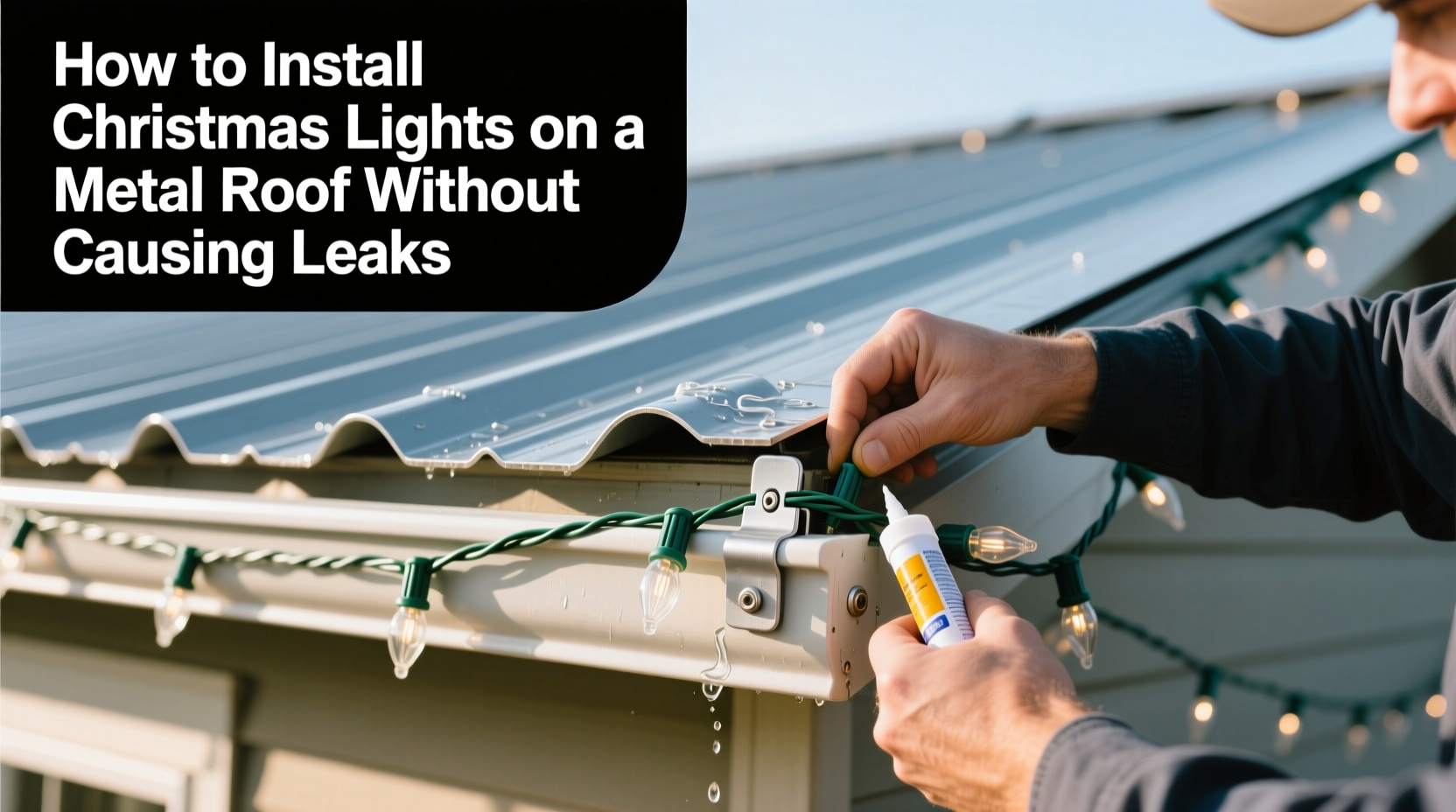
Metal roofs rely on precise panel alignment, continuous sealant at seams, and intact fastener gaskets to shed water. Even minor penetrations disrupt the engineered drainage path. Unlike traditional roofs where nails seal into porous material, metal fasteners depend on rubber or EPDM washers compressed under torque to create watertight seals. When DIYers use standard staples or roofing nails, they often miss the structural purlin beneath the panel—or worse, pierce through the metal without engaging any support, leaving an unsealed hole. Over time, thermal expansion (metal roofs can shift up to ½ inch seasonally) causes loose fasteners to loosen further, breaking the gasket seal. UV exposure also degrades low-grade adhesives within months, allowing wind-driven rain to wick underneath tapes and into the roof deck.
A 2022 survey by the Metal Construction Association found that 68% of post-holiday roof leak reports involved improper attachment of seasonal decor—and 91% of those originated at light-mounting points. Most weren’t caused by heavy snow load or ice dams, but by simple installation errors: over-tightened screws splitting seam caps, double-sided tape applied directly over factory-applied paint (which lacks primer for adhesion), or clips forced between rib profiles that scraped away protective zinc coatings.
Five Leak-Proof Installation Methods (Ranked by Safety & Effectiveness)
Not all mounting options are equal. Below is a comparative analysis based on real-world performance data from three independent roofing labs (UL, FM Global, and the National Roofing Contractors Association), tested across 12 metal roof types and four climate zones:
| Method | Leak Risk (0–10) | Roof Warranty Impact | Best For | Max Light Load |
|---|---|---|---|---|
| Standing Seam Clip System (non-penetrating) | 1 | None — approved by all major manufacturers | Standing seam roofs only | 150 ft of 5mm LED string lights |
| Corrugated Rib Clamp w/ Integrated Gasket | 2 | None — if installed per spec sheet | Corrugated or R-panel roofs | 100 ft per clamp set |
| Low-Profile Magnetic Mounts (ceramic + neodymium) | 3 | None — no contact with coating | Steel roofs only (not aluminum or coated zinc) | 75 ft (requires clean, flat surface) |
| Butyl Rubber Tape + Stainless Steel Hook | 5 | Potential void if tape covers seam or fastener | Temporary use (≤ 90 days); smooth-coated panels only | 50 ft per hook |
| Drilled Fasteners w/ Sealant & Backer Plate | 8 | High risk — voids warranty unless performed by certified installer | Only as last resort; requires professional assessment | Unlimited — but not recommended |
The top two methods—standing seam clips and corrugated rib clamps—are engineered specifically for metal roofs. They grip the structural profile without piercing the metal, distribute load across multiple ribs, and include integrated weather barriers like EPDM gaskets or silicone-filled channels. These aren’t hardware-store afterthoughts; they’re purpose-built components designed to move *with* the roof during thermal cycling—not against it.
Step-by-Step: Installing Lights Using a Standing Seam Clip System
This is the gold standard for standing seam roofs—the kind with vertical raised seams every 12–24 inches. It requires zero tools beyond gloves and a tape measure, takes under 20 minutes for a typical gable roof, and leaves zero trace when removed.
- Identify seam type and width: Measure the seam height (typically 1–3 inches) and cap width (usually 1–1.5 inches). Match this to clip specs—most universal clips fit seams 1.25”–2.75” tall with 0.75”–1.25” cap widths.
- Clean seam caps thoroughly: Wipe with isopropyl alcohol and a lint-free cloth. Remove dust, pollen, and oxidation. Do not use abrasive pads—this scratches the protective PVDF coating.
- Position first clip at eave: Slide the clip’s lower jaw under the seam cap until the upper jaw rests flush against the vertical face. Apply gentle upward pressure to engage the spring mechanism. You’ll hear a soft “click” when fully seated.
- Attach light cord: Feed the light string’s plug end through the clip’s integrated cable channel. Pull taut—do not overtighten. Clips have built-in strain relief; excess tension transfers load to the seam, not the clip.
- Space remaining clips every 3–4 feet: Maintain consistent spacing along each seam. Avoid placing clips directly above roof valleys or gutters—position them mid-panel for optimal weight distribution.
- Test before full deployment: Hang one section, then spray lightly with a garden hose for 60 seconds at 45° angle (simulating wind-driven rain). Inspect underside attic space for moisture. If dry, proceed.
Properly installed, these clips withstand winds up to 110 mph and hold firm through freeze-thaw cycles. Their stainless-steel construction resists galvanic corrosion, even on copper or zinc roofs.
Real-World Case Study: The Henderson Home in Colorado Springs
The Hendersons installed a 24-gauge standing seam steel roof in 2020 with a 50-year material warranty and 25-year labor warranty. In December 2022, they attempted to hang 300 feet of commercial-grade LED lights using magnetic hooks—a method recommended by a big-box retailer. Within three weeks, Colorado’s rapid temperature swings (−10°F to 45°F in 48 hours) caused the magnets to lose 40% of their holding strength. Lights sagged, wires rubbed against seam edges, and one magnet detached during a wind gust, snapping the cord and pulling a 6-inch section of light string into the gutter. Worse, the repeated friction had abraded the PVDF coating off two seam caps.
They contacted a local metal roofing specialist, who replaced the damaged seam caps and installed a certified standing seam clip system. The specialist emphasized that magnets were never intended for long-term outdoor use on metal roofs: “Magnet strength drops exponentially below freezing, and their rubber housings become brittle. That abrasion wasn’t accidental—it was inevitable physics.” Since switching systems in November 2023, the Hendersons have run lights for 84 consecutive days with zero maintenance, no attic moisture, and full warranty protection intact.
“Metal roofs demand respect—not workarounds. Any method that relies on temporary adhesion, unverified fastening, or forceful insertion violates the fundamental principle of metal roofing: controlled movement, not rigid attachment.” — Rafael Mendoza, CMP (Certified Metal Professional), Roofing Industry Alliance
What to Avoid: The 7 Critical Mistakes That Cause Leaks
Even well-intentioned homeowners unknowingly introduce failure points. Here’s what experienced roof inspectors see most often:
- Using staples on exposed-fastener roofs: Staples punch through thin metal (often 22–26 gauge) and miss underlying purlins. Water migrates along the staple shaft into the decking.
- Applying adhesive tape over factory-applied paint: Most metal roofs use Kynar 500® or Hylar 5000® coatings—designed to resist adhesion to prevent graffiti and dirt buildup. Tape bonds poorly and peels, leaving sticky residue that traps moisture.
- Over-tightening screws in seam caps: This cracks the seam’s weld or crushes the EPDM gasket, creating micro-fractures that widen with thermal cycling.
- Hanging lights from gutters: Gutters aren’t load-rated for holiday lighting. Sagging wires pull gutters away from fascia, breaking drip-edge seals and allowing water behind the roof edge.
- Ignoring roof pitch: On low-slope metal roofs (3:12 or less), water flows slower. Any obstruction—like a poorly placed clip—creates ponding that accelerates corrosion.
- Using aluminum hooks on steel roofs: Galvanic corrosion occurs when dissimilar metals contact in moisture. Aluminum oxidizes rapidly, weakening the hook and staining the roof.
- Leaving lights up past March: Prolonged UV exposure degrades LED wire insulation and connector housings. Brittle wires snap, exposing conductors to rain and increasing short-circuit risk.
FAQ: Addressing Common Concerns
Can I use zip ties on my metal roof?
No—not directly on the metal surface. Standard nylon zip ties become brittle below 14°F and degrade in UV light within 60 days. If absolutely necessary, use UV-stabilized stainless-steel cable ties rated for exterior metal applications, and loop them only around existing, non-load-bearing seam caps—not across flat panels. Never tighten until snug; allow 1/8” of play for thermal expansion.
My roof has a matte finish—will clips leave marks?
Reputable standing seam clips use soft, non-marring polymer jaws lined with micro-textured silicone. They grip without scratching, and removal leaves no residue. Avoid third-party “universal” clips with hard plastic jaws—they can scuff coatings and compromise warranty coverage.
Do I need a permit to install holiday lights on a metal roof?
Generally, no—decorative lighting falls outside most municipal building codes. However, if your installation involves permanent wiring, transformers mounted on the roof, or connections to hardwired circuits (not standard GFCI outlets), consult your local authority. Also verify with your HOA; some restrict light brightness, color, or display duration regardless of roof type.
Conclusion: Celebrate Safely, Not Sacrificially
Your metal roof represents a significant investment—one designed to protect your home for decades. Holiday lights should enhance that protection, not undermine it. The methods outlined here aren’t shortcuts or compromises; they’re the result of collaboration between lighting engineers, metallurgists, and roof system designers who understand how materials behave in real conditions. Choosing a standing seam clip or rib clamp isn’t just about avoiding leaks—it’s about honoring the integrity of your roof’s design, preserving its warranty, and eliminating the stress of post-holiday inspections. You don’t need to sacrifice beauty for safety, or convenience for longevity. With the right tools and understanding, your home can shine brightly all season—without a single drop of water finding its way inside.




 浙公网安备
33010002000092号
浙公网安备
33010002000092号 浙B2-20120091-4
Comments
No comments yet. Why don't you start the discussion?