
In today’s fast-paced digital world, staying ahead means being able to act immediately—especially when managing a forward-looking project or website like “tomorrow site.” Whether you're tracking upcoming content, monitoring scheduled updates, or responding to time-sensitive changes, having instant access from your mobile device is no longer optional—it's essential. The ability to manage your tomorrow site remotely empowers you to maintain control, ensure continuity, and react in real time, regardless of location.
This guide walks through practical strategies, tools, and techniques that enable seamless mobile access and efficient management of your tomorrow site. From browser shortcuts to automation workflows, we’ll cover everything you need to stay agile and informed at all times.
Understanding What a \"Tomorrow Site\" Means
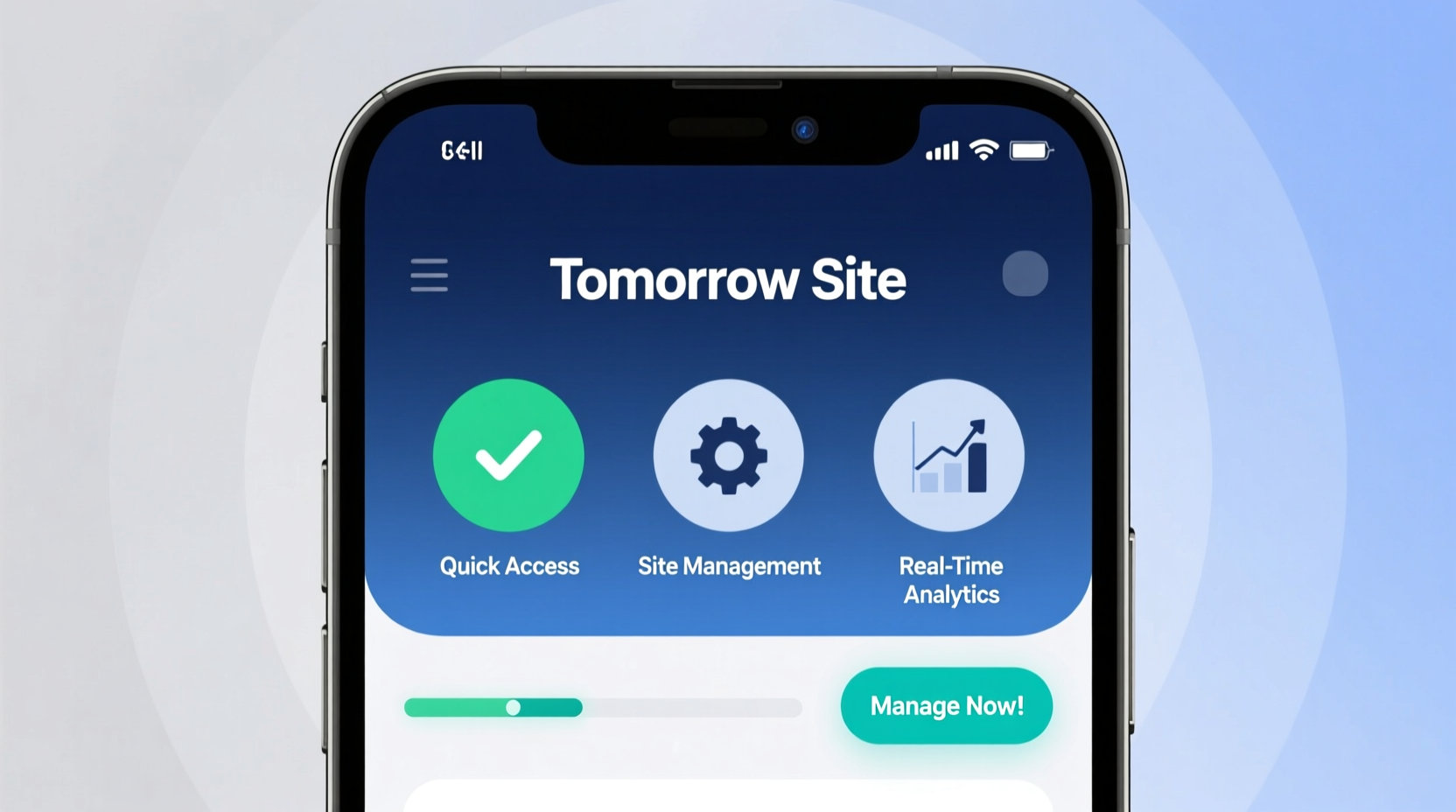
The term “tomorrow site” doesn’t refer to a specific platform but rather describes any web property designed with future-facing content, scheduled launches, or predictive functionality. It could be:
- A news portal publishing breaking stories set for release the next day
- An e-commerce store previewing products launching tomorrow
- A personal blog with scheduled posts ready for publication
- A dashboard showing data forecasts or calendar-based analytics
Managing such a site requires anticipation, precision, and constant readiness. Mobile access ensures you’re never out of reach when last-minute edits, urgent approvals, or emergency fixes are needed.
“Mobile-first site management isn’t just about convenience—it’s about maintaining operational resilience.” — Dana Reyes, Digital Operations Lead at WebFlow Systems
Step-by-Step: Instant Access Setup on Your Mobile Device
Gaining immediate entry to your tomorrow site starts with preparation. Follow this timeline to set up full mobile accessibility within minutes.
- Log into your site’s admin panel using a desktop browser and ensure two-factor authentication (2FA) is enabled for security.
- Open the same login page on your smartphone and save credentials via your preferred password manager (e.g., Bitwarden, 1Password).
- Add the login URL to your home screen: In Safari (iOS) or Chrome (Android), tap “Share” → “Add to Home Screen.” Name it “Tomorrow Site Admin.”
- Enable push notifications from your CMS (like WordPress, Ghost, or Webflow) so you receive alerts about scheduled posts, errors, or comments.
- Install the official app if available (e.g., WordPress App, Shopify Admin) and log in using saved credentials.
- Test access by viewing a draft post or checking your publishing calendar.
Essential Tools for On-the-Go Management
Not all platforms offer equal mobile experiences. Choosing the right tools can make the difference between smooth operation and frustrating delays.
| Tool | Best For | Mobile Strengths | Limitations |
|---|---|---|---|
| WordPress Mobile App | Blogging, content scheduling | Full editor, media upload, stats | Limited plugin access |
| Ghost(Pro) App | Publishing-focused sites | Clean UI, Markdown support | No custom theme editing |
| Webflow Editor (via browser) | Design-heavy tomorrow sites | Responsive preview, CMS updates | No drag-and-drop on mobile |
| Notion + Automation | Content planning & coordination | Real-time collaboration, databases | Not a direct publishing tool |
For non-app solutions, use responsive admin dashboards accessed through mobile Chrome or Safari. Ensure your CMS supports touch-friendly interfaces and fast load times over cellular networks.
Real Example: How a Travel Blogger Manages Her Tomorrow Posts
Sophie Lin, a full-time travel content creator, publishes daily itinerary previews every evening for the following day’s adventures. She writes from remote locations—mountain lodges, trains, airports—where desktop access is impossible.
To maintain consistency, Sophie uses the WordPress mobile app to:
- Draft posts offline while traveling
- Schedule them precisely for 6:00 AM local time the next morning
- Attach geotagged photos taken earlier in the day
- Receive comment notifications and respond within hours
When she realized her audience grew most after early-morning posts went live, she optimized her workflow further by setting recurring reminders on her phone labeled “Final Check – Tomorrow Post.” This habit reduced errors and increased engagement by 37% over three months.
Her success hinges not on complex systems but on disciplined mobile access and consistent habits.
Security and Efficiency Checklist
Instant access must never compromise safety. Use this checklist before relying on mobile management:
- ✅ Enable two-factor authentication (2FA) on all admin accounts
- ✅ Use a trusted password manager synced across devices
- ✅ Avoid public Wi-Fi when accessing backend panels; use a mobile hotspot or VPN
- ✅ Regularly review active sessions and log out unknown devices
- ✅ Set up automatic backups triggered before major changes
- ✅ Bookmark key pages: Dashboard, Media Library, Publishing Calendar
- ✅ Test emergency rollback procedures monthly
Frequently Asked Questions
Can I publish a new page on my tomorrow site entirely from my phone?
Yes, provided your content management system supports full mobile editing. Platforms like WordPress, Ghost, and Squarespace allow users to create, format, and publish new pages directly from their mobile apps. However, complex layouts may require later refinement on desktop.
What should I do if I lose internet connection while making critical changes?
Always draft changes in an app or browser that supports auto-save and offline mode (e.g., Google Docs, WordPress app). If connectivity drops mid-edit, reconnect as soon as possible and verify synchronization. Never force-quit during uploads or saves.
Is it safe to approve comments or user submissions on mobile?
It’s safe if done through authenticated channels. Avoid approving sensitive actions from shared or unsecured devices. Use biometric locks (Face ID, fingerprint) and disable auto-fill for admin logins on public devices.
Optimize for Speed and Reliability
To truly “instantly” access your tomorrow site, optimize both device performance and network reliability. Start by clearing cache in your browser and CMS app monthly. Disable unused extensions that slow down page loads.
Consider using a lightweight DNS service like Cloudflare (1.1.1.1) on your phone to reduce latency. Also, pre-load your admin dashboard during downtime—open it once in the morning and keep it running in a background tab. Modern smartphones handle this efficiently without draining battery excessively.
Finally, integrate automation tools like Zapier or Make.com to trigger alerts. For example: “If a post is scheduled for tomorrow at 8 AM, send me a mobile notification 1 hour before.” This proactive approach prevents oversights and keeps you one step ahead.
Conclusion: Take Control Wherever You Are
Your tomorrow site doesn’t wait—and neither should you. With the right setup, your mobile phone becomes a powerful command center, giving you the freedom to manage content, monitor performance, and respond to changes anytime, anywhere. The combination of smart tools, secure practices, and disciplined routines transforms your smartphone from a communication device into a dynamic management hub.




 浙公网安备
33010002000092号
浙公网安备
33010002000092号 浙B2-20120091-4
Comments
No comments yet. Why don't you start the discussion?