
For many, the holiday season is a time of cherished traditions—family gatherings, festive décor, and the careful decoration of a Christmas tree that reflects both personal taste and seasonal elegance. Yet for fans of Japanese animation, the desire to express their passion through collectible anime figurines often clashes with the expectation of maintaining a refined, formal aesthetic. The solution lies not in choosing between fandom and formality, but in thoughtfully blending the two. With strategic placement, color coordination, and a respect for balance, anime figurines can become sophisticated accents on even the most traditional Christmas tree.
The key is treating each figurine not merely as a pop culture artifact, but as a curated ornament—a piece of art that contributes to an overall visual narrative. When done right, this integration enhances individuality while preserving the tree’s cohesive charm. This guide explores practical methods, design principles, and real-world examples to help collectors honor both their heritage and their hobbies during the holidays.
Understanding Formal Christmas Tree Aesthetics
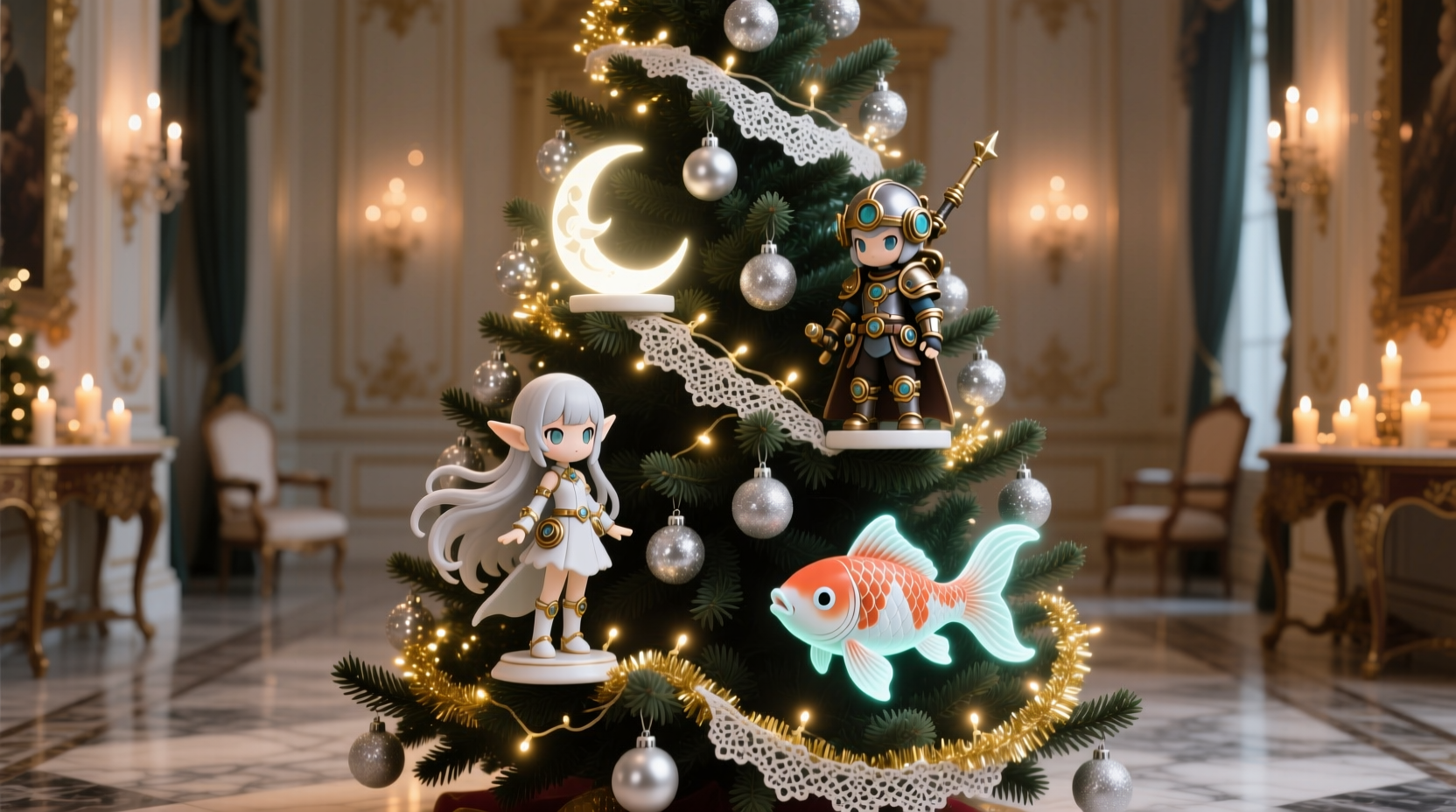
A formal Christmas tree typically emphasizes symmetry, elegance, and a restrained color palette—often silver, gold, white, deep red, or forest green. Ornaments are usually uniform in style: glass balls, crystal droplets, satin ribbons, and delicate tinsel. Lighting is soft and warm, avoiding strobes or bright colors. The goal is to create a sense of timeless sophistication, evoking luxury rather than whimsy.
In such settings, unconventional elements like anime figurines can appear out of place if introduced carelessly. However, formal doesn’t mean rigid. Interior designers increasingly embrace “curated eclecticism”—the intentional mixing of high-end and personal pieces to reflect authentic living spaces. As designer Clara Nguyen notes:
“Elegance isn’t about perfection; it’s about intention. A single meaningful object, well-placed, can elevate a space more than a dozen generic ornaments.” — Clara Nguyen, Interior Stylist & Lifestyle Curator
This philosophy opens the door for anime figurines to be included—not hidden, but highlighted—with purpose and polish.
Step-by-Step Guide to Integration
Integrating anime figurines into a formal tree requires planning, restraint, and attention to detail. Follow this timeline in the days leading up to decoration for best results.
- Week Before Decorating: Assess your collection. Select 1–3 figurines that are smaller in scale (under 6 inches), have clean lines, and feature neutral or metallic finishes. Avoid those with loud colors, action poses, or visible packaging elements.
- Two Days Before: Clean and prep the tree base. Set up lights first, ensuring they are evenly distributed and warm-white. Use fewer bulbs than usual to leave visual space for ornaments.
- Day of Decoration – Morning: Hang primary ornaments in clusters of three, focusing on balanced spacing. Begin with larger glass balls, then add smaller accents.
- Day of Decoration – Afternoon: Introduce anime figurines. Position them at eye level or slightly below, anchoring them on stronger branches. Ensure they face outward and are secured with clear fishing line or ornament hooks.
- Final Touches: Add ribbon, pinecones, or fabric bows in matching tones to unify the look. Step back frequently to assess symmetry and visual weight.
This method ensures that figurines are integrated as deliberate focal points, not afterthoughts.
Design Principles for Harmonious Blending
To maintain formality while showcasing anime collectibles, apply these core design principles:
- Color Matching: Choose figurines painted in monochrome, pearl-finish, or metallic hues. For example, a black-and-gold rendition of Sailor Moon fits better than a full-color version. Spray-paint accessories (like stands) to match the tree’s dominant metal tone.
- Scale and Proportion: Opt for miniature figurines (2–5 inches). Larger statues disrupt flow and draw excessive attention. If using a larger piece, place it beneath the tree as a centerpiece instead.
- Thematic Alignment: Select characters associated with winter, snow, or celestial themes—Yuki-onna from folklore-inspired series, Kamina in a white coat variant, or figures posed under snow effects. These resonate with seasonal motifs.
- Material Consistency: Pair resin figurines with glass or ceramic ornaments. Avoid plastic-looking pieces unless they’re artistically finished. Matte textures blend better than glossy ones in formal settings.
By aligning the figurine’s visual language with the tree’s overarching theme, you create cohesion rather than contrast.
Do’s and Don’ts: A Quick Reference Table
| Do | Don’t |
|---|---|
| Choose figurines with elegant poses (e.g., standing calmly, holding a lantern) | Use action figures mid-leap or with exaggerated expressions |
| Paint or replace bases to match gold/silver/white themes | Leave colorful or branded stands visible |
| Limit to 1–3 figurines per medium-sized tree | Fill multiple branches with characters from the same series |
| Use warm-white LED lights to enhance depth | Pair with multicolor or blinking lights |
| Display near thematic ornaments (snowflakes, stars, moons) | Isolate figurines in a “fan corner” of the tree |
Real Example: A Tokyo Executive’s Holiday Tree
Mika Tanaka, a corporate attorney in Tokyo, faced skepticism when she proposed displaying her limited-edition *Demon Slayer* Nezuko figurine on the office’s annual Christmas tree. The firm valued tradition, and past trees had featured only red-and-gold baubles and calligraphy scrolls.
Rather than argue for inclusion, Mika redesigned the entire display around a “winter serenity” theme. She suggested a palette of white, ash gray, and rose gold, with paper snowflakes inspired by origami. Her Nezuko statue—painted in matte white with faint pink blush and a bamboo hat dusted with artificial snow—was placed at the tree’s front-left quadrant, facing inward like a guardian spirit. She paired it with handmade pinecone ornaments wrapped in silver thread and minimalist star lanterns.
The result was so cohesive that most guests didn’t recognize the figurine as anime-related. One colleague remarked, “It looks like a modern take on a Shinto shrine maiden.” The tree was later featured in the firm’s newsletter, praised for its “contemporary elegance.” Mika’s approach proved that context transforms perception.
Checklist: Preparing Your Figurine for Display
Before placing any anime figure on a formal tree, run through this checklist:
- ✅ Is the figurine under 6 inches tall?
- ✅ Is its color scheme compatible with your tree’s palette?
- ✅ Has the base been repainted or covered to remove branding?
- ✅ Is the pose calm and dignified (not action-oriented)?
- ✅ Have you tested its stability on a tree branch?
- ✅ Is it secured with invisible wire or hook to prevent falls?
- ✅ Are there no loose parts (weapons, capes) that could snag tinsel?
- ✅ Does it complement, rather than compete with, nearby ornaments?
Only proceed if all boxes are checked. If not, consider displaying the figurine on a nearby shelf with a small spotlight instead.
Frequently Asked Questions
Can I use a glowing anime figurine on a formal tree?
Only if the light is subtle and warm-toned. Avoid flashing LEDs or colored glows. Battery-powered soft-glow bases can work if they mimic candlelight. Ensure wires are concealed and the glow enhances, rather than distracts from, the tree’s ambiance.
What if my family sees this as “untraditional”?
Frame the figurine as part of a broader cultural celebration. Explain that anime is a respected art form in Japan and that your choice reflects global awareness. Offer to balance it with classic ornaments to show respect for shared traditions.
Are certain anime series more suitable than others?
Yes. Series with artistic, historical, or nature-themed aesthetics—such as *Spirited Away*, *Your Name*, or *Violet Evergarden*—integrate more smoothly than battle-heavy franchises. Characters in traditional clothing (kimono, school uniforms with scarves) also align better with formal styling.
Expert Insight: Balancing Fandom and Formality
Dr. Elena Rodriguez, a cultural anthropologist specializing in contemporary holiday practices, observes a growing trend of personalized ritual expression:
“We’re moving away from one-size-fits-all traditions. People want authenticity, not just appearance. Integrating personal icons like anime figures into formal spaces isn’t rebellion—it’s evolution. It shows that tradition can expand without breaking.” — Dr. Elena Rodriguez, Cultural Anthropologist, University of California, Berkeley
Her research indicates that households combining personal passions with seasonal décor report higher emotional satisfaction during the holidays. The act of inclusion becomes a quiet affirmation of identity.
Conclusion: Celebrate Both Heritage and Heart
Integrating anime figurines into a formal Christmas tree isn’t about defiance or compromise—it’s about synthesis. It’s possible to honor the elegance of holiday tradition while making space for what brings you joy. By selecting pieces with care, applying design discipline, and positioning them with intention, your figurines become more than decorations; they become statements of who you are.
This holiday season, let your tree tell a fuller story—one that includes both the sparkle of heirloom glass and the quiet presence of a beloved character watching over the room. Blend the worlds you love, not because you must, but because you can.




 浙公网安备
33010002000092号
浙公网安备
33010002000092号 浙B2-20120091-4
Comments
No comments yet. Why don't you start the discussion?