
Bringing festive cheer into your home gym can elevate your workout experience during the holiday season. The soft glow of Christmas lights adds ambiance, motivation, and seasonal spirit to a space often dominated by steel, rubber, and sweat. However, integrating decorative lighting into a high-activity zone requires careful planning. Poorly placed strings can create dangerous trip points, reflect off mirrors causing visual distraction, or even interfere with equipment operation. Done right, Christmas lights enhance rather than hinder—transforming your gym into a warm, inviting sanctuary that still functions efficiently.
The key lies in balancing aesthetics with functionality. A home gym is not just a place for exercise; it’s a personal wellness environment where safety, visibility, and movement freedom are paramount. This guide walks through proven strategies to weave holiday lighting seamlessly into your fitness space—without compromising performance or safety.
Assess Your Space and Lighting Needs
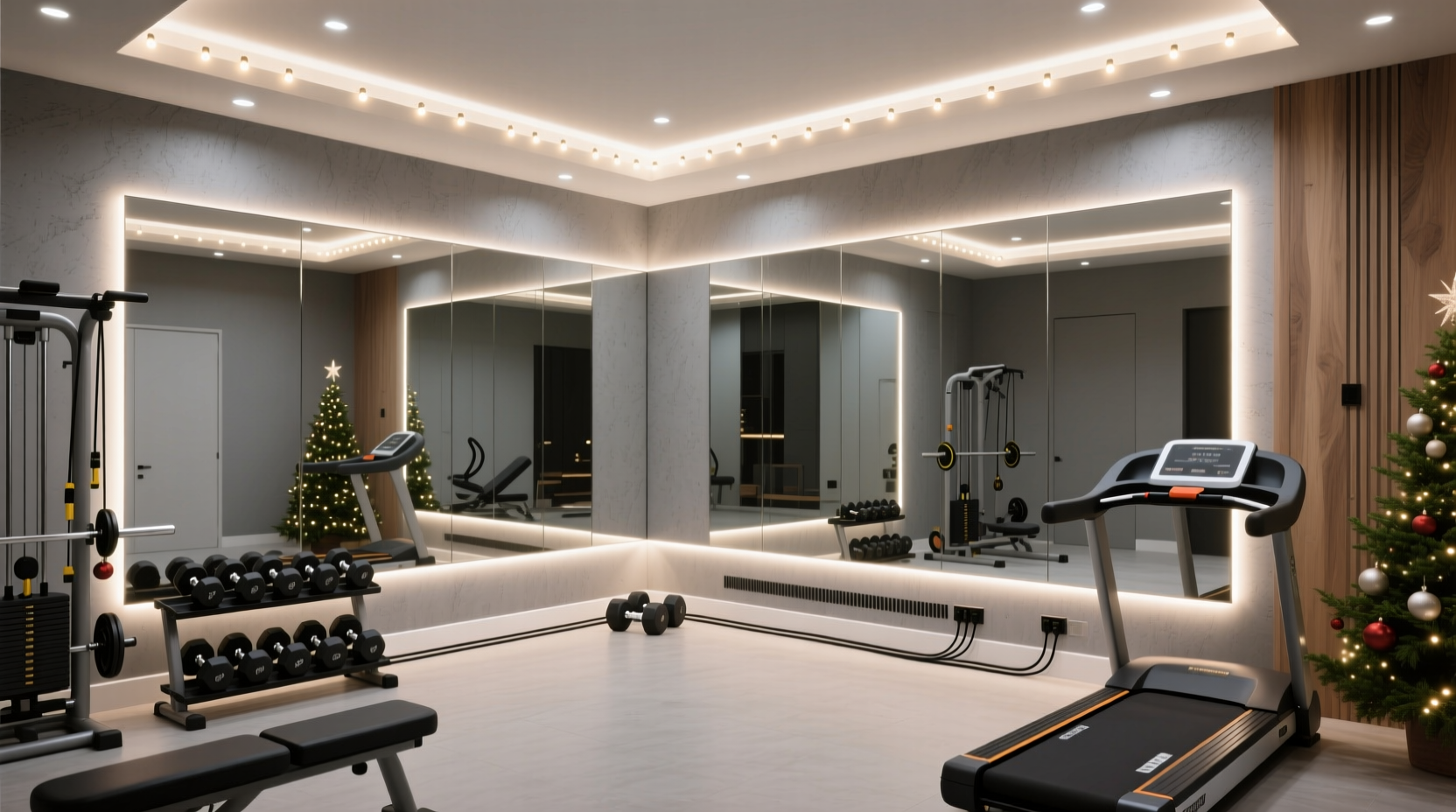
Before hanging a single strand, take time to evaluate your gym’s layout. Walk through your typical workout routine: do you lay on the floor for core work? Use resistance bands near walls? Jump rope in open zones? Identify areas of frequent movement, cable paths, mirror positions, and flooring transitions. These will inform where lights can go—and where they absolutely shouldn’t.
Begin with a sketch or mental map of your gym. Mark:
- Equipment locations (treadmill, squat rack, yoga mat zone)
- Mirror surfaces and reflective panels
- Power outlets and extension cord routes
- Floor-based activity zones (e.g., stretching, HIIT, foam rolling)
This assessment prevents last-minute adjustments and ensures lighting enhances, not obstructs. For example, stringing lights across a doorway used for kettlebell swings introduces entanglement risk. Similarly, placing bright LEDs directly behind a treadmill may cause distracting reflections in front-facing mirrors.
Choose the Right Type of Lights
Not all Christmas lights are suitable for active environments. Prioritize durability, low heat output, and flexible installation options. LED lights are ideal—they consume less power, generate minimal heat, and come in various lengths, colors, and control modes.
Consider these factors when selecting lights:
| Feature | Recommended Choice | Avoid |
|---|---|---|
| Bulb Type | LED mini or fairy lights | Incandescent bulbs (hot, fragile) |
| Power Source | Plug-in with surge protector or battery-operated | Unprotected wall outlets |
| Cord Material | Rubber-coated or braided wire | Thin, exposed copper strands |
| Light Control | Dimmable or remote-controlled | Fixed brightness only |
| Installation Style | Clip-on, adhesive-backed, or overhead track | Loose drape over equipment |
Battery-powered lights offer greater flexibility, especially in zones far from outlets. Look for models with timer functions so lights turn off automatically after use—reducing energy waste and fire risk. If using plug-in strings, ensure cords run along baseboards or overhead paths, never across walkways.
“Decorative lighting in functional spaces should serve both mood and safety. Low-glare, cool-white or warm-white LEDs minimize eye strain while adding warmth.” — Daniel Reeves, Interior Lighting Designer & Wellness Space Consultant
Strategic Placement to Avoid Glare and Hazards
Positioning is everything. Even the safest lights become problematic if installed incorrectly. Follow this step-by-step approach to install lights without compromising gym usability.
- Start at the perimeter: Install lights along ceiling edges, crown molding, or high shelves—areas out of direct reach and movement paths.
- Avoid floor-level runs: Never run cords across floors, thresholds, or under mats. If unavoidable, use flat, taped-down cord covers rated for foot traffic.
- Use vertical accent zones: Frame mirrors or large equipment like racks with side-mounted strips. This draws the eye upward, reducing reflection issues.
- Illuminate ceilings: Overhead twinkling creates ambient glow without directional glare. Consider net-style LED panels for even coverage.
- Keep clear zones intact: Leave open floor areas completely free of cords, clips, or dangling ends. Reserve these for dynamic movements like jumping or lunges.
For mirrored walls, angle lights slightly away from the reflective surface or use diffusers. Warm white tones (2700K–3000K) produce softer illumination than cool white, which can appear harsh under fluorescent-like conditions.
Safety Checklist: Before You Plug In
Once installed, verify every aspect meets safety standards. Use this checklist to eliminate risks before daily use begins.
- ✅ All cords are secured and routed away from foot traffic
- ✅ No lights are draped over moving parts (treadmill belts, cables, pulleys)
- ✅ Bulbs are cool to the touch after 30 minutes of operation
- ✅ Extension cords are grounded and not overloaded
- ✅ Lights are within reach of a GFCI outlet or surge protector
- ✅ No sharp bends or pinched wires at corners or doorframes
- ✅ Timers or remotes allow automatic shutoff (recommended: 2–4 hours post-workout)
If your gym has rubber flooring, avoid adhesive hooks that may leave residue. Instead, use removable plastic clips with nail-free mounts designed for textured surfaces. For permanent installations, consider low-voltage track lighting systems that mimic festive patterns without traditional strings.
Real Example: Transforming a Basement Gym
Take the case of Marcus T., a fitness coach in Minneapolis who converted his basement into a full-function home gym. He wanted holiday spirit but refused to compromise safety during early-morning workouts.
His solution:
- Installed 50-foot warm white LED string lights along the ceiling perimeter using plastic clips
- Added battery-powered fairy lights inside a glass-front cabinet housing supplements and accessories
- Mounted a dimmable LED strip behind his wall-mounted mirror, facing upward into the ceiling
- Used a smart plug to schedule lights from 5:00 AM to 8:00 AM and 6:00 PM to 9:00 PM
The result? A softly lit environment that energized morning sessions without glare. No cords crossed the floor, and all connections stayed above knee level. “It feels festive but still serious,” he said. “I’m not dodging wires between burpees.”
Managing Light During Workouts
Even well-placed lights can become distracting during intense sessions. Bright blinking modes or strobe effects may disrupt focus or trigger discomfort in sensitive individuals. Stick to steady or gently pulsing settings. Avoid multicolor chase sequences unless used sparingly as accent lighting outside primary workout zones.
Consider layering your lighting:
- Task lighting: Bright, neutral white for equipment zones
- Ambient lighting: Soft, warm glow from Christmas strings
- Accent lighting: Highlight artwork, motivational signs, or architectural features
Use smart controls to adjust brightness based on time of day. Lower intensity during evening workouts supports melatonin regulation, aiding post-exercise recovery. Many modern LED systems integrate with voice assistants—allowing hands-free dimming before stretching or meditation.
Frequently Asked Questions
Can I leave Christmas lights on overnight in my home gym?
It’s not recommended. While LED lights are low-risk, any electrical device left unattended increases fire hazard potential. Use built-in timers or smart plugs to ensure lights shut off within a few hours of activation. Most manufacturers advise against continuous operation beyond 8–10 hours.
Are battery-operated lights safe around metal equipment?
Yes, provided batteries are properly enclosed and terminals aren’t exposed. Avoid placing battery packs directly on conductive surfaces like steel racks. Secure them to non-metallic brackets or inside insulated pouches. Check monthly for corrosion or swelling.
How do I clean around Christmas lights without damaging them?
Power off and unplug all lighting before cleaning. Use a dry microfiber cloth or compressed air to remove dust from bulbs and cords. Never spray liquids directly onto lights. Wait until fully dry before reactivating.
Final Recommendations for Year-Round Flexibility
Think beyond December. Design your lighting system for easy removal or reconfiguration. Use modular components that can be repurposed—such as LED strips that double as night lighting or mood enhancers during winter training slumps.
If you plan to reuse lights annually, label each strand and store them coiled around cardboard reels. Keep mounting hardware organized in labeled bags. This makes next year’s installation faster and more consistent.
Remember: a festive gym should still feel like a gym. The goal isn’t to turn your space into a holiday display—it’s to infuse subtle joy into a room dedicated to discipline and growth. When lighting supports both purpose and pleasure, it becomes more than decoration; it becomes part of your wellness ecosystem.
Conclusion
Integrating Christmas lights into a home gym doesn’t have to mean sacrificing safety or functionality. With thoughtful selection, strategic placement, and disciplined cord management, you can enjoy seasonal ambiance without glare or tripping hazards. From choosing low-heat LEDs to mapping movement zones and automating shutoff times, every decision contributes to a space that inspires—without endangering.




 浙公网安备
33010002000092号
浙公网安备
33010002000092号 浙B2-20120091-4
Comments
No comments yet. Why don't you start the discussion?