
Bookshelves are more than storage—they’re personal galleries. During the holidays, they become natural focal points for seasonal expression. But adding Christmas lights can easily tip the balance from cozy charm to chaotic clutter if not done with intention. The key lies in subtlety, cohesion, and strategic placement. When thoughtfully integrated, fairy lights enhance warmth and dimension without overwhelming the space. This guide walks through proven methods to illuminate your shelves with holiday spirit while preserving their curated elegance.
Why less is more: The psychology of light and space
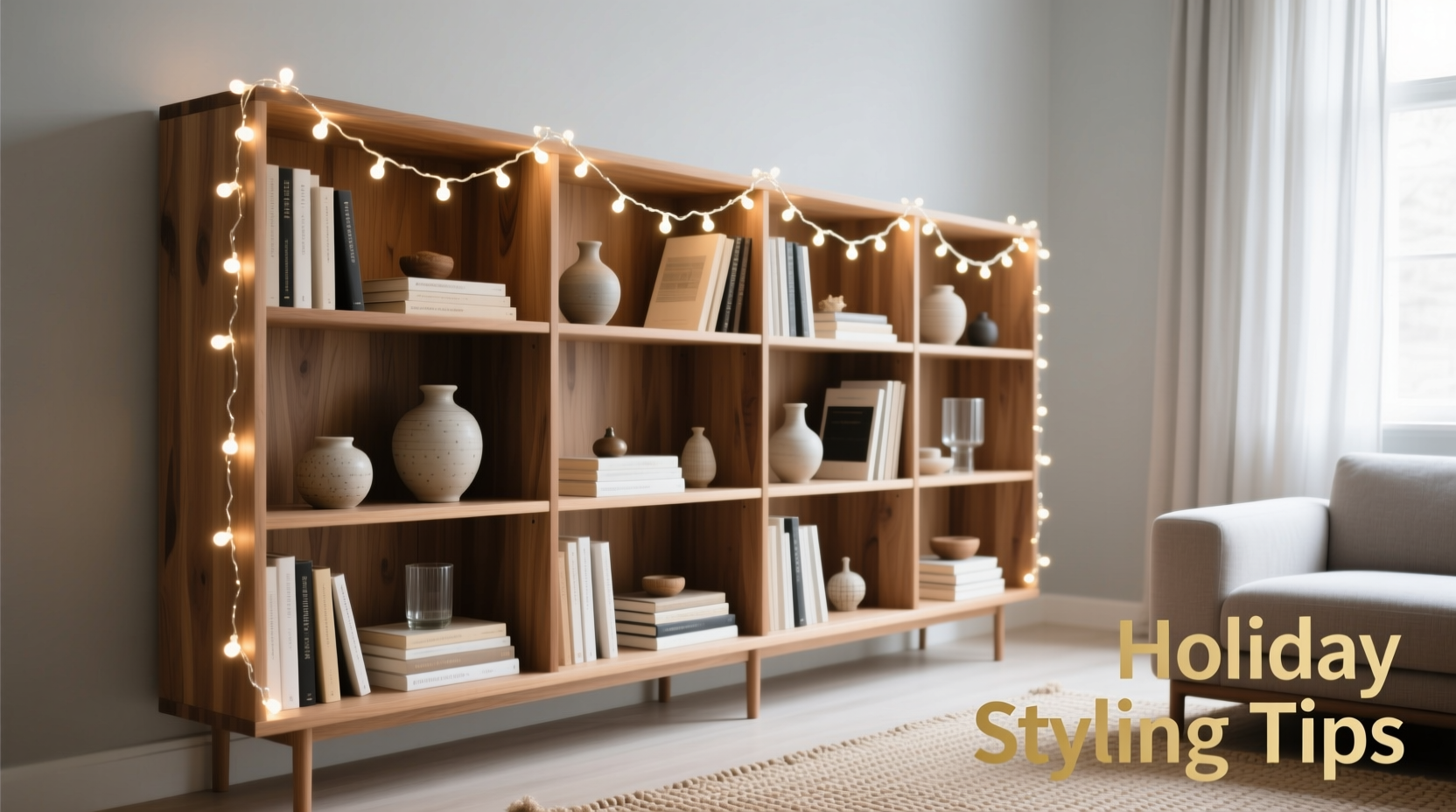
Light affects perception. Bright or excessive illumination draws attention, but uncontrolled brightness distracts. Bookshelves already contain multiple textures, colors, and forms—books, decor objects, framed photos. Introducing additional visual elements like blinking or multicolored lights increases cognitive load, making the shelf feel busy rather than inviting.
Designers often reference the “rule of three” when layering accessories: limit groupings to odd numbers and maintain negative space. The same principle applies to lighting. A few well-placed strands can create depth and rhythm, while over-lighting flattens the composition and competes with the items on display.
The goal isn’t to turn your bookshelf into a holiday display case, but to use light as an enhancer—an accent that brings out existing features, like the spine of a favorite novel or a sculptural vase, without stealing focus.
“Light should serve the space, not dominate it. On a bookshelf, subtle illumination adds atmosphere without disrupting the narrative of the objects.” — Lena Pruitt, Interior Stylist & Author of *Quiet Spaces*
Step-by-step guide to seamless light integration
Integrating Christmas lights successfully requires planning and precision. Follow this five-phase approach to ensure clarity and cohesion.
- Assess the shelf’s current aesthetic: Take everything off the shelf and evaluate its structure, color scheme, and dominant materials. Is it minimalist? Rustic? Eclectic? Your lighting style must complement—not contrast—this base.
- Select the right type of lights: Opt for warm white LED fairy lights (2700K–3000K). Avoid colored or flashing bulbs unless they align precisely with your theme. Battery-operated strands offer flexibility and eliminate visible cords.
- Determine the lighting zones: Choose one or two shelves to illuminate—typically the top or middle level. Avoid lighting every shelf, which creates visual noise. Use light to highlight specific areas, such as a curated vignette or a collection of ceramic ornaments.
- Plan the wire path: Route wires along the back edge of the shelf, securing them with clear adhesive clips or double-sided tape. Keep power sources hidden behind books or within decorative boxes. For plug-in models, use a cord cover or route the cable behind furniture.
- Test before final styling: Turn on the lights during both day and night to assess their impact. Adjust density or position if they appear too bright or distracting.
Do’s and Don’ts: A comparison table for clean execution
| Do’s | Don’ts |
|---|---|
| Use warm white LEDs – They mimic candlelight and blend naturally with wood and paper tones. | Avoid cool white or rainbow-colored strings – These clash with neutral interiors and scream “temporary decoration.” |
| Highlight a single vignette – Frame a small grouping of seasonal objects with soft backlighting. | Don’t wrap lights around every object – This turns your shelf into a department store window. |
| Hide wires meticulously – Run them behind taller books or along the rear lip of the shelf. | Never leave cords dangling – Exposed wiring breaks immersion and looks haphazard. |
| Limit coverage to 30% of the shelf – Light only select areas to preserve balance. | Don’t illuminate all shelves equally – Uniform lighting lacks hierarchy and feels institutional. |
| Use battery packs tucked inside hollow books – Disguise them with book-shaped enclosures or place them behind dense spines. | Don’t rely on bulky plug adapters – They protrude and disrupt the clean lines of the shelf. |
Real example: Transforming a mid-century modern bookshelf
Sarah, a graphic designer in Portland, wanted to add holiday warmth to her walnut West Elm bookshelf without compromising its sleek profile. She began by editing down the contents—removing knickknacks and leaving only hardcover art books, a black ceramic vase, and two framed family photos.
She selected a 16-foot string of warm white micro LEDs with a slim battery pack. Instead of draping them across the entire shelf, she focused on the second-to-top level. Behind a trio of tall books, she ran the wire horizontally and then looped six gentle coils in front of a matte gold ornament placed at the center.
The result? A soft glow emanated from behind the ornament, creating a halo effect. The light didn’t draw attention to itself—it made the ornament appear to float. At night, the shelf became a quiet centerpiece in her living room, admired by guests who assumed the lighting was built-in.
Sarah’s success came from restraint. She used only 12 bulbs out of 50 on the strand. The rest were coiled neatly behind the books, invisible but ready if she chose to expand the effect later.
Creative techniques for layered illumination
Beyond basic string lights, consider these advanced applications for refined results:
- Back-panel lighting: Attach a thin LED strip along the back wall of the shelf unit. This washes the surface evenly and makes books appear gently lit, like in a museum display.
- Under-shelf glow: Use adhesive puck lights underneath a floating shelf to cast downward ambient light, ideal for illuminating a plant or sculpture below.
- Interior shelf tracing: For glass-front cabinets, run a fine copper wire LED around the inner frame. It adds a delicate outline without interfering with the contents.
- Shadow play with silhouettes: Place a small figurine in front of a rear-mounted light source to cast a soft shadow on the wall—a subtle nod to the season without overt decor.
Checklist: Pre-installation preparation
Before touching a single bulb, go through this checklist to ensure a smooth, clutter-free installation:
- ☐ Declutter the bookshelf—remove unnecessary items to create breathing room
- ☐ Choose warm white, non-blinking LED lights (preferably battery-powered)
- ☐ Measure shelf depth and height to determine optimal strand length
- ☐ Identify where the power source will be placed and how cords will be concealed
- ☐ Test lights beforehand to confirm functionality and color tone
- ☐ Gather tools: clear adhesive clips, double-sided tape, scissors, and a spare AA battery
- ☐ Plan the layout using painter’s tape to mark wire paths temporarily
- ☐ Style the shelf first, then add lights—never the other way around
FAQ: Common concerns answered
Can I leave Christmas lights on my bookshelf year-round?
Absolutely—if they’re subtle and well-integrated. Warm white LED strands without holiday-specific shapes (like snowmen or stars) can function as permanent ambient lighting. Simply switch them off during warmer months if they no longer suit the mood.
Are fairy lights safe around books?
Yes, especially LED versions. Unlike incandescent bulbs, LEDs emit minimal heat, reducing fire risk. Always inspect wires for fraying and avoid covering lights with fabric or paper. Use battery-operated sets to eliminate electrical hazards near flammable materials.
How do I hide the battery pack?
Place it behind a thick book, inside a decorative box, or within a faux hollow book available from home goods stores. Ensure easy access for battery changes—don’t seal it permanently unless using a rechargeable model.
Expert insight: Balancing festivity and sophistication
Many clients worry about appearing “too festive” in a professional or minimalist home. The solution isn’t to avoid decorations altogether, but to elevate them.
“The most memorable holiday spaces aren’t the ones with the most lights—they’re the ones where light feels intentional. A single glowing shelf can evoke more warmth than an entire tree covered in strobes.” — Marcus Bell, Residential Lighting Consultant
Bell recommends treating Christmas lights like jewelry: a pendant enhances an outfit, but wearing ten necklaces overwhelms it. Similarly, a single illuminated shelf becomes a statement piece, while over-lighting dilutes impact.
Final thoughts: Illuminate with intention
Integrating Christmas lights into a bookshelf isn’t about adding another decoration—it’s about enhancing what’s already there. The most effective designs are those where you notice the effect but not the mechanism. When done well, the glow feels organic, like sunlight catching dust motes in an old library.
Start small. Edit ruthlessly. Prioritize harmony over spectacle. Whether you live in a studio apartment or a spacious home, a thoughtfully lit bookshelf can become the quiet heart of your holiday ambiance—one that honors both celebration and calm.




 浙公网安备
33010002000092号
浙公网安备
33010002000092号 浙B2-20120091-4
Comments
No comments yet. Why don't you start the discussion?