
Decorating is one of the most emotionally resonant parts of seasonal traditions—whether it’s stringing popcorn for a Christmas tree, arranging dried citrus slices for a fall wreath, or placing handmade clay ornaments on a mantle. Yet for many parents and caregivers, the excitement quickly curdles into anxiety: the clink of shattering glass, the crunch of ceramic under a small sneaker, the panicked silence after a beloved heirloom tumbles from a shelf. It doesn’t have to be this way. Involving children in decorating isn’t about lowering standards—it’s about rethinking structure, materials, roles, and expectations. With intentionality, you can transform what feels like a high-stakes balancing act into a meaningful, skill-building, and genuinely joyful collaboration.
Reframe the Goal: From “Ornament Preservation” to “Skill Development”
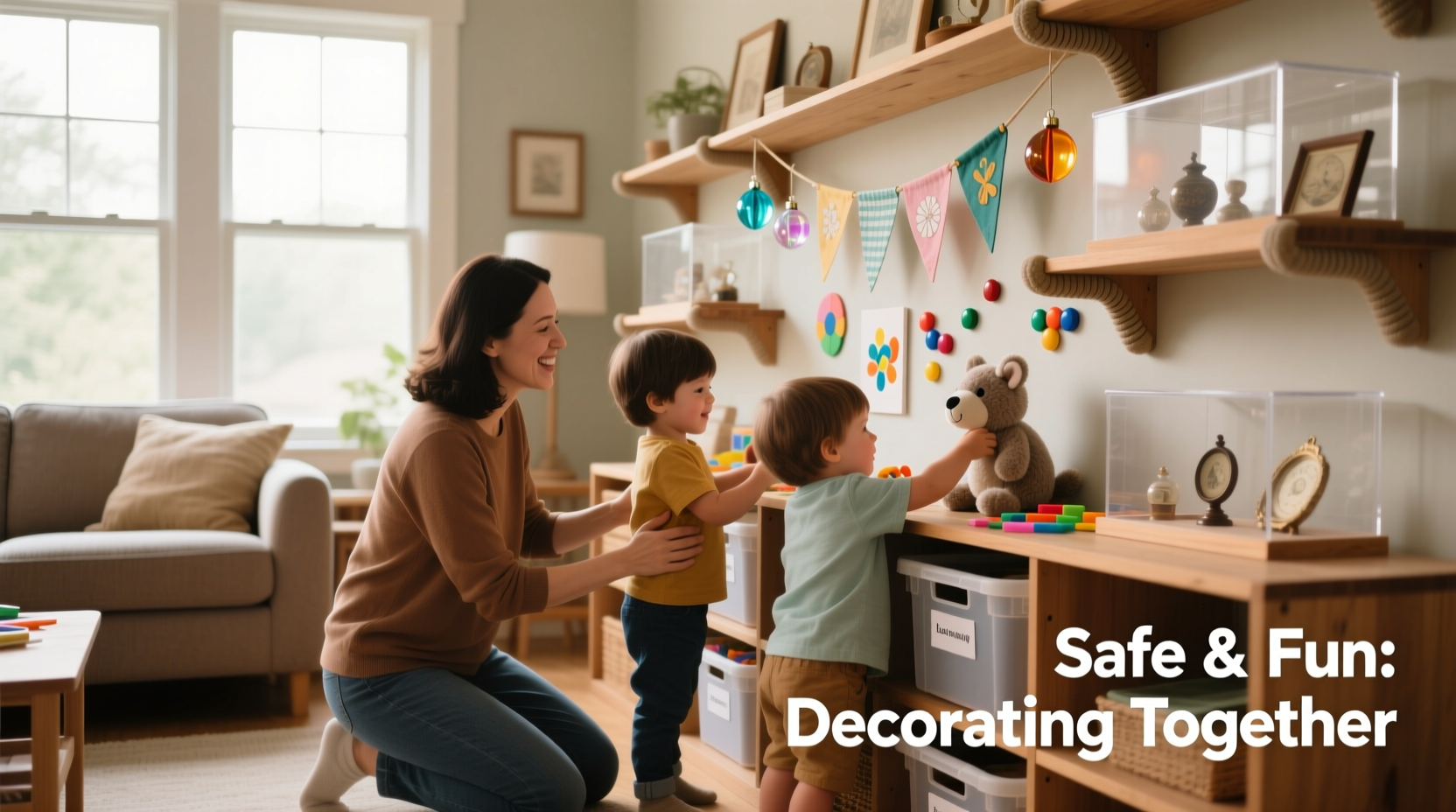
Most adults approach kid-led decorating as a risk-mitigation exercise: *How do I keep them from breaking things?* That mindset sets up a dynamic of restriction, surveillance, and correction. Instead, consider the developmental opportunities embedded in decoration: fine motor control (threading beads onto garlands), spatial reasoning (arranging objects on a tray), pattern recognition (alternating colors on a table runner), sensory integration (handling textured ribbons, pinecones, or fabric scraps), and executive function (planning where each piece goes before touching it). When you shift focus to growth—not just safety—you naturally design experiences that are both enriching and low-risk.
A Three-Tier Safety System for Fragile Spaces
Instead of banning kids from certain rooms or surfaces, implement a layered, consistent system that teaches responsibility while protecting vulnerable items. This isn’t about segregation—it’s about scaffolding autonomy.
- Zone 1: Fully Kid-Safe Zones — Designated areas (e.g., a low shelf, a felt-lined tray on the coffee table, a section of the dining table) stocked exclusively with unbreakable, washable, and developmentally appropriate materials: wooden ornaments, silicone baking mats cut into shapes, fabric scraps, large pom-poms, cork tiles, air-dry clay pieces, or smooth river stones.
- Zone 2: Supervised Co-Creation Zones — Areas where fragile items *can* be present—but only when an adult is actively guiding the interaction. Example: Hanging a single vintage glass ornament *together*, using a looped ribbon and letting the child hold the ribbon while you guide placement. The adult manages proximity, height, and pressure; the child contributes choice, voice, and attention.
- Zone 3: Fragile-Only Zones — Spaces reserved for irreplaceable or highly delicate items (e.g., grandmother’s porcelain nativity, hand-blown glass baubles, framed vintage postcards). These zones are clearly marked—not with “Do Not Touch” signs (which invite testing), but with visual cues: a velvet rope cordoned off with twine and pine boughs, a small brass bell that chimes softly if brushed, or a dedicated “museum shelf” lit with a soft LED puck light. Children help *curate* these zones by choosing which special item gets “museum status” each season—giving them ownership over preservation.
This tiered model builds awareness, not fear. Children learn that fragility isn’t arbitrary—it’s tied to material, history, and care. And because they participate in defining boundaries, they internalize them more deeply than through prohibition alone.
Material Substitution That Doesn’t Feel Like Compromise
The biggest misconception is that “kid-friendly” means cheap, flimsy, or aesthetically diminished. It doesn’t. Thoughtful material swaps preserve beauty, texture, and meaning—while eliminating breakage risk. Below is a practical comparison of common fragile decor items and their resilient, equally expressive alternatives:
| Fragile Original | Resilient Alternative | Why It Works |
|---|---|---|
| Glass ornaments | Hand-blown recycled glass look-alikes made from thick, tempered acrylic (optically clear, scratch-resistant, impact-tested) | Indistinguishable at a glance; safe for hanging, tossing (during play-based sorting games), and washing. Many are made by ethical studios supporting circular design. |
| Ceramic figurines | Cold-cast porcelain resin or kiln-fired stoneware with reinforced bases (designed specifically for homes with children) | Retains weight, detail, and matte/gloss finish—but engineered to absorb impact without shattering. Often includes subtle rubberized feet for stability. |
| Pressed-flower framed art | Laminated botanical prints mounted on reclaimed wood panels with recessed edges | No glass to break; laminated surface resists smudging and moisture; wood frame adds warmth and durability. Kids can help choose the botanical print or arrange dried petals *before* lamination. |
| Crystal candleholders | Heavy-gauge hammered brass or cast iron holders with wide, weighted bases and recessed wells | Eliminates glass entirely while elevating texture and light reflection. Heat-resistant and stable—even if nudged. Children can polish them with microfiber cloths as part of prep. |
These aren’t “just for kids.” They’re well-designed objects that belong in thoughtful, layered interiors—and many designers now specify them for hospitality spaces, schools, and multigenerational homes precisely because they marry integrity with resilience.
Real Example: The Maple Street Holiday Project
In December 2022, the Thompson family—two parents, ages 38 and 41, and three children aged 4, 7, and 10—decided to overhaul how they decorated their century-old Craftsman home. Their living room mantel held six generations of hand-blown glass ornaments, a silver-plated Victorian candlestick, and a 1920s pressed-tin advent calendar. Every year, the youngest would reach, the middle child would “help rearrange,” and the oldest would try to “fix the crooked one”—resulting in at least one broken item and tense silences around the tree.
They implemented the three-tier system over two weekends. First, they cleared the mantel and sorted items into three bins: “Museum Only” (kept in a locked cabinet except for designated viewing times), “Co-Creation” (three acrylic ornaments, one brass holder, and a set of wooden nesting boxes), and “Kid-Led Zone” (a low oak ledge beside the fireplace stocked with felt trees, wool roving, walnut shells, and beeswax crayons for drawing on reusable parchment scrolls).
Crucially, they invited the children to *design the rules*. The 4-year-old chose which ornament got the “special ribbon.” The 7-year-old drew a “no-jump zone” line on the rug with chalk (washed away weekly). The 10-year-old researched and presented a 3-minute talk on why glass breaks—and why brass doesn’t—using a simple drop-test demonstration with identical weights.
By New Year’s Eve, no items were broken. More significantly, the 7-year-old began noticing loose screws on picture frames and asking to tighten them. The 4-year-old carried her “felt tree” to the Museum Bin each evening, saying, “It’s sleeping with Grandma’s things.” Decoration became less about aesthetics—and more about stewardship, observation, and shared language.
Expert Insight: What Child Development Research Tells Us
Dr. Lena Park, pediatric occupational therapist and author of Hands-On Home: Building Competence Through Everyday Tasks, emphasizes that perceived “clumsiness” in young children is rarely about lack of coordination—it’s about underdeveloped proprioception (awareness of body position) and interoception (recognition of internal states like grip strength or urgency). “When we say a child ‘broke everything,’ what we’re often seeing is a nervous system still learning how much force is needed to lift, place, or release,” she explains. “The solution isn’t to remove objects—it’s to give them calibrated feedback loops: textured surfaces that resist slipping, weighted bases that correct wobble, and materials that make cause-and-effect visible—like a wooden bead that rolls slowly down a carved groove instead of clattering off a shelf.”
“Children don’t need fewer opportunities—they need clearer signals from the environment. A well-designed space teaches physics, respect, and care long before words ever do.” — Dr. Lena Park, Pediatric Occupational Therapist
Step-by-Step: Launching Your Kid-Inclusive Decorating Practice
Follow this sequence over 7–10 days. Each step builds competence and confidence—without rushing or overwhelming.
- Day 1–2: Audit & Categorize — Walk through each room. Photograph every fragile item. Sort into: (a) Irreplaceable (museum-only), (b) Replaceable but sentimental (co-creation candidates), (c) Functional but breakable (swap candidates), (d) Fully disposable (keep or discard). Be ruthless—sentiment shouldn’t override safety.
- Day 3: Source Alternatives — Order 3–5 resilient replacements using the table above. Prioritize items your child has already shown interest in (e.g., if they love shiny things, get hammered brass; if they’re drawn to nature, choose wood and stone).
- Day 4: Build the Zones — Install Zone 1 (kid-safe tray/shelf), mark Zone 2 (with removable washi tape or a small velvet rope), and define Zone 3 (add lighting or a subtle sign: “This shelf holds stories”). Involve kids in choosing the felt color for the tray or arranging pine boughs around the rope.
- Day 5–6: Skill-Building Prep — Practice fine motor tasks *away* from decor: threading large wooden beads, pouring rice between bowls, rolling clay into coils, wiping a chalkboard with controlled pressure. No mention of decorating yet—just building neural pathways.
- Day 7–10: Co-Creation Week — Begin with 15 minutes daily in Zone 1. Then add 5 minutes in Zone 2 with adult guidance. Document choices (“We picked the blue pom-pom first”) and reflect nightly: “What felt steady today? What surprised you?”
FAQ
What if my child still knocks something over—even in Zone 1?
That’s expected—and valuable. Use it as a moment to explore cause and effect without shame. Ask: “What happened to the pom-pom when it rolled off the edge? How could we keep it on next time?” Then co-design a solution: adding a raised lip to the tray, using double-sided tape on the bottom, or switching to a heavier material. Failure becomes data, not failure.
Can older kids (10+) handle real glass or ceramic?
Yes—if paired with explicit training and accountability. Have them research the item’s history, watch a slow-motion video of glass fracturing, and draft a “care covenant” outlining how they’ll store, clean, and supervise its use. Sign it together. Revisit quarterly. This transforms responsibility from abstract to embodied.
Isn’t this just more work for adults?
Initially, yes—about 3–4 hours of setup. But within three weeks, most families report *less* daily stress, fewer repairs, and significantly more collaborative energy. The upfront investment pays back in reduced vigilance, richer conversations, and children who begin noticing and adjusting their own movements without prompting.
Conclusion
Decorating with children isn’t about achieving perfection—it’s about cultivating presence. When a 5-year-old carefully places a walnut shell beside a brass candleholder, they’re not just arranging objects. They’re practicing attention, honoring weight and balance, learning that beauty can be both sturdy and tender, and absorbing, at a cellular level, what it means to care for something outside themselves. The fragile items you protect aren’t just decorations—they’re vessels for memory, craft, and continuity. And the children beside you? They’re not hazards to be managed. They’re emerging stewards, waiting for the right tools, the right language, and the right invitation to step into that role with dignity and delight.




 浙公网安备
33010002000092号
浙公网安备
33010002000092号 浙B2-20120091-4
Comments
No comments yet. Why don't you start the discussion?