
Avocados are a kitchen staple—creamy, nutritious, and versatile. But their tendency to turn brown within minutes of being cut is a constant frustration. Whether you're making guacamole, slicing for toast, or prepping meal prep containers, oxidation turns that vibrant green into an unappetizing brown far too quickly. Enter two popular solutions: the onion trick and lemon juice. Both claim to slow browning, but which one actually works better? And more importantly, how can you use them effectively?
This article breaks down the science behind avocado browning, compares the onion method with citrus-based protection, and provides practical, tested strategies to extend the freshness of your avocados using everyday kitchen tools.
The Science Behind Avocado Browning
When an avocado is sliced open, its flesh is exposed to oxygen in the air. This triggers a chemical reaction known as enzymatic browning. The enzyme polyphenol oxidase (PPO) reacts with phenolic compounds in the fruit, producing melanin-like pigments that cause the darkening effect.
This process isn’t harmful—brown avocado is still safe to eat—but it affects appearance, texture, and flavor over time. The good news? You can significantly delay this reaction with the right techniques.
Several factors influence the rate of browning:
- Air exposure: More surface area exposed = faster oxidation.
- Temperature: Warmer environments accelerate browning.
- pH level: Acidic environments inhibit PPO activity.
- Moisture loss: Drying out speeds up degradation.
Understanding these elements helps explain why both the onion trick and lemon juice are commonly recommended—they target different aspects of the browning process.
The Onion Trick: Does It Really Work?
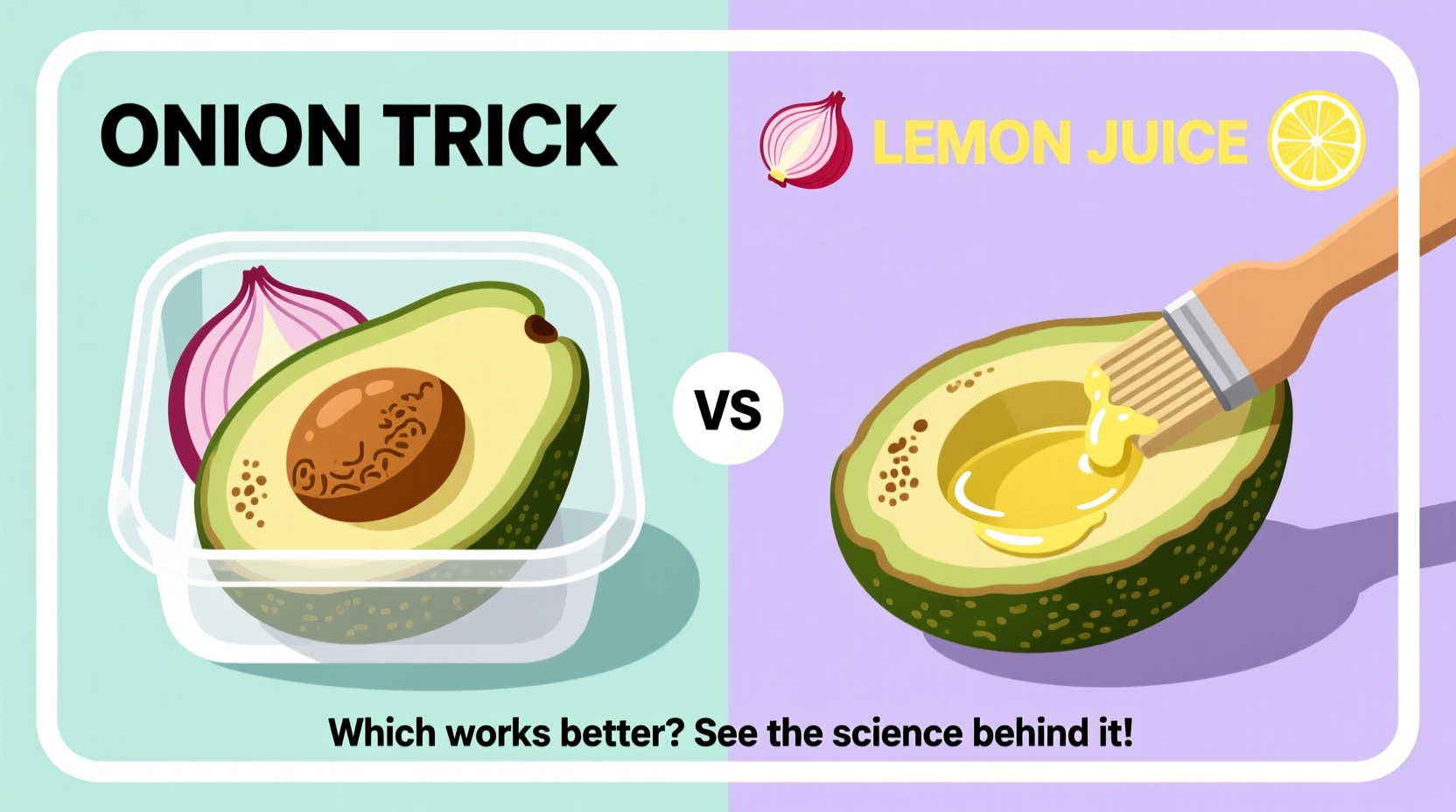
The “onion trick” involves placing a piece of raw onion—often a quartered white or red onion—in the same container as cut avocado or guacamole before refrigerating. Proponents claim the sulfur compounds released by the onion create a protective atmosphere that slows oxidation.
So, is there any truth to this?
Onions contain volatile sulfur compounds such as propanethial S-oxide, which give onions their pungent smell and tear-inducing properties. These compounds have mild antimicrobial and antioxidant effects. In theory, they could interfere with the oxidation process when concentrated in a sealed environment.
Anecdotal evidence supports this method. Many home cooks swear by storing guacamole with a halved onion, reporting noticeably slower browning after 24 hours. However, scientific validation is limited. No peer-reviewed studies conclusively prove that onions prevent avocado browning through gas diffusion alone.
That said, there may be a psychological factor at play: the strong odor of onion masks off-flavors that develop during early spoilage, giving the impression of freshness even if minimal chemical protection occurs.
Pros and Cons of the Onion Method
| Aspect | Advantage | Drawback |
|---|---|---|
| Effectiveness | Moderate; may slow browning slightly in short-term storage | Limited scientific backing; inconsistent results |
| Flavor Impact | Minimal if not mixed directly | Potential for onion aroma to permeate delicate dishes |
| Convenience | No prep needed; uses common ingredient | Takes up space in container; requires disposal later |
| Safety | Fully food-safe; no additives | Cross-contamination risk if same cutting board used |
Lemon Juice: The Citrus Shield Against Oxidation
Lemon juice is widely recognized as an effective anti-browning agent—and for good reason. Its high acidity (pH around 2.0–2.6) directly inhibits the activity of polyphenol oxidase, the enzyme responsible for browning.
In addition to lowering pH, lemon juice contains vitamin C (ascorbic acid), which acts as a reducing agent. Ascorbic acid reacts with oxygen before it can interact with the avocado’s enzymes, essentially sacrificing itself to preserve color and freshness.
Studies confirm that acidic treatments significantly delay enzymatic browning in fruits like apples, bananas, and avocados. A light coating of lemon juice—about half a tablespoon per medium avocado—is usually sufficient.
However, caution is needed. Too much lemon juice alters flavor, making the avocado overly tart or masking its natural richness. For guacamole, balance is key: lime juice (a close alternative) is often preferred because it complements traditional seasonings better.
“Acidification is one of the most reliable ways to control enzymatic browning in fruits. Lemon and lime juices offer both pH reduction and antioxidant benefits.” — Dr. Rebecca Lin, Food Scientist at UC Davis
How to Apply Lemon Juice Effectively
- Cut the avocado just before use to minimize initial exposure.
- Squeeze fresh lemon juice over the exposed surfaces immediately after cutting.
- Use approximately ½ teaspoon per half avocado—adjust based on taste preference.
- Cover tightly with plastic wrap, pressing it directly onto the surface to limit air contact.
- Refrigerate until ready to use, ideally within 24 hours.
Bottled lemon juice works, but fresh-squeezed contains higher levels of active ascorbic acid and lacks preservatives that might affect flavor.
Comparing Both Methods: Head-to-Head Analysis
To determine which method performs better, consider real-world conditions: effectiveness, ease of use, flavor preservation, and accessibility.
A mini case study illustrates this well:
Mini Case Study: Guacamole Left Overnight
Jamie prepared three batches of homemade guacamole using identical ingredients. Each was stored in a separate airtight container in the refrigerator overnight (approx. 14 hours).
- Batch 1: Stored with a quartered white onion placed on top.
- Batch 2: Mixed with 1 tablespoon of fresh lime juice (standard recipe addition).
- Batch 3: No treatment—control sample.
Results:
- Batch 3 (control) developed a thick brown layer and slight off-smell by morning.
- Batch 1 (onion) showed moderate browning—less than control but still noticeable. A faint onion scent was detectable, though flavor remained mostly intact.
- Batch 2 (lime juice) retained bright green color throughout, with only minimal surface darkening. Flavor was fresh and balanced.
Conclusion: While the onion provided some protection, the citrus-treated batch clearly outperformed it in both appearance and sensory quality.
Best Practices for Maximum Freshness
Neither method should be used in isolation. Combining strategies yields the best results. Here's a step-by-step guide to keeping avocados fresh for up to 48 hours:
Step-by-Step Guide: Prevent Browning Like a Pro
- Prep Right Before Use: Delay cutting until necessary. Whole, uncut avocados resist browning far longer.
- Use Citrus Immediately: After slicing, lightly coat all exposed surfaces with lemon or lime juice using a spray bottle or brush for even coverage.
- Minimize Air Exposure: Place the avocado halves back together, mimicking the whole fruit, then wrap tightly in plastic wrap. Alternatively, store in an airtight container.
- Add an Onion (Optional): Include a small piece of raw onion in the container if desired—but expect subtle flavor changes.
- Refrigerate Promptly: Store below 40°F (4°C). Cold temperatures slow enzymatic reactions.
- Revive When Needed: If slight browning occurs, scrape off the top layer. The flesh underneath is typically still fresh and green.
Checklist: How to Keep Avocados Fresh
- ☑ Cut avocados right before serving
- ☑ Apply lemon or lime juice immediately after cutting
- ☑ Press plastic wrap directly onto the surface
- ☑ Store in an airtight container
- ☑ Refrigerate promptly
- ☑ Consider adding an onion for extra protection (optional)
- ☑ Label leftovers with time/date for freshness tracking
Frequently Asked Questions
Does leaving the pit in prevent browning?
No—not entirely. The pit only protects the small area directly beneath it. The rest of the surface remains exposed to oxygen and will brown. However, placing the pit in guacamole adds psychological reassurance and can help reduce air pockets when combined with proper sealing.
Can I freeze avocado to prevent browning?
Yes, but texture changes occur. Freezing halts enzymatic activity, so browning stops. However, thawed avocado becomes softer and less suitable for slicing. Best used in smoothies, dips, or spreads. For optimal results, mash with lemon juice before freezing.
Is brown avocado unsafe to eat?
No. Browning is caused by oxidation, not microbial spoilage. As long as the avocado smells normal and has no slimy texture, it’s safe to consume. Scrape off discolored layers if desired for aesthetic reasons.
Final Verdict: Onion Trick vs Lemon Juice
While the onion trick has cultural popularity and anecdotal support, lemon juice (or lime juice) is scientifically superior for preventing avocado browning. Its dual action—lowering pH and providing antioxidants—directly targets the root cause of discoloration.
The onion method may offer marginal benefits due to sulfur compounds and displacement of oxygen in a sealed container, but it risks altering flavor and lacks consistent evidence. It can be used as a supplementary technique, especially in savory preparations where onion notes aren't intrusive.
For reliable, long-lasting results, always prioritize acidulation (adding citrus), airtight storage, and cold temperatures. Combine these with smart handling practices, and you’ll enjoy fresh-looking avocados well beyond the typical 30-minute window.
“The simplest solutions are often the most effective. A squeeze of lime and tight wrap do more than folklore remedies ever could.” — Chef Maria Tran, Culinary Instructor
Take Action Today
Stop throwing away half-used avocados. Start applying proven methods tonight. Reach for that lemon, press the plastic wrap down firmly, and refrigerate with confidence. Share your favorite tip in the comments—have you tried the onion trick? Did it work for you? Your experience could help others master the art of avocado preservation.




 浙公网安备
33010002000092号
浙公网安备
33010002000092号 浙B2-20120091-4
Comments
No comments yet. Why don't you start the discussion?