
Candles are more than just a source of light—they create ambiance, evoke memories, and enhance the atmosphere of any space. But nothing diminishes the experience faster than a candle that tunnels down the middle, leaving a ring of wasted wax along the edges. Tunneling not only shortens a candle’s lifespan but also reduces its fragrance output and aesthetic appeal. The good news is that this common issue is almost entirely preventable. With the right burn techniques and a bit of patience, you can enjoy an even, clean, and complete melt pool every time you light your candle.
Understanding Candle Tunneling: Why It Happens
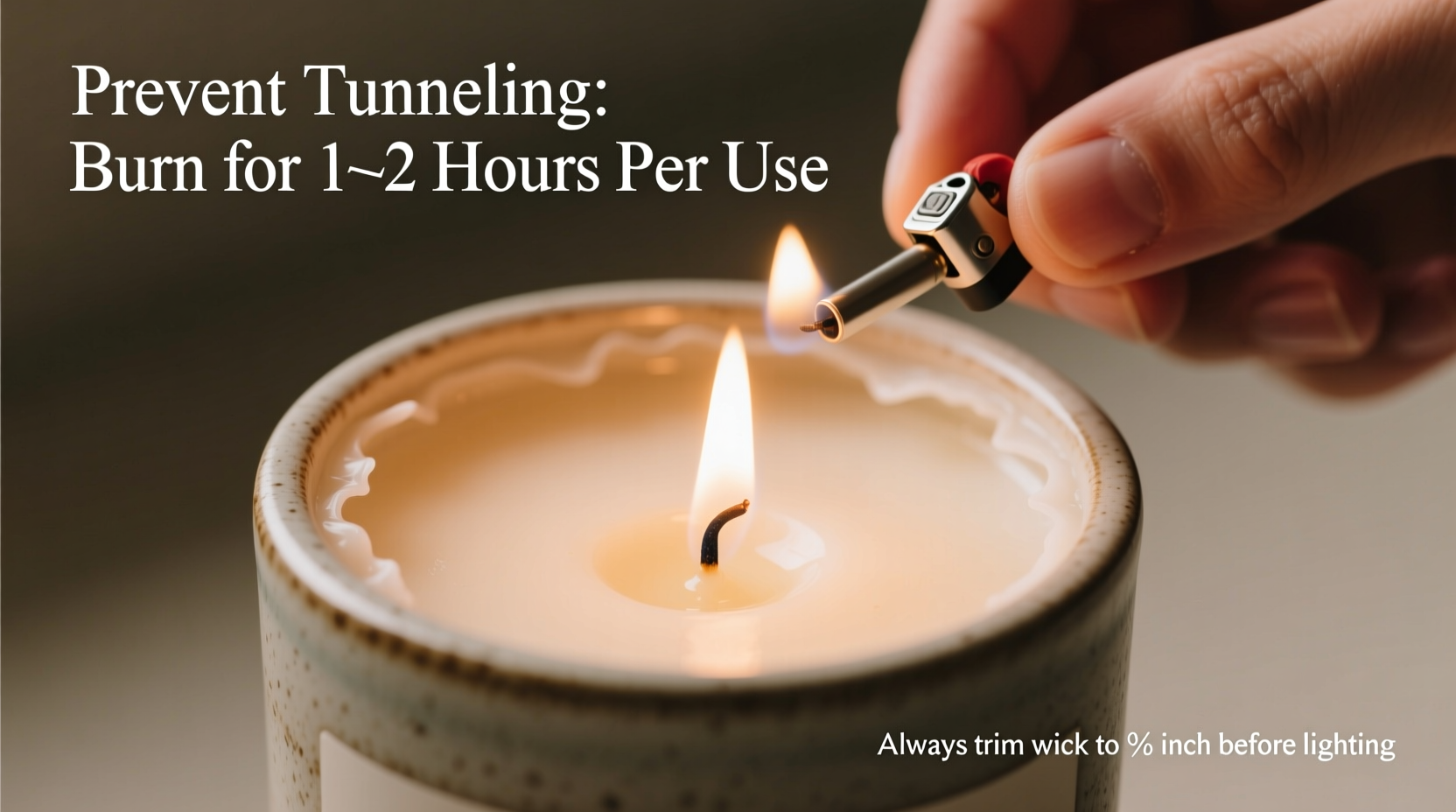
Tunneling occurs when a candle burns straight down the center, leaving hardened wax on the sides of the container. This happens because the initial burn didn’t allow the wax to melt all the way to the edges. Once a “memory ring” forms during the first burn, subsequent burns will follow the same pattern—no matter how long you let it burn later.
The root cause lies in the physics of wax melting. Most soy, paraffin, and coconut wax blends have a specific melt point. If the flame isn’t hot enough or isn’t allowed to burn long enough initially, the heat doesn’t radiate outward sufficiently to liquefy the wax at the container’s perimeter. As a result, the wick continues to consume wax only from the center, creating a deep well.
Manufacturers often recommend a first burn duration of 3–4 hours, but this varies depending on the candle’s diameter. A general rule: for every inch of diameter, the candle should burn for one hour during its first lighting. For example, a 3-inch wide candle needs about 3 hours of uninterrupted burning to establish a full melt pool.
The First Burn: Setting the Foundation
The first time you light a candle is the most critical moment in its life cycle. This is when the wax establishes its \"burn memory.\" If the wax doesn’t reach the edges during this phase, it likely never will without intervention.
To ensure a successful first burn:
- Place the candle on a level, draft-free surface.
- Allow it to burn until the entire top layer of wax has melted into a liquid pool reaching the container walls.
- This may take 2–4 hours depending on size, but never exceed 4 hours in a single session.
- Avoid extinguishing the flame prematurely—even if the room becomes warm or fragrant.
It’s tempting to blow out a candle once the scent fills the room, but doing so too soon creates a shallow melt pool. Over time, this leads to tunneling and inefficient wax use. Resist the urge. Let the candle do its job fully the first time.
“Candle care starts with patience. The first burn sets the tone for every burn that follows.” — Jordan Lee, Artisan Candlemaker & Founder of Hearth & Wick Co.
Step-by-Step Guide to Prevent Tunneling
Follow this proven sequence to maintain even burns and avoid tunneling throughout your candle’s life:
- Inspect the Wick: Before lighting, check that the wick is centered and trimmed to ¼ inch. An off-center wick can cause uneven melting.
- Trim the Wick: Use wick trimmers or nail clippers to cut the wick straight across. Long wicks produce larger flames that generate excess heat and soot, increasing the risk of overheating the center while neglecting the edges.
- Burn Until Fully Melted: Light the candle and allow it to burn until the melt pool extends to the edges. This may take several hours, but it's essential for preventing tunneling.
- Extinguish Properly: Use a wick dipper or snuffer to put out the flame. Blowing it out can send hot wax flying and disturb the cooling process.
- Let It Cool Completely: Allow the candle to harden for at least 12 hours before relighting. This resets the wax structure and prepares it for the next even burn.
- Repeat the Process: Each time you light the candle, repeat steps 1–5. Consistency is key to long-term performance.
Common Mistakes That Lead to Tunneling
Even experienced candle users sometimes fall into habits that sabotage their candles’ longevity. Here are the most frequent errors—and how to correct them:
| Mistake | Why It Causes Tunneling | How to Fix It |
|---|---|---|
| Burning for less than 1 hour | Insufficient time to form a full melt pool; memory ring forms too small | Always burn until wax reaches container edges (minimum 2+ hours) |
| Using fans or placing near vents | Drafts cool one side faster, leading to uneven melting | Keep candles away from airflow and HVAC systems |
| Over-trimming the wick (below 1/8 inch) | Flame becomes too weak to spread heat outward | Always leave 1/4 inch of wick above the wax |
| Relighting before wax fully cools | Thermal stress causes cracking and poor adhesion to glass | Wait at least 12 hours between burns |
| Ignoring wick mushrooming | Carbon buildup creates erratic flames and uneven burn patterns | Trim off blackened tips before each use |
Reviving a Already-Tunneled Candle
If you’ve already fallen victim to tunneling, don’t toss the candle yet. You can rescue it with a method called the aluminum foil technique.
Here’s how:
- Snuff out the candle and let it cool completely.
- Take a piece of aluminum foil and shape it into a collar around the rim of the jar, leaving a hole only over the wick.
- The foil traps heat and directs it toward the sides, helping the outer wax catch up to the melted center.
- Light the candle and let it burn for 2–3 hours, monitoring closely to avoid overheating.
- Remove the foil and inspect. Repeat if necessary until a full melt pool is achieved.
In extreme cases where tunneling has created deep wells, consider using a hairdryer on low heat to gently warm the outer edges before lighting. Move the dryer in circular motions around the jar to soften the wax evenly. Then light the candle and let it finish melting naturally.
“We’ve had customers revive candles they thought were doomed. With the foil trick and consistent trimming, many last twice as long as expected.” — Sarah Nguyen, Customer Experience Lead at Luminary Home Scents
Choosing Candles Designed to Resist Tunneling
Not all candles are created equal. Some brands prioritize aesthetics over function, using wicks that are too small for the vessel or low-quality wax blends that don’t flow well. When shopping, look for these features:
- Single cotton or wood wicks: These provide steady, predictable flames ideal for even melting.
- Wax type: Soy-blend and coconut-apricot waxes tend to have excellent \"wet adhesion,\" meaning they stick better to glass and melt more uniformly.
- Proper wick sizing: Reputable makers test extensively to match wick thickness to container diameter.
- Transparent labeling: Brands that list burn instructions, wax composition, and recommended usage show commitment to quality.
Avoid multiphase candles with layered colors or embedded objects unless they’re specifically designed for even burning. Decorative elements inside jars often disrupt heat distribution and increase tunneling risk.
Checklist: How to Keep Candles from Tunneling
Use this simple checklist every time you burn a candle:
- ✅ Trim wick to 1/4 inch before lighting
- ✅ Center the wick if it has drifted
- ✅ Burn for 1 hour per inch of diameter (minimum 2 hours)
- ✅ Ensure melt pool reaches container edges
- ✅ Extinguish with a snuffer or dipper—never blow
- ✅ Allow wax to cool and reharden completely (12+ hours)
- ✅ Store unused candles in a cool, dark place away from sunlight
- ✅ Clean jar rims with a paper towel to remove carbon residue
Frequently Asked Questions
Can I fix tunneling permanently once it starts?
Yes—with intervention. Using the aluminum foil method or gentle external heating can restore even melting. Once corrected, maintaining proper burn times prevents recurrence. However, repeated tunneling weakens glass adhesion and may lead to frosting or poor scent throw over time.
Is tunneling worse with certain types of wax?
Yes. Paraffin wax tends to adhere less to containers than natural waxes like soy or coconut, making it slightly more prone to tunneling if not burned correctly. Beeswax has high melt points and requires longer initial burns. Soy wax, while eco-friendly, can develop sinkholes if cooled too quickly. Each wax type demands tailored care.
How do I know when my candle is nearing its end safely?
Stop burning when there’s about 1/2 inch of wax left at the bottom. Burning beyond this risks overheating the container, which can crack or become dangerously hot. At that stage, you can scoop out remaining wax and reuse the jar—or repurpose it as a succulent planter or storage container.
Real Example: From Frustration to Full Melts
Lena, a home stylist from Portland, used to go through luxury candles quickly, frustrated that half the wax remained stuck to the sides by the time the wick drowned. She assumed it was normal—until she attended a local candle-making workshop. There, she learned about memory rings and proper burn windows.
She applied the 1-hour-per-inch rule to her next candle—a 3.5-inch jar of lavender vanilla. Instead of burning it for 30 minutes while cooking dinner, she dedicated two full evenings to letting it burn for 3.5 hours each time. The difference was immediate: a smooth, even melt pool formed, and the scent filled her apartment more consistently.
Now, Lena’s candles last nearly twice as long, and she’s teaching friends the same technique. “I wasted so much money before,” she says. “Now I actually enjoy watching them burn.”
Conclusion: Burn Smart, Enjoy Longer
Preventing candle tunneling isn’t complicated—it’s consistent. By respecting the science of wax melting and committing to proper burn practices, you extend not only the life of your candles but also the pleasure they bring. Whether you're lighting a $10 drugstore candle or a hand-poured artisan creation, the principles remain the same: trim, burn long enough, cool fully, and repeat.
Every candle deserves a fair chance to perform at its best. With these techniques, you’ll get the most out of every ounce of wax, enjoy stronger fragrance throws, and reduce waste. Start applying these methods today—and watch your candles transform from disposable decor to lasting luxuries.




 浙公网安备
33010002000092号
浙公网安备
33010002000092号 浙B2-20120091-4
Comments
No comments yet. Why don't you start the discussion?