
Hydrangeas are beloved for their lush, voluminous blooms and soft color palettes, making them a favorite in bouquets and home arrangements. But anyone who’s tried arranging freshly cut hydrangeas knows the frustration: within hours, the once-plump heads droop dramatically, losing their elegance. Unlike many flowers, hydrangeas are especially prone to rapid wilting due to their high water loss rate and porous stems. The good news? With a few simple, practical techniques, you can significantly extend their vase life—often doubling or even tripling it.
This guide reveals proven, easy-to-implement methods backed by florists and horticultural experts to help your cut hydrangeas stay fresh, firm, and vibrant for days longer than usual. From harvest timing to stem prep and hydration tricks, these hacks require no special tools—just everyday items found in most kitchens.
Why Hydrangeas Wilt So Quickly
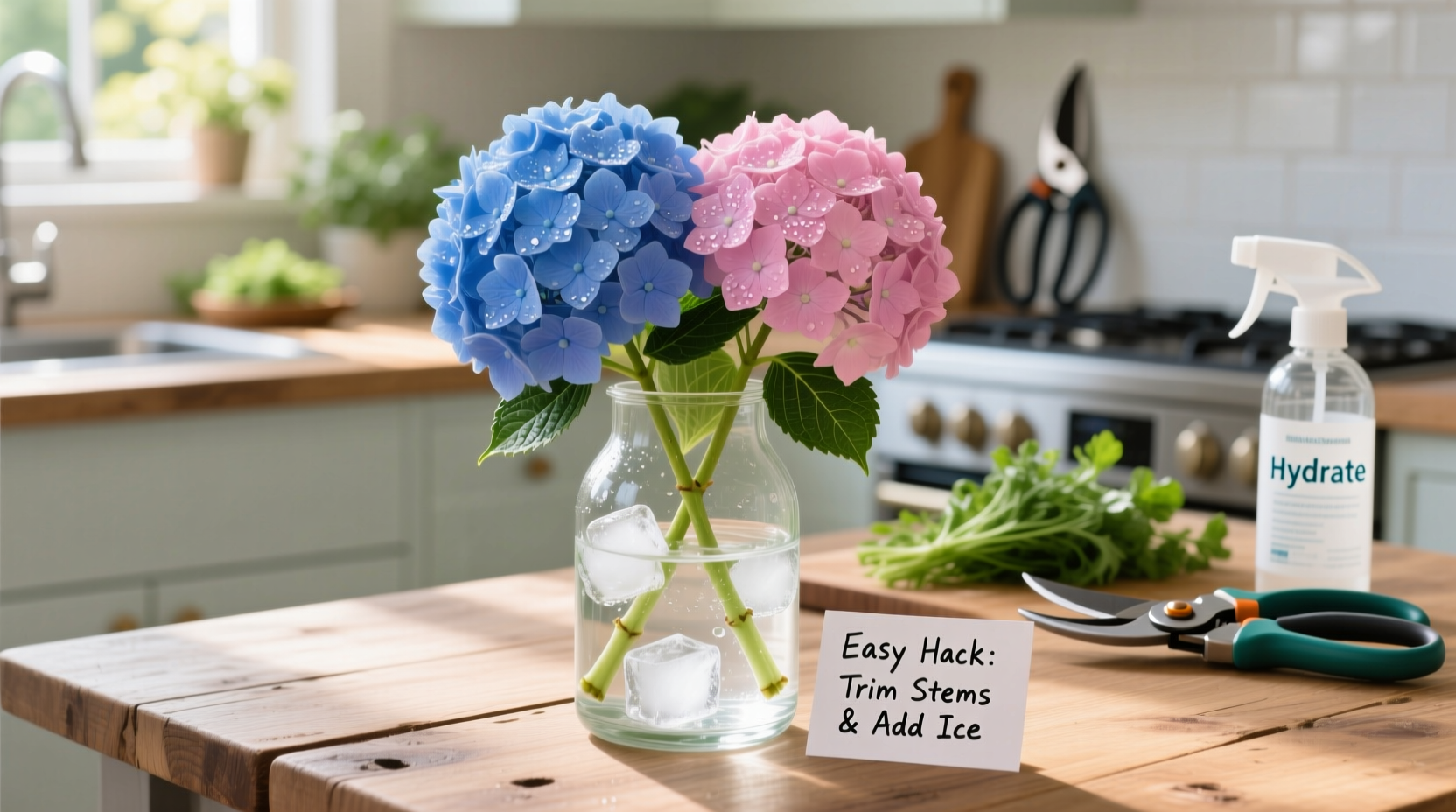
Understanding the biology behind the problem is key to solving it. Hydrangeas have large, sponge-like flower heads composed of hundreds of tiny florets. These structures lose moisture rapidly through transpiration—the natural process where water evaporates from plant surfaces. When cut, the plant can no longer pull water from roots, so maintaining internal hydration becomes critical.
Additionally, hydrangea stems contain pith—a soft, central tissue that can easily clog when exposed to air or bacteria in water. Once blocked, water uptake slows or stops entirely, leading to collapse. This is why simply placing hydrangeas in a vase often fails—they may look hydrated briefly but struggle to absorb water efficiently over time.
“Hydrangeas are among the most challenging cut flowers because they wilt not from lack of water, but from inability to take it up. Proper stem preparation is non-negotiable.” — Dr. Linda Chalker-Scott, Urban Horticulturist and Extension Specialist, Washington State University
Best Time and Method to Cut Hydrangeas
The moment you cut the stem determines how well the flower will perform in a vase. Timing, weather, and technique all play crucial roles.
Cut Early in the Morning or Late in the Evening
Avoid cutting hydrangeas during peak daylight heat. The ideal window is early morning, just after dew dries, or late afternoon as temperatures cool. At these times, plants are fully hydrated from overnight moisture absorption and haven’t been stressed by sun exposure.
Select Mature Blooms
Counterintuitively, slightly mature blooms last longer in vases than tight buds. Look for flowers that feel firm but have begun to develop a papery texture on the outer petals. These have already built structural resilience and are less sensitive to shock.
Use Sharp, Clean Tools
Always use sharp bypass pruners or scissors sterilized with rubbing alcohol. Dull tools crush stems instead of making clean cuts, damaging vascular tissues needed for water transport. A crushed stem is like a kinked hose—it restricts flow immediately.
Step-by-Step Guide to Prevent Wilting After Cutting
Follow this sequence immediately after harvesting for best results. Each step addresses a specific cause of wilting.
- Cut stems to desired length using sharp pruners. Aim for at least 6–8 inches for optimal water uptake.
- Strip lower leaves completely. Any foliage below the waterline will rot and promote bacterial growth.
- Re-cut stems underwater (in a sink or bucket). This prevents air bubbles from entering the xylem—the water-conducting channels—and ensures immediate hydration.
- Place directly into warm water (100–110°F / 38–43°C). Warm water is absorbed faster than cold and helps dissolve any stem blockages.
- Add a hydration booster (see next section) or commercial floral preservative.
- Let hydrangeas rest in a cool, dark place for 2–4 hours before arranging. This rehydration period allows full recovery from cutting stress.
This protocol mimics professional floral conditioning practices and dramatically improves longevity.
Easy Hacks to Boost Hydration and Prevent Collapse
You don’t need expensive products to keep hydrangeas fresh. These household-based solutions work by enhancing water uptake, reducing evaporation, or inhibiting microbial growth.
1. Boiled Water Dip (Most Effective Hack)
Dip the bottom inch of each stem into boiling water for 30 seconds immediately after cutting. This seals the stem end temporarily while dissolving sap and air bubbles that block water flow. After dipping, plunge into room-temperature water. Florists report this method increases vase life by up to 5 days.
2. Add Sugar and Vinegar Solution
Create a DIY preservative: mix 1 teaspoon sugar, 2 teaspoons white vinegar, and 1 quart (liter) of lukewarm water. Sugar feeds the blooms, vinegar lowers pH to improve water absorption, and both inhibit bacterial growth.
3. Use Alum Powder (Grandma’s Secret)
Available in spice aisles, alum powder acts as an antibacterial agent and stem sealant. Dissolve ¼ teaspoon in 1 cup of hot water, then dilute into a full vase. Hydrangeas treated with alum show reduced drooping and clearer stems.
4. Mist Flowers Lightly
Spritz blooms with water twice daily using a fine mist spray bottle. This reduces transpiration without soaking the petals, which can encourage mold. Avoid direct sunlight after misting to prevent scorching.
5. Seal Stems with Flame (For Woody Varieties)
Quickly pass the cut end of thick, woody hydrangea stems through a candle flame for 5–10 seconds. This cauterizes the stem, preventing air lock and sealing off tannins that block water. Let cool briefly, then place in water.
| Hack | How It Works | Effectiveness (1–5) |
|---|---|---|
| Boiled Water Dip | Dissolves blockages, removes air bubbles | ★★★★★ |
| Sugar-Vinegar Mix | Feeds flowers, lowers pH, fights bacteria | ★★★★☆ |
| Alum Powder | Antibacterial, enhances stem conductivity | ★★★★☆ |
| Underwater Recutting | Prevents embolism (airlock in stems) | ★★★★★ |
| Flame Sealing | Seals woody stems, prevents clogging | ★★★☆☆ |
Common Mistakes That Cause Immediate Wilting
Even with good intentions, small errors can sabotage your efforts. Avoid these frequent pitfalls:
- Leaving leaves in water: Submerged foliage breeds bacteria that travel up the stem and block water flow.
- Using cold tap water straight from the faucet: Cold water slows absorption. Lukewarm is more effective initially.
- Waiting too long to place in water: Exposing cut stems to air for more than a minute risks embolism.
- Placing near heat or fruit: Heat accelerates transpiration; ripening fruit releases ethylene gas, which speeds aging in flowers.
- Not changing water regularly: Stagnant water becomes a breeding ground for microbes. Change every 2 days.
Mini Case Study: Reviving a Wedding Bouquet
Sarah, a DIY bride from Oregon, prepared her own wedding bouquet using garden-grown hydrangeas. Despite cutting them the night before, she noticed severe drooping by morning. Panicked, she recalled reading about the boiling water method. She quickly recut each stem underwater, dipped ends in boiling water for 30 seconds, and placed the bouquet in warm sugar-vinegar solution. After resting in a cool hallway for three hours, the blooms rebounded completely—so much so that guests assumed they were freshly picked. The bouquet lasted six days post-wedding, far exceeding expectations.
This real-world example shows how combining multiple techniques can rescue even severely stressed flowers.
Checklist: How to Keep Cut Hydrangeas Fresh
Use this quick-reference checklist every time you cut hydrangeas:
- ☑ Cut early morning or late evening
- ☑ Choose slightly mature, firm blooms
- ☑ Use sharp, clean pruners
- ☑ Cut at a 45-degree angle
- ☑ Remove all leaves below waterline
- ☑ Recut stems underwater
- ☑ Dip in boiling water (optional but highly effective)
- ☑ Place in warm water with preservative (DIY or commercial)
- ☑ Let condition in cool, dark area for 2–4 hours
- ☑ Display away from direct sun, heat, and fruit
- ☑ Change water and re-trim stems every 2 days
Frequently Asked Questions
Can I revive wilted hydrangeas?
Yes, in many cases. Recut stems underwater, dip in boiling water for 30 seconds, and place in warm preservative solution. Leave in a cool, dark room for several hours. Most will perk up if dehydration—not decay—is the cause.
Do hydrangeas need flower food?
While not mandatory, floral preservatives greatly improve longevity. If unavailable, a homemade mix of sugar, vinegar, and a drop of bleach (½ tsp per quart) works well by feeding blooms and controlling microbes.
How long should cut hydrangeas last with proper care?
With standard care, expect 3–4 days. Using advanced techniques like boiling water dips and proper conditioning, 6–8 days is achievable. Some cultivars, like ‘Limelight’ or ‘PeeGee’, naturally last longer due to sturdier petal structure.
Final Tips for Long-Lasting Arrangements
Hydrangeas reward attentive care with stunning beauty. Beyond initial preparation, maintain freshness by keeping vases topped with treated water and avoiding placement near vents, windows, or ripening produce. For mixed bouquets, remember that hydrangeas consume more water than most flowers—check levels daily.
If arranging with other blooms, consider placing hydrangeas in their own container first to condition, then combine after they’ve stabilized. Their thirst can deplete shared water sources quickly, leaving companions dry.
“The secret to lasting hydrangeas isn’t magic—it’s mechanics. Get water into the stem, keep bacteria out, and slow down moisture loss. Everything else follows.” — Maria Thompson, Professional Floral Designer with 20+ years experience
Conclusion: Enjoy Fuller, Fresher Blooms with Simple Science
Wilting doesn’t have to be inevitable. By understanding how hydrangeas lose water and applying straightforward, science-based techniques, you can enjoy vibrant, full-headed blooms for over a week. Whether you’re harvesting from your garden or arranging store-bought stems, these easy hacks transform frustrating droops into enduring elegance.




 浙公网安备
33010002000092号
浙公网安备
33010002000092号 浙B2-20120091-4
Comments
No comments yet. Why don't you start the discussion?