
Every year, families face the same quiet crisis: the moment a toddler spots a glittering ornament dangling just within reach on the lower third of the Christmas tree—and decides it’s not decoration, but destiny. What follows is a cascade of snapped twigs, shattered glass, startled shrieks, and a sudden, very real safety hazard. It’s not just about preserving ornaments; it’s about preventing falls, eye injuries, choking risks from small parts, and the emotional toll of a destabilized tree that leans precariously after repeated tugs. This isn’t a matter of “childproofing” in the abstract—it’s about designing a tree environment that respects both developmental reality and festive intention. Children under five are naturally tactile, drawn to movement, light, and texture. Lower branches aren’t invitations—they’re irresistible sensory targets. The solution lies not in constant vigilance or authoritarian restrictions, but in thoughtful structural planning, age-appropriate engagement, and smart environmental design.
Understand Why It Happens—Before You Fix It
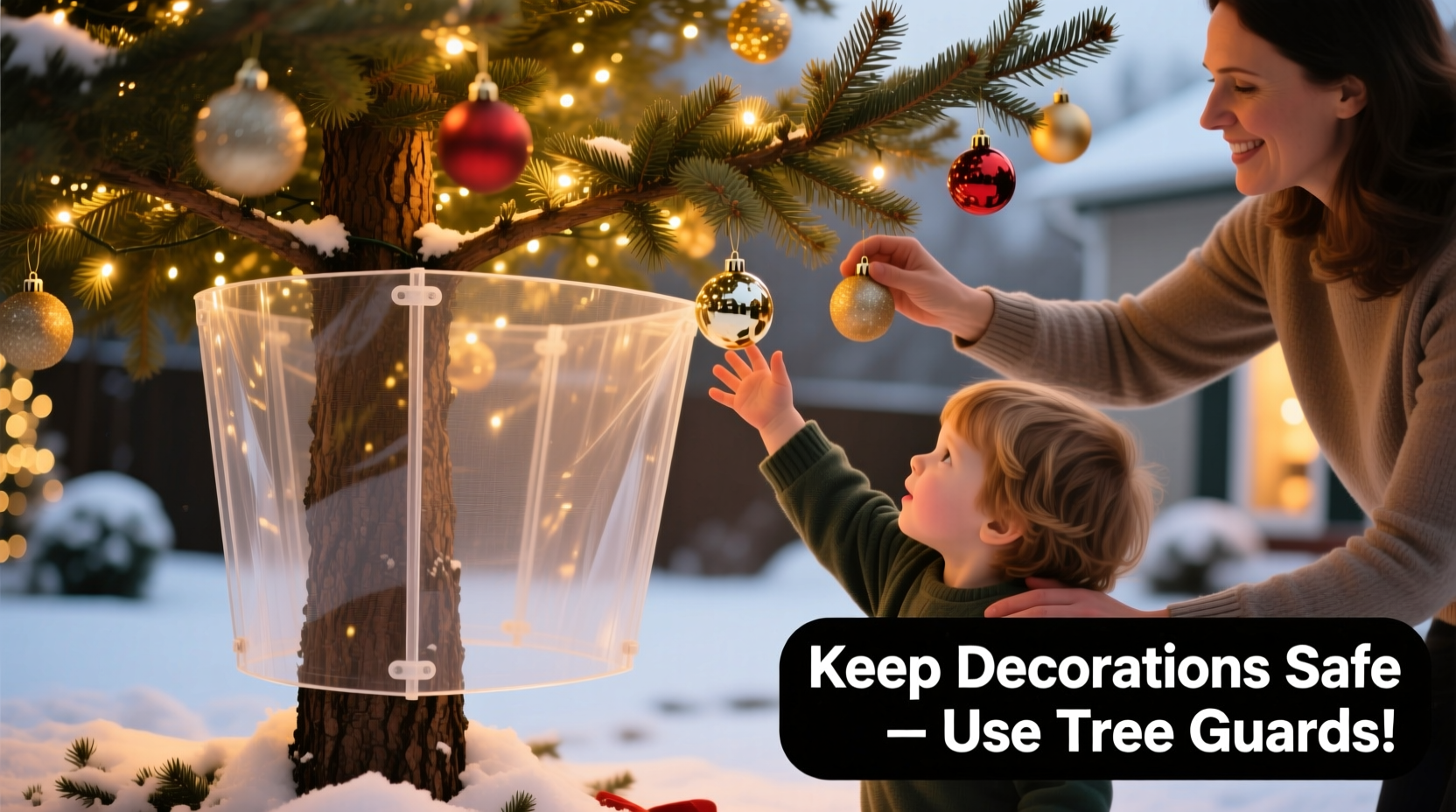
Kids don’t pull branches to be destructive. They do it because their motor development, curiosity, and sensory processing converge at that exact point: low-hanging, shiny, movable, and *just* within grasp. According to pediatric occupational therapist Dr. Lena Ruiz, “Children aged 18 months to 4 years are refining bilateral coordination and proprioceptive input—they test stability by pushing, pulling, and hanging. A flexible branch with a jingling ornament provides perfect feedback: visual (sparkle), auditory (tinkle), tactile (cool glass or smooth wood), and kinesthetic (resistance followed by give). That multisensory loop reinforces the behavior—even when adults say ‘no.’” In other words, the problem isn’t willful disobedience; it’s neurologically wired exploration meeting poorly designed access.
This understanding shifts the intervention strategy entirely. Rather than focusing solely on “stopping the pull,” effective solutions address three root drivers: accessibility (how easy it is to reach), reward (what sensory payoff the action delivers), and alternatives (what else meets those same needs safely).
Structural Reinforcement: Stabilize the Tree from the Ground Up
A wobbly tree invites testing. If the trunk sways or branches droop significantly when lightly brushed, children instinctively interpret that as permission—or challenge—to interact further. Structural integrity is your first line of defense.
Begin with the stand. Use a heavy-duty, water-filled metal stand rated for trees over 7 feet—even if your tree is smaller. Fill the reservoir completely: water adds mass and lowers the center of gravity. Anchor the stand to a wall stud using a single-loop, 300-lb-rated nylon strap (not rope or elastic) attached at the back of the base—not the trunk. This prevents forward tipping without restricting natural sway.
Next, reinforce the lower 24 inches of the trunk and primary branches. Wrap the trunk tightly—but not constrictingly—with 1-inch-wide horticultural tape or soft cotton twill tape, starting 6 inches above soil level and spiraling upward. Then, use thin, flexible but rigid aluminum armature wire (18-gauge) to create a discreet internal scaffold: twist two parallel wires vertically along the trunk, then gently wrap horizontal loops around the strongest lower branches, securing them to the verticals with floral wire twists. This doesn’t eliminate flexibility—it eliminates *excessive* bend. Test by pressing gently on a branch tip: it should yield slightly (1–1.5 inches max), then rebound cleanly.
Strategic Ornament Placement & Material Selection
Ornament placement isn’t decorative—it’s behavioral engineering. The lower 30 inches of your tree is a high-risk zone. Treat it like a safety perimeter, not a display area.
First, adopt the Rule of Three Feet: no breakable, small, or dangling ornaments below 36 inches from the floor. Instead, fill this zone with safe, engaging, non-ornamental elements that satisfy the same sensory cravings—without risk. Think: large felt pinecones stuffed with lavender, knotted wool balls in seasonal colors, or wide-rimmed wooden stars hung flush against the branch (not dangling).
When you do place ornaments within reach, choose wisely. Avoid anything with hooks, loops, or chains. Prioritize ornaments with flat backs and wide surface contact—like ceramic discs, pressed botanical slices in resin, or thick-walled blown glass with broad bases. Skip tinsel, ribbon streamers, and anything with loose beads or sequins.
| Type of Ornament | Safety Rating (1–5) | Why It Works (or Doesn’t) |
|---|---|---|
| Large fabric pomegranates (stuffed, no seams) | 5 | No small parts; soft impact; satisfies tactile need without breakage |
| Wooden slice ornaments with recessed holes (no protrusions) | 4.5 | Natural weight stabilizes branch; grain offers texture; no sharp edges |
| Shatterproof acrylic globes with integrated hanger (no separate hook) | 4 | Light-refracting but durable; hanger molded into base reduces pull points |
| Traditional glass baubles with metal hooks | 1.5 | Hook creates leverage point; glass shatters on impact; small parts risk |
| Tinsel garlands | 0.5 | Entangles easily; choking hazard if pulled loose; encourages repeated grabbing |
Engagement-Based Deterrence: Redirect, Don’t Restrict
Children who understand *why* certain actions are unsafe—and who have satisfying alternatives—comply more consistently than those simply told “don’t touch.” Engagement-based deterrence uses predictability, participation, and purpose to reduce temptation.
Create a “Touch Tree Zone” just beside the main tree—a small, child-height evergreen bough secured upright in a weighted bucket filled with sand and water. Let your child decorate it themselves with safe, washable ornaments: large pom-poms, fabric leaves with Velcro dots, or pinecone “ornaments” dipped in non-toxic glue and rolled in birdseed. Hang it at eye level, within arm’s reach, and explicitly name its purpose: “This is *your* tree to touch, shake, and explore. The big tree is for looking and admiring.” Rotate decorations weekly to maintain novelty.
Introduce ritual-based interaction: designate one daily “Ornament Check” where your child, with supervision, gently taps three specific low-hanging ornaments while naming their color and shape (“Red ball. Smooth. Cold.”). This transforms passive pulling into structured, language-rich, sensory-guided engagement—meeting the same neurological needs, but with adult scaffolding and clear boundaries.
“Children comply best when limits are paired with agency. ‘Don’t touch’ fails. ‘Here’s what you *can* touch, and how we’ll do it together’ builds competence and respect.” — Dr. Aris Thorne, Developmental Psychologist and author of Playful Boundaries
A Step-by-Step Pre-Tree Setup Checklist
Follow this sequence *before* bringing the tree indoors or placing any ornaments. Doing it in order ensures structural integrity precedes decoration—and prevents last-minute compromises.
- Assess floor surface: Place a non-slip rug pad (rubber-backed, no PVC) under the entire tree footprint. Prevents sliding during accidental bumps.
- Secure the stand: Assemble stand, fill ¾ with water, place on pad, then anchor to wall stud using nylon strap and screw-eye bolt.
- Trim and brace: Prune weak or crossing lower branches. Install aluminum armature wire scaffold (vertical + horizontal loops) on strongest remaining branches.
- Install “safe zone” elements: Hang tactile, non-breakable items on lower branches (felt shapes, wooden stars, fabric fruits) using wide, flat ribbon ties—not hooks.
- Set up the Touch Tree: Position child-height bough beside main tree. Provide 5–7 safe, washable decorations and a small stool for access.
- Establish verbal framing: With your child present, say: “We made space for your hands here. The big tree sparkles best when we look with our eyes and listen with our ears.”
Real-World Example: The Miller Family’s Two-Tree Solution
The Millers—parents of Leo (3) and Maya (18 months)—tried traditional methods for three years: sticky tape on branches, “gentle reminders,” and moving ornaments higher. Each year ended with a toppled tree on Christmas Eve. In year four, they redesigned their approach entirely. They bought a 6-foot Fraser fir and a 24-inch potted dwarf Alberta spruce. They anchored the main tree using a water-filled stand and wall strap. On the lower third, they hung only oversized, hand-sewn wool apples with embroidered stems—each stitched directly onto sturdy branch forks using waxed linen thread. Beside it, they placed the dwarf spruce in a heavy ceramic pot, decorated with large wooden buttons, knotted yarn bundles, and cinnamon stick “branches” tied with raffia. Leo was given a “Tree Helper Card” with pictures: one showing him tapping three safe ornaments, another showing him placing a button on the small tree. By Christmas morning, he’d “checked” every ornament twice and spent 47 minutes arranging cinnamon sticks on the dwarf spruce. No pulls. No breaks. No stress.
Frequently Asked Questions
Can I use fishing line or invisible thread to hang ornaments out of reach?
No. While nearly invisible, monofilament fishing line creates serious entanglement and strangulation hazards for crawling infants and toddlers. It also increases tension on branches, making them more likely to snap under pressure. Use wide, flat satin or grosgrain ribbon instead—it’s visible, soft, and distributes weight evenly.
What if my child has special needs that increase tactile seeking or impulse control challenges?
Work with an occupational therapist to co-design a sensory toolkit: weighted lap pads for tree-time, chewable necklace options for oral-seeking, or a designated “tree fidget box” with textured stones, silicone rings, and scented pinecones. Prioritize deep-pressure input (e.g., a firm hug before approaching the tree) over verbal redirection alone.
Is it okay to use baby gates around the tree?
Only as a short-term, transitional measure—not a permanent solution. Gates teach avoidance, not understanding. Use them *only* during unsupervised moments (e.g., while cooking), and always pair with parallel engagement: bring the Touch Tree into the gated area so the boundary feels inclusive, not punitive.
Conclusion: Safety, Joy, and Shared Wonder Are Not Mutually Exclusive
Keeping kids from pulling down lower tree branches isn’t about building a fortress around tradition—it’s about expanding the definition of celebration to include every member of the family, at their developmental stage. When you stabilize the structure, thoughtfully curate what hangs within reach, and invite genuine participation through safe alternatives, you transform a potential hazard into a shared learning experience. You teach observation, respect for fragility, and the quiet satisfaction of caring for something beautiful together. The ornaments remain intact—not because they’re out of reach, but because their value has been made visible in new ways. The branches stay upright—not because they’re rigid, but because they’re supported. And your children? They don’t just learn not to pull. They learn how to wonder, how to participate, and how to hold space for beauty without needing to hold it in their hands.




 浙公网安备
33010002000092号
浙公网安备
33010002000092号 浙B2-20120091-4
Comments
No comments yet. Why don't you start the discussion?