
Fireworks are a spectacle for humans but can be terrifying for cats. The sudden loud booms, flashing lights, and unpredictable rhythms trigger intense fear in felines, whose hearing is far more sensitive than ours. Unlike dogs, cats rarely vocalize their distress—instead, they may hide, freeze, or flee. While medication might seem like an easy fix, many owners prefer natural, non-invasive methods to comfort their pets. Fortunately, there are multiple evidence-backed, humane ways to reduce your cat’s anxiety during firework events without resorting to drugs.
Understanding your cat’s stress response is the first step toward helping them cope. Cats rely heavily on routine and control over their environment. When fireworks disrupt that sense of safety, their nervous systems go into overdrive. The goal isn’t to eliminate the noise—but to minimize its impact by creating a secure, predictable space where your cat feels protected.
Create a Safe Indoor Sanctuary
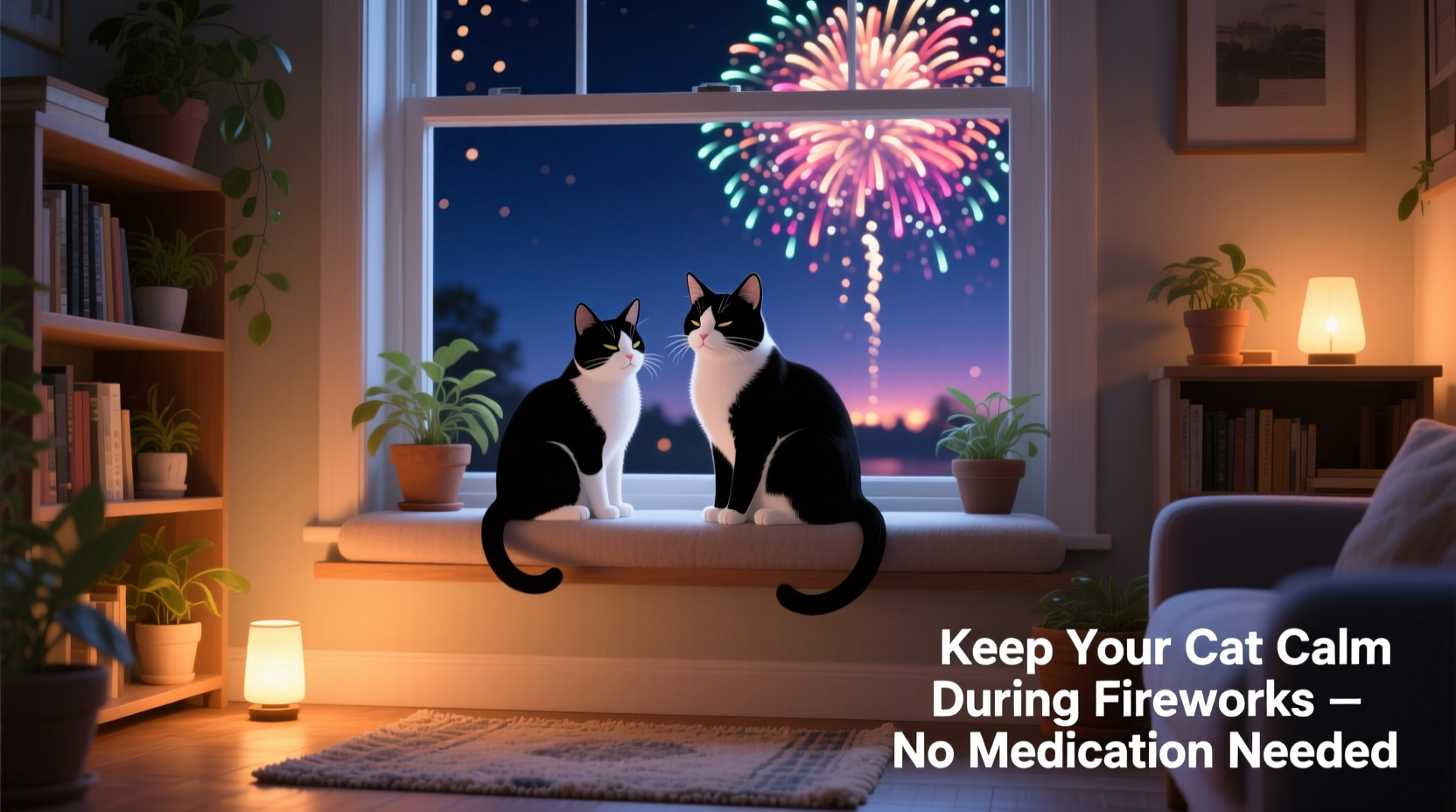
The foundation of any successful firework plan is a designated safe zone. This should be a quiet, interior room—preferably windowless—where external stimuli are minimized. Bathrooms, closets, or spare bedrooms work well, especially if they’re away from outdoor walls and doors.
Equip this space with everything your cat needs: fresh water, clean litter, familiar bedding, and favorite toys. Include items that carry your scent, such as a recently worn sweater or blanket, to provide emotional reassurance. The idea is to make this area so inviting and comfortable that your cat chooses to stay there voluntarily when fireworks begin.
Soundproofing helps significantly. Close all windows and curtains, and use thick towels or blankets at door gaps to muffle noise. Consider placing a heavy bookshelf against the wall facing the street to dampen sound vibrations. Even small changes in acoustics can reduce the perceived intensity of explosions.
Use Sound Masking and Calming Audio
Cats hear frequencies up to 65 kHz—nearly double that of humans—making firework blasts painfully sharp. One of the most effective non-medical tools is auditory masking: replacing frightening sounds with soothing, predictable ones.
Play calming music specifically designed for cats. Studies have shown that species-appropriate music—featuring tempos and frequencies aligned with feline physiology—can lower heart rates and reduce anxiety. Classical music, particularly slower compositions, also works well. Avoid sudden volume changes or high-pitched melodies.
White noise machines, box fans, or even a running air purifier can create a consistent background hum that buffers abrupt noises. Some pet owners report success using audiobooks or talk radio, as the human voice provides a grounding presence.
“Environmental enrichment through sound can significantly reduce stress markers in cats during loud events.” — Dr. Sarah Ellis, Feline Behavior Scientist, University of Lincoln
Implement a Pre-Fireworks Routine
Timing matters. Waiting until fireworks start to act means your cat is already in fight-or-flight mode. Instead, begin preparations hours in advance.
Feed your cat earlier than usual. A full stomach promotes relaxation and reduces pacing or agitation. Follow feeding with gentle play to burn off excess energy. Use interactive toys like feather wands or laser pointers to engage their hunting instincts in a controlled way. End the session with cuddles or grooming to reinforce security.
By the time fireworks begin, your cat should be physically tired and mentally settled. This pre-event routine establishes predictability, which counteracts the chaos outside.
Step-by-Step Timeline: 6 Hours Before Fireworks
- 6–4 hours prior: Feed your cat their main meal.
- 4–2 hours prior: Engage in 10–15 minutes of active play.
- 2 hours prior: Offer treats or a food puzzle to stimulate mental focus.
- 1 hour prior: Turn on calming music or white noise.
- 30 minutes prior: Close windows, draw blinds, and activate indoor lighting to reduce visual flashes.
- When fireworks start: Stay calm and present. Avoid excessive petting, which can signal that danger is present.
Behavioral Support Techniques
Your own demeanor plays a crucial role. Cats are highly attuned to human emotions. If you’re anxious, they’ll sense it. Move slowly, speak softly, and maintain a steady routine. Do not force interaction—if your cat hides, respect their need for space.
Some cats respond well to pressure-based calming aids like snug-fitting vests (e.g., Thundershirt), which apply gentle, constant pressure similar to swaddling. While research on their efficacy in cats is limited, anecdotal reports suggest reduced trembling and pacing in some individuals.
Avoid common mistakes such as:
- Picking up a hiding cat to “reassure” them (this increases stress).
- Yelling or punishing fearful behavior (this deepens trauma).
- Trying to lure them out with treats during active fireworks (wait until the event ends).
Desensitization and Long-Term Training
For recurring firework seasons (e.g., Fourth of July, New Year’s Eve), consider long-term behavioral training. Desensitization involves gradually exposing your cat to recorded firework sounds at low volumes, paired with positive experiences like treats or play.
Start weeks in advance. Play a firework audio track at barely audible levels while engaging in normal activities. Over several days, very slowly increase volume only if your cat shows no signs of distress. Never rush the process. The goal is to build tolerance, not test limits.
This method works best when combined with counter-conditioning—teaching your cat to associate fireworks with something positive. For example, offer a special treat or open a new toy only during playback sessions. Over time, the sound becomes a predictor of good things, reducing fear.
“Desensitization requires patience, but even modest progress can make a dramatic difference in acute stress responses.” — Dr. Karen Overall, Veterinary Behavioral Medicine Specialist
Checklist: How to Prepare for Fireworks Season
- ✅ Identify a quiet, secure room in your home.
- ✅ Stock it with food, water, litter, and familiar scents.
- ✅ Test soundproofing methods (closed doors, white noise, etc.).
- ✅ Download cat-calming music or white noise playlists.
- ✅ Begin desensitization training 4–6 weeks before major events.
- ✅ Schedule play and feeding routines to end before fireworks start.
- ✅ Keep ID tags and microchip information updated in case of escape.
Do’s and Don’ts During Fireworks
| Do | Don't |
|---|---|
| Stay calm and move slowly. | Panic or raise your voice. |
| Provide access to hiding spots. | Force your cat out of hiding. |
| Use background noise to mask booms. | Turn on loud or erratic TV/audio. |
| Offer favorite toys or puzzles. | Introduce new or stimulating toys. |
| Keep windows and blinds closed. | Let your cat near open windows or balconies. |
Real Example: Luna’s Firework Survival Plan
Luna, a 3-year-old domestic shorthair, used to bolt under the bed every time fireworks went off, refusing food and litter for hours. Her owner, Maria, decided to take a proactive approach ahead of New Year’s Eve.
Two months prior, Maria began playing low-volume firework recordings during Luna’s dinner time. She used a puzzle feeder filled with tuna paste, making the sound a cue for a reward. Over six weeks, she gradually increased the volume while monitoring Luna’s body language—ears forward and relaxed meant progress; flattened ears meant she backed off.
On New Year’s Eve, Maria set up a safe room with soft lighting, a heated pad, and calming music. She played a playlist blending classical piano with nature sounds. When fireworks started nearby, Luna initially darted under the bed—but within 15 minutes, she emerged, ate a treat, and curled up beside Maria.
It wasn’t perfect, but it was a breakthrough. No medication, no vet visit—just consistency and empathy. By the next holiday season, Luna barely flinched.
Frequently Asked Questions
Can I leave my cat alone during fireworks?
It’s best not to. Cats may injure themselves trying to escape (e.g., breaking through screens). If you must leave, prepare the safe room in advance, leave calming audio on, and ensure all escape routes are blocked. Consider asking a trusted friend to check in.
What if my cat hides and won’t come out?
Let them stay hidden. Forcing them out increases stress. Wait until the noise stops, then gently coax them with treats or a familiar voice. Ensure food, water, and litter are nearby so they don’t have to emerge prematurely.
Are there natural supplements that help?
Some cat owners use products containing L-theanine, chamomile, or pheromones (like Feliway) to support calmness. These aren’t medications but may help mildly anxious cats. Always consult your vet before introducing supplements, especially if your cat has health conditions.
Final Thoughts: Empathy Is the Best Medicine
Your cat doesn’t understand fireworks—they only know that the world has become loud, bright, and dangerous. In those moments, your role isn’t to fix the noise, but to be a steady presence in the storm. Small, thoughtful actions—preparing a quiet room, playing soft music, maintaining routine—add up to profound comfort.
You don’t need pills or gadgets to help your cat feel safe. What they need most is predictability, privacy, and your quiet confidence. With planning and compassion, you can turn a night of terror into one of trust.




 浙公网安备
33010002000092号
浙公网安备
33010002000092号 浙B2-20120091-4
Comments
No comments yet. Why don't you start the discussion?