
Cats scratch. It’s not mischief—it’s instinct. They do it to shed old claw sheaths, mark territory with scent glands in their paws, stretch muscles, and relieve stress. When a new sofa arrives, its fresh fabric can be irresistibly tempting. But replacing upholstery every few months isn’t practical or affordable. The good news? You don’t need chemical sprays to protect your furniture. With thoughtful environmental design, behavioral redirection, and consistent training, you can preserve your sofa while honoring your cat’s natural needs.
Understand Why Cats Scratch Furniture
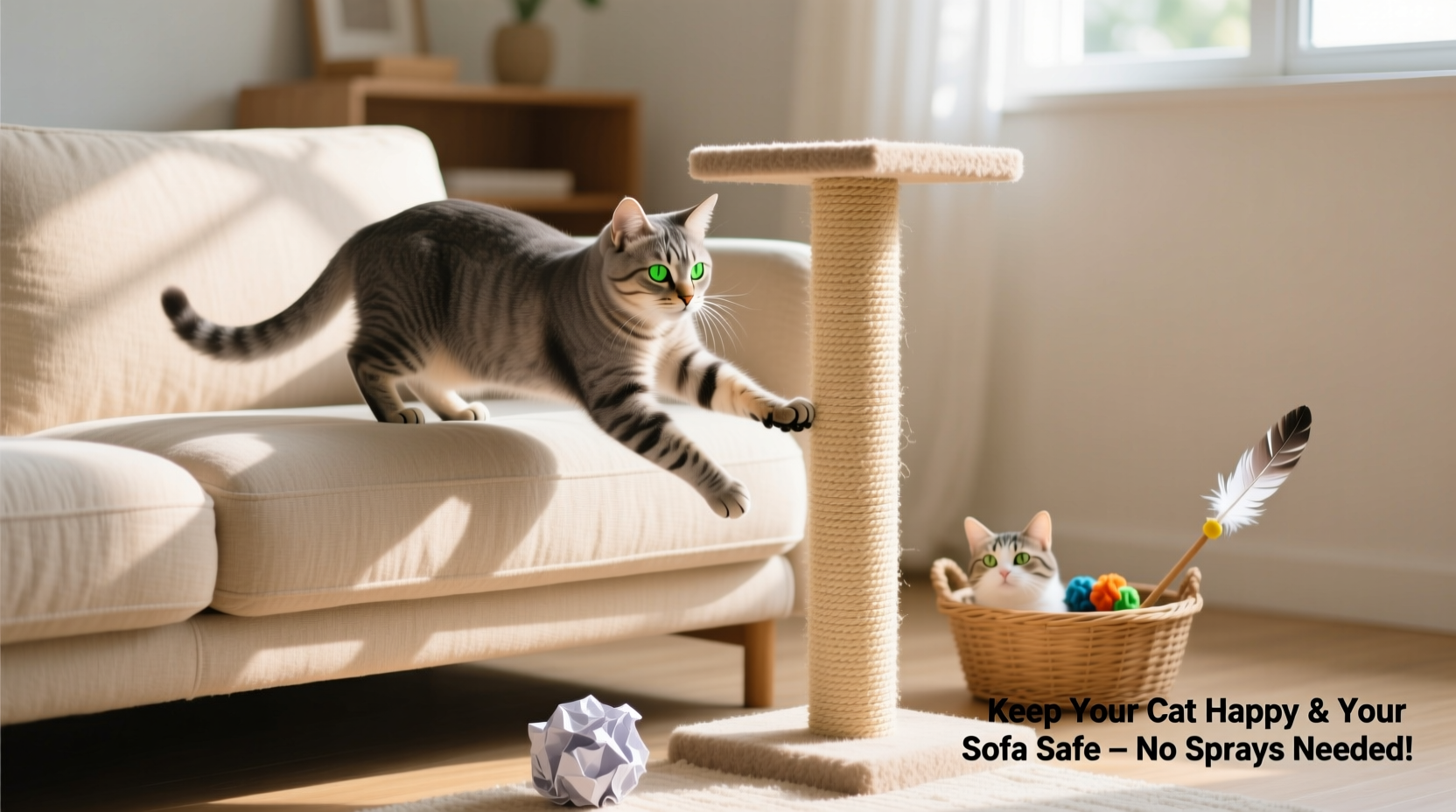
Before addressing the behavior, it helps to understand what drives it. Scratching is not an act of defiance. It serves multiple biological purposes:
- Physical maintenance: Regular scratching removes dead outer layers of claws, keeping them sharp and healthy.
- Scent marking: Cats have scent glands between their paw pads. Each swipe deposits pheromones, signaling safety and ownership.
- Stretching and exercise: The full-body extension during scratching supports joint flexibility and muscle tone.
- Emotional regulation: Scratching can be calming—especially during transitions, stress, or excitement.
When a cat targets a new sofa, it’s often because the texture, height, or location makes it ideal for these functions. A tall backrest allows for maximum reach; tightly woven fabric offers satisfying resistance. Blaming the cat misses the point: the environment is inviting the behavior.
“Cats don’t destroy furniture out of spite. They respond to opportunities. Remove the opportunity, and you redirect the behavior.” — Dr. Sarah Thompson, Feline Behavior Consultant
Provide Superior Alternatives to Sofa Scratching
The most effective long-term solution is not punishment but substitution. Offer better options that fulfill the same needs—only more effectively than the sofa.
Choose the Right Scratching Posts
Not all scratching posts work. Many commercial models are too short, wobbly, or covered in unappealing materials. For real success, consider these features:
| Feature | Ideal Choice | Avoid |
|---|---|---|
| Height | At least 30 inches (tall enough for full stretch) | Short posts under 24 inches |
| Stability | Heavy base or wall-mounted | Wobbly or tipping models |
| Material | Sisal rope, corrugated cardboard, or natural wood | Plush carpet covers |
| Orientation | Vertical for stretching, horizontal for paw swipes | Only one type |
Place vertical posts near the sofa—at least within three feet. Horizontal scratchers (like cardboard slabs) work well near resting areas. Rotate locations slightly over time to encourage exploration.
Make Alternatives Irresistible
Even the best post won’t help if ignored. Increase appeal by:
- Rubbing dried catnip or silver vine on the surface weekly.
- Dangling toys from the top to encourage batting and climbing.
- Using pheromone diffusers like Feliway Classic nearby to create a sense of security.
- Priming the post with a few initial scratches using your fingers to simulate use.
Modify the Sofa Environment Strategically
While offering alternatives is key, altering the sofa itself—without sprays—can reduce temptation. The goal isn’t to punish, but to make the surface less appealing through texture, access, and positioning.
Use Physical Deterrents
Cats dislike certain textures under their paws. These temporary barriers discourage contact without harming the animal:
- Aluminum foil: Temporarily cover high-scratch areas. The crinkling sound and cold feel deter most cats within days.
- Double-sided tape: Apply non-toxic adhesive strips (e.g., Sticky Paws) along armrests. Cats hate sticky paws.
- Plastic runners: Clear carpet protectors with nubby surfaces work well on corners and backs.
These are not permanent fixes but tools to buy time while your cat adapts to new scratching habits.
Change Access and Positioning
Reevaluate where the sofa sits. If it’s near a window or doorway—a common marking zone—consider repositioning it slightly. Even a six-inch shift can disrupt routine. Alternatively, block direct access with a small plant stand, ottoman, or room divider. Create a “buffer zone” that forces the cat to reconsider before jumping up.
Use Soft Covers and Slipcovers
Invest in a washable, textured slipcover made of canvas, denim, or microfiber. These fabrics are less enticing than soft weaves like chenille or velvet. Some owners use reversible covers—one side smooth, the other rough—to rotate based on behavior. Over time, as the cat adjusts, you can phase out the cover entirely.
“We switched to a tight-weave linen slipcover and placed sisal posts at both ends of the couch. Within two weeks, the scratching shifted completely.” — Lena M., Portland cat owner
Train Through Positive Reinforcement and Routine
Behavior change requires consistency. Cats learn through repetition and reward. Use daily routines to reinforce desired habits.
Step-by-Step Guide: Redirecting Scratching Behavior
- Observe patterns: Note when and where scratching occurs (e.g., after waking, before meals).
- Place posts nearby: Install a sturdy scratching post within arm’s reach of the targeted sofa area.
- Interrupt gently: If you catch your cat mid-scratch, clap softly or say “no” in a calm voice—do not shout.
- Redirect immediately: Guide the cat to the post and mimic scratching with your fingers.
- Reward use: Give a treat, praise, or play session only when they use the post.
- Repeat daily: Continue for at least 2–3 weeks until the behavior stabilizes.
Timing is crucial. Rewards must follow within seconds of the desired action to create association. Delayed praise won’t register as reinforcement.
Build a Daily Scratch Routine
Treat scratching like brushing teeth—something done regularly. At predictable times (e.g., morning and evening), take your cat to the post and encourage use with toys or treats. Over time, this becomes habit. Some owners attach a feather toy to the top of the post and engage in brief play sessions right after scratching, linking the activity with fun.
Checklist: Non-Spray Sofa Protection Plan
Follow this checklist to safeguard your new sofa without sprays:
- ✅ Install at least two sturdy scratching posts (vertical and/or horizontal)
- ✅ Place posts near the sofa and in high-traffic zones
- ✅ Use double-sided tape or aluminum foil on tempting spots (temporarily)
- ✅ Cover vulnerable areas with textured slipcovers or plastic runners
- ✅ Reward correct scratching with treats or affection
- ✅ Interrupt unwanted scratching calmly and redirect immediately
- ✅ Rotate scratcher types (cardboard, sisal, wood) monthly to prevent boredom
- ✅ Trim front claws every 2–3 weeks to reduce damage potential
Real Example: How One Household Saved Their Couch
The Rivera family replaced their old sectional with a sleek navy microfiber model. Within days, their 3-year-old tabby, Milo, began shredding the left armrest. They refused to use sprays due to allergies. Instead, they took a multi-pronged approach:
They bought a 36-inch sisal-wrapped post and placed it beside the sofa, attaching a dangling mouse toy. They covered the armrest with a transparent plastic carpet runner for one week. Each morning, they guided Milo to the post, mimicked scratching, and gave a treat. They also started trimming his claws biweekly.
By day 10, Milo used the post independently. By week 4, the plastic was removed, and no further damage occurred. The key, they said, was consistency—not just among adults, but including their children in the routine.
Frequently Asked Questions
Can I train an older cat to stop scratching the sofa?
Yes. While kittens learn faster, adult cats adapt well when motivation and alternatives align. Older cats may resist change initially, but with patience and rewards, behavior shifts are possible at any age.
What if my cat ignores the scratching post completely?
Try changing the material or location. Some cats prefer cardboard over sisal. Others favor horizontal surfaces. Experiment with placement near sleeping areas or sunny spots. Rubbing silver vine or catnip on the post can boost interest.
Is declawing a viable option to protect furniture?
No. Declawing is a painful surgical procedure involving amputation of the last bone in each toe. It’s banned in many countries and discouraged by veterinary associations. It can lead to chronic pain, litter box avoidance, and aggression. Humane alternatives always exist.
Final Thoughts: Coexistence Is Possible
Protecting your new sofa doesn’t require war against your cat. It requires understanding. When you meet your cat’s instinctual needs in acceptable ways, destruction becomes unnecessary. The goal isn’t to suppress nature, but to channel it appropriately.
Start today: assess your cat’s current scratching spots, invest in one high-quality post, and begin rewarding better choices. Small, consistent actions yield lasting results. Your sofa—and your feline companion—will thank you.




 浙公网安备
33010002000092号
浙公网安备
33010002000092号 浙B2-20120091-4
Comments
No comments yet. Why don't you start the discussion?