
Cats are naturally curious, agile, and drawn to elevated spaces. The dining table, often at just the right height and covered in enticing scents from meals, becomes a prime target for exploration. While many pet owners default to spray bottles as a deterrent, this method can damage trust, increase anxiety, and fail to address the root cause of the behavior. More importantly, it’s not necessary. With thoughtful environmental management, consistent training, and an understanding of feline psychology, you can effectively keep your cat off the dining table—without resorting to fear-based tactics.
This guide explores humane, science-backed strategies that respect your cat’s instincts while setting clear boundaries. Whether your cat is jumping up during meals or lounging on clean tablecloths, these methods focus on redirection, enrichment, and consistency.
Understanding Why Cats Jump on Tables
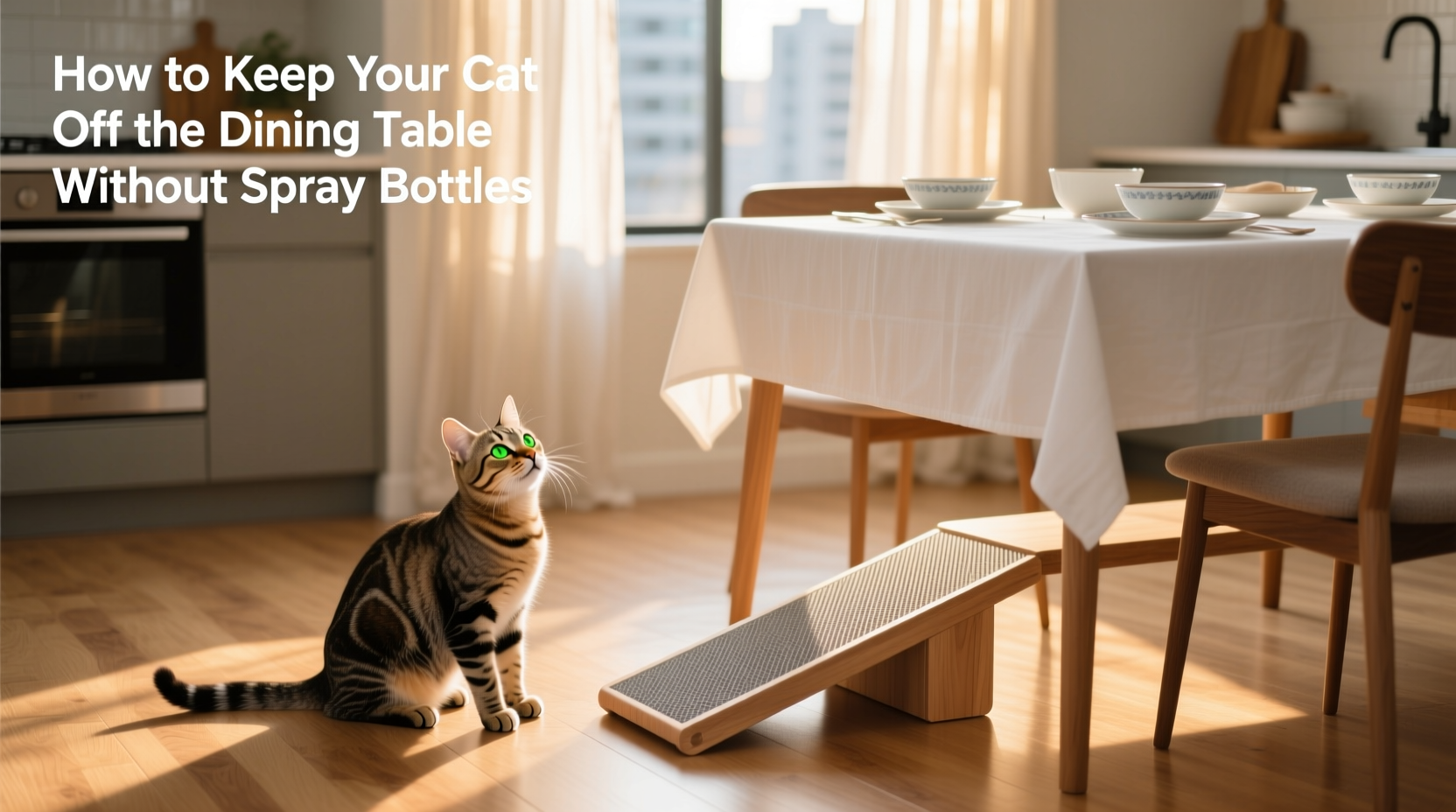
To solve any behavioral issue, it helps to understand the motivation behind it. Cats don’t jump on dining tables to annoy their owners—they do so because the behavior serves a purpose from their perspective.
- Elevation and Observation: Cats instinctively seek high vantage points to monitor their territory. A dining table offers a central view of household activity.
- Food Exploration: If meals are regularly eaten at the table, cats associate it with food smells and potential scraps.
- Attention-Seeking: Some cats learn that getting on the table triggers a reaction—even if it’s negative—which reinforces the behavior.
- Comfort and Warmth: A freshly wiped table may still hold residual warmth from dishes, making it an appealing spot to rest.
- Lack of Alternatives: If there are no better perches or play areas nearby, the table becomes the default option.
Addressing these underlying motivations is far more effective than simply trying to scare the cat away.
Effective Alternatives to Spray Bottles
Spray bottles rely on startling the cat, which can lead to stress-related behaviors like inappropriate elimination or hiding. Instead, use proactive, non-aversive techniques that teach desired behaviors through positive association and environmental control.
1. Provide Superior Alternatives
Cats will choose comfort and convenience. If you offer a more appealing perch nearby, they’ll naturally gravitate toward it.
- Place a cat tree or shelf near the dining area but at a slightly higher elevation.
- Use heated beds or soft blankets to make alternative spots cozier than the table.
- Position perches near windows to satisfy observational instincts.
The key is ensuring the alternative is consistently more rewarding than the table itself.
2. Use Motion-Activated Deterrents
Devices like motion-activated air blasters or noise emitters startle without direct human involvement, minimizing fear conditioning.
- Products such as the SSSCAT spray-free deterrent release a quick burst of air when movement is detected.
- These tools work best when paired with redirection—immediately guiding the cat to an acceptable spot after activation.
Unlike hand-held spray bottles, these devices don’t link the consequence to you, preserving your bond with your cat.
3. Modify Surface Texture Temporarily
Cats dislike certain textures underfoot. Temporary changes can discourage table access without causing distress.
- Use aluminum foil, double-sided tape, or plastic carpet runners (nubby side up) when the table is unattended.
- Remove the deterrent only when supervision is possible, so the cat learns the table is off-limits regardless of texture.
Over time, phase out physical barriers once the cat consistently avoids the area.
“Cats respond best to environmental solutions, not punishment. When we meet their needs for security, stimulation, and choice, problem behaviors often resolve naturally.” — Dr. Mikel Delgado, Certified Cat Behavior Consultant
Step-by-Step Guide to Table Training
Changing feline behavior requires patience and repetition. Follow this timeline to gradually eliminate table-jumping:
- Week 1: Assess Triggers
Observe when and why your cat accesses the table. Note meal times, presence of food, or lack of stimulation. - Week 2: Install Alternatives
Set up elevated resting spots nearby. Encourage use with treats, catnip, or toys. - Week 3: Implement Passive Deterrence
Use foil or motion-activated devices during unsupervised hours. Supervise interactions and redirect immediately. - Week 4: Reinforce Desired Behavior
Reward your cat generously when they choose the perch instead of the table. Ignore attempts to gain attention by jumping up. - Ongoing: Maintain Consistency
Ensure all household members follow the same rules. Never allow table access, even “just this once.”
By the end of the fourth week, most cats begin to internalize the boundary—especially when reinforced daily.
Creating a Cat-Friendly Dining Environment
Prevention works best when the entire space supports good behavior. Consider these adjustments to reduce temptation:
- Clear the table immediately after meals. Leftover crumbs or dishes invite investigation.
- Avoid eating in front of your cat if they’re prone to begging or jumping. Feed them in another room during mealtimes.
- Use placemats with textured surfaces that feel unpleasant to walk on, like rubberized or woven materials.
- Keep dining chairs pushed in. This removes stepping stones cats use to leap onto the table.
Checklist: How to Keep Your Cat Off the Dining Table (Without Sprays)
- ✅ Identify why your cat is drawn to the table (food, height, warmth).
- ✅ Install a more attractive perch nearby (higher, warmer, or with a view).
- ✅ Use temporary surface deterrents like foil or plastic mats when unsupervised.
- ✅ Try a motion-activated air deterrent for automatic correction.
- ✅ Remove food residue and dishes promptly after meals.
- ✅ Reward your cat for using alternative spaces (treats, praise, petting).
- ✅ Ensure all family members enforce the same rules—no exceptions.
- ✅ Be patient and consistent for at least 4 weeks before expecting full compliance.
Do’s and Don’ts: Managing Table-Jumping Behavior
| Do’s | Don’ts |
|---|---|
| Redirect your cat to an approved perch when they approach the table. | Yell, swat, or chase your cat off the table. |
| Use treats to reinforce staying off the table during meal prep. | Use water sprays or loud noises that damage trust. |
| Feed your cat before family meals to reduce food interest. | Leave food scraps or dirty dishes unattended. |
| Make alternative spaces more comfortable than the table. | Allow occasional table access “just this once.” |
| Use passive deterrents like motion-activated devices. | Punish your cat after the fact—they won’t understand. |
Real-Life Example: How the Patel Family Solved Table-Jumping
The Patels adopted a young rescue cat named Milo who quickly developed a habit of leaping onto their glass-top dining table. Initially, they tried clapping and spraying water, but Milo became skittish around them and started avoiding the dining room entirely—even during playtime.
After consulting a feline behaviorist, they changed their approach. They installed a tall cat tree beside the window overlooking their backyard and placed Milo’s favorite feather toy there. They also began feeding him 15 minutes before dinner and used a motion-activated air device on the table when they couldn’t supervise.
Within three weeks, Milo stopped attempting the table. By week five, he consistently chose his perch—even when the dining chairs were left out. The family reported not only improved behavior but also a stronger bond with Milo, who was now more relaxed and affectionate.
Their success came not from suppression, but from understanding and meeting Milo’s needs in a constructive way.
Frequently Asked Questions
Can I ever let my cat on the table, even sometimes?
Consistency is crucial. Allowing occasional access confuses cats, as they can’t distinguish between “sometimes okay” and “never allowed.” If you want the table off-limits, it must be off-limits every time. If you’d like your cat on the table under supervision, create a designated “cat-friendly” zone with a mat and invite them up intentionally—but train them to come down on cue.
What if my cat jumps on the table the moment I turn my back?
This usually means the behavior is highly reinforced—either by food access or attention. Increase supervision, remove all food-related triggers, and use passive deterrents during transitions (like placing dishes in the sink). Also, ensure your cat has enough mental and physical stimulation throughout the day to reduce impulsive behaviors.
Are there long-term risks to using spray bottles?
Yes. Regular use can erode trust, increase anxiety, and lead to avoidance behaviors. Some cats develop generalized fear of humans or specific rooms. Others redirect stress into overgrooming or litter box issues. Humane alternatives are not only kinder—they’re more effective long-term because they teach rather than suppress.
Final Thoughts: Building Trust Through Positive Training
Keeping your cat off the dining table isn’t about dominance or control—it’s about creating a home where both species thrive. Cats aren’t inherently misbehaved; they act according to instinct and learned outcomes. When we respond with empathy and structure, we shape behavior without sacrificing well-being.
By replacing spray bottles with smarter environmental design, consistent redirection, and positive reinforcement, you foster a relationship built on trust. Over time, your cat will learn that staying off the table leads to better rewards—whether it’s a sunlit perch, a treat, or your affection.




 浙公网安备
33010002000092号
浙公网安备
33010002000092号 浙B2-20120091-4
Comments
No comments yet. Why don't you start the discussion?