
Heated conversations are inevitable—whether with a partner, colleague, or family member, emotions can escalate quickly. When tempers flare, rational thinking often takes a backseat, leading to regrettable words or decisions. But staying calm isn’t just about willpower; it’s about strategy. Psychology offers practical, evidence-based tools that help regulate emotions, reframe perspectives, and maintain composure under pressure. These aren’t quick fixes—they’re long-term skills that transform how you engage in conflict.
Understand the Science of Emotional Hijacking
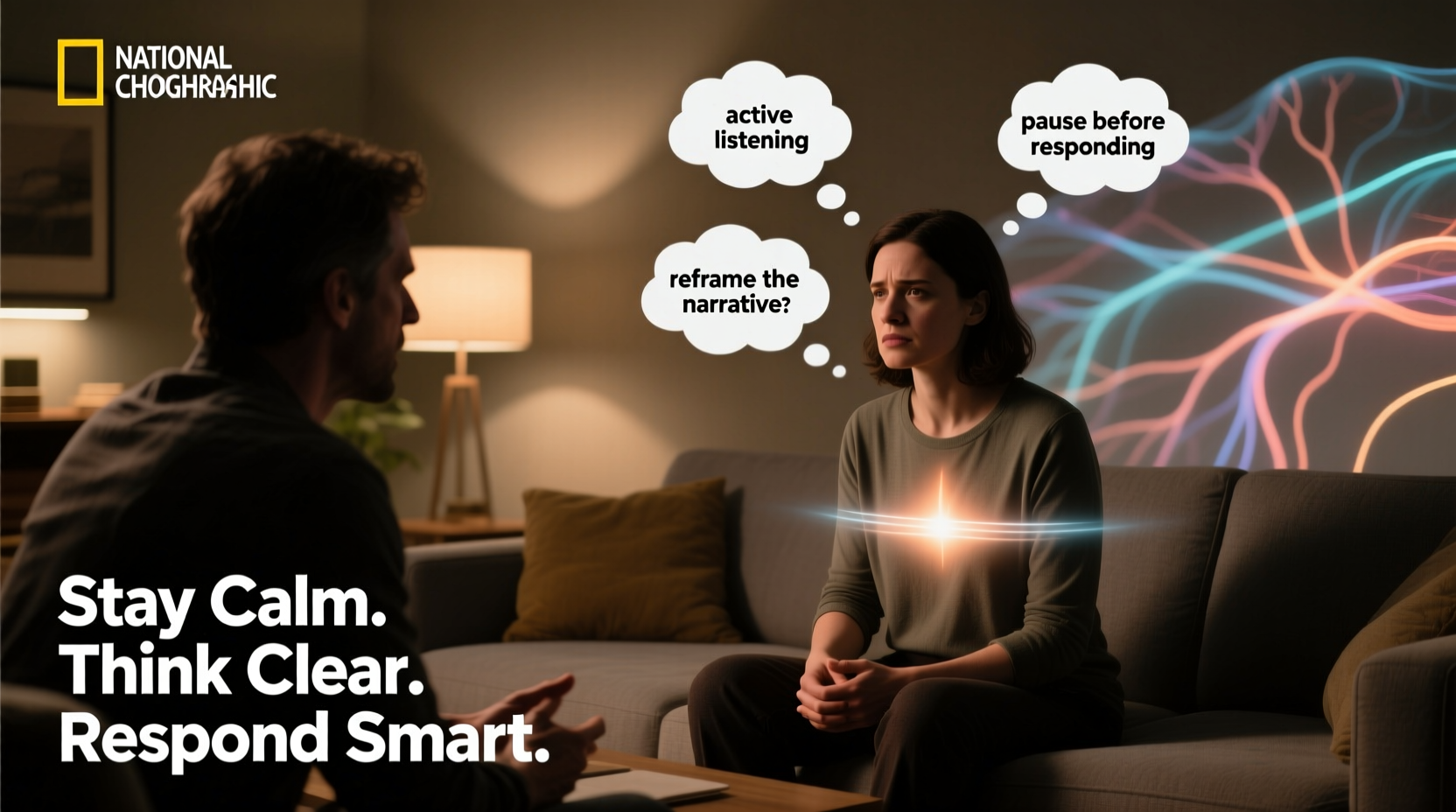
When someone raises their voice or challenges your beliefs, your brain may respond before you even realize it. The amygdala, a small structure deep within the brain, acts as an emotional alarm system. In moments of perceived threat—even social ones like criticism—it can trigger a “fight, flight, or freeze” response. This is known as an amygdala hijack, where emotion overrides logic in seconds.
During such episodes, cortisol and adrenaline surge, increasing heart rate and sharpening focus—but not on listening or problem-solving. Instead, your attention narrows toward defending yourself or attacking back. Recognizing this biological process is the first step in regaining control. You're not weak for feeling angry; you're human reacting to a primal survival mechanism.
Use Tactical Breathing to Reset Your Nervous System
Breath is one of the few autonomic functions you can consciously influence—and it directly impacts emotional regulation. Controlled breathing signals safety to the brain, reducing sympathetic (stress) activation and boosting parasympathetic (calming) tone.
A technique used by Navy SEALs and therapists alike is box breathing:
- Inhale slowly through the nose for 4 seconds.
- Hold the breath for 4 seconds.
- Exhale completely through the mouth for 4 seconds.
- Pause for 4 seconds before repeating.
Repeat this cycle four times. It lowers heart rate, clears mental fog, and creates psychological space between stimulus and response. Even doing this subtly—without drawing attention—can shift your internal state mid-conversation.
The Power of Micro-Pauses
Instead of reacting instantly, insert a micro-pause. Say nothing for two full seconds after the other person finishes speaking. This brief silence does more than buy time—it prevents reactive escalation. Research from the University of California shows that individuals who pause before replying in conflicts are perceived as more composed and trustworthy, regardless of content.
“Emotional self-control isn’t suppression—it’s strategic delay. The most effective communicators don’t avoid anger; they manage its timing.” — Dr. Lisa Feldman Barrett, Neuroscientist and author of *How Emotions Are Made*
Reframe the Other Person’s Behavior Using Attribution Theory
One major reason conversations turn hostile is misattribution—assuming negative intent behind someone’s actions. If your coworker interrupts you, you might think, “They’re trying to shut me down.” But what if they’re anxious, overstimulated, or misunderstood your point?
Psychologists use attribution theory to explain how we interpret others’ behaviors. There are two main types:
- Internal attribution: Believing someone acted a certain way because of their character (“They’re rude”).
- External attribution: Recognizing situational factors (“They’re stressed from a deadline”).
Defaulting to internal attributions fuels resentment. Shifting to external ones—even tentatively—reduces emotional charge. Try silently asking: What else could be going on for them right now?
| Assumption | Effect on Emotion | Alternative Thought |
|---|---|---|
| “They’re disrespecting me.” | Triggers defensiveness | “Maybe they didn’t hear me clearly.” |
| “They always do this.” | Increases frustration | “This is happening now, but it won’t last forever.” |
| “They don’t care.” | Creates hurt | “Their behavior suggests stress, not indifference.” |
This doesn’t mean excusing harmful behavior—it means decoupling emotional reaction from interpretation. By questioning your assumptions, you create room for empathy and clarity.
Apply Active Listening to Defuse Tension
Most people listen to reply, not to understand. In high-stakes discussions, this leads to talking past each other. Active listening flips the script: focus entirely on comprehending the speaker’s message, both verbal and nonverbal.
Here’s how to practice it during conflict:
- Maintain soft eye contact (not staring).
- Nod slightly to show engagement.
- Paraphrase what you heard: “So you’re saying you felt overlooked when I made that decision alone?”
- Ask open-ended follow-ups: “Can you tell me more about why that mattered so much?”
These behaviors signal respect and reduce perceived threat. When people feel heard, their nervous systems relax. A study published in the International Journal of Listening found that perceived empathy reduced conflict intensity by up to 50% in workplace disputes.
Real Example: A Manager Resolves a Team Conflict
Sarah, a project lead, noticed rising tension between two senior developers. During a meeting, one accused the other of sabotaging code reviews. Voices rose, fingers pointed. Instead of shutting it down, Sarah paused the discussion.
She asked each developer to explain their concern while the other listened without interrupting. Then, she paraphrased each side: “Alex, you feel your feedback is being ignored. Jordan, you worry suggestions are coming across as personal attacks.”
By validating both perspectives—not agreeing, just acknowledging—she lowered the emotional temperature. The team shifted from blame to problem-solving. Later, Alex admitted he hadn’t realized his tone came off as dismissive. Jordan acknowledged he’d been unusually sensitive due to burnout.
No policy changes were needed—just structured listening. The conflict didn’t disappear overnight, but the working relationship improved significantly within weeks.
Adopt the “Observer Self” Technique
Cognitive defusion, a concept from Acceptance and Commitment Therapy (ACT), teaches you to separate from overwhelming thoughts. Instead of thinking, I’m so angry I can’t think straight, you learn to say, I notice I’m having the thought that I can’t think straight.
This subtle shift creates distance. You’re no longer fused with the emotion—you’re observing it. Imagine watching yourself from the corner of the room: noticing flushed cheeks, tight shoulders, racing thoughts. Label them calmly: “There’s anger. There’s frustration. There’s the urge to interrupt.”
This metacognitive awareness breaks automatic reactivity. You begin to see emotions as temporary weather patterns, not permanent storms.
“The ability to witness your own mind in action is the foundation of emotional intelligence.” — Dr. Steven C. Hayes, Developer of Acceptance and Commitment Therapy
Step-by-Step Guide: Managing a Heated Exchange in Real Time
Next time you feel a conversation escalating, follow this six-step approach:
- Notice physiological cues: Clenched fists, shallow breathing, heat in face? Acknowledge: “I’m getting triggered.”
- Engage tactical breathing: Take three slow, deep breaths. Inhale 4, hold 4, exhale 4.
- Shift attribution: Ask yourself: “What might be going on for them?” Avoid assuming malice.
- Listen fully: Focus on understanding, not rebutting. Paraphrase their point once they finish.
- Respond with curiosity: Ask, “Help me understand what led you to that view?” instead of arguing. <6> Set boundaries if needed: Calmly say, “I want to continue this, but not while voices are raised. Can we pause and return in 10 minutes?”
This sequence doesn’t eliminate discomfort—it gives you agency within it. With repetition, these steps become second nature.
Common Pitfalls and How to Avoid Them
Even with good intentions, people slip into counterproductive habits. Here are frequent mistakes and their psychological antidotes:
| Mistake | Why It Backfires | Better Approach |
|---|---|---|
| Trying to “win” the argument | Turns dialogue into battle; damages trust | Aim for mutual understanding, not victory |
| Using absolute language (“You always,” “You never”) | Triggers defensiveness; rarely accurate | Stick to specific instances: “In yesterday’s meeting…” |
| Matching the other person’s volume | Escalates arousal; mimics aggression | Speak slower and softer—this naturally calms both parties |
| Shutting down emotionally | Stops communication; feels like rejection | Pause respectfully: “I need a moment to process. Let’s continue shortly.” |
Frequently Asked Questions
What if the other person refuses to calm down?
You can only control your side of the interaction. Continue modeling calm behavior—lower your voice, speak slowly, and use empathetic phrases. If they persist in hostility, disengage gracefully: “I care about resolving this, but not under yelling. Let’s talk when we can both speak respectfully.”
Can these techniques work in high-stakes situations, like performance reviews or divorce negotiations?
Absolutely. In fact, they’re most valuable in high-stakes settings. The principles of emotional regulation, active listening, and cognitive reframing are used by mediators, hostage negotiators, and executive coaches. Practice them in low-risk conversations first to build confidence.
Is it manipulative to use psychology tricks in arguments?
Not if your goal is de-escalation and connection. These aren’t manipulation tactics—they’re self-regulation and communication tools. Manipulation seeks to control others; emotional intelligence seeks to understand and collaborate. Intent matters.
Final Checklist: Prepare Before Conflict Arises
Don’t wait for a crisis to build these skills. Use this checklist weekly to strengthen your emotional resilience:
- Practice box breathing for 2 minutes daily.
- Reflect on one recent disagreement: What attribution did I make? Was it fair?
- Role-play a tough conversation with a trusted friend.
- Identify your top three emotional triggers (e.g., being interrupted, criticized, ignored).
- Write a personal “cool-down” phrase: “I choose understanding over reaction.”
Conclusion: Mastery Comes Through Practice
Keeping your cool isn’t about suppressing anger or pretending everything is fine. It’s about creating space between impulse and action—space where choice lives. Psychology doesn’t offer magic spells, but it does provide reliable tools grounded in neuroscience and behavioral research. Each technique here—from breathing to reframing—has been tested in labs, clinics, and real-world conflicts.
The next time a conversation heats up, remember: your response is a skill, not a reflex. And like any skill, it improves with deliberate practice. Start small. Pause one extra second before replying. Breathe before speaking. Choose curiosity over certainty. Over time, these moments accumulate into profound change—not just in how you handle arguments, but in how you relate to people altogether.




 浙公网安备
33010002000092号
浙公网安备
33010002000092号 浙B2-20120091-4
Comments
No comments yet. Why don't you start the discussion?