
Lipstick feathering—when color migrates into fine lines around the mouth or creeps beyond the natural lip line—is a common frustration. Many turn to overlining or cosmetic fillers for a solution, but both come with risks and aren’t necessary for achieving a clean, polished look. The truth is, feathering is less about anatomy and more about preparation, product choice, and technique. With the right approach, you can enjoy vibrant, long-lasting color that stays exactly where it belongs—without altering your natural shape.
Understanding Why Lipstick Feathers
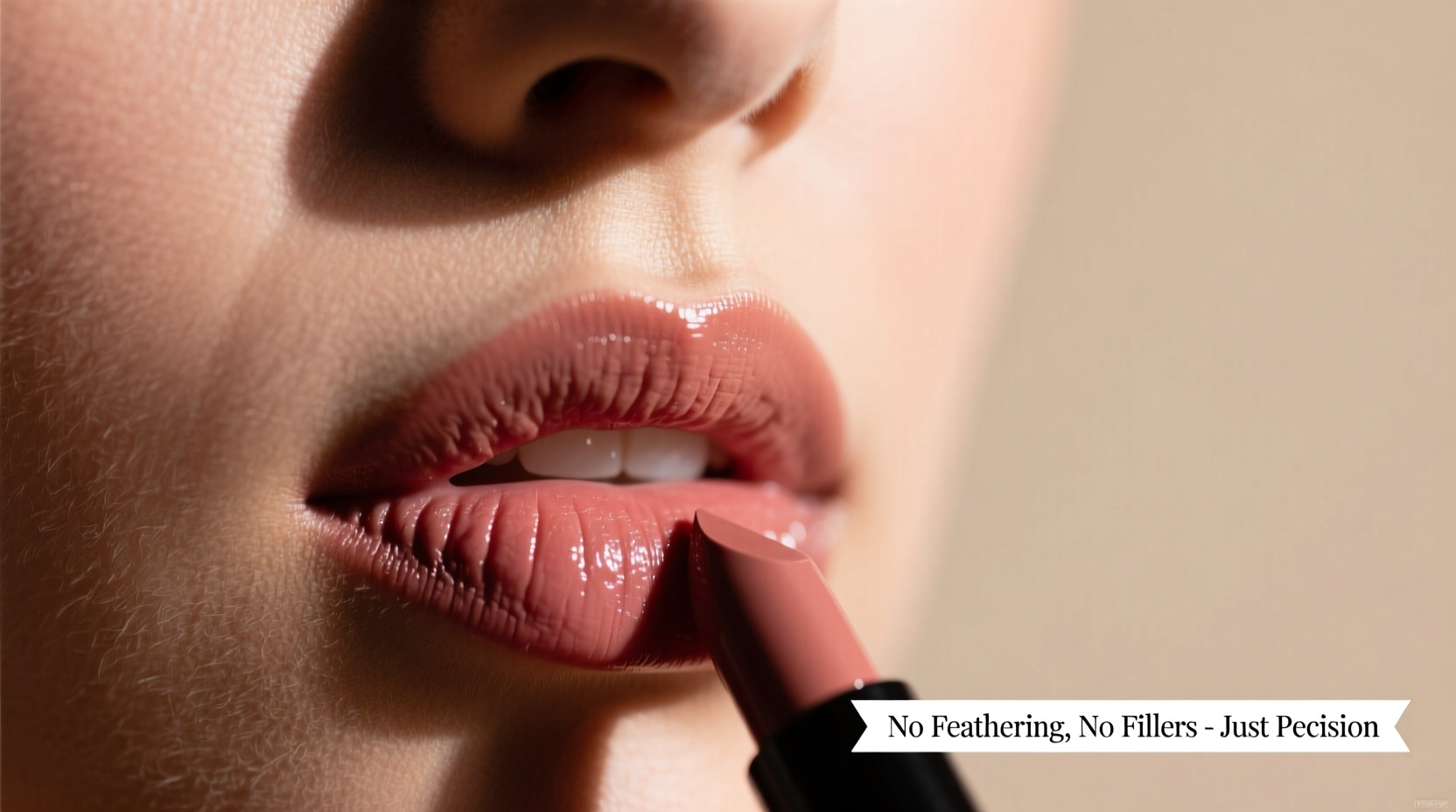
Lipstick doesn’t just “move” on its own. Feathering occurs due to a combination of factors: skin texture, moisture levels, product formulation, and facial movement. As we age, vertical lip lines become more pronounced, creating tiny grooves where pigment can settle and spread. Even younger skin can be prone to migration if the lips are dry, oily, or improperly prepped.
The corners of the mouth are especially vulnerable. This area sees constant motion from speaking, eating, and smiling, which breaks down product over time. Additionally, natural oils from the skin or transferred from fingertips can destabilize lipstick, encouraging it to bleed.
“Feathering isn’t inevitable—it’s often a sign of poor prep or incompatible products. Fix the foundation, and the finish follows.” — Dana Reyes, Celebrity Makeup Artist & Cosmetic Formulation Consultant
Step-by-Step Guide: Prevent Feathering Naturally
Preventing lipstick migration starts long before you apply color. A disciplined routine focused on exfoliation, hydration, and barrier control ensures a stable canvas. Follow this timeline for best results:
- Exfoliate Weekly (or as needed): Use a soft lip scrub or a damp washcloth to gently buff away dead skin. Smooth lips prevent product from catching in flakes and settling into lines.
- Hydrate Daily: Apply a nourishing balm every night. Look for ingredients like shea butter, ceramides, or hyaluronic acid. Avoid petroleum-heavy balms during the day—they can make lipstick slippery.
- Prime Before Color: Use a dedicated lip primer or a small amount of concealer to create a matte base. This evens out texture and reduces surface oil.
- Define with Liner: Choose a liner that matches your natural lip color or lipstick shade. Gently trace along the inner edge of your vermillion border—do not extend outward. This creates a subtle barrier without overlining.
- Apply Lipstick Strategically: Use a brush for precision. Start from the center of the lips and work outward, pressing color into place rather than dragging it.
- Set with Powder (Optional): For extra staying power, blot with tissue, then lightly dust translucent powder over a piece of tissue paper placed on the lips.
Choosing the Right Products Matters
Not all lipsticks behave the same. Creamy formulas may feel luxurious but often lack stability. Conversely, overly drying matte lipsticks can emphasize fine lines, ironically increasing the appearance of feathering. The key is balance: a formula that sets quickly, resists transfer, and doesn’t migrate.
Look for terms like “long-wear,” “transfer-proof,” or “liquid-to-matte” when shopping. These are typically polymer-based and form a flexible film on the lips, locking pigment in place. Avoid overly glossy or balm-like finishes if feathering is a concern.
| Product Type | Feathering Risk | Best For | Pro Tip |
|---|---|---|---|
| Sheer Gloss | High | Casual daytime wear | Use only with a strong liner barrier |
| Cremes & Satins | Moderate | Daily wear, medium coverage | Blot and set for longevity |
| Mattes (Liquid) | Low | All-day events, photos | Exfoliate first to avoid patchiness |
| Lip Pencils (Full Coverage) | Very Low | Precision application | Layer with matching lipstick for depth |
The Role of Lip Liner in Prevention
Lip liner is one of the most underrated tools in combating feathering. When used correctly, it acts as a dam, physically blocking pigment from spreading. The trick is to use it *within* your natural lip line—not beyond it.
Select a pencil with a firm, creamy texture that glides without tugging. Sharpen regularly for precision. Begin at the cupid’s bow and follow the inner edge of your upper lip, stopping at the outer corners. Repeat on the lower lip. You don’t need to outline the entire lip if certain areas are stable—spot-treat problem zones like the lateral edges.
For added insurance, blur the liner slightly inward with a small brush or fingertip. This creates a gradient seal that integrates with your lipstick, avoiding harsh lines while still preventing escape.
Real Example: The Client Who Thought She Needed Fillers
Sarah, a 38-year-old professional, came to a makeup consultation convinced her lips were “too thin” and “always bleeding.” She was considering dermal fillers to “define her shape” and stop her lipstick from feathering. After examining her routine, the artist noticed several red flags: she applied tinted balm straight from the tube, skipped exfoliation, and used a creamy lipstick known for migration.
The solution? A three-step reset: weekly sugar scrub treatments, nightly hydration with a ceramide-rich balm, and switching to a long-wear liquid lipstick applied over a matching liner. Within days, Sarah reported her lipstick lasted longer and stayed put—even through coffee breaks and meetings. After a month, she canceled her filler appointment, saying, “I finally see my lips the way they’re meant to look—defined, healthy, and completely me.”
Do’s and Don’ts: Quick Reference Table
| Action | Do | Don't |
|---|---|---|
| Prepping Lips | Exfoliate gently 1–2x/week | Scrub aggressively or daily |
| Moisturizing | Use lightweight balms; blot before color | Apply thick ointments right before lipstick |
| Applying Product | Use liner as a barrier inside natural line | Draw outside lip border to “correct” shape |
| Longevity | Blot and set with powder for extended wear | Reapply greasy glosses throughout the day |
| Touch-Ups | Remove old color first, re-prime if needed | Layer new lipstick over smeared base |
Expert-Approved Techniques That Work
Makeup artists have refined their anti-feathering strategies through years of trial and high-stakes applications. Here are field-tested methods used on photo shoots, weddings, and red carpets:
- The Reverse Blot: After applying lipstick, press a clean finger lightly against the outer edges of the lips—especially near the nose and chin—where migration commonly starts. This removes excess product before it has a chance to move.
- Concealer Contouring: Dip a flat brush into skin-tone concealer and sharpen the perimeter of the lips. This cleans up any minor smudging and reinforces the boundary without overlining. Set with a tiny puff of powder.
- Double-Layer Liner: Apply liner, then lipstick, then another thin layer of liner on top. This “sandwich” method locks in color and increases adhesion.
- Nose-to-Chin Rule: Avoid applying moisturizer or serum directly around the mouth. These products often contain emollients that break down lipstick. Instead, stop creams just short of the lip border.
“In editorial work, we never rely on fillers to fix makeup issues. If the lipstick moves, we adjust the prep—not the face.” — Marcus Tran, Lead Artist at Luxe Beauty Studio
Frequently Asked Questions
Can I stop feathering without using lip liner?
Yes, but it’s significantly harder. Liner provides a physical barrier that few other products can replicate. If you dislike the feel of pencil, try a waxy lip primer or a matte liquid lipstick that dries down quickly and adheres tightly to the skin.
Does aging make feathering unavoidable?
Aging deepens perioral lines, which can trap and spread pigment, but it doesn’t make feathering inevitable. Consistent exfoliation, hydration, and smart product choices can keep lipstick looking crisp at any age. Focus on maintaining skin health rather than masking it with corrective procedures.
Is there a difference between feathering and bleeding?
The terms are often used interchangeably, but technically, “feathering” refers to gradual spreading along fine lines, while “bleeding” implies sudden migration beyond the lip border. Both stem from similar causes and are prevented using the same techniques.
Checklist: Your Anti-Feathering Routine
- ✅ Gently exfoliate lips (1–2x/week)
- ✅ Apply hydrating balm; wait 10 minutes
- ✅ Blot away excess moisture
- ✅ Prime with concealer or lip primer
- ✅ Line inside natural lip edge
- ✅ Apply lipstick with a brush for control
- ✅ Blot and reapply for intensity
- ✅ Set with translucent powder (optional)
- ✅ Clean up edges with concealer
Conclusion: Embrace Your Natural Shape
Your lips are designed to move, speak, smile, and express. Trying to control them with invasive measures shouldn’t be the default response to a simple makeup challenge. Feathering is a solvable issue—one rooted in care, not correction. By refining your routine, selecting intelligent products, and respecting your natural contours, you can achieve a flawless lip look that lasts from morning meetings to evening plans.




 浙公网安备
33010002000092号
浙公网安备
33010002000092号 浙B2-20120091-4
Comments
No comments yet. Why don't you start the discussion?