
In an era saturated with serums, essences, and 10-step regimens, many people are overwhelmed by the sheer volume of products promising flawless skin. The truth is, more isn’t always better. In fact, overloading your skin can lead to irritation, breakouts, and compromised barrier function. A minimal skincare routine—one built on quality over quantity—can deliver exceptional results without clutter or confusion. By focusing on essentials, understanding your skin’s needs, and choosing high-performing ingredients, you can achieve clarity, radiance, and resilience with fewer steps.
The Power of Less: Why Minimalism Works in Skincare
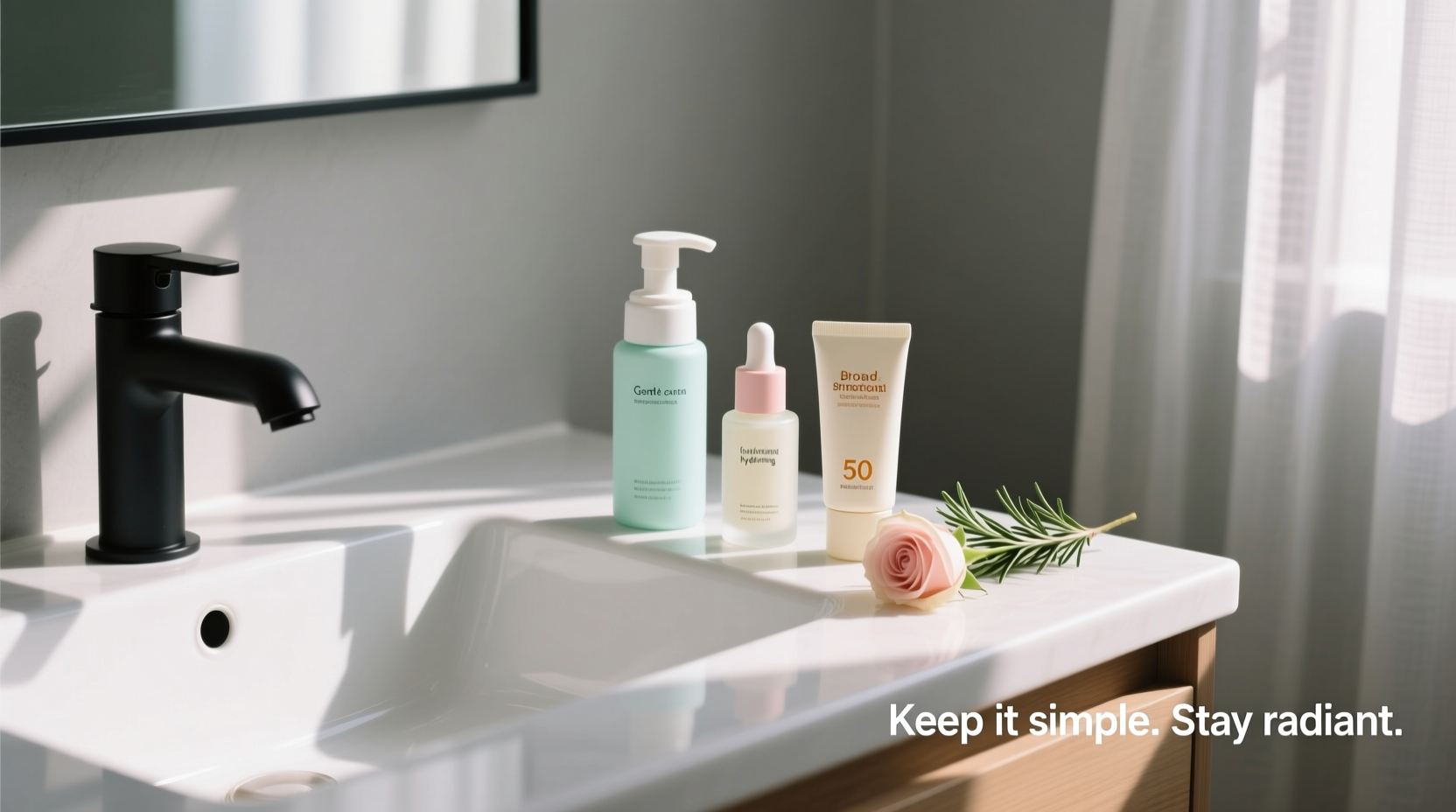
Skin is not only the body’s largest organ but also a highly intelligent system designed to protect and renew itself. When bombarded with too many active ingredients or layered products, it can become stressed, leading to inflammation, dehydration, or sensitivity. A minimalist approach respects the skin’s natural balance while supporting its functions efficiently.
Studies show that consistent use of a few well-chosen products often outperforms complex routines. Dermatologists increasingly advocate for “skin cycling”—a method where actives are used strategically rather than daily—to prevent over-exfoliation and maintain barrier integrity. Simplicity doesn’t mean sacrificing efficacy; it means being intentional.
Core Principles of an Effective Minimal Routine
A successful minimal skincare regimen rests on three pillars: consistency, compatibility, and customization. These principles ensure that every product earns its place on your shelf.
- Consistency: Applying the same core products daily builds long-term results. Ingredients like retinoids and vitamin C require time to show visible improvement.
- Compatibility: Products should work together, not against each other. For example, pairing strong exfoliants with high concentrations of vitamin C may cause irritation.
- Customization: Your routine should reflect your skin type (oily, dry, combination, sensitive) and concerns (acne, aging, hyperpigmentation), not trends.
Instead of chasing new launches, focus on identifying what truly benefits your skin. This reduces waste, saves money, and minimizes risk of adverse reactions.
Build Your Minimal Routine: The Essential Steps
An effective minimalist skincare routine typically includes four key steps—cleanser, moisturizer, sunscreen, and one targeted treatment. Anything beyond this should serve a clear purpose.
| Step | Purpose | Frequency | Key Considerations |
|---|---|---|---|
| Cleanser | Removes dirt, oil, and impurities without stripping moisture | Morning and night | Choose pH-balanced, fragrance-free formulas |
| Moisturizer | Locks in hydration and supports skin barrier | Daily, morning and night | Lightweight for oily skin; richer textures for dry skin |
| Sunscreen (SPF 30+) | Prevents UV damage, premature aging, and pigmentation | Every morning, even indoors | Broad-spectrum, non-comedogenic |
| Targeted Treatment | Addresses specific concerns (e.g., acne, fine lines) | Nightly or as directed (2–7 times/week) | Retinol, niacinamide, or gentle AHAs/BHAs |
This framework allows flexibility based on individual needs. For instance, someone with oily, acne-prone skin might use a salicylic acid cleanser and lightweight gel moisturizer, while a person with dry, mature skin could opt for a hydrating cream and nightly retinoid.
“Simplicity is the ultimate sophistication in skincare. I tell my patients: if you can see improvement with three products, why add seven?” — Dr. Lena Patel, Board-Certified Dermatologist
Choosing the Right Ingredients Without Overcomplicating
The ingredient list matters more than the number of bottles on your counter. Focus on proven, research-backed compounds that deliver measurable results.
- Hyaluronic Acid: Draws moisture into the skin, ideal for all types, especially dehydrated skin.
- Niacinamide (Vitamin B3): Reduces redness, regulates oil production, and strengthens the skin barrier.
- Retinol: Gold standard for anti-aging and texture refinement. Start slowly (1–2x/week) to avoid irritation.
- Vitamin C (L-ascorbic acid): Brightens tone and protects against environmental damage.
- Ceramides: Restore the lipid barrier, crucial for sensitive or dry skin.
Avoid layering multiple actives unless necessary. For example, combining vitamin C and retinol in the same routine can be powerful—but not at the same time. Use vitamin C in the morning and retinol at night to maximize benefits and minimize irritation.
Real-Life Example: From 10 Steps to 4
Take Sarah, a 32-year-old marketing professional who struggled with persistent redness and breakouts despite following a 10-step Korean-inspired routine. Her shelf was crowded with toners, essences, sheet masks, and multiple serums. After consulting a dermatologist, she simplified her regimen:
- Morning: Gentle foaming cleanser → Niacinamide serum → Lightweight moisturizer → SPF 50
- Night: Micellar water → Creamy cleanser → Retinol (3x/week) → Ceramide-rich moisturizer
Within six weeks, her skin appeared calmer, less oily, and more even-toned. She reported fewer breakouts and no longer experienced midday tightness. The turning point wasn’t a miracle product—it was removing unnecessary layers and letting her skin breathe.
Common Pitfalls to Avoid
Even with good intentions, minimalism can go wrong if not approached thoughtfully. Here are frequent missteps and how to sidestep them:
| Do’s | Don’ts |
|---|---|
| Introduce one new product at a time | Swap out multiple products simultaneously |
| Use sunscreen every single day | Only wear SPF when it's sunny |
| Listen to your skin’s feedback (dryness, shine, texture) | Stick rigidly to a routine that causes irritation |
| Store actives (like vitamin C and retinol) in cool, dark places | Leave them on a sunny bathroom counter |
| Replace expired products (especially sunscreen and antioxidants) | Keep using a serum past its shelf life |
Remember, minimal doesn’t mean neglectful. It means being selective and strategic. Skipping moisturizer because you have oily skin, for instance, can trigger excess sebum production—a classic case of doing less but achieving the opposite of your goal.
Your Minimal Skincare Checklist
Use this checklist to evaluate and refine your current routine:
- ✅ Do I know my skin type and primary concern?
- ✅ Is my cleanser non-stripping and suitable for daily use?
- ✅ Am I applying sunscreen every morning, regardless of weather?
- ✅ Do I have one effective treatment product addressing my main issue?
- ✅ Is my moisturizer compatible with my climate and skin needs?
- ✅ Have I eliminated any products causing irritation or breakouts?
- ✅ Am I introducing changes gradually, not all at once?
- ✅ Are my products stored properly to preserve potency?
If you answered “no” to any of these, those are your starting points for simplification.
Step-by-Step Guide to Transitioning to a Minimal Routine
Switching from a complex to a minimal routine doesn’t have to be abrupt. Follow this timeline to make the shift smoothly:
- Week 1: Audit Your Current Products
Lay out everything you use. Label each with its purpose. Identify duplicates (e.g., two exfoliating toners). - Week 2: Pause Actives and Introduce a Gentle Cleanser
Let your skin reset. Use only a mild cleanser and moisturizer to assess baseline condition. - Week 3: Reintroduce One Active at a Time
Add back your most essential treatment (e.g., retinol or niacinamide). Monitor for reactions. - Week 4: Lock in Sun Protection
Ensure you’re using a broad-spectrum SPF 30+ every morning, even on cloudy days. - Ongoing: Evaluate Monthly
Ask: Is this product making a visible difference? If not, consider replacing or removing it.
This phased approach prevents shock to the skin and helps pinpoint what works—and what doesn’t.
Frequently Asked Questions
Can I skip moisturizer if I have oily skin?
No. Even oily skin needs hydration. Skipping moisturizer can signal your glands to produce more oil. Instead, choose an oil-free, non-comedogenic gel moisturizer that balances hydration without clogging pores.
How do I know if a product is “minimalist” enough?
A minimalist product has a focused formulation with few, high-quality ingredients. Look for brands that avoid unnecessary fillers, synthetic fragrances, and dyes. Transparency in sourcing and testing is a good sign.
Is a minimal routine suitable for aging skin?
Absolutely. Mature skin benefits from simplicity. Over-exfoliation can thin the epidermis, making signs of aging worse. A gentle cleanser, ceramide-rich moisturizer, daily SPF, and nightly retinol offer powerful anti-aging effects without overload.
Final Thoughts: Less Can Be More
Skincare shouldn’t be a chore filled with endless bottles and confusing rituals. True effectiveness lies in consistency, not complexity. By paring down to the essentials—cleanser, moisturizer, sunscreen, and one targeted treatment—you give your skin the tools it needs without overwhelming it.
The goal isn’t perfection but progress: healthier texture, improved resilience, and a glow that comes from balance, not manipulation. When you stop chasing the next miracle product and start listening to your skin, you’ll find that radiant results are possible with far less effort.




 浙公网安备
33010002000092号
浙公网安备
33010002000092号 浙B2-20120091-4
Comments
No comments yet. Why don't you start the discussion?