
Sunglasses are more than just a fashion accessory—they're an investment in eye protection and personal style. Yet, one of the most common frustrations among wearers is discovering fine scratches on their lenses after pulling them from a bag. These tiny abrasions not only impair clarity but can degrade lens coatings over time, reducing UV protection and visual comfort. The good news? Most scratches are preventable with consistent, simple habits. By adjusting how you store, handle, and transport your sunglasses, you can preserve their condition for years.
The root cause of scratches isn’t always poor quality—it’s often poor handling. Tossing sunglasses loosely into a handbag, backpack, or glove compartment exposes them to keys, pens, makeup, and other hard objects that act like sandpaper on delicate lens surfaces. Even micro-abrasions from dust trapped under a flimsy case can accumulate over time. The solution lies in intentional routines and informed choices about storage and materials.
Choose the Right Case: Your First Line of Defense
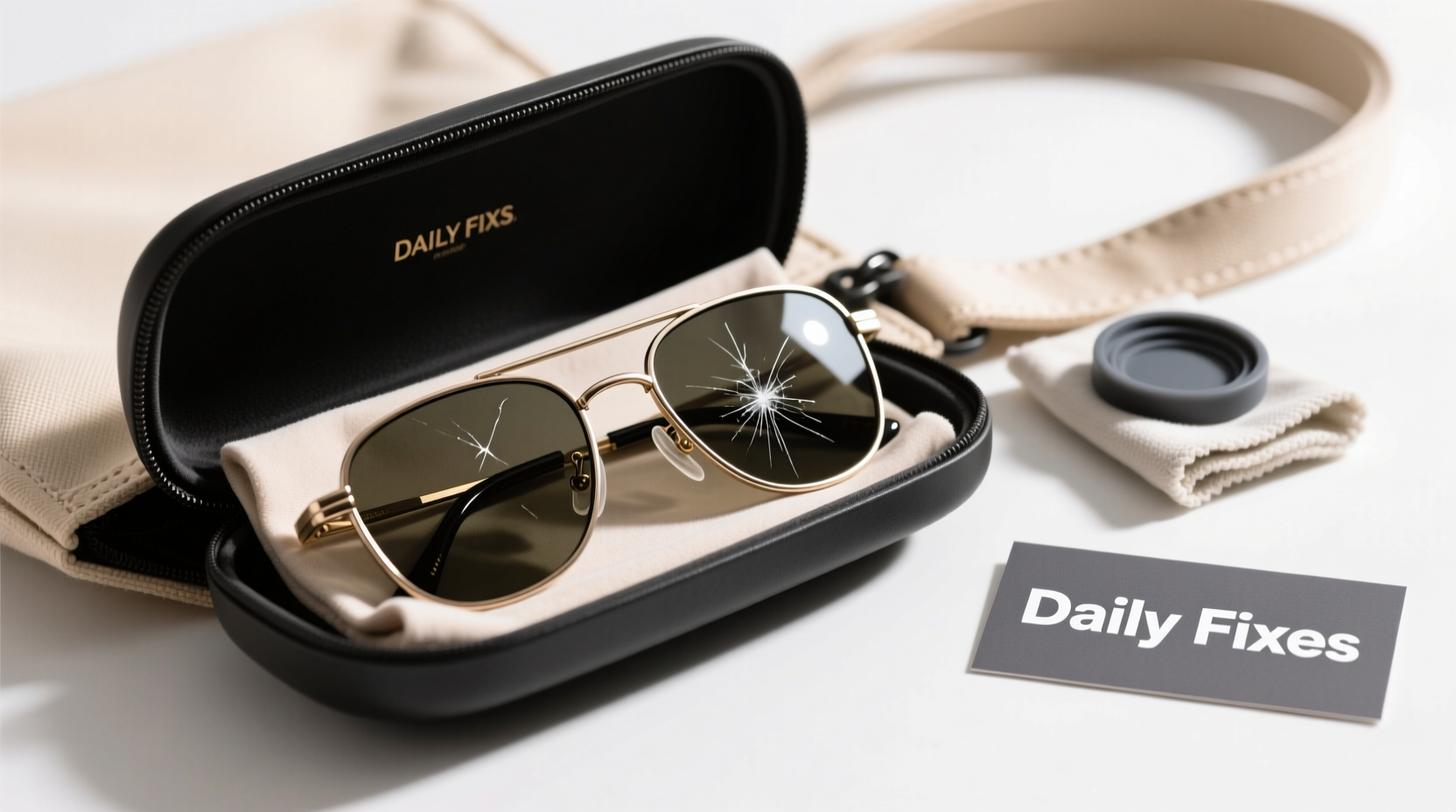
The case you use makes a dramatic difference in protecting your sunglasses. Not all cases are created equal—many come standard with flimsy plastic shells that offer minimal protection and can even contribute to scratching if debris gets inside.
A high-quality hard-shell case made from rigid polycarbonate or EVA material provides structural resistance against crushing and impact. Soft silicone or neoprene cases offer flexibility and shock absorption but should only be used if they have an internal lining free of grit. Avoid mesh or fabric sleeves without rigid support; these may look stylish but do little to prevent lateral pressure or abrasion.
When selecting a case, ensure it fits your frames snugly without forcing them in. A too-tight fit increases pressure on hinges and temples, while a loose one allows movement that leads to internal bumps. If your sunglasses didn’t come with a durable case, consider investing in a third-party option designed specifically for eyewear protection during transit.
Daily Handling Habits That Prevent Damage
How you place your sunglasses into your bag matters as much as the case you use. Many people develop unconscious habits—like setting them face-down on tables, folding them with one hand, or shoving them into side pockets—that increase vulnerability.
Always fold your sunglasses properly using both hands to avoid misalignment or stress on the hinges. Place them lens-up when setting them down temporarily. When storing them in your bag, designate a fixed location—preferably a dedicated inner pocket or organizer slot—so they don’t shift around with every movement.
Never let sunglasses dangle from your shirt or neck; this exposes them to sudden drops and impacts. Similarly, avoid placing heavy items directly on top of where your sunglasses are stored in the bag. Gravity and motion turn otherwise harmless objects into damaging weights over time.
“Over 70% of lens scratches occur not from misuse outdoors, but from improper storage and contact with everyday carry items.” — Dr. Lena Torres, Optical Product Specialist at VisionGuard Labs
Smart Bag Organization: Create a Sunglass-Safe Zone
Your bag doesn’t have to be a hazard zone. With thoughtful organization, you can create a protective environment for your sunglasses. Treat them like fragile electronics or prescription medication—items that require isolation from physical contact.
If your bag has a zippered internal pocket, reserve it exclusively for your sunglasses case. If not, use a small padded pouch (like those for cameras or hard drives) as a secondary buffer. This double-layer approach—case plus cushioned sleeve—greatly reduces the risk of damage.
Keep sharp or abrasive objects like keys, multitools, or metal pens in separate compartments. Better yet, store keys in a silicone key cover or small pouch. One study found that bare metal keys generate up to five times more surface abrasion on lenses than soft-sided accessories.
| Item | Risk Level to Sunglasses | Recommended Action |
|---|---|---|
| Loose Keys | High | Store in a fabric or rubber pouch |
| Makeup Compact | Moderate | Place in a separate zippered section |
| Pens/Pencils | Medium | Use pen holders or capped storage |
| Phone Charger Cable | Low | Roll neatly; avoid tangling near eyewear |
| Water Bottle | Low-Medium | Ensure cap is tight; use insulated sleeve |
Mini Case Study: How Sarah Reduced Scratches by 90%
Sarah, a graphic designer in Austin, carried her favorite polarized Ray-Bans in her tote bag every day. Within four months, she noticed spiderweb-like scratches across both lenses. Frustrated, she replaced them—only to see the same issue recur within six weeks.
After consulting an optician, she realized her mistake: she was tossing her sunglasses—still in their soft leather case—into the main compartment alongside her tablet, sketchbook, and metal water bottle. Over time, the constant compression caused the case to deform, allowing the lenses to rub against a stray paperclip lodged inside.
She implemented three changes: switched to a hard-shell case, began storing her sunglasses in a front zip pocket, and started cleaning her bag monthly. After eight months, her lenses remained pristine. “It wasn’t the sun or my nose bridge wearing them down,” she said. “It was my bag setup.”
Step-by-Step Guide: Building a Scratch-Proof Routine
Preventing scratches isn’t about perfection—it’s about consistency. Follow this daily routine to protect your sunglasses effectively:
- End-of-Day Wipe Down: Before storing, gently clean lenses with a microfiber cloth. Never use clothing, napkins, or paper towels—they contain fibers that scratch.
- Inspect the Case: Check for dust, sand, or moisture inside the case. Wipe it out weekly with a dry cloth.
- Fold Gently: Use two hands to close the arms smoothly. Forcing them closed can warp the frame and weaken joint integrity.
- Store in Designated Spot: Place the case in the same protected area of your bag every time—no exceptions.
- Morning Retrieval: Remove the case carefully, avoiding dumping contents. Open it away from dusty environments.
- Weekly Deep Check: Examine hinges, nose pads, and lens edges for early signs of wear or coating degradation.
This six-step process takes less than two minutes daily but compounds into significant long-term protection. Think of it as dental hygiene for your eyewear—small investments now prevent costly repairs later.
Do’s and Don’ts of Sunglass Storage
To reinforce best practices, here’s a clear breakdown of what to embrace and what to eliminate from your routine.
| Do’s | Don’ts |
|---|---|
| Use a hard-shell case with a soft interior lining | Leave sunglasses exposed in open compartments |
| Clean lenses with a microfiber cloth before storing | Wipe lenses with rough fabrics or tissues |
| Store in a cool, dry place away from direct heat | Leave them in hot cars or humid bathrooms |
| Keep the case zipped or snapped shut | Let the case flap open in your bag |
| Label or color-code your case for quick access | Force oversized glasses into undersized cases |
“The biggest myth is that expensive sunglasses don’t scratch. All lenses scratch—glass, polycarbonate, even coated Trivex. Protection comes from behavior, not price.” — Marcus Reed, Senior Optician at Urban Eyecare
FAQ: Common Questions About Sunglass Care
Can scratched lenses be repaired?
Minor surface scratches may be reduced with professional polishing services, but most consumer-grade repair kits do more harm than good. Deep scratches compromise optical clarity and cannot be fully removed without reshaping the lens. Prevention is far more effective than attempted fixes.
Is it safe to leave sunglasses in a car?
No. Interior temperatures can exceed 150°F (65°C), which warps frames and degrades anti-reflective and UV-blocking coatings. Additionally, sunlight through the windshield magnifies heat and accelerates material fatigue. Always take your sunglasses with you when exiting the vehicle.
Are cloth bags enough for protection?
Cloth or flannel bags are better than nothing, but they lack structural rigidity. They’re suitable only for short-term storage inside a larger protective case. On their own, they offer no defense against crushing or puncture from heavier objects.
Conclusion: Small Changes, Lasting Results
Protecting your sunglasses from scratches doesn’t require expensive gear or complicated rituals. It starts with awareness—recognizing that everyday actions have long-term consequences. A few mindful choices each day can preserve the clarity, function, and appearance of your eyewear for years.
Whether you wear $50 shades or premium designer models, the principles remain the same: use a sturdy case, organize your bag wisely, handle with care, and maintain a consistent cleaning routine. These habits cost nothing but deliver tangible value in longevity and visual performance.




 浙公网安备
33010002000092号
浙公网安备
33010002000092号 浙B2-20120091-4
Comments
No comments yet. Why don't you start the discussion?