
Fragile ornaments—whether glass baubles, hand-blown figurines, or delicate ceramic heirlooms—are often irreplaceable. Their value isn’t just monetary; many carry emotional weight, passed down through generations or collected over decades. But when it comes to storage, transport, or insurance documentation, identifying these items without compromising their appearance poses a unique challenge. Traditional labels peel, smudge, or detract from aesthetics. Writing directly on surfaces risks permanent damage. The solution? Invisible UV ink labeling—a discreet, non-invasive method that reveals information only under ultraviolet (black) light.
This technique is increasingly adopted by museums, auction houses, private collectors, and logistics professionals who need to track fragile items without altering their visual integrity. When done correctly, UV ink labeling provides a permanent, tamper-resistant identifier that remains hidden in normal lighting conditions. This guide walks through the science, tools, best practices, and real-world applications of using UV ink to label fragile ornaments safely and effectively.
The Science Behind Invisible UV Ink
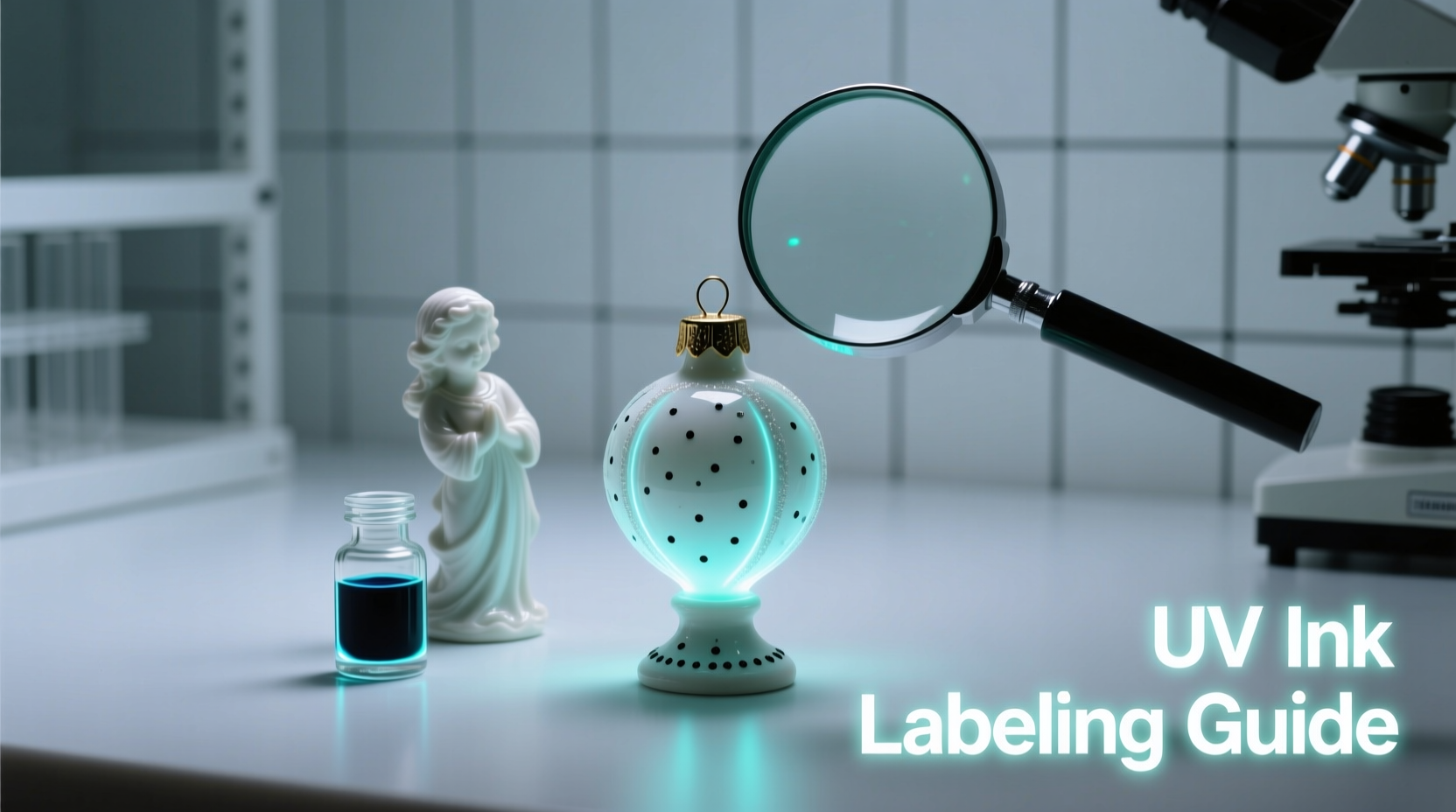
Invisible UV ink contains fluorescent compounds that absorb ultraviolet light and re-emit it as visible light, typically in blue, green, or yellow hues. These dyes are transparent under daylight or incandescent lighting but glow brightly when exposed to UV-A wavelengths (365–395 nm), commonly emitted by blacklight flashlights or inspection lamps.
Most commercially available UV inks are water-based and non-toxic, designed for use on paper, plastic, textiles, and smooth surfaces like glass or glazed ceramics—exactly the materials common in fragile ornaments. The key advantage is permanence: once dried, the ink bonds at a molecular level and resists smudging, moisture, and mild cleaning agents.
It’s important to note that not all UV inks are created equal. Some formulations degrade under prolonged sunlight exposure, while others may leave a faint residue. For valuable or archival items, opt for archival-grade, fade-resistant UV ink specifically labeled for long-term preservation use.
Step-by-Step Guide to Labeling Ornaments with UV Ink
Labeling fragile ornaments requires precision, patience, and the right tools. Follow this sequence to ensure clear, durable, and invisible identification:
- Gather your materials: UV ink pen or marker, fine-tipped applicator (optional), UV flashlight (365 nm preferred), rubbing alcohol and lint-free cloth, gloves, and a clean workspace.
- Clean the surface: Gently wipe the labeling area with a cloth dampened with isopropyl alcohol. This removes oils, dust, and residues that could prevent adhesion. Allow the surface to dry completely.
- Choose the location: Select a low-visibility spot—such as the underside, inside rim, or base—where the ink won’t be seen during display but is accessible for scanning.
- Apply the ink: Using steady hands, write or stamp the desired information. Use block letters for clarity. Avoid excessive pressure, especially on thin glass or lacquered surfaces.
- Dry thoroughly: Let the ink air-dry for at least 5–10 minutes. Do not blow on it or use heat, which can cause bubbling or distortion.
- Verify under UV light: Shine the blacklight at a 45-degree angle to confirm legibility. Adjust handwriting or reapply if needed.
- Record the data: Maintain a digital or physical log linking the UV code to item details (e.g., “ORN-07 = 1920s German Glass Angel, Height: 12cm”).
For high-value collections, consider encoding more than just a number. Include abbreviated provenance, acquisition date, or insurance ID. For example: ACQ23-MUN-042 could mean “Acquired 2023, Munich Collection, Item 42.” This system allows quick verification without exposing sensitive data.
Best Practices and Common Pitfalls
While UV ink labeling is straightforward, mistakes can compromise results. The following table outlines critical do’s and don’ts:
| Do | Don't |
|---|---|
| Use gloves to prevent oil transfer | Handle the item excessively after application |
| Store UV-labeled items away from direct sunlight | Use solvent-based cleaners near labeled areas |
| Use 365nm UV lights for maximum clarity | Assume all blacklights are equally effective |
| Label during low-humidity conditions | Apply ink in damp environments |
| Back up codes in a secure database | Rely solely on memory or unrecorded UV tags |
One often-overlooked factor is humidity. High moisture levels can slow drying time and weaken ink adhesion, especially on non-porous surfaces. Aim for a relative humidity below 50% when applying UV ink. Additionally, avoid touching the labeled area post-application—even clean fingers can leave traces that interfere with fluorescence.
Real-World Application: A Collector’s Experience
Sophia Reed, a vintage ornament collector from Portland, owns over 300 pieces spanning eight decades. After losing two rare Czech glass ornaments during a move due to mislabeling, she sought a better tracking method. “I didn’t want sticky tags on my displays, and writing on boxes wasn’t reliable,” she said. “I tried barcodes, but they looked out of place on antique packaging.”
She discovered UV ink labeling through a museum conservation forum. Starting with her most valuable items, she began marking the interior bases of glass ornaments with a three-character code linked to a spreadsheet containing photos, origin, and insurance value. During her next relocation, movers used UV flashlights to verify contents without opening every box. “It saved hours of unpacking and gave me peace of mind,” Sophia noted. “Even my insurer was impressed—they now recommend it to other clients with art collections.”
Her system has evolved: each holiday season, she does a quick UV scan of stored ornaments to ensure none were damaged in transit. The process takes less than ten minutes and has prevented accidental discarding of unlabeled spares.
“Discreet identification is essential for preserving both the physical and sentimental value of fragile items. UV ink offers a nearly perfect balance of invisibility and reliability.” — Dr. Alan Zhou, Conservation Scientist, National Museum of Decorative Arts
Essential Tools and Product Recommendations
Not all UV ink products are suitable for delicate surfaces. Below is a checklist of what to look for when selecting supplies:
- Archival-quality ink: Free of acids and lignin, pH-neutral, and fade-resistant.
- Fine-tip applicator: Precision nibs (0.4–0.8mm) allow controlled writing without bleeding.
- UV flashlight with 365nm wavelength: Higher frequency than standard 395nm models, offering brighter fluorescence and less visible purple glow.
- Non-abrasive cleaning tools: Microfiber cloths and 70% isopropyl alcohol for prep.
- Gloves: Nitrile gloves prevent fingerprints and skin oils from contaminating surfaces.
Recommended brands include UV Markers by Zebra for fine-line writing, SecurityTag UV Ink Pens for industrial durability, and OceanMax 365nm UV Flashlights for high-sensitivity detection. For large collections, consider UV ink stamp pads with custom rubber stamps—ideal for applying consistent batch codes quickly.
FAQ: Common Questions About UV Labeling
Can UV ink damage glass or painted ornaments?
High-quality, water-based UV inks are non-corrosive and safe for glass, glazed ceramics, and most painted finishes. However, avoid use on unsealed wood, porous stone, or antique varnishes without testing. Never use solvent-based UV inks on delicate surfaces.
How long does UV ink last on ornaments?
Under proper storage conditions—away from direct sunlight and moisture—archival UV ink can remain readable for 10–15 years or longer. Exposure to intense UV light (e.g., prolonged sunlight) may gradually degrade fluorescence over time.
Is UV labeling detectable by the public or thieves?
No, the ink is invisible under normal lighting. However, UV flashlights are widely available, so this method should not be relied upon for security against theft. It is best used for inventory, restoration, and logistical purposes rather than anti-theft protection.
Expanding the Use Case: Beyond Holiday Decorations
While holiday ornaments are a common application, UV ink labeling benefits any fragile collectible. Museums use it to tag ancient pottery shards, auction houses mark consignment lots, and film prop departments identify delicate replicas. Even laboratories apply UV codes to glassware used in sensitive experiments where visible labels could interfere with imaging.
For estate managers and executors, UV labeling simplifies inheritance distribution. Instead of attaching notes or relying on memory, each item carries a silent identifier linked to a will or digital catalog. This reduces disputes and ensures accurate allocation of sentimental assets.
Another growing use is in disaster preparedness. Families in wildfire or flood-prone areas label valuables with UV ink before evacuation. If items are recovered from debris, identification remains intact even when external tags are destroyed.
Final Checklist: Your UV Labeling Action Plan
Before you begin labeling your collection, complete this checklist to ensure success:
- ☐ Acquire archival-grade UV ink pen or marker
- ☐ Obtain a 365nm UV flashlight and test its output
- ☐ Prepare a digital or printed log to map codes to item details
- ☐ Clean and dry your workspace; wear nitrile gloves
- ☐ Test ink on a non-visible area of a less valuable piece
- ☐ Choose consistent labeling locations across all items
- ☐ Apply ink in thin, even strokes; allow full drying time
- ☐ Verify readability under UV light before storing
- ☐ Back up your inventory log in cloud storage or offline drive
- ☐ Schedule annual UV checks to confirm label integrity
Conclusion
Labeling fragile ornaments with invisible UV ink is more than a clever trick—it’s a thoughtful preservation strategy. It bridges the gap between practicality and aesthetics, allowing owners to protect, track, and cherish delicate items without compromise. Whether you’re a collector safeguarding a lifetime of memories, a curator managing institutional artifacts, or someone preparing heirlooms for future generations, this method offers a quiet yet powerful way to maintain order and authenticity.
The tools are accessible, the process is simple, and the benefits endure far beyond the holiday season. Start small, refine your system, and watch your confidence in handling fragile treasures grow. In a world where so much is visible, sometimes the most valuable marks are the ones you can’t see—until you need them.




 浙公网安备
33010002000092号
浙公网安备
33010002000092号 浙B2-20120091-4
Comments
No comments yet. Why don't you start the discussion?