
As the holiday season approaches, homes come alive with warmth and light. One of the most understated yet impactful ways to elevate your interior ambiance is by layering Christmas lights behind sheer curtains. This technique diffuses the brightness of the bulbs, creating a gentle, ethereal glow that mimics candlelight or moonlight filtering through snow-dusted panes. Unlike bold displays that dominate attention, this method offers subtle elegance—perfect for living rooms, bedrooms, or even dining areas where mood lighting enhances comfort.
The magic lies in simplicity: sheer fabric acts as a natural diffuser, scattering light evenly while concealing the wiring and structure of the strand. When done thoughtfully, the result feels intentional and serene, not cluttered or overly festive. Whether you're aiming for a cozy hygge-inspired retreat or a romantic holiday dinner setting, this approach adds depth and dimension without overwhelming the space.
Why Sheer Curtains Work Best for Light Diffusion
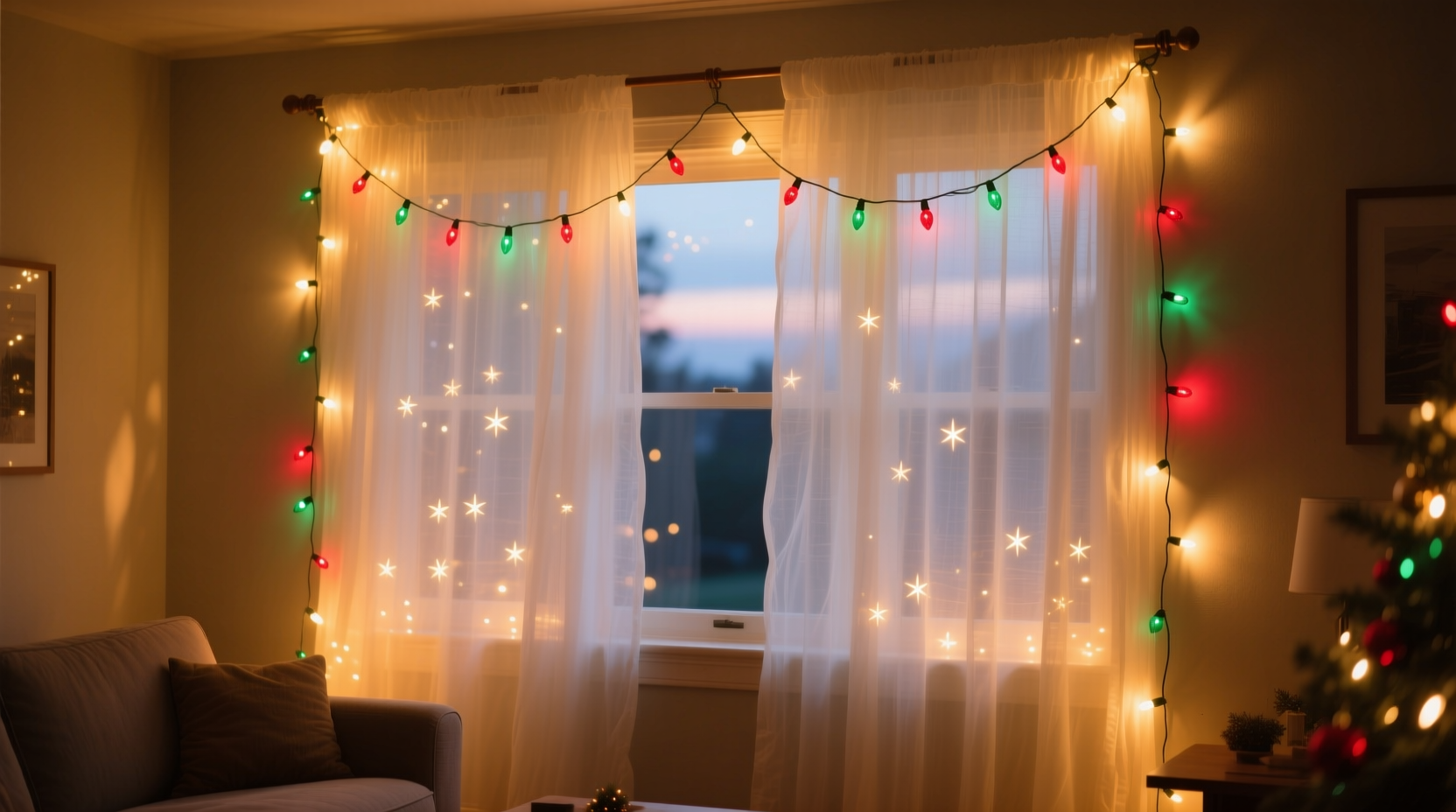
Sheer curtains are uniquely suited for softening artificial light due to their lightweight, semi-transparent weave. Unlike blackout or lined drapes, which absorb or block light, sheer fabrics like voile, chiffon, or organza allow illumination to pass through while blurring individual points of brightness. This creates a uniform luminosity across the window surface, turning each bulb into a softly glowing halo rather than a distinct dot.
The translucency also maintains visibility from both inside and outside at night, preserving views of falling snow or city lights beyond the glass. During daylight hours, the strands remain nearly invisible when unlit, ensuring your decor doesn’t clash with everyday aesthetics. This dual functionality makes it an ideal choice for renters or those who prefer minimalist seasonal touches.
“Light diffusion through sheer textiles can transform harsh LEDs into something poetic—like stars caught in gauze.” — Lila Monroe, Interior Lighting Designer
Step-by-Step Guide: Installing Lights Behind Sheer Curtains
Proper installation ensures safety, longevity, and visual harmony. Follow this sequence to achieve professional results without damaging walls, windows, or fabric.
- Measure Your Window Frame: Use a tape measure to determine the height and width of the window where the curtain rod is mounted. Add six inches on each side for fullness and edge coverage.
- Select Appropriate Lights: Opt for mini fairy lights or warm-white LED string lights with a low heat output. Avoid incandescent bulbs, which generate excess warmth that could degrade fabric over time.
- Test the Strand Before Mounting: Plug in the lights to ensure all bulbs function and confirm the color temperature suits your space. Warm white (2700K–3000K) provides the coziest effect.
- Attach Clips or Adhesive Hooks: Install small plastic clips along the top edge of the curtain rod bracket or directly onto the wall just behind the rod. Space them every 12–18 inches to support the wire evenly.
- Weave the Lights Behind the Curtain: Starting at one end, gently feed the light strand behind the sheer panel, guiding it through the clips. Keep tension minimal to avoid pulling the fabric out of alignment.
- Secure the Power Cord: Route the plug along the baseboard or up the wall using cord clips. Never let cords dangle near foot traffic or hang loosely over furniture edges.
- Adjust Fabric Drape: Once installed, smooth the curtain so it hangs naturally in front of the lights. Slight puckering or gathering can enhance the shimmering effect.
- Turn On and Evaluate: View the setup at dusk and adjust spacing if certain areas appear brighter than others. Add secondary strands if needed for fuller coverage.
Choosing the Right Lights and Materials
Not all Christmas lights deliver the same quality of glow. The interplay between bulb type, spacing, and fabric texture determines the final outcome.
| Feature | Recommended | Avoid |
|---|---|---|
| Bulb Type | Warm-white LED micro-lights | Cool-white or multicolor LEDs |
| Wire Gauge | Thin, flexible copper wire | Thick, rigid cables |
| Bulb Spacing | 2–4 inches between bulbs | Spaced more than 6 inches apart |
| Fabric Weight | Lightweight polyester or cotton blend | Heavy linens or thermal-backed sheers |
| Power Source | Plug-in with timer or USB-powered | Battery packs requiring frequent replacement |
For larger windows, consider connecting multiple strands end-to-end, but verify total wattage does not exceed outlet capacity. Look for strings labeled “connectable up to X sets” to stay within safe limits. Battery-operated options offer flexibility but require regular monitoring; a plug-in model with an automatic timer (on for 6 hours, off for 18) conserves energy and reduces fire risk.
Design Variations and Creative Applications
While basic linear placement works well, slight modifications can personalize the display. Experiment with these techniques to match your room’s character.
- Zigzag Pattern: Instead of running straight across, weave the strand vertically in a gentle wave to mimic falling snowflakes or icicles.
- Layered Depth: Hang two sheer panels—one closer to the glass, one nearer the room—and place lights between them for added dimension.
- Accent Corners Only: Focus lighting on upper corners of wide windows to frame the view without covering the entire span.
- Combine with Natural Elements: Tuck eucalyptus garlands or dried pampas grass above the rod, letting the lights peek through the foliage for organic texture.
In bedrooms, position the lights behind blackout curtains topped with a sheer overlay. This allows daytime privacy while enabling the soft glow to emerge at night when only the sheer remains drawn.
Mini Case Study: A Cozy Urban Apartment Transformation
Sophie, a graphic designer in Chicago, wanted to bring holiday warmth into her 700-square-foot loft without sacrificing modern minimalism. Her living area features floor-to-ceiling windows overlooking a quiet courtyard. Last year, she strung colored lights around the perimeter, but found the reflection disruptive during evening work sessions.
This season, she opted for 30 feet of warm-white fairy lights mounted behind ivory voile curtains. She used clear adhesive hooks to secure the wire along the inner edge of the curtain track, feeding the strand behind the fabric before closing the panels. After dark, the effect was immediate: a luminous veil replaced the stark outline of individual bulbs. Neighbors commented on the \"candlelit\" appearance from outside, while Sophie enjoyed ambient lighting perfect for movie nights and video calls.
The project took under 45 minutes, cost less than $40, and required no tools beyond scissors and a measuring tape. Most importantly, the setup felt integrated—not temporary or tacked-on.
Safety and Maintenance Best Practices
Even low-voltage LED strings demand responsible handling. Overheating, frayed wires, or improper installation can pose risks, especially in homes with pets or children.
- Inspect strands annually for damaged insulation or loose connections.
- Never leave lights unattended for extended periods; use timers to limit operation.
- Keep cords away from water sources and high-moisture zones like kitchens or bathrooms.
- Unplug before adjusting curtains or cleaning windows.
- Store lights carefully after the season—wrap around a cardboard reel to prevent tangling.
Additionally, avoid pinching the wire between curtain rings or brackets, which can wear down the coating over time. If your sheers are machine-washable, remove the lights completely before laundering.
Checklist: Preparing Your Window Display
Use this checklist to ensure a seamless installation:
- ☐ Measure window dimensions and purchase appropriately sized lights
- ☐ Test all bulbs and check for flickering or dead sections
- ☐ Gather mounting supplies: clips, adhesive hooks, cord organizers
- ☐ Confirm outlet access and use surge protector if needed
- ☐ Install curtain rod securely and verify fabric movement isn't obstructed
- ☐ Feed lights behind the panel and secure with clips
- ☐ Adjust drape for even light distribution
- ☐ Set timer and evaluate after dark
FAQ
Can I use this technique with blackout curtains?
Only if the blackout layer is beneath a sheer top panel. Solid blackout fabric will block nearly all light. However, combining a sheer overlay with hidden lights achieves both darkness during the day and soft glow at night.
Will the lights damage my curtains over time?
LEDs produce minimal heat, making them safe for prolonged contact with most fabrics. Still, inspect the area monthly for discoloration or melting—especially if using older or non-certified strings.
Are battery-powered lights effective for this look?
Yes, particularly in rentals where outlets are limited. Just ensure batteries are fresh and replace them early in the season to maintain consistent brightness throughout December.
Final Thoughts and Call to Action
Creating a soft glow with Christmas lights behind sheer curtains is more than decoration—it's an exercise in thoughtful design. It invites calm, enhances intimacy, and turns ordinary windows into luminous canvases. Unlike flashy outdoor displays, this approach speaks quietly, resonating with those who value atmosphere over spectacle.
The beauty of this method is its accessibility. With fewer than ten dollars’ worth of materials and less than an hour of effort, you can redefine the emotional tone of any room. Whether you live in a high-rise apartment, suburban home, or countryside cottage, the principle holds: subtlety often leaves the strongest impression.




 浙公网安备
33010002000092号
浙公网安备
33010002000092号 浙B2-20120091-4
Comments
No comments yet. Why don't you start the discussion?