
A beautifully lit Christmas tree is the centerpiece of any holiday home. But achieving that professional-level glow—where every branch shimmers and depth seems to dance behind the needles—requires more than just plugging in a string of lights. The secret lies in layering. When done correctly, layered lighting creates dimension, warmth, and an almost magical sparkle that draws the eye from base to tip. This guide walks through the art and science of layering Christmas lights, offering practical steps, real-world examples, and expert-backed methods to transform your tree into a luminous masterpiece.
Why Layering Lights Matters
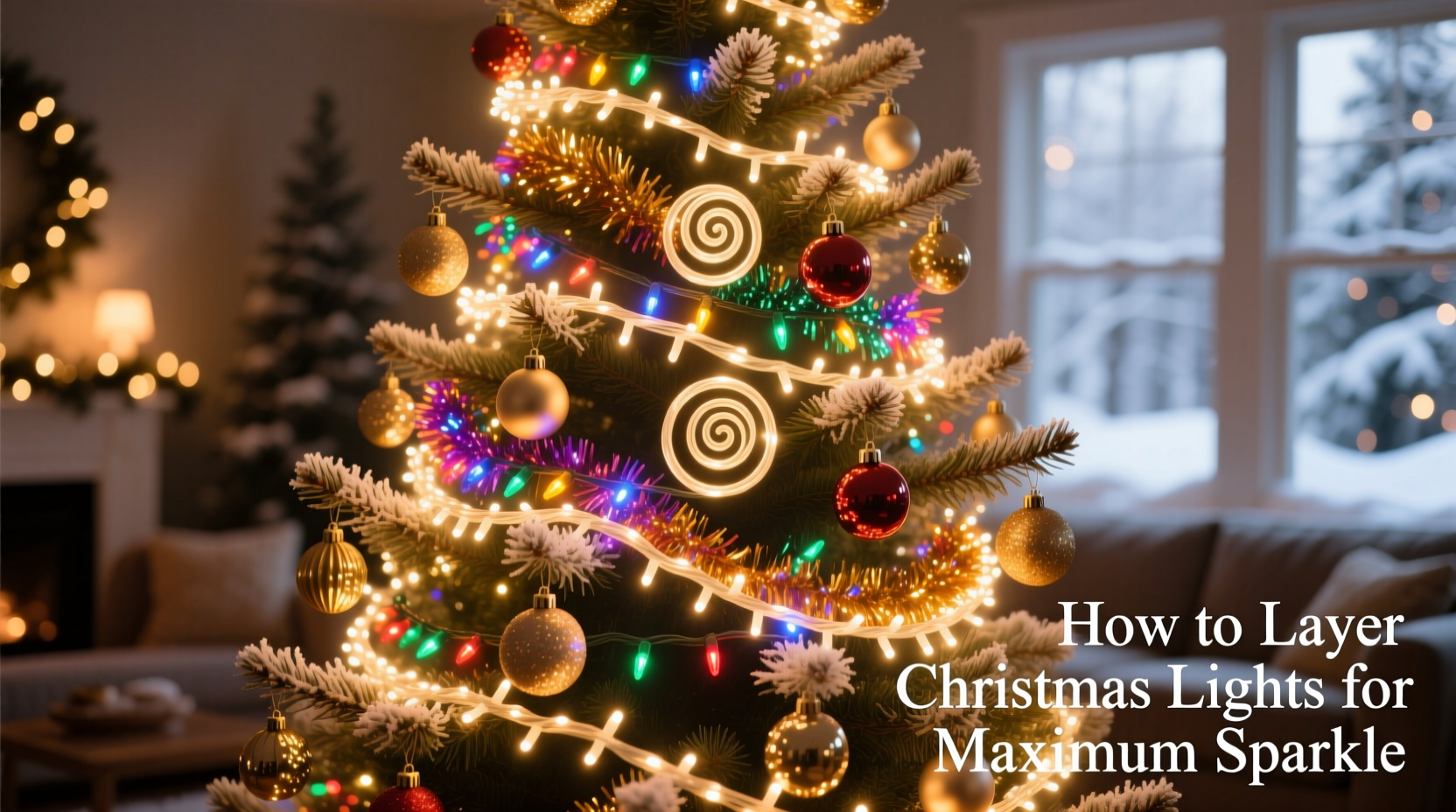
Most people drape lights around their tree in a single pass, spiraling from bottom to top. While this method covers the surface, it often results in flat, uneven illumination—bright on the outside, dark within. Layering solves this by building light from the inside out, ensuring brightness permeates the entire structure. Think of it like painting: one coat hides nothing; multiple layers build richness and contrast.
Layered lighting adds volume, mimics natural depth, and reduces shadow zones. It’s especially effective on full, dense trees where inner branches can easily disappear into darkness. Whether you're working with a real fir or an artificial pre-lit model, strategic layering enhances realism and visual impact.
“Professional decorators don’t just add lights—they sculpt with them. Depth comes from placement, not quantity.” — Marcus Langley, Holiday Display Designer & Former Disney Seasonal Lead
Step-by-Step Guide to Layering Christmas Lights
Follow this five-phase approach to achieve maximum sparkle through intentional layering. Each phase builds upon the last, creating a cohesive, radiant effect.
- Phase 1: Anchor with Base Lighting (Warm White Inners)
Begin with a string of warm white mini lights. These will serve as your foundation. Instead of wrapping the exterior, weave these lights deep into the interior core of the tree, starting at the trunk and working outward. Focus on filling shadow areas—behind thick clusters, near the stand, and along central branches. The goal is to create a soft internal glow, like embers beneath snow. - Phase 2: Build Mid-Layer Coverage (Cool White Middles)
Use a second set of lights—preferably cool white or daylight temperature LEDs—to fill mid-canopy zones. Weave these halfway into the branches, angling the bulbs slightly outward. This layer bridges the gap between core and surface, adding brightness without overwhelming. Maintain consistent spacing: about 3–4 inches between bulb clusters. - Phase 3: Define the Outer Shell (Twinkling or Icicle Finish)
Now apply your most decorative string—twinkling LEDs, faceted bulbs, or icicle-style strands—along the outermost tips of the branches. These catch ambient light and create movement. Wrap loosely, allowing some randomness to mimic natural frost patterns. Avoid overloading; too many bulbs here flatten the effect. - Phase 4: Add Directional Accents (Spotlight Strings or C9s)
For large trees (7 feet and above), incorporate directional lighting. Use C9 bulbs or rope lights along select long branches to draw the eye upward. Place one or two strings vertically from base to apex to simulate a “halo” effect. These act like highlight strokes in a painting—few but impactful. - Phase 5: Test and Adjust (The Dimmer Check)
Plug all strings into individual dimmable outlets or smart plugs. Turn off room lights and observe the tree from multiple angles. Look for dark pockets, overly bright spots, or repetitive patterns. Adjust by repositioning a few bulbs or reducing intensity on specific layers. Fine-tuning is essential—perfection happens in the details.
Choosing the Right Lights for Layering
Not all lights are suited for layering. The right combination depends on color temperature, bulb type, and wire flexibility.
| Layer Position | Recommended Light Type | Color Temp / Effect | Why It Works |
|---|---|---|---|
| Inner Core | Mini LED (warm white) | 2700K–3000K | Soft, diffused glow; energy-efficient for dense weaving |
| Mid-Canopy | Flexible LED strip or mini lights | 3500K–4000K | Balances warmth and clarity; fills visual gaps |
| Outer Edge | Twinkling LEDs or faceted C7s | Multicolor or cool white | Adds sparkle and motion; catches reflections |
| Accent Zones | C9 bulbs or rope lights | Dimmable white | Creates focal points; ideal for tall trees |
Avoid mixing incompatible voltages or connecting more than three standard incandescent strings end-to-end. For safety and control, use UL-listed connectors and surge-protected extension cords rated for indoor use.
Real Example: Transforming a Flat Pre-Lit Tree
Sarah M., a homeowner in Portland, OR, struggled each year with her 7.5-foot pre-lit artificial tree. Despite hundreds of built-in lights, it looked dull and one-dimensional. After consulting a local decorator, she tried layering.
She kept the existing warm white string but added two new sets: first, a cool white LED strand woven into middle branches, then a short run of slow-fade twinkling lights along the outer third. She also installed a smart plug to dim the base layer by 30%, allowing the outer lights to stand out.
The result? Neighbors stopped to admire her tree, and family photos taken beside it finally captured the glow she’d always wanted. “It went from looking like a department store display to something alive,” she said. “The depth makes it feel real, even though it’s plastic.”
Common Mistakes to Avoid
- Overloading the exterior: Too many lights on the surface flatten the tree’s shape and create glare.
- Ignoring color temperature: Mixing warm and cool whites without intention leads to a disjointed look.
- Skipping the anchor layer: Without inner lighting, even well-lit trees have dark centers.
- Using only one type of bulb: Uniformity kills visual interest. Combine steady and twinkling effects sparingly.
- Forgetting power management: Daisychaining too many strings risks overheating or tripped breakers.
Checklist: Perfect Light Layering in 8 Steps
- Unpack and test all light strings before installing.
- Start with the innermost layer—weave warm white lights into the trunk and core branches.
- Apply mid-layer lights, spacing evenly and angling outward.
- Add outer-shell lights with sparkle or texture (twinkle, flicker, or icicle).
- Incorporate accent strings for vertical emphasis on tall trees.
- Use dimmers or smart plugs to control each layer independently.
- View the tree in low ambient light from multiple angles.
- Adjust spacing or brightness to eliminate dark zones or hotspots.
Expert Insight: The Psychology of Light Layers
Lighting affects mood and perception. According to Dr. Lena Pruitt, an environmental psychologist specializing in seasonal environments, layered lighting triggers emotional responses tied to warmth, safety, and celebration.
“Humans are drawn to layered light because it mimics firelight—deep glow at the center, brighter edges dancing outward. It feels comforting and familiar.” — Dr. Lena Pruitt, PhD, Environmental Design Research Institute
This psychological resonance explains why professionally layered trees feel more inviting. They don’t just look better—they feel better.
Frequently Asked Questions
How many strings of lights do I need for layering?
A good rule of thumb is 100 mini lights per foot of tree height for a single layer. For layering, double that—200 per foot. For example, a 6-foot tree needs about 1,200 bulbs across two or three complementary strings. Adjust based on tree density and desired brightness.
Can I layer lights on a pre-lit tree?
Absolutely. Most pre-lit trees only have one layer—usually on the outer branches. Enhance them by adding interior and mid-layer strings. Choose thin, flexible wires that blend with existing foliage. Avoid covering built-in bulbs; instead, weave new lights between them.
Should I use colored or white lights for layering?
White lights offer the most versatility for layering. Use warm white for depth, cool white for clarity, and mix in colored or multicolor strings only as accents. Colored lights scattered throughout can overwhelm the layered effect. If using color, limit it to the outer layer or themed sections.
Final Tips for Lasting Sparkle
Once your tree shines perfectly, preserve the setup for future years. After the holidays, remove lights in reverse order: outer layers first, core last. Coil each string separately and label by function and position. Store in compartmentalized bins to prevent tangling.
Consider taking a photo of your final tree from multiple angles. This becomes a reference for next year’s setup—especially useful if you’ve found the perfect balance of glow and glitter.
And remember: perfection isn’t the goal. Joy is. A tree that sparkles with care, even if slightly imperfect, radiates the spirit of the season far more than a flawless but soulless display.
Conclusion
Layering Christmas lights isn’t about adding more—it’s about placing wisely. With intentional depth, thoughtful color pairing, and careful adjustment, your tree can become a glowing centerpiece that captures attention and warms hearts. You don’t need expensive gear or decades of experience. Just patience, a few extra strings, and the willingness to look beyond the surface.




 浙公网安备
33010002000092号
浙公网安备
33010002000092号 浙B2-20120091-4
Comments
No comments yet. Why don't you start the discussion?