
Creating a festive, inviting holiday display is an art form—one that balances warmth and sparkle with intentional design. Many homeowners fall into the trap of overloading their spaces with lights and greenery, only to end up with a chaotic, visually overwhelming result. The key lies in layering: combining Christmas lights and garlands thoughtfully to build dimension while maintaining harmony. When done right, this technique adds richness and depth without sacrificing elegance or cohesion.
The goal isn’t to cover every inch with decoration, but to guide the eye through a sequence of light and texture—like a well-composed photograph. This approach transforms porches, mantels, staircases, and entryways into curated experiences rather than mere displays. With strategic placement, balanced color temperatures, and mindful spacing, you can achieve a professionally styled look that feels both abundant and refined.
Understanding Visual Depth in Holiday Decor
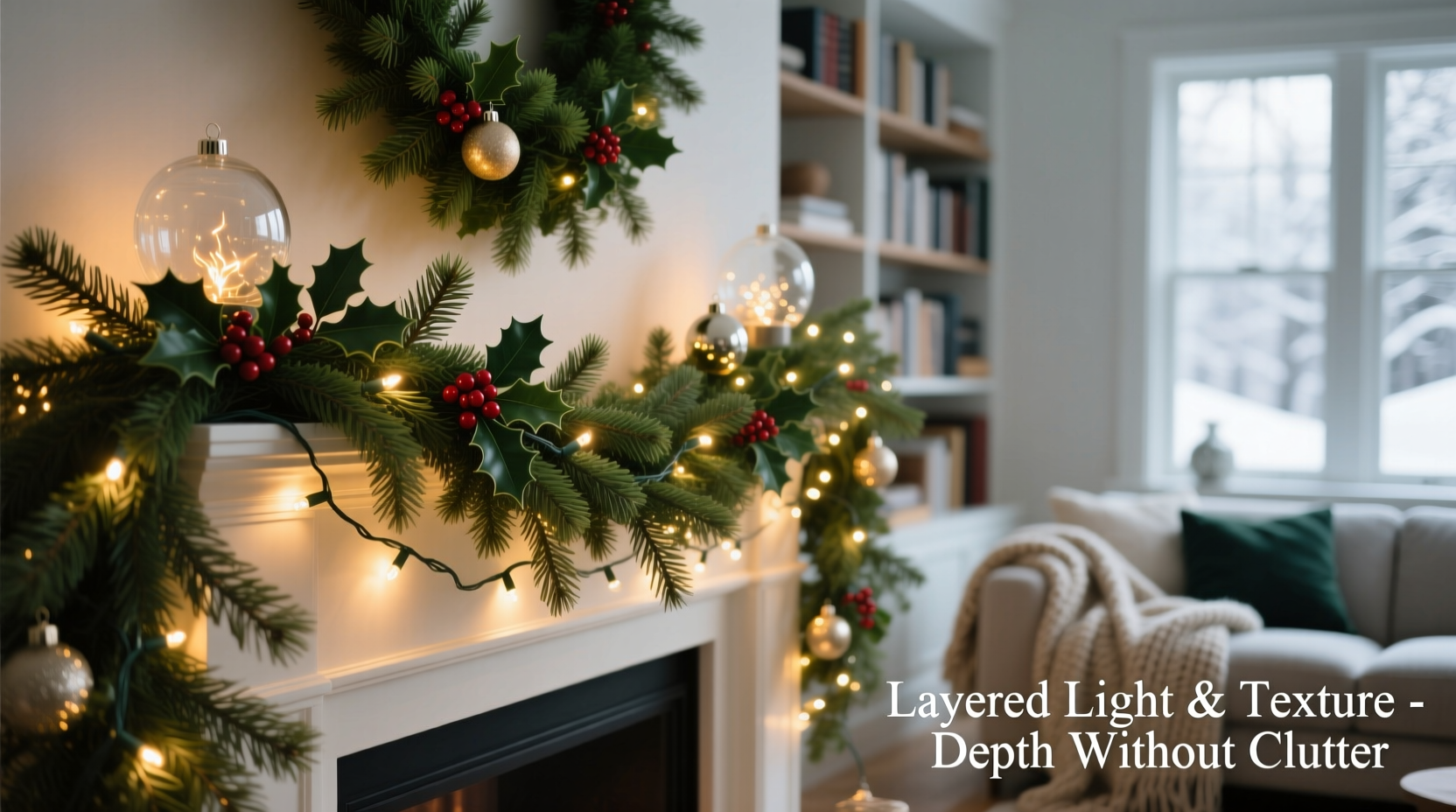
Visual depth refers to the perception of distance and layering within a space. In interior and exterior design, it’s achieved by varying elements such as scale, brightness, texture, and positioning. During the holidays, where lighting plays a dominant role, depth prevents flatness and monotony.
Garlands provide the foundational texture—organic, flowing, and dimensional—while lights act as accents that highlight contours and draw attention to specific areas. Used together, they create a push-and-pull effect: the garland grounds the composition, and the lights lift it, creating movement and interest.
However, when too many competing elements are introduced—such as multicolored bulbs, mismatched garlands, or overly dense wrapping—the brain struggles to process the scene, resulting in visual clutter. This fatigue diminishes the festive joy and makes the space feel stressful rather than celebratory.
Step-by-Step Guide to Layering Lights and Garlands
Follow this structured approach to layer Christmas lights with garlands effectively, ensuring depth without overcrowding.
- Start with a clean base. Remove existing decor and assess the architectural lines of the area—mantel, staircase railing, doorway, or porch columns. Identify natural anchor points where garlands can begin and end.
- Install the garland first. Drape it loosely to follow the shape of the structure. Allow gentle dips and loops to add rhythm. Secure every 12–18 inches with floral wire or zip ties hidden beneath foliage.
- Select complementary lighting. Choose mini string lights that match the garland’s tone—warm white for traditional evergreen, cool white for frosted or silver themes. Avoid blinking or multi-color sets unless used sparingly as accents.
- Weave lights into the garland. Begin at one end and thread the string through the center or underside of the garland. Space bulbs evenly, tucking wires between branches so they’re not visible from the front.
- Add secondary light sources. Place spotlighted candles, lanterns, or recessed uplighting nearby to cast soft shadows and enhance depth behind the garland.
- Step back and evaluate. View the arrangement from different angles and distances. Adjust any sections that appear too dense or uneven.
This method ensures that each element has room to breathe while contributing to an overall sense of layered sophistication.
Do’s and Don’ts: Balancing Garland and Light Use
Mistakes in holiday decorating often stem from good intentions gone unchecked. The desire to “make it festive” can lead to excess. Use this table as a reference to avoid common pitfalls.
| Do | Don't |
|---|---|
| Use uniform garland thickness throughout a space | Mix chunky and thin garlands on the same railing |
| Weave lights inside the garland for a glowing-from-within effect | Wrap lights tightly around the outside like a candy cane |
| Limit yourself to one primary light color per zone | Combine warm white, cool white, and rainbow lights in proximity |
| Leave negative space between decorative groupings | Cover every inch of railing or mantel surface |
| Incorporate subtle reflective elements (e.g., metallic ribbon) | Overload with glitter, mirrors, or flashing ornaments |
By adhering to these guidelines, you preserve clarity and focus in your design, allowing each component to shine without competing.
Expert Insight: The Psychology of Holiday Aesthetics
Design choices during the holidays impact more than just appearance—they influence mood and perception. Dr. Lila Monroe, an environmental psychologist specializing in seasonal environments, explains:
“People respond emotionally to light patterns. Consistent, rhythmic lighting reduces stress and evokes feelings of safety and celebration. When garlands and lights are layered with intention, they create a sense of journey and discovery, which enhances emotional engagement.”
This insight underscores why thoughtful layering matters. It’s not about covering more ground; it’s about creating moments of delight along the way. A well-lit garland winding down a staircase doesn’t just look beautiful—it invites people to move through the space with anticipation and comfort.
Real Example: Transforming a Busy Entryway
Sarah Kim, a homeowner in Portland, Oregon, struggled each year with her front porch decor. She loved the idea of abundance but found her setup looked “like a tangled jungle.” Her previous approach involved three strands of multicolored lights wrapped haphazardly around a mixed-evergreen garland, with pinecones and red berries stuffed wherever there was space.
In consultation with a local decorator, she simplified her strategy. She replaced the garland with a uniform Fraser fir strand, secured with hidden ties. Then, she chose a single string of warm white LED mini lights and wove them through the center of the garland, starting at the top post and spiraling gently downward. She added only two focal points: a classic red bow at the base and a small vintage lantern on the step below, aimed upward to cast dappled shadows through the leaves.
The result? A cohesive, elegant display that drew compliments from neighbors and felt calming rather than exhausting. “I finally get what ‘less is more’ means,” Sarah said. “It actually feels more festive because I can see the beauty instead of fighting through the noise.”
Checklist: Achieving Clean, Layered Holiday Displays
Use this checklist before finalizing your holiday decor to ensure clarity and depth:
- ☐ Chose a consistent garland type and thickness for each area
- ☐ Selected one primary light color temperature (preferably warm white)
- ☐ Weaved lights into the garland, not wrapped around it
- ☐ Left breathing room between decorative elements
- ☐ Anchored the display with one or two non-light focal points (bow, lantern, ornament)
- ☐ Stepped back to view from multiple angles and distances
- ☐ Turned on lights at night to evaluate glow and shadow balance
- ☐ Removed at least one item you initially thought was “necessary”
That last point is critical. Editing is part of the creative process. Removing even a single strand or ornament can dramatically improve visual flow.
Frequently Asked Questions
Can I mix artificial and real garlands?
Yes, but do so carefully. Blend them only if their textures and colors align closely. For example, a high-quality artificial spruce can pair with fresh cedar if both have a deep green hue and similar needle density. Avoid placing obviously fake-looking pieces next to real ones, as the contrast creates dissonance.
How many lights should I use per foot of garland?
A general rule is 50 bulbs (on a 25-foot string) per 10 feet of garland. This provides even illumination without overloading. For thicker garlands or darker settings, consider 100 bulbs per 10 feet—but always test the effect before securing permanently.
What if I want color? Can I still avoid clutter?
Absolutely. If you prefer colored lights, limit them to a single accent area—like a doorway centerpiece or tree mantle. Surround it with neutral-toned garlands and warm white lights to buffer the vibrancy. Think of color as a spice: a little enhances flavor; too much overwhelms.
Final Thoughts: Design with Intention, Not Volume
The most memorable holiday displays aren’t those with the most lights or the longest garlands—they’re the ones that make you pause, smile, and feel welcomed. Achieving depth without visual clutter comes down to discipline, editing, and a clear vision.
Every strand of lights and every foot of garland should serve a purpose: to highlight, to guide, to soften, or to celebrate. When you layer with restraint and attention to detail, the result is not minimalism, but meaning. The glow feels warmer because it’s focused. The greenery feels richer because it’s uncluttered.
This season, resist the urge to decorate every available surface. Instead, invest time in curating a few standout features where lights and garlands work together like partners in a dance—each enhancing the other, moving in rhythm, creating something greater than the sum of its parts.




 浙公网安备
33010002000092号
浙公网安备
33010002000092号 浙B2-20120091-4
Comments
No comments yet. Why don't you start the discussion?