
A beautifully lit Christmas tree can transform a room into a winter sanctuary, evoking warmth, nostalgia, and elegance. While many people focus on color schemes or ornament selection, one of the most impactful — yet often overlooked — elements is how lights are layered. Professional designers don’t just string bulbs; they build depth, rhythm, and dimension through strategic layering of different bulb sizes. When done right, this technique creates a luminous, multidimensional effect that mimics high-end holiday displays seen in luxury hotels, boutiques, and editorial spreads.
The key lies not in using more lights, but in using them more thoughtfully. By combining various bulb sizes, intensities, and placements, you can achieve a custom, curated glow that feels intentional rather than accidental. This guide breaks down the exact method used by interior stylists to layer bulb sizes like pros—no expensive tools or design degree required.
Why Bulb Size Matters in Tree Lighting
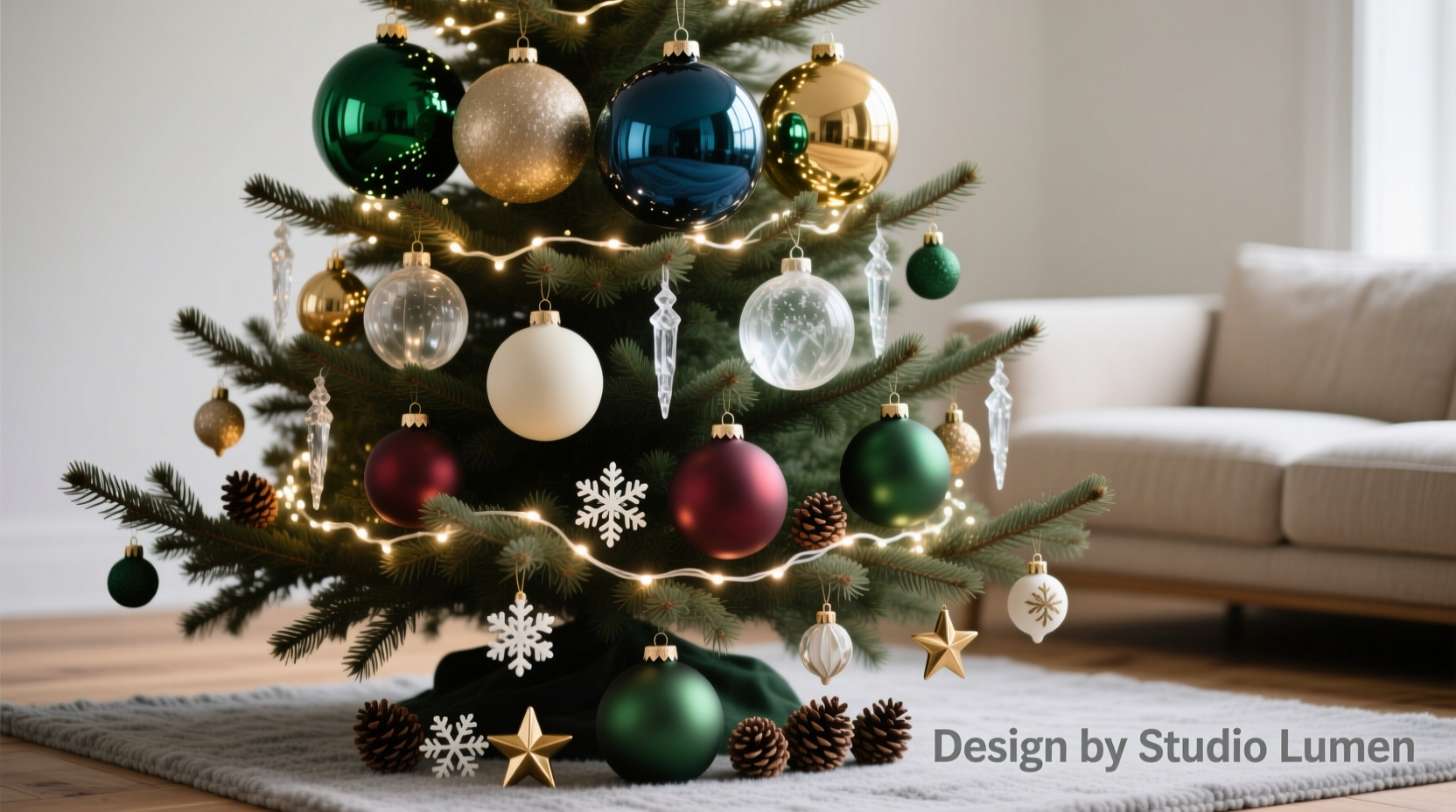
Bulb size directly influences how light interacts with your tree’s structure. Larger bulbs cast broader beams and serve as focal points, while smaller ones create ambient sparkle. Using only one size results in flat, uniform lighting—an effect that can look artificial or dated. In contrast, mixing sizes introduces visual hierarchy, drawing the eye naturally from branch to branch, much like sunlight filtering through real pine needles.
Consider a 7-foot Fraser fir: its dense outer layer catches light differently than the inner branches near the trunk. Small fairy lights might disappear in thick foliage if used alone, while oversized C9 bulbs could overwhelm delicate tips. A balanced mix ensures every level of the tree—from core to canopy—receives appropriate illumination.
“Lighting is the foundation of any great holiday display. Layering bulb sizes gives trees soul. It’s not about brightness—it’s about dimension.” — Lydia Chen, Interior Stylist & Holiday Design Consultant
Step-by-Step Guide to Layering Bulb Sizes Like a Designer
Follow this five-step process to build a professionally layered lighting scheme using multiple bulb types. The goal is to create depth, balance, and rhythm across your tree.
- Start with a base layer of mini lights (2–3 mm)
Begin by wrapping the tree with warm white or soft ivory mini lights. These act as your “canvas,” providing even background illumination. Use at least 100 bulbs per foot of tree height—for a 6-foot tree, that’s 600–700 mini lights. Wrap spirally from bottom to top, tucking wires into branches rather than leaving them exposed. - Add mid-size bulbs (5–7 mm) for texture
Once the base layer is secure, weave strands of slightly larger bulbs—such as candle-style or faceted miniatures—through the middle third of the tree. Focus on areas where shadows tend to gather, like behind clusters of ornaments or along thicker limbs. These bulbs should be spaced irregularly to mimic natural flicker patterns, avoiding symmetrical placement. - Incorporate statement bulbs (10–25 mm) for drama
Select 8–12 large decorative bulbs—think vintage Edison-style globes, frosted teardrops, or colored glass spheres—and place them strategically around the tree. These aren’t strung; they’re individually wired and positioned to stand out. Place one every 8–10 inches, favoring outward-facing branches for maximum visibility. - Highlight depth with back-layer accents
Use short strands of warm fairy lights to illuminate the backside of the tree, especially near the wall or corner. This prevents the rear from looking dark when viewed from an angle. Tuck these behind outer branches so the glow appears to emanate from within. - Test and refine after dark
Turn off overhead lights and evaluate the tree at night. Walk around it from multiple angles. Adjust any overly bright zones by removing or dimming bulbs. Add more small lights to underlit sections. Let the tree “rest” for a few hours before final tweaks—your eyes will notice imbalances more clearly after a break.
Choosing the Right Bulb Sizes and Types
Not all bulbs are created equal. Understanding standard sizes and their roles helps you make informed choices. Below is a comparison of common bulb types and their best uses in layered tree lighting.
| Bulb Type | Size (mm) | Best For | Avoid If |
|---|---|---|---|
| Mini LED Fairy Lights | 2–3 mm | Base layer, ambient glow, filling dense foliage | You want bold, standout features |
| Mid-Size Faceted Bulbs | 5–7 mm | Adding sparkle and mid-level interest | Using on very sparse trees (can look patchy) |
| Vintage-Inspired Globes | 10–15 mm | Statement pieces, retro aesthetic | Tree has delicate tips (bulbs may weigh down branches) |
| Oversized Decorative Spheres | 20–25 mm | Drama, luxury appeal, centerpiece effect | Tree is under 5 feet tall (can overpower scale) |
| Candelabra-Style Flames | 8–12 mm (variable) | Traditional or rustic themes, flicker effect | Seeking modern minimalism |
When selecting colors, stick to a cohesive palette. Warm whites and ivories blend seamlessly across bulb sizes. If using color, limit it to one or two tones—like ruby and gold or cobalt and silver—and distribute them evenly across all layers. Avoid mixing cool white with warm white unless intentionally creating contrast.
Real Example: Transforming a Basic Tree into a Designer Display
Sarah, a homeowner in Portland, had always used a single strand of red mini lights on her pre-lit artificial tree. Each year, it looked flat and uninspired. Last November, she decided to experiment with layering. She kept the existing pre-lit string as a partial base but added three new components:
- A second spiral wrap of warm white micro LEDs (2.5 mm) to boost coverage
- Two strands of amber-tinted 6 mm faceted bulbs woven through the mid-canopy
- Eleven hand-wired vintage-style 18 mm clear glass bulbs placed at eye level and near the top
The result was immediate. Friends commented that the tree looked “expensive” and “magical.” The smaller bulbs filled gaps, the mid-size ones caught reflections from ornaments, and the large bulbs acted as glowing anchors. Sarah didn’t add more total lights—she simply diversified their size and placement. Her total investment was under $40, proving that designer effects don’t require designer budgets.
Pro Tips for a Polished Finish
- Use dimmers to control intensity. Even warm white bulbs can feel harsh if overpowered. A plug-in dimmer lets you adjust brightness for day vs. night viewing.
- Cluster similar-sized bulbs sparingly. Never group more than three large bulbs together—they’ll create a “traffic light” effect. Instead, space them apart and let them shine individually.
- Hide cords and plugs behind the tree or inside a decorative sleeve. Exposed wiring breaks the illusion of seamless glow.
- Label strands by size and color if storing for next year. Reassembly becomes faster and more accurate.
Checklist: Achieving a Designer-Layered Look
Before turning on your tree, run through this checklist to ensure professional results:
- ✅ Base layer of mini lights installed from bottom to top
- ✅ Mid-size bulbs added for texture and rhythm
- ✅ Large statement bulbs wired and positioned (not clustered)
- ✅ Back-layer lighting tested for depth
- ✅ All strands tested and working
- ✅ No visible cords or tangled wires
- ✅ Tree evaluated from multiple angles in low light
- ✅ Dimmer switch applied (if available)
- ✅ Extra bulbs saved for replacements
Frequently Asked Questions
Can I mix LED and incandescent bulbs on the same tree?
Yes, but be cautious about color temperature. Incandescent bulbs typically emit a warmer, yellower glow, while LEDs vary. Choose LEDs labeled “warm white” (2700K–3000K) to match incandescents. Mixing cool white LEDs with incandescents creates an uneven, jarring effect.
How many total lights do I need for a layered look?
A good rule is 100 mini lights per foot of tree height as a base. Then add 25–50% more in secondary layers. For a 7-foot tree: 700 mini lights + 200 mid-size bulbs + 10–12 large bulbs. Adjust based on tree density—fuller trees need more light to penetrate.
Are large bulbs safe for artificial trees?
Yes, especially if using LED versions, which generate little heat. Avoid placing large incandescent bulbs directly against synthetic branches, as prolonged heat exposure can cause warping or discoloration. Always check manufacturer guidelines for fire safety.
Final Thoughts: Elevate Your Holiday Aesthetic
A designer Christmas tree isn’t defined by price or brand—it’s defined by intention. Layering different bulb sizes is a simple yet powerful technique that transforms ordinary lighting into something extraordinary. It invites guests to pause, to admire, to feel the care embedded in every glow. You don’t need a decorator’s budget, only a decorator’s mindset: thoughtful, deliberate, and attentive to detail.
Start with what you have. Assess your current lights. Can you add a second layer? Replace a strand with a different size? Introduce just one or two statement bulbs to anchor the design? Small changes yield big results. This season, let your tree tell a story—not just of celebration, but of craftsmanship and care.




 浙公网安备
33010002000092号
浙公网安备
33010002000092号 浙B2-20120091-4
Comments
No comments yet. Why don't you start the discussion?