
Creating a captivating Christmas light display goes beyond simply draping strings along eaves or wrapping trees. The most striking outdoor setups achieve a sense of dimension—lights appear to glow from within, casting soft halos and drawing the eye through layers of brilliance. This effect isn’t accidental; it’s achieved by intentionally layering different sizes and types of Christmas lights. When done correctly, layered lighting adds visual depth, mimics natural luminosity, and transforms ordinary displays into immersive experiences.
Whether you're decorating a modest porch or illuminating an entire home façade, understanding how to combine various bulb sizes and light densities can elevate your holiday aesthetic. From micro LED strands to C9 commercial-grade bulbs, each size contributes a unique role in building a dynamic, textured look. The key lies not just in using multiple types, but in placing them strategically to guide the viewer’s gaze and simulate three-dimensionality.
Understanding Light Bulb Sizes and Their Roles
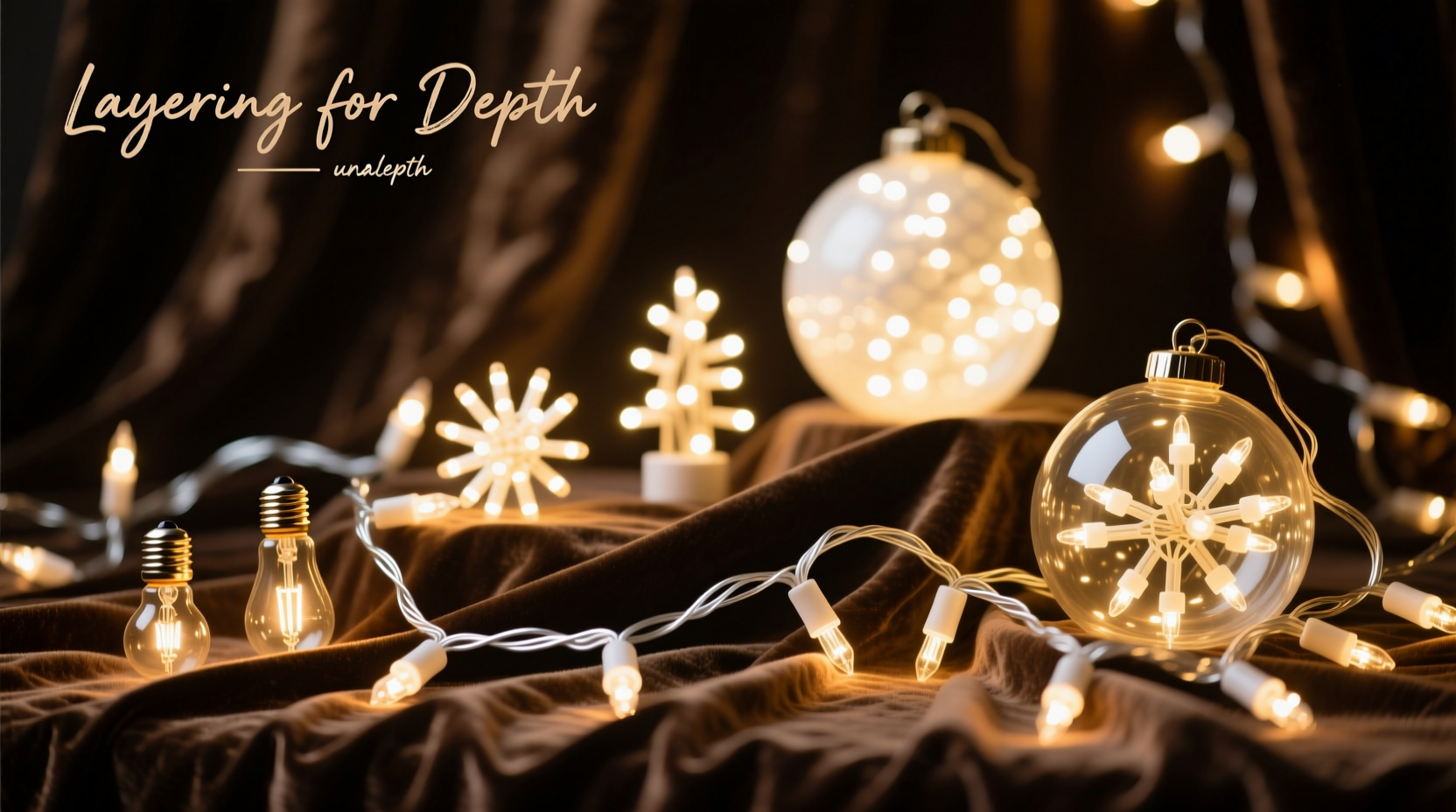
Before layering, it's essential to understand the common sizes of Christmas lights and what each brings to a display. Different bulb types vary not only in physical size but also in brightness, spacing, and visual weight. These characteristics determine where they’re best used when building depth.
- Micro LEDs (1.5–3mm): Tiny and energy-efficient, these are ideal for filling spaces, outlining delicate features, or adding subtle sparkle behind larger lights.
- Mini Lights (5mm): The standard holiday string light. Evenly spaced and moderately bright, they work well for general coverage and mid-layer effects.
- Wide-Angle or Twinkle Mini Lights: These emit broader or flickering light patterns, useful for creating movement and catching attention without overpowering.
- C6 (¾” diameter): Slightly larger than mini lights, often used on trees or railings where more visibility is needed.
- C7 (1” diameter) and C9 (1¼” diameter): Large, bold bulbs typically used for outlines, silhouettes, or as focal points. They command attention and serve as top-layer elements.
The principle of layering relies on treating lighting like painting: background, midground, and foreground. Micro and mini lights form the base layer, providing ambient glow. Medium bulbs like C6s define shapes and add presence. C7s and C9s act as highlights—like brushstrokes of light that punctuate the composition.
A Step-by-Step Guide to Layering for Depth
Building depth with Christmas lights requires planning and precision. Follow this sequence to create a professional-quality layered effect.
- Plan Your Layers: Walk around your property and identify architectural features—eaves, windows, columns, trees, and rooflines. Assign each area a layer: background (deep), midground (structural), and foreground (accent).
- Start with the Background Layer: Use micro or warm-white mini lights to fill recessed areas. Wrap tree trunks, line foundation plantings, or tuck strands behind railings. This creates a soft glow that appears to emanate from within.
- Add Midground Definition: Apply mini or C6 lights to define edges—window frames, stair railings, or shrub outlines. These should be visible but not dominant, acting as connectors between background glow and foreground impact.
- Apply Foreground Accents: Install C7 or C9 bulbs on high-visibility areas: roof peaks, column tops, or tree crowns. Space them slightly wider (6–12 inches apart) to let each bulb stand out.
- Incorporate Movement and Texture: Integrate twinkle or chasing mini lights sparingly in the midground to suggest life within the display. Avoid overuse—subtlety maintains sophistication.
- Test at Night: View your setup after full dark. Adjust density or reposition bulbs that appear too harsh or too dim. The goal is balance, not uniformity.
This progression ensures no single layer overwhelms the others. Instead, the eye moves naturally from deep glow to sharp accent, creating a sense of journey through light.
Do’s and Don’ts of Layering Different Light Sizes
Even with the right materials, poor execution can flatten a display. The following table outlines common pitfalls and best practices when combining bulb sizes.
| Category | Do | Don’t |
|---|---|---|
| Placement | Tuck smaller lights behind objects to create shadow depth. | Place all lights on the same plane; this kills dimension. |
| Density | Use tighter spacing for background, looser for foreground. | Crowd large bulbs together—they lose impact. |
| Color Temperature | Stick to one temperature across all layers. | Mix warm and cool whites—it fractures cohesion. |
| Power & Wiring | Group similar light types on the same circuit for consistent performance. | Daisy-chain too many strands—risk voltage drop and dimming. |
| Maintenance | Label wires by layer for easy reassembly next year. | Store mixed strands together—they tangle and degrade faster. |
Real Example: A Front Porch Transformed
Consider a two-story colonial home with a wraparound porch, wooden columns, and mature evergreen shrubs. The homeowner wants a warm, elegant display—not flashy, but memorable.
They begin by wrapping micro LED strands around the base of each column and weaving them into the shrubs near the foundation. These remain partially hidden, casting a soft underglow that lifts shadows off the ground. Next, warm mini lights outline the porch railing and window trim, forming a clear mid-layer frame. On the upper portion of each column, they install C7 bulbs every 8 inches, spiraling upward. At the roofline, C9 bulbs mark each gable end and dormer corner, acting as anchor points.
The result? From the street, the porch appears to rise from a bed of light. The eye travels from the grounded warmth of the shrubs up through the defined structure, culminating in bold accents against the night sky. Neighbors comment that it looks “expensive” and “professionally done”—not because of quantity, but because of thoughtful layering.
Expert Insight: What the Pros Know
Professional decorators understand that perception of depth in lighting is psychological as much as technical. It relies on contrast, placement, and expectation.
“Amateur displays fail because they treat lights like paint—just covering surfaces. Pros think in volumes. We place small lights deeper in the space so they recede visually, then use larger bulbs to pull forward. It’s chiaroscuro with diodes.” — Daniel Reyes, Lead Designer at Luminaryscapes Holiday Lighting
Reyes emphasizes that the human eye interprets smaller, dimmer lights as being farther away, even if they’re physically close. By exploiting this optical illusion, decorators can make a flat façade appear sculpted. He also warns against symmetry: “Perfect rows kill depth. Stagger placements slightly—nature isn’t uniform, and neither should your lights be.”
Essential Checklist for Layered Lighting Success
Before installation, verify you’ve covered all critical steps.
- ☐ Measure all areas to estimate light strand quantities by size
- ☐ Choose one color temperature (preferably warm white)
- ☐ Purchase at least three bulb sizes: micro/mini (background), standard mini (midground), C7/C9 (foreground)
- ☐ Plan power source locations and use outdoor-rated extension cords
- ☐ Group lights by layer during storage and labeling
- ☐ Test all strands before installation
- ☐ Install background layers first, then midground, then foreground
- ☐ Step back frequently during installation to assess balance
- ☐ Perform a final nighttime review and adjust as needed
Following this checklist ensures a systematic approach, reducing errors and rework.
Frequently Asked Questions
Can I mix LED and incandescent bulbs in a layered display?
Technically yes, but it’s not recommended. Incandescent bulbs generate heat and consume more power, which can affect circuit load. More importantly, they often emit a slightly different color temperature, disrupting the unified look essential for depth. For consistency, stick to all-LED setups.
How many layers should I use?
Three is ideal: background (ambient), midground (structural), and foreground (accent). Fewer lacks depth; more can become chaotic. Each layer should have a distinct purpose and visual weight. Overcomplicating reduces clarity.
What if I don’t have architectural features to layer onto?
You can create your own depth. Use potted evergreens or artificial wreaths placed at varying distances from the house. String lights on shepherd’s hooks in the lawn to form glowing “pillars” at different depths. Even simple wire frames shaped into stars or snowflakes, lit with micro LEDs and placed in front of larger bulbs, can enhance dimension.
Conclusion: Elevate Your Holiday Display with Intentional Design
Layering different sizes of Christmas lights isn’t about more—it’s about meaning. It’s the difference between illumination and artistry. By assigning roles to each bulb type and placing them with spatial awareness, you craft a display that feels alive, dimensional, and thoughtfully composed.
The most admired holiday homes aren’t those with the most lights, but those that make you pause, look closer, and feel something. That emotional response comes from depth—from the quiet glow beneath the railing, the steady hum of outlined windows, and the proud gleam of a rooftop beacon. These layers, working in harmony, tell a story of warmth, care, and celebration.




 浙公网安备
33010002000092号
浙公网安备
33010002000092号 浙B2-20120091-4
Comments
No comments yet. Why don't you start the discussion?