
Decorating with Christmas garlands is more than draping greenery along a mantel or staircase. When done thoughtfully, garland layering transforms flat, predictable displays into rich, multidimensional arrangements that capture the warmth and complexity of the season. The secret lies not in quantity, but in texture—combining varied materials, finishes, and forms to create visual rhythm and tactile appeal. Whether you're styling a fireplace, dining table, or entryway, mastering the art of textural layering elevates your holiday aesthetic from generic to gallery-worthy.
Why Texture Matters in Garland Design
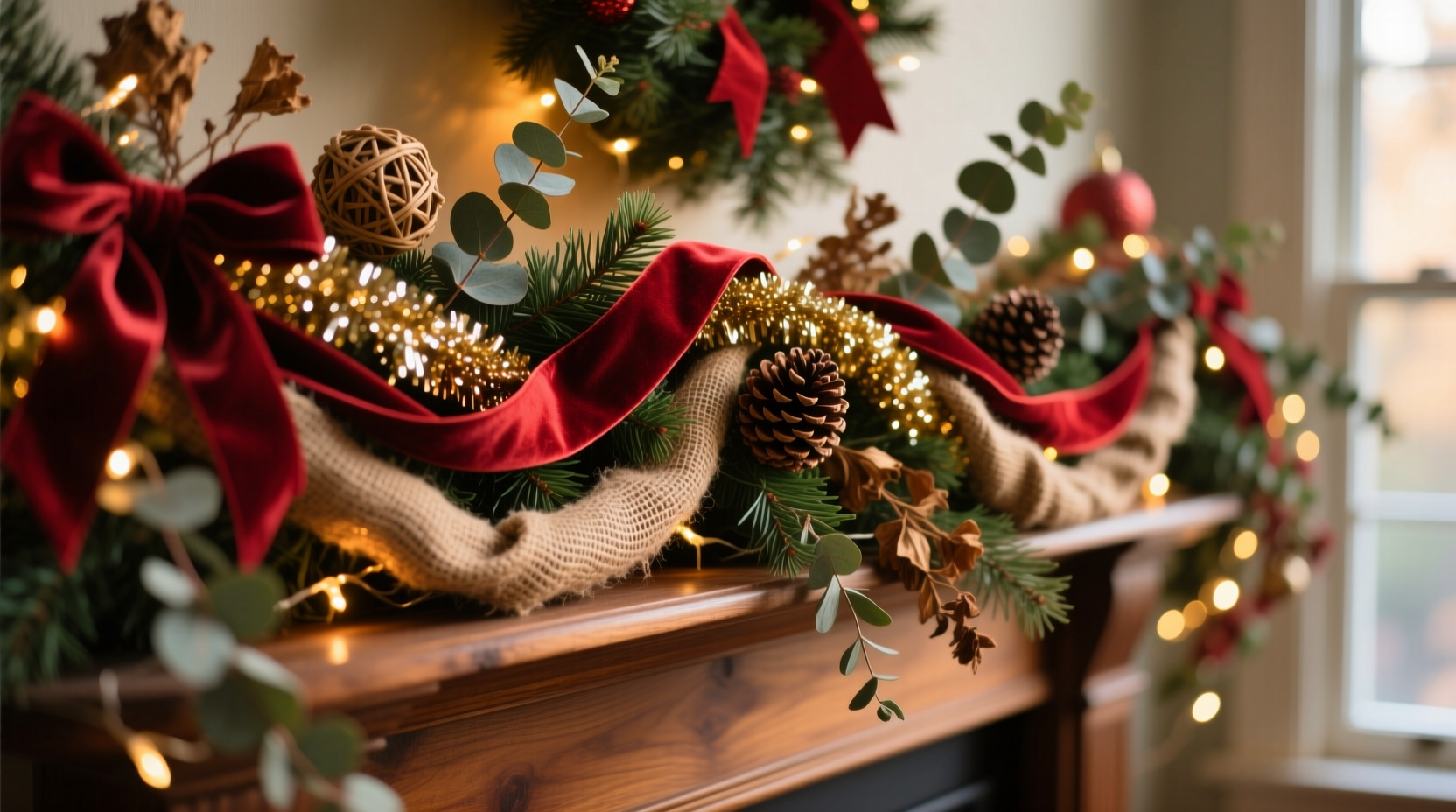
Texture adds contrast and movement to any design. In the context of Christmas garlands, it prevents monotony and draws the eye through subtle shifts in light, shadow, and surface quality. A single strand of uniform faux pine may look artificial up close, but when layered with coarser burlap ribbon, soft velvet bows, and shimmering metallic accents, it gains authenticity and depth.
Our brains interpret texture as information. Rough surfaces suggest warmth and rustic charm; smooth or glossy elements imply elegance; matte finishes feel organic and grounded. By intentionally combining these cues, you guide how people experience your space during the holidays—not just seeing it, but feeling it.
“Layering isn’t about covering more ground—it’s about creating moments within the decor. Each texture tells part of the story.” — Lila Montgomery, Interior Stylist & Holiday Design Consultant
Selecting Textural Elements for Layered Garlands
The foundation of successful layering begins with thoughtful material selection. Aim for at least three distinct textural categories: base greenery, accent strands, and finishing details. Each plays a specific role in building visual interest.
Base Greenery: The Structural Backbone
This is your primary garland—the one that establishes length, volume, and color tone. Common choices include:
- Fir, pine, or eucalyptus (real or high-quality faux)
- Preshaped foam or wire-core garlands for structure
- Naturally varying tones like sage, forest, or blue-green hues
Opt for greenery with some natural variation in leaf size and density. Avoid perfectly uniform strands, which can appear synthetic. If using real greens, mist lightly every few days to maintain freshness.
Accent Strands: Adding Contrast and Rhythm
These secondary elements weave through or sit atop the base to introduce contrast. Think beyond traditional ribbons. Consider:
- Burlap or linen twill tape – rough, earthy texture
- Velvet or satin cord – soft sheen and plush feel
- Beaded chains or metallic wire – reflective, linear sparkle
- Dried citrus slices or cinnamon sticks on twine – organic warmth
- Lace or crochet trim – vintage-inspired delicacy
Finishing Details: Tactile Focal Points
These are the standout pieces that catch attention upon closer inspection. Use sparingly to avoid clutter:
- Faux fur pom-poms
- Wooden beads or carved ornaments
- Felted wool balls
- Metallic-dipped pinecones
- Mini wreaths or fabric flowers
When selecting these components, consider how they interact under ambient lighting. Matte elements absorb light; shiny ones reflect it. Balance ensures no single piece dominates the composition.
A Step-by-Step Guide to Layering Techniques
Effective layering follows a deliberate sequence. Rushing this process leads to overcrowding or imbalance. Follow these steps to build depth gradually.
- Anchor the Base Garland: Secure your primary greenery first. Use clear zip ties, floral wire, or adhesive hooks depending on the surface. Drape loosely rather than pulling tight—natural sag adds realism.
- Weave in Accent Strands: Begin inserting secondary textures at 8- to 12-inch intervals. Alternate types—for example, burlap at one point, then velvet two spots later. Vary insertion depth: some pieces should rest on top; others should be partially buried in foliage.
- Introduce Dimensional Elements: Attach larger focal points like pinecones or fabric bows using U-shaped pins or hot glue (for non-removable installations). Space them evenly but not symmetrically—odd numbers often feel more organic.
- Adjust Lighting Interaction: Turn on nearby lights or lamps. Observe where shadows fall and where highlights emerge. Add metallic threads or mirrored beads in darker zones to bounce light forward.
- Step Back and Edit: View the arrangement from multiple angles and distances. Remove any element that feels forced or repetitive. Less is often more when textures compete.
Material Pairings That Work—And Those That Don’t
Not all textures complement each other. Some combinations clash tonally or visually overwhelm. Use this guide to make informed pairings.
Lacks visual pop; can appear flat under indoor lighting.
| Recommended Pairings | Avoid These Combinations |
|---|---|
| Fir + Burlap Ribbon Natural greenery with coarse fabric creates rustic harmony. Ideal for farmhouse or woodland themes. |
Glossy Plastic Pine + Shiny Metallic Tinsel Both overly artificial; results in visual noise without contrast. |
| Eucalyptus + Velvet Cord Soft gray-green leaves paired with deep jewel-toned velvet evoke luxury and calm. |
Fuzzy Yarn + Feathers Both highly textural; risks looking messy or chaotic unless carefully spaced. |
| Pine + Beaded Chain The rigidity of wooden beads contrasts beautifully with feathery evergreen needles. |
|
| Cedar + Dried Citrus Warm wood scent meets bright citrus; excellent for kitchens or dining areas. |
Velvet + Satin Two shiny fabrics compete; choose one dominant finish and use the other minimally. |
Real-World Example: Transforming a Basic Mantel Display
Sarah, a homeowner in Portland, wanted to upgrade her living room mantel for Christmas. She started with a standard pre-lit pine garland—functional but forgettable. After consulting a local stylist, she applied textural layering principles:
- Kept the base garland but loosened sections to create natural dips.
- Wove in 1.5-inch-wide burlap ribbon in olive tone, knotted at random intervals.
- Added short strands of copper wire interspersed with small dried oranges tied with jute.
- Attached five handmade felt stars filled with lavender for subtle fragrance.
The result? A dynamic display that drew compliments throughout the season. Guests mentioned how “inviting” and “thoughtful” it looked, noting the mix of rough and soft elements. Sarah reported spending less time adjusting decorations because the layered approach held up well over several weeks.
Checklist: Pre-Layering Preparation
Before assembling your garland, ensure you have everything ready. Use this checklist to stay organized:
- ☐ Measured the space (mantel, staircase, etc.) for accurate length needs
- ☐ Selected a base garland with natural variation in foliage
- ☐ Chosen 2–3 accent textures (e.g., fabric, metal, organic)
- ☐ Gathered tools: floral wire, zip ties, scissors, gloves (for handling prickly greens)
- ☐ Tested lighting conditions in the area (natural vs. artificial)
- ☐ Prepared finishing elements (bows, ornaments, scented additions)
- ☐ Cleared the installation zone for easy access
FAQ: Common Questions About Textured Garland Layering
Can I mix real and faux greenery in layered garlands?
Yes—and doing so is often recommended. Real greenery provides authentic scent and subtle imperfection, while faux elements offer durability and reusability. Combine them by placing real stems within a faux base for longevity. Replace the fresh parts mid-season if needed.
How do I prevent my layered garland from looking cluttered?
Stick to a cohesive color palette and limit yourself to three dominant textures. Use repetition without symmetry—repeat a velvet bow every 18 inches, but vary its orientation or pairing (e.g., sometimes with a pinecone, sometimes alone). Leave negative space between elements to allow each texture to breathe.
What’s the best way to store textured garlands for reuse next year?
Disassemble if possible. Store base garlands in ventilated canvas bags; keep delicate accents (like velvet cords or dried citrus) in labeled containers with tissue paper. Never pack tightly in plastic, which traps moisture and encourages mold. Re-inspect and refresh before next use.
Final Thoughts: Elevate Your Holiday Aesthetic Through Intentional Layering
Layering Christmas garlands by texture is not merely decorative—it’s narrative. Each material contributes a voice: the whisper of burlap, the gleam of metal, the quiet fullness of evergreen. Together, they tell a story of warmth, care, and seasonal celebration.
Move beyond uniformity. Embrace contrast. Let your garlands reflect the layered nature of the holidays themselves—joy wrapped in nostalgia, simplicity meeting splendor, tradition mingling with creativity. With careful planning and an eye for detail, your home can become a curated expression of the season’s depth.




 浙公网安备
33010002000092号
浙公网安备
33010002000092号 浙B2-20120091-4
Comments
No comments yet. Why don't you start the discussion?