
Christmas lighting is more than decoration—it’s storytelling with light. A single string of white bulbs may glow, but it doesn’t sing. The magic happens when layers converge: warm and cool tones, steady and twinkling effects, tight outlines and soft washes. Layering Christmas lights creates visual depth, mimics the complexity of starlight, and turns ordinary homes into luminous winter sanctuaries. Done well, layered lighting draws the eye upward, outward, and inward—inviting wonder from every angle.
The most memorable holiday displays aren’t defined by quantity, but by intentionality. They use multiple types of lights in strategic combinations to build rhythm, contrast, and drama. Whether you're illuminating a modest porch or a sprawling roofline, understanding how to layer effectively will elevate your display from festive to unforgettable.
Understanding Light Types and Their Roles
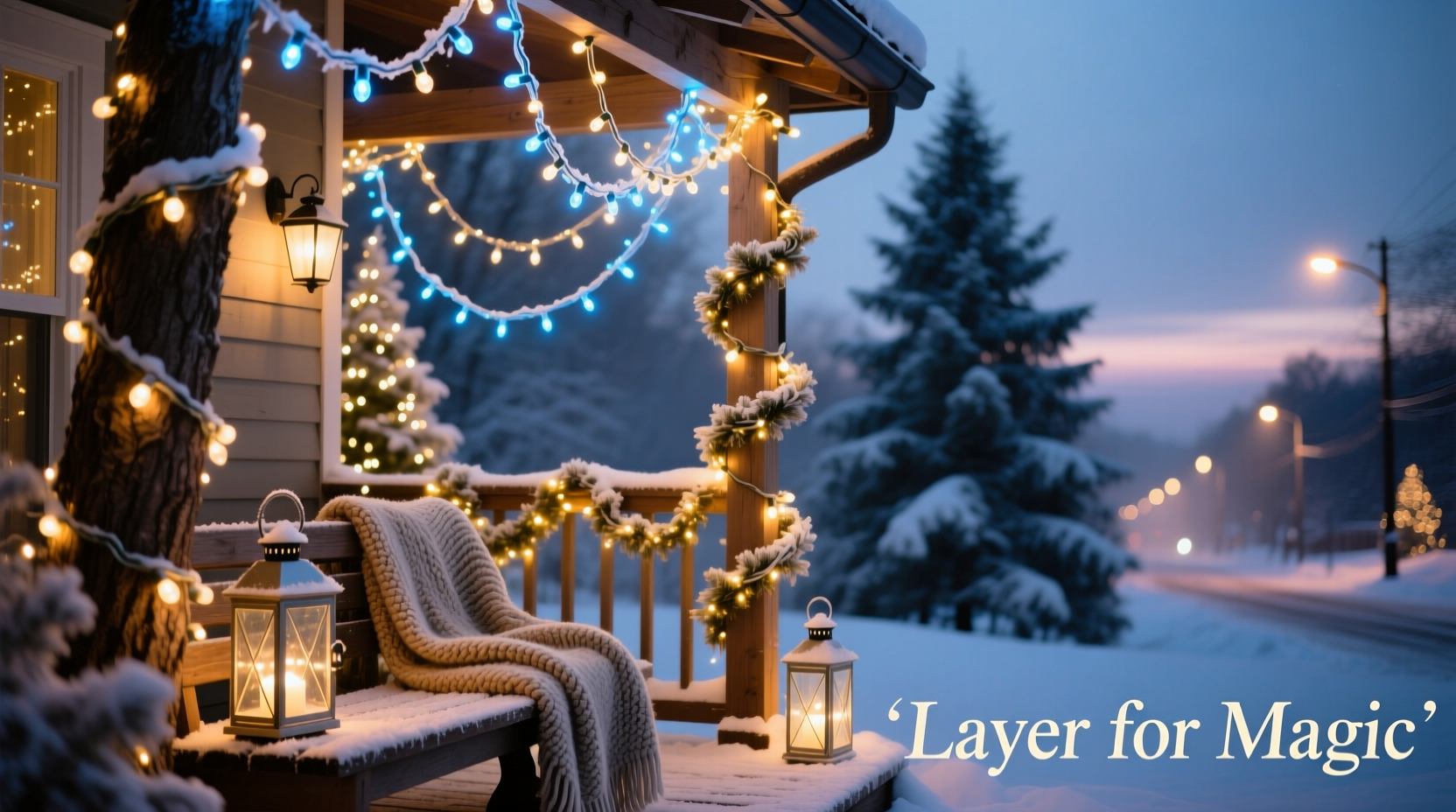
Before layering begins, it's essential to understand the tools at your disposal. Each type of Christmas light brings a unique quality to the overall composition. Think of them as instruments in an orchestra—each has its voice, and each contributes to harmony when placed correctly.
- Mini lights (5mm or 3mm): These are the workhorses of holiday lighting. Uniform, compact, and available in warm white, cool white, multicolor, and color-changing variants, they’re ideal for outlining, filling shrubs, and wrapping trees.
- C7 and C9 bulbs: Larger and bolder, these vintage-style bulbs command attention. C7s (1.5 inches long) and C9s (2.25 inches) are often used for dramatic silhouettes, vertical lines on columns, or bold roofline accents. They shine best in warm white or classic colors like red, green, and blue.
- Rope lights: Flexible tubing encasing continuous LED strands. Best for soft glows along railings, eaves, or under steps. Less about sparkle, more about ambient definition.
- Fairy lights (micro or twinkle lights): Extremely fine wires with tiny bulbs, often battery-powered. Use them to add delicate shimmer inside wreaths, mantle garlands, or window displays where subtlety matters.
- Projector lights: While not “strung,” they can be part of a layered effect—casting moving stars or snowflakes onto walls or lawns to complement physical light layers.
Principles of Depth in Lighting Design
Depth in lighting isn’t just about front-to-back space—it’s about perceived dimension. A flat wall lit with one string of lights appears two-dimensional. But when lights vary in brightness, color temperature, motion, and placement, the brain interprets layers, shadows, and distance.
Consider three spatial planes: foreground, midground, and background. In landscaping, foreground might be your walkway or flower beds, midground your house façade, and background your roofline or tall trees. Assign different lighting types to each plane to enhance separation and interest.
“Layering is the difference between a decoration and an experience. You don’t just see layered lights—you feel them.” — Marcus Delgado, Professional Holiday Lighting Designer
Color temperature plays a critical role. Warm white (2700K–3000K) feels intimate and cozy, ideal for lower levels and indoor-facing areas. Cool white (5000K–6500K) reads as crisp and expansive, perfect for upper structures and icy effects. Combining both—warm near ground level, cool above—creates a sunrise/sunset illusion that enhances depth.
Motion also adds dimension. Static lights define form; twinkling or chasing effects suggest life and movement. Use steady lights for architectural definition and dynamic effects sparingly—for example, only in tree canopies or behind sheer curtains—to avoid visual chaos.
Step-by-Step Guide to Layering Lights
Follow this sequence to build a layered lighting scheme that balances impact and elegance.
- Assess your space and identify focal points. Is it the front door? A towering pine? The gable peak? Start by marking what you want to highlight. This determines where your boldest layers go.
- Begin with foundational lighting. Install mini lights along rooflines, windows, and doors. Use warm white for a welcoming base. This is your “canvas” layer—consistent and unobtrusive.
- Add structural emphasis with larger bulbs. Place C9s vertically on corners, pillars, or downspouts. Choose a complementary color—like amber or soft blue—or stick with warm white for cohesion. These draw the eye upward.
- Incorporate texture with rope or net lights. Drape rope lights along porches or wrap bushes with net lights. This fills negative space and prevents flatness. For evergreens, use green-wire mini lights woven deep into branches for an internal glow.
- Introduce movement and surprise. Add one strand of twinkle lights per tree or section. Or use a slow-fade effect on a garland. Avoid overusing chase sequences—they can distract rather than delight.
- Cap with atmospheric effects. Position projector lights to cast snowflakes on blank walls or star fields on ceilings (in covered entries). These sit “behind” the physical layers, adding dreamlike depth.
- Test at night and adjust. View your home from the street after dark. Are some areas too bright? Too busy? Diminish where needed. Sometimes removing a strand improves balance more than adding one.
Do’s and Don’ts of Layering: A Practical Table
| Do | Don’t |
|---|---|
| Mix warm and cool whites for dimensional contrast | Use all cool white—it can feel sterile and clinical |
| Layer textures (e.g., rope + mini + C9) | Repeat the same bulb type everywhere |
| Use dimmers or timers to control intensity | Leave lights on 24/7—burnout and glare reduce longevity |
| Anchor layers to architecture (follow lines, curves) | Crisscross haphazardly—visual clutter kills elegance |
| Limit animated effects to 10–20% of total display | Run all lights in chase or blink mode |
Real Example: The Johnson Family Porch Transformation
The Johnsons had a traditional colonial home with a covered front porch, two flanking evergreens, and a steep gable. Every year, they strung one set of multicolor mini lights around the door and called it done. Neighbors admired their tree, but no one paused.
Last season, they decided to layer. First, they wrapped the porch railing with warm white rope lights—soft and inviting. Next, they installed C9 bulbs in amber along the gable edges, drawing eyes upward. Then, they filled the two evergreens with dense strings of warm white mini lights, weaving them from trunk to tip for an inner radiance.
Over the doorway, they hung a pine wreath threaded with micro fairy lights that twinkled gently. Finally, they added a slow-pulse effect to the mini lights on the trees—just enough movement to catch peripheral vision.
The result? Pedestrians slowed. Neighbors brought cocoa. A local paper featured their home in a “Best Displays” roundup. The transformation wasn’t due to more lights—it was due to better layering.
Checklist: Your Layered Lighting Action Plan
Use this checklist before, during, and after installation:
- ☐ Walk around your property at dusk to identify natural focal points
- ☐ Choose a dominant color palette (e.g., warm white + amber, or cool white + blue)
- ☐ Purchase at least two bulb types (e.g., mini + C9, or rope + fairy)
- ☐ Plan foundation layer: outline key architectural features
- ☐ Map accent zones: peaks, trees, columns, railings
- ☐ Install static lights first, then add dynamic effects sparingly
- ☐ Test combinations using a multi-zone controller
- ☐ Step back and evaluate from 50+ feet away
- ☐ Adjust spacing—avoid clumping or gaps longer than 6 inches
- ☐ Schedule nightly on/off times to preserve bulb life and reduce light pollution
Frequently Asked Questions
Can I mix LED and incandescent lights in a layered design?
Technically yes, but it’s not recommended. LEDs run cooler, use less energy, and last longer. Incandescents have a warmer glow but burn out faster and can overheat when enclosed. For consistency in color, safety, and maintenance, stick to LED across all layers.
How many layers are too many?
There’s no fixed number, but if your display causes visual fatigue—where the eye doesn’t know where to rest—you’ve gone too far. A good rule: no more than three distinct light types in any one view, and no more than 20% of lights should be animated. Simplicity with contrast beats clutter every time.
What’s the best way to hide cords and plugs in a layered setup?
Use adhesive clips to route cords along downspouts or under eaves. Plug all strands into smart power strips mounted discreetly (e.g., inside a covered entry or garage). Conceal extension cords behind shrubs or along fence bases using cord covers. Label each circuit for easy troubleshooting.
Final Thoughts: Light with Intention
Layering Christmas lights isn’t about covering every inch in glow—it’s about crafting moments of discovery. A flicker in the treetop. A golden line tracing the roof. A soft hum of warmth from the porch. These details, woven together, create memory-making experiences for families and passersby alike.
As you plan your display, think beyond decoration. Think dimension. Think depth. Let your lights tell a story—one of warmth, wonder, and quiet joy. With the right layers, your home won’t just be lit. It will be luminous.




 浙公网安备
33010002000092号
浙公网安备
33010002000092号 浙B2-20120091-4
Comments
No comments yet. Why don't you start the discussion?