
Fragrance layering is no longer a niche trend—it’s a personal signature ritual embraced by those who treat scent as an extension of identity. In 2025, the rules are looser, creativity is encouraged, and blending perfumes has evolved into a nuanced form of self-expression. But with greater freedom comes the risk of olfactory chaos. A poorly mixed combination can turn sweet florals sour or make fresh citrus feel cloying. The key lies in understanding scent chemistry, note compatibility, and application technique. Done right, fragrance layering elevates your presence, adds depth to your daily routine, and sets you apart in subtle yet unforgettable ways.
The Science Behind Scent Compatibility
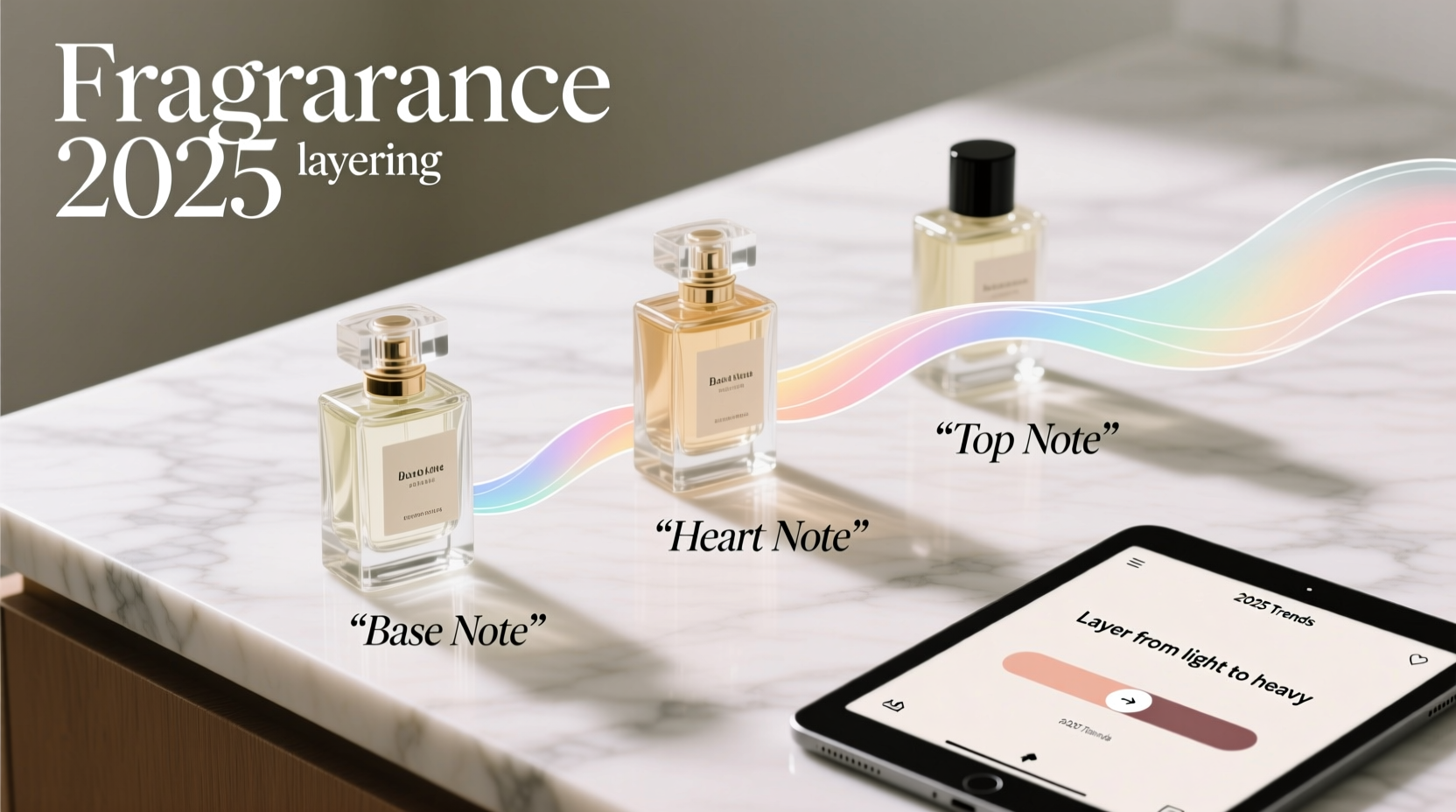
Fragrances are composed of top, middle (heart), and base notes that unfold over time. When layering, it's essential to consider how these notes interact across different perfumes. Top notes evaporate first, often citrus or herbal; heart notes emerge next, typically floral or spicy; and base notes linger longest, like woods, musks, or resins. Clashing occurs when two scents have conflicting core accords—for example, pairing a sharp green galbanum with a creamy vanilla gourmand can create dissonance rather than harmony.
To avoid this, think of fragrance layering like music composition: each scent plays a role in a larger arrangement. Perfumers often use the “fragrance family” classification system—floral, oriental, woody, fresh, and gourmand—as a guide. Scents within the same or adjacent families generally blend more smoothly. For instance, a warm amber from the oriental family pairs well with a sandalwood-based woody scent but may clash with a bright aquatic cologne unless balanced carefully.
“Layering isn’t about masking one scent with another—it’s about creating a third, invisible perfume that only exists when they meet on the skin.” — Luca Turin, Olfactory Critic & Co-author of *Perfumes: The Guide*
Step-by-Step Guide to Harmonious Layering
Creating a successful layered fragrance requires intention and patience. Follow this five-step process to build a cohesive scent profile that evolves beautifully throughout the day.
- Start with a clean canvas. Wash your skin and avoid heavily scented lotions or deodorants that could interfere with the perfumes’ true character.
- Choose your anchor scent. This is usually your strongest or longest-lasting fragrance—the base of your olfactory pyramid. It should reflect your desired mood: confident, romantic, energized, etc.
- Select a complementary second scent. Look for shared notes or similar tonal qualities. If your anchor is a rose-centered floral, try adding a light bergamot or violet leaf scent to lift it.
- Apply in order of weight. Spray the heavier, deeper scent first (usually the base note-rich one), then layer the lighter, more volatile scent on top. This prevents the stronger fragrance from overwhelming the delicate one.
- Let it settle before reapplying. Wait at least 30 seconds between sprays. Rushing can trap alcohol fumes and distort the blend. Allow the initial dry-down to assess balance.
When to Add a Third Layer
In 2025, minimalist maximalism is trending—using three scents thoughtfully to achieve complexity without muddiness. A third layer should serve a specific purpose: enhancing longevity, adding texture, or introducing contrast. For example, a sheer musk can be misted over a floral-woody duo to soften its edges and extend wear. However, never layer more than three perfumes unless you’re experienced. Overlayering risks olfactory fatigue and makes it difficult for others to perceive any single accord clearly.
Do’s and Don’ts of Fragrance Mixing
| Do | Don't |
|---|---|
| Mix within the same fragrance family (e.g., two woody scents) | Combine polar opposites like heavy patchouli and crisp oceanic accords without a bridge note |
| Use unscented moisturizer as a base to help fragrances adhere and evolve slowly | Apply multiple scents directly on clothing—fabrics absorb unevenly and may stain |
| Limit layering to pulse points (wrists, neck, behind ears) to control intensity | |
| Reapply selectively—refresh only the lighter scent if needed | Layer multiple high-sillage (projection-heavy) perfumes—they can overwhelm close contact |
Real-World Example: Building a Signature Scent for Work & Evening
Sophia, a creative director in Berlin, wanted a scent that transitioned seamlessly from her morning meetings to after-work networking events. She started with **Diptyque Tam Dao**, a serene sandalwood-based fragrance known for its creamy warmth. While elegant, she found it too quiet for evening impact. To add vibrancy, she introduced **Le Labo Bergamote 22**, which features radiant citrus and subtle incense. Applied lightly over Tam Dao, the bergamot lifted the sandalwood without overpowering it, adding a luminous top note that caught attention without aggression.
For special occasions, Sophia added a third element: a single spray of **Maison Margiela Lazy Sunday Morning**—a clean, cotton-like musk—on her collarbone. This created a soft halo effect, making her scent feel intimate and modern. Colleagues began commenting on her “expensive-smelling simplicity,” unaware she was using a custom blend. Her success came from respecting hierarchy: sandalwood as foundation, citrus-resin as mid-layer, and musk as atmospheric finisher.
Top 5 Fragrance Pairings for 2025
As gender-neutral and eco-conscious perfumery gains momentum, new hybrid accords are emerging. These pairings reflect current trends while maintaining timeless balance:
- Citrus + Mineral: Try Atelier Cologne Orange Sanguine layered with Aesop Tacit. The juicy blood orange meets wet stone and green tea for a vibrant yet grounded effect.
- Vanilla + Smoke: Combine Byredo Gypsy Water (with its campfire accord) and Yves Saint Laurent Libre Intense. The result is a bold, slightly rebellious sweetness with smoky depth.
- Floral + Leather: Chanel No. 5 L’Eau over Tom Ford Black Orchid Parfum creates a surprising juxtaposition—powdery elegance meets dark opulence.
- Aquatic + Spice: Dior Sauvage Elixir (spicy-woody) with a hint of Jo Malone Wood Sage & Sea Salt adds coastal freshness without diluting strength.
- Musk + Petrichor: Ideal for minimalists. Blend Escentric Molecules Molecule 01 with Demeter Rain for a skin-like aura with earthy undertones.
“In 2025, consumers aren’t just buying perfumes—they’re curating olfactory wardrobes. Layering turns fragrance into a dynamic, personalized experience.” — Clara Park, Senior Fragrance Analyst at Trendalytics
Fragrance Layering Checklist
Before you begin blending, run through this checklist to ensure a polished outcome:
- ✅ Skin is clean and free of competing scents
- ✅ Chosen anchor scent aligns with occasion and season
- ✅ Secondary scent shares at least one common note (e.g., both contain vetiver or iris)
- ✅ Application tools ready (clean hands, separate zones for spraying)
- ✅ Time allowed for dry-down assessment (minimum 10 minutes)
- ✅ Backup option available if blend feels off
Seasonal Considerations for 2025
Climate and environment influence how layered fragrances behave. In warmer months, lighter compositions prevail. Citrus, green, and aquatic notes carry better in heat, while heavy vanillas and resins can become oppressive. During summer, limit layers to two—one fresh, one subtly textured—and apply sparingly.
Winter invites bolder experimentation. Cold air dampens scent projection, so layering helps maintain presence. Rich bases like oud, tonka bean, or benzoin provide stability, while a touch of spice or incense adds intrigue. However, beware of over-amplification in heated indoor spaces where scent lingers longer.
Spring calls for renewal-inspired blends: hyacinth with rain, narcissus with green stems. Think of rebirth and moisture. Fall favors earthiness—mushroom, fallen leaves, dried fruit. Pair a leathery chypre with a fig sap fragrance for a sophisticated autumnal narrative.
FAQ: Common Questions About Scent Layering
Can I layer designer perfumes with niche ones?
Yes, but proceed with caution. Designer fragrances often have higher alcohol content and simpler structures, while niche perfumes use concentrated oils and complex accords. Start by applying the niche scent first, then lightly mist the designer fragrance on top. Test in small doses to avoid imbalance.
How do I know if two scents clash?
A clash often manifests as a chemical, metallic, or sour smell within minutes of application. If the blend feels harsh, disjointed, or gives you a headache, it’s likely incompatible. Trust your nose—if it doesn’t feel harmonious, it probably isn’t.
Is it safe to layer body mists with Eau de Parfum?
Yes, and it’s one of the safest ways to begin layering. Use a lightly scented body mist as a base (like coconut or rice milk), then apply a stronger EDP on pulse points. Just ensure the base mist isn’t overly sweet or synthetic, as cheap ingredients can degrade the overall impression.
Conclusion: Make Your Scent Unmistakably Yours
Fragrance layering in 2025 is less about following rules and more about cultivating intuition. With awareness of note structure, seasonal shifts, and personal chemistry, you can craft a scent identity that evolves with you. Whether you’re combining two beloved bottles or experimenting with avant-garde accords, the goal remains the same: to leave a trace that feels authentic, memorable, and uniquely yours. Start small, document your trials, and embrace the occasional misstep as part of the creative journey. Your signature blend is waiting to be discovered—one spray at a time.




 浙公网安备
33010002000092号
浙公网安备
33010002000092号 浙B2-20120091-4
Comments
No comments yet. Why don't you start the discussion?