
Perfume is more than a finishing touch—it’s an extension of identity. When done thoughtfully, fragrance layering can create a signature scent that evolves throughout the day, reflecting mood, occasion, and personal style. Yet, one misstep can turn a sophisticated blend into olfactory chaos. The key lies not in piling on favorites but in understanding harmony, concentration, and sillage. This guide reveals how to layer fragrances with precision, avoiding clashes and ensuring your presence is memorable—not overpowering.
The Science of Scent Compatibility
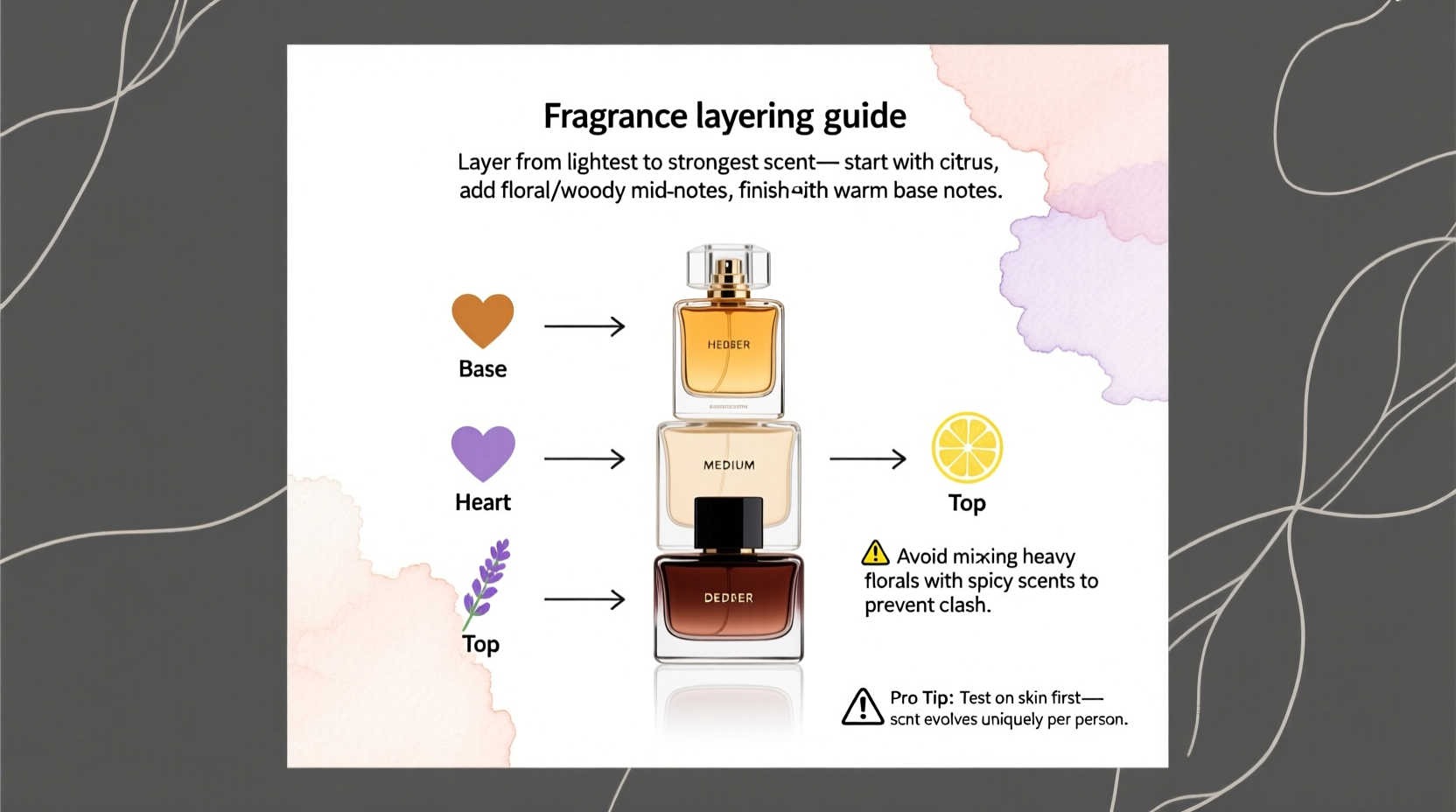
Fragrance layering works best when built on a foundation of aromatic chemistry. Scents are composed of top, middle (heart), and base notes that unfold over time. Top notes—citrus, herbs, light florals—evaporate quickly. Heart notes like rose, lavender, or spices emerge next, followed by deep base notes such as vanilla, musk, sandalwood, or amber. Layering effectively means aligning these phases across multiple perfumes so they complement rather than compete.
Scent families also play a critical role. The main categories include:
- Floral: Rose, jasmine, peony—ideal for soft, romantic blends.
- Oriental: Warm, spicy accords with vanilla or resins—rich and long-lasting.
- Woody: Sandalwood, cedar, vetiver—earthy and grounding.
- Citrus/Fougère: Fresh, zesty, or herbal—great for daytime layering.
- Gourmand: Sweet, edible notes like caramel or tonka bean—best used sparingly.
Pairing within the same family generally yields safer results. For example, layering two floral scents—one fresh (top-heavy) and one indolic (base-rich)—can deepen complexity without dissonance. Crossing families requires caution: citrus and leather may work if balanced; patchouli and coconut might clash unless both are subtle.
A Strategic Approach to Layering: Step-by-Step
Successful fragrance layering follows a deliberate sequence. Rushing leads to imbalance. Follow this timeline to build a cohesive scent profile:
- Start with your base: Choose a perfume with strong base notes (e.g., musk, amber, sandalwood). Apply it to pulse points first—wrists, neck, behind ears. Let it settle for 30–60 seconds.
- Add a heart-layer scent: Select a fragrance with prominent middle notes—floral or spicy accords work well. Spray lightly over your arms or mist into the air and walk through it to avoid saturation.
- Finish with a top note accent: Use a lighter eau de cologne or body mist with citrus or green notes. Apply minimally to refresh the opening phase without dominating.
- Wait and assess: Allow 5–10 minutes for the layers to meld. Sniff subtly. If the blend feels heavy, skip reapplication later in the day.
- Maintain balance: Reapply only the top note if needed. Never re-spray base-heavy perfumes midday—they intensify over time.
This method ensures progression rather than collision. It mimics how single perfumes are structured, giving your layered creation natural evolution.
Do’s and Don’ts of Fragrance Pairing
Avoid common pitfalls by referencing this practical comparison table:
| Do’s | Don’ts |
|---|---|
| Choose perfumes with shared notes (e.g., both contain bergamot or vanilla). | Mix two strong gourmands or heavy orientals—they can become cloying. |
| Use lighter concentrations (EDT, cologne) for upper layers. | Layer two parfum-strength scents—you risk overwhelming sillage. |
| Apply in order: base first, then heart, then top. | Apply all at once—this prevents proper blending and assessment. |
| Test combinations in cool environments to gauge true projection. | Layer in hot, humid weather—heat amplifies intensity unpredictably. |
| Limit yourself to two or three complementary scents max. | Use more than three fragrances—complexity becomes confusion. |
Remember, subtlety often speaks louder. A well-blended duo can be more compelling than a chaotic stack of five.
Real-Life Example: Building a Signature Office-to-Evening Scent
Sophia, a marketing executive, wanted a fragrance that transitioned from meetings to dinner dates. She loved the freshness of her Citrus Verbena EDT but found it faded too quickly. Her evening favorite, a warm Amber & Oud Parfum, felt too intense for daylight.
Her solution: apply the Amber & Oud lightly to her wrists and inner elbows in the morning. After lunch, she spritzed Citrus Verbena onto her collar and hair. By evening, the citrus had softened, revealing the amber base with renewed brightness. Coworkers commented on her “clean yet intriguing” presence—never overpowering.
The success came from respecting concentration levels and timing. She didn’t wear both at full strength simultaneously. Instead, she allowed the day to shape the scent’s narrative.
Expert Insight: What Perfumers Recommend
Industry professionals emphasize restraint and intentionality. According to Luca Maffei, a Paris-based nose with over two decades of experience:
“Layering isn’t about quantity—it’s about dialogue between molecules. Think of it like composing music. You wouldn’t layer three basslines and call it harmony. The same applies to scent. One dominant theme, supported by accents, creates elegance.” — Luca Maffei, Master Perfumer
He advises starting with a “scent anchor”—a reliable base fragrance—and experimenting with just one variable at a time. Change one layer per week, observe reactions, and keep notes. Over time, you’ll develop an intuitive sense of compatibility.
Essential Checklist for Safe Fragrance Layering
Before combining scents, run through this checklist to ensure balance and respect for those around you:
- ✅ Identify the dominant note family in each fragrance.
- ✅ Confirm at least one shared note between them (e.g., both have sandalwood).
- ✅ Check concentration levels—avoid layering two extrait or parfum-grade scents.
- ✅ Test on skin during low-social hours (e.g., weekend mornings).
- ✅ Limit application to 2–3 sprays total across all layers.
- ✅ Avoid layering in enclosed spaces or crowded environments until tested.
- ✅ Ask a trusted friend for honest feedback after 30 minutes of wear.
- ✅ Carry a neutralizing wipe (unscented alcohol pad) to remove excess if needed.
This routine builds confidence and prevents social discomfort. Fragrance should invite curiosity, not force avoidance.
Frequently Asked Questions
Can I layer different brands or lines?
Absolutely. Brand boundaries don’t dictate scent compatibility. Focus on notes and concentration instead. A niche oud from Brand A can harmonize beautifully with a mainstream floral from Brand B if their structures align.
Is it safe to layer with scented lotions or shower gels?
Yes—but choose products from the same fragrance line whenever possible. Scented lotions often contain lower perfume oil concentrations and act as excellent base layers. However, avoid heavily fragranced body washes right before applying perfumes; they can distort the final aroma.
How do I know if I’ve over-applied?
If people comment on your scent within five minutes of entering a room—or if you still smell it strongly after four hours in a well-ventilated space—you’ve likely overdone it. True elegance in fragrance is noticed upon approach, not announced from afar.
Final Thoughts: Elevate Your Scent with Intention
Fragrance layering is an art rooted in awareness. It rewards patience, observation, and respect—for your own preferences and the sensory space of others. The most memorable scents aren’t the loudest; they’re the ones that unfold with nuance, leaving a trail of intrigue rather than intrusion.
Begin simply. Pair a woody base with a citrus top. Wear it alone for a day. Then adjust. Document what works. Build a small repertoire of reliable combinations rather than chasing novelty. Over time, you’ll cultivate a personal olfactory language—one that shifts with seasons, occasions, and moods, always staying in harmony.




 浙公网安备
33010002000092号
浙公网安备
33010002000092号 浙B2-20120091-4
Comments
No comments yet. Why don't you start the discussion?