
Fragrance layering is more than just applying multiple perfumes—it’s an intentional act of olfactory storytelling. When done correctly, it elevates your presence, enhances mood, and creates a unique scent identity. But when mismatched, it can result in a chaotic blend that overwhelms rather than intrigues. The key lies not in random combinations, but in understanding scent chemistry, timing, and harmony. Professionals in perfumery use precise methods to build complexity without dissonance. With the right knowledge, anyone can master this subtle craft.
Understanding Scent Families and Compatibility
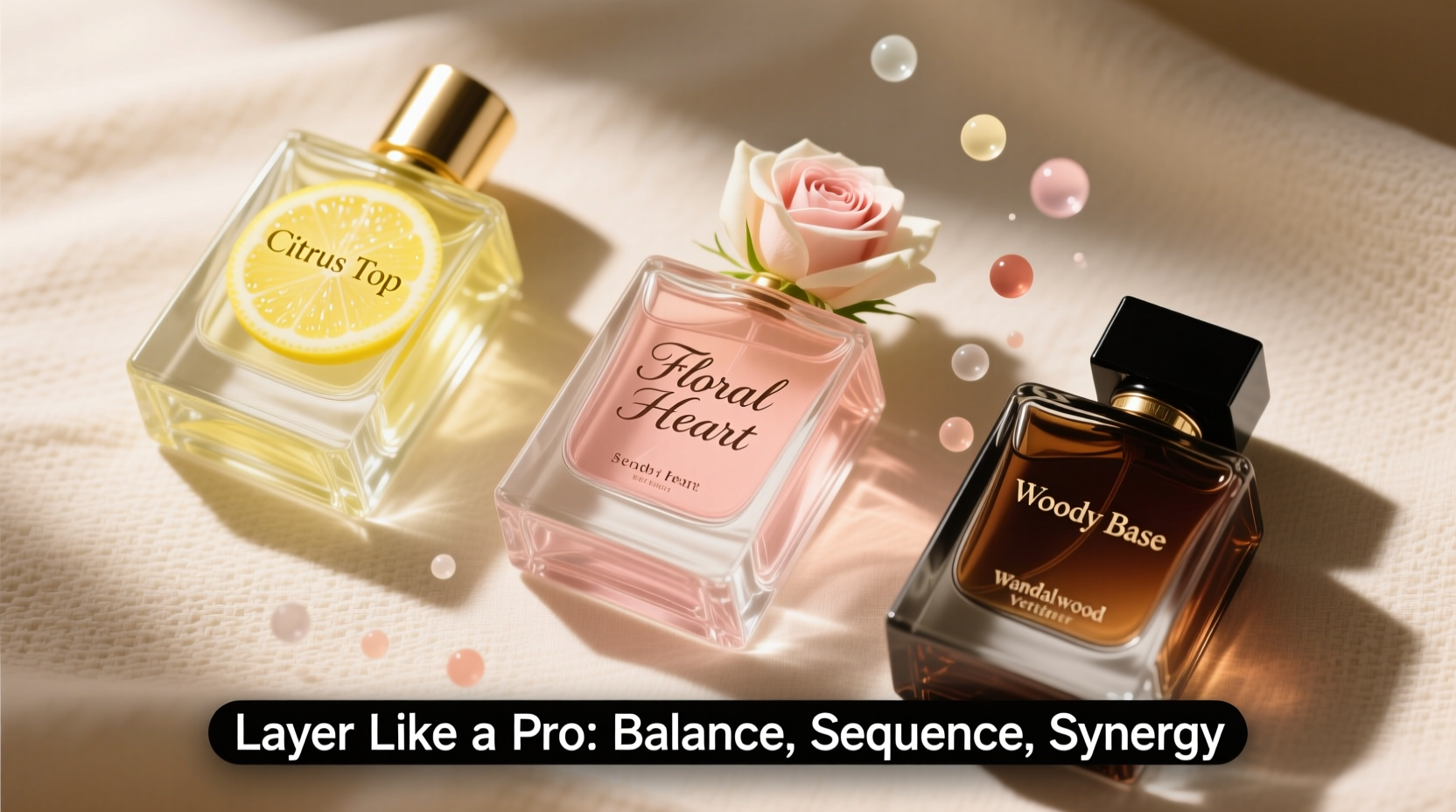
Every fragrance belongs to a scent family—categories defined by dominant notes and overall character. Recognizing these groups is essential for successful layering. Common families include floral, citrus, woody, oriental, fresh, and gourmand. Each has distinct tonalities that either complement or clash with others.
For example, citrus and fresh scents often work well together due to their bright, clean profiles. Similarly, woody and oriental notes—rich in amber, vanilla, and spices—can deepen each other when layered thoughtfully. However, pairing a sharp green tea fragrance with a heavy leather-based scent may result in sensory conflict unless balanced carefully.
The foundation of non-clashing layering is alignment in scent profile. Begin by auditing your collection: group bottles by primary family. This visual map helps identify natural pairings and reveals potential conflicts before you spray.
The Science Behind Fragrance Notes and Longevity
A perfume unfolds in three stages: top, middle (heart), and base notes. Top notes are the first impression—light and volatile, lasting 5–15 minutes. Heart notes emerge next, forming the core personality of the scent over 20–60 minutes. Base notes are deep and long-lasting, anchoring the fragrance for hours.
When layering, consider how the note progression of one fragrance interacts with another. For instance, layering a citrus top-heavy scent over a sandalwood base can create a dynamic evolution: bright at first, then warm and earthy. But stacking two strong top notes leads to early burnout and leaves little olfactory depth.
| Note Type | Duration | Common Ingredients | Layering Role |
|---|---|---|---|
| Top | 5–15 min | Lemon, bergamot, mint | Initial impact; best layered lightly |
| Middle (Heart) | 20–60 min | Rose, jasmine, lavender | Defines character; ideal blending zone |
| Base | Hours | Musk, patchouli, vanilla | Anchors longevity; great base layer |
To avoid clashing, allow each fragrance to express its full arc. Apply the base note-dominant scent first, then introduce a complementary top or heart-forward fragrance after a few minutes. This mimics the natural unfolding of a complex perfume and prevents muddiness.
Step-by-Step Guide to Layering Without Clash
Creating a seamless layered fragrance requires precision and patience. Follow this six-step process to build a cohesive scent profile:
- Start with clean skin. Moisturize with an unscented lotion or a matching body creme from one of your chosen fragrances. Hydrated skin holds scent longer and provides a neutral canvas.
- Select a base fragrance. Choose a perfume with strong base notes—vanilla, musk, amber, or woods. Apply sparingly to pulse points: wrists, neck, behind ears.
- Wait 3–5 minutes. Allow the base fragrance to settle into your skin. Rushing the next step traps volatile top notes too close to the surface, increasing the risk of imbalance.
- Choose a complementary second scent. Pick something from a related family—e.g., if your base is a warm amber, try a soft floral or light citrus. Avoid competing intensities.
- Spray, don’t dab, the second fragrance. Hold the bottle 6–8 inches away and mist lightly over arms or clothing—not directly on top of the first scent. This allows diffusion and blending in the air.
- Evaluate after 10 minutes. Smell your wrist gently. Does the blend evolve smoothly? Is one note overpowering? Adjust quantity or sequence next time.
“Fragrance layering isn’t about volume—it’s about dimension. A well-layered scent should feel like a journey, not a collision.” — Clara Nguyen, Master Perfumer at Osmologie Paris
This method ensures each fragrance contributes without dominating. Over time, you’ll develop intuition for which combinations age gracefully on your skin.
Real-World Example: Building a Signature Morning Scent
Consider Maya, a creative director who wanted a daytime fragrance that was both energizing and grounded. She loved the zesty burst of her Citrus Soleil eau de toilette but found it faded too quickly. Her deeper Oud & Amber parfum lasted all day but felt too intense for morning meetings.
Instead of choosing one or the other, she experimented. She began by applying a small amount of Oud & Amber to her neck and inner elbows. After waiting five minutes, she lightly misted Citrus Soleil over her forearms and clothing. The result? A vibrant opening of lemon and grapefruit softened into a warm, resinous dry-down. Colleagues commented on her “expensive, polished” aura without pinpointing a single scent.
Maya’s success came from respecting the weight and evolution of each fragrance. She didn’t mix them haphazardly; she orchestrated their interaction. This approach turned two standalone perfumes into a bespoke hybrid that reflected her personality: bright yet sophisticated.
Checklist: Do’s and Don’ts of Fragrance Layering
Use this checklist before attempting any new combination. It minimizes risk and maximizes elegance.
- ✅ Do moisturize skin before layering
- ✅ Do choose scents from compatible families
- ✅ Do apply the heavier, deeper scent first
- ✅ Do wait between applications
- ✅ Do test on skin, not just the air
- ❌ Don’t layer two strong orientals or heavy florals
- ❌ Don’t apply multiple sprays of each fragrance
- ❌ Don’t mix extremely polar opposites (e.g., aquatic + leathery)
- ❌ Don’t layer over heavily scented lotions unless they’re part of the same line
- ❌ Don’t judge the blend immediately—wait 15+ minutes
This structured approach eliminates common pitfalls. Many failures in layering stem from impatience or over-application. Less is almost always more when combining scents.
Advanced Techniques: Using Unscented and Scented Bases
Professionals often use unscented carriers to extend and modulate fragrance. A simple trick: layer perfume over a plain jojoba oil or unscented body balm. These trap aromatic molecules, slowing evaporation and enhancing projection.
Alternatively, use scented body products from the same fragrance line—such as shower gel, body milk, or hair mist. These contain lower concentrations of the same essential oils, creating a \"scent halo\" that supports the perfume without altering its character. For example, spraying a vanilla-musk perfume over a matching body cream reinforces the base without introducing conflicting notes.
Another pro move: incorporate solid perfumes. These waxes are highly concentrated and excellent for targeted layering. Apply a floral solid balm to your collarbone, then mist a woody eau de parfum nearby. The separation prevents direct mixing while allowing the scents to mingle subtly in the air around you.
FAQ: Common Questions About Fragrance Layering
Can I layer different brands of perfume?
Yes, but with caution. Brand consistency doesn’t guarantee compatibility. Focus on scent profiles, not labels. Two perfumes from the same brand might still clash if one is a marine fresh and the other a spicy oriental. Always test first.
How many fragrances can I safely layer?
Most experts recommend no more than two at a time. Three or more increases the chance of olfactory confusion. If you want greater complexity, opt for a single, well-composed niche fragrance instead of over-layering.
Why does my layered scent smell different on me than on my friend?
Skin chemistry varies significantly. pH levels, diet, hormones, and even medications affect how fragrance molecules interact with your body. Always test combinations on your own skin and wear them for several hours before judging the outcome.
Conclusion: Craft Your Olfactory Identity
Layering fragrances without clashing isn’t magic—it’s mindfulness. It demands attention to detail, respect for scent structure, and a willingness to experiment intelligently. By understanding note progression, honoring compatibility, and applying methodically, you transform disjointed aromas into a coherent personal signature.
The goal isn’t to be noticed from across the room, but to leave a lasting, memorable impression up close—one that evolves with you throughout the day. Whether you're crafting a morning ritual or refining your evening presence, the power of thoughtful layering puts you in control of how you’re perceived.




 浙公网安备
33010002000092号
浙公网安备
33010002000092号 浙B2-20120091-4
Comments
No comments yet. Why don't you start the discussion?