
Fragrance layering is an art form that transforms the way you wear scent—elevating it from a single note into a personal olfactory story. When done well, it creates depth, longevity, and uniqueness. But when approached haphazardly, it can result in a muddled aroma or an overpowering cloud that overwhelms those around you. The key lies not in quantity but in harmony. By understanding scent families, concentration levels, and application strategy, you can craft a layered fragrance experience that’s subtle, sophisticated, and memorable.
Understanding Fragrance Families and Compatibility
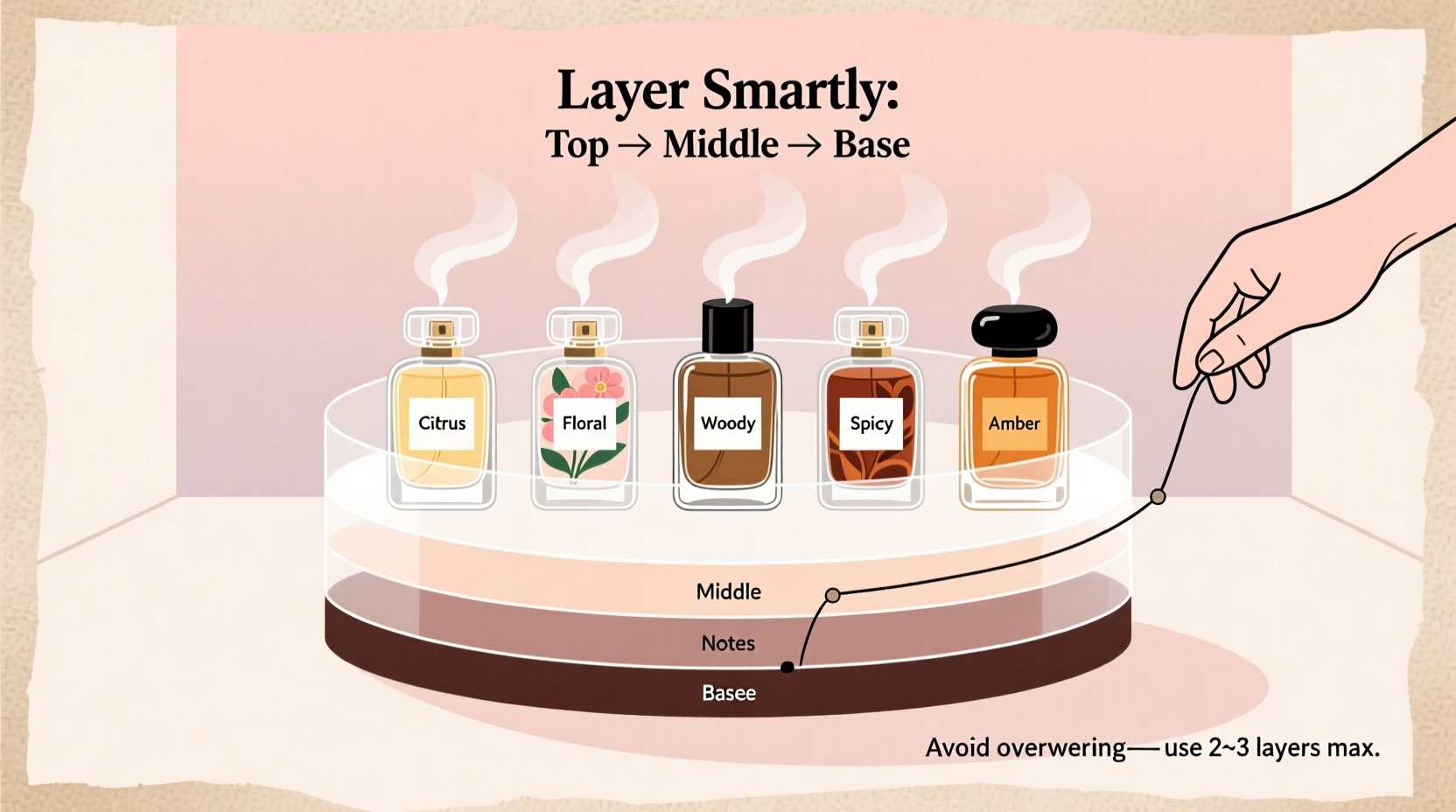
Fragrances are categorized into distinct families based on their dominant notes and overall character. These include floral, oriental, woody, fresh (citrus/aquatic), and gourmand. To avoid clashing, begin by identifying which family your primary fragrance belongs to. Layering works best within the same or complementary families.
For example, pairing a warm vanilla-based oriental with a sandalwood-rich woody scent enhances richness without conflict. Conversely, combining a bright citrus cologne with a heavy amber perfume may create dissonance—like serving lemon sorbet immediately after dark chocolate.
Perfumers often use the \"fragrance wheel\" as a guide for compatibility. Scents adjacent to each other on the wheel generally blend well. For instance:
- Floral pairs naturally with fruity or green notes.
- Woody blends seamlessly with earthy or spicy accords.
- Fresh scents work with marine or herbal elements.
Start simple. Choose one base scent and add just one supporting fragrance. Over time, your nose will learn what combinations resonate—and which ones clash.
The Role of Concentration and Longevity
Fragrance concentration affects both intensity and lifespan. Common types include Eau de Parfum (EDP), Eau de Toilette (EDT), Eau de Cologne (EDC), and parfum. Each has different oil percentages:
| Type | Fragrance Oil % | Average Longevity | Best For Layering? |
|---|---|---|---|
| Parfum | 20–30% | 6–8+ hours | Yes – ideal base layer |
| Eau de Parfum (EDP) | 15–20% | 5–7 hours | Yes – strong anchor |
| Eau de Toilette (EDT) | 5–15% | 3–5 hours | Yes – mid/top layer |
| Eau de Cologne (EDC) | 2–4% | 2–3 hours | Limited – best for freshness |
When layering, apply lower-concentration scents first or as top layers. A citrus EDT sprayed over a woody EDP allows the bright opening to shine before settling into deeper base notes. Avoid layering multiple high-concentration perfumes unless you’re experienced—two parfums can easily dominate a room.
“Layering isn’t about adding more—it’s about building dimension. Think like a composer, not a volume knob.” — Luca Maffei, Master Perfumer at Acqua di Parma
Step-by-Step Guide to Harmonious Fragrance Layering
Follow this structured approach to create balanced, non-overpowering scent combinations:
- Choose Your Base Scent: Start with a long-lasting fragrance you love—preferably an EDP or parfum. This will anchor your olfactory profile.
- Select a Complementary Top or Mid Note: Pick a second fragrance from a compatible family. If your base is rose-oud (oriental-floral), consider a light saffron or incense accent.
- Test on Skin, Not Just Paper: Spray both scents on your skin separately, wait 10 minutes, then bring them close together. Does the blend evolve smoothly? Or does it turn sharp or sour?
- Apply in Order of Heaviness: Apply the richest, most concentrated scent first. Follow with lighter formulations. This mimics natural scent development.
- Limit Application Points: Use pulse points—wrists, neck, behind ears. Avoid spraying multiple times on each spot. One spray per area is usually sufficient.
- Wait Before Reapplying: Allow 15–20 minutes between layers. This prevents oversaturation and lets each scent settle.
- Assess After 30 Minutes: How does it smell now? Has the combination deepened gracefully? If it feels too strong, dab lightly with unscented moisturizer to mute intensity.
Common Mistakes That Lead to Clashing or Overpowering Scents
Even with good intentions, many people unintentionally create fragrance chaos. Recognizing these pitfalls can save both your reputation and your nostrils.
- Over-spraying: More sprays do not equal better scent. Two to three total sprays across all products is typically enough.
- Mixing opposing profiles: Don’t pair a crisp aquatic cologne with a dense patchouli perfume—they compete rather than complement.
- Ignoring sillage: Sillage refers to the trail a fragrance leaves. Heavy sillage in enclosed spaces (offices, elevators) can be intrusive.
- Layering too many products: Using scented deodorant, body wash, lotion, eau de toilette, and cologne simultaneously increases chemical interaction and unpredictability.
- Not considering the environment: A bold, spicy blend might dazzle at night but overwhelm coworkers during a morning meeting.
To prevent these issues, simplify your routine. Use only one or two scented products per day. Let your main fragrance carry the weight, supported subtly by secondary notes.
Do’s and Don’ts of Fragrance Layering
| Do | Don’t |
|---|---|
| Match scent families (e.g., floral + fruity) | Mix heavy gourmand with sharp green tea |
| Apply heavier scents first | Spray five times on each wrist |
| Use unscented moisturizer as a base | Layer three different branded colognes |
| Test combinations in private first | Wear intense blends in small rooms |
| Reapply lightly if needed after hours | Ignore how others react to your scent |
Real-World Example: A Balanced Evening Layering Routine
Consider Marcus, a marketing executive who enjoys wearing fragrance but doesn’t want to alienate colleagues. He loves deep, smoky aromas but works in a shared office space.
During the week, he wears a minimalist approach: an unscented alum block and a single spray of a cedar-musk EDT behind his ears. It’s clean, present, but unobtrusive.
On weekends, when attending dinner parties, he layers intentionally. First, he applies a shea butter-based unscented body balm to his chest and arms. Then, he sprays Tom Ford Black Orchid (a rich, complex floral-oriental) once at the base of his throat. Finally, he lightly mists a niche oud water—lighter in concentration—on his jacket lapel. The result? A luxurious, evolving scent that reveals itself gradually, never shouting, always intriguing.
No one comments on “smelling” him until they’re close—then they lean in, curious. That’s the hallmark of successful layering: presence without intrusion.
Checklist: Build Your Own Non-Clashing Fragrance Layer
- ☐ Identify the scent family of your primary fragrance
- ☐ Choose a secondary scent from a compatible family
- ☐ Verify concentrations (avoid doubling up on parfums)
- ☐ Test the combo on skin before wearing out
- ☐ Apply base fragrance first, lighter one second
- ☐ Limit to 2–3 sprays total across all products
- ☐ Wear in appropriate settings (day vs. night, open vs. closed spaces)
- ☐ Observe reactions—adjust if people step back or comment on strength
Frequently Asked Questions
Can I layer fragrances from different brands?
Absolutely. Brand loyalty shouldn’t limit creativity. Many perfumers design scents with universal appeal in mind. However, always test first—different formulas contain varying alcohol bases and fixatives that can alter how scents interact.
How do I know if my layered scent is too strong?
If someone more than an arm’s length away can clearly detect your fragrance, it’s likely too potent. Another sign: people open windows or comment on the air “feeling heavy.” A well-layered scent should invite closeness, not repel it.
Is it safe to layer with scented lotions or shower gels?
Yes—but cautiously. Many branded \"scented systems\" (like Jo Malone or Dior) are designed for layering. However, generic or heavily fragranced bath products often contain cheaper aroma compounds that don’t age well on skin. When in doubt, use unscented skincare and let your perfumes shine.
Conclusion: Craft Your Signature Scent with Confidence
Layering fragrances isn’t about making a statement—it’s about telling a story. With careful selection, mindful application, and respect for your environment, you can create a scent profile that’s uniquely yours without overwhelming those around you. The goal isn’t to be noticed from across the room, but to leave a lasting impression when someone stands beside you.
Start small. Experiment at home. Keep notes on what works. Over time, you’ll develop an instinct for balance—knowing exactly when a whisper of citrus lifts a smoky base or when a hint of vanilla warms a floral heart. That’s the mark of true fragrance mastery.




 浙公网安备
33010002000092号
浙公网安备
33010002000092号 浙B2-20120091-4
Comments
No comments yet. Why don't you start the discussion?