
A fireplace mantle is often the centerpiece of seasonal decorating, especially during the holidays. When done well, layered garlands create a lush, inviting display that draws the eye and enhances the warmth of your space. But when too many elements compete for attention, the result can feel chaotic rather than curated. The key to successful garland layering lies not in how much you add, but in how thoughtfully you arrange each piece. With the right approach, you can achieve a rich, dimensional look that feels intentional—not overcrowded.
The goal isn’t minimalism for its own sake, but harmony. Multiple garlands can coexist beautifully when guided by principles of scale, texture, color, and rhythm. This guide walks through practical strategies to layer with confidence, ensuring your mantle remains a focal point of elegance, not excess.
Choose a Cohesive Theme or Palette
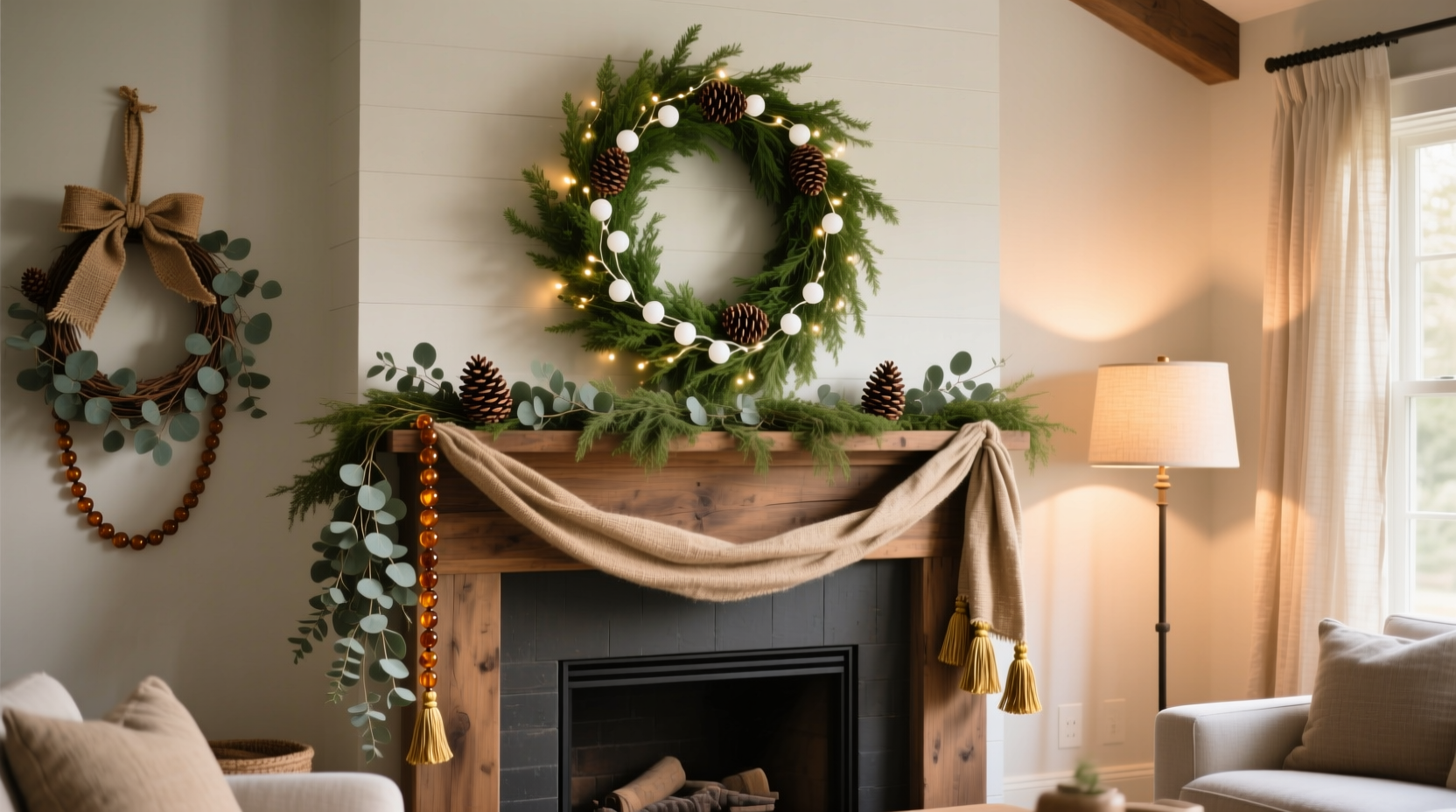
Before selecting a single strand of greenery, define the mood you want to set. Are you aiming for rustic woodland charm, modern minimalist elegance, or traditional holiday opulence? A clear theme informs every decision—from garland types to accent pieces—and prevents mismatched styles from clashing.
Start by choosing a dominant color scheme. Classic combinations like evergreen and cream, red and gold, or silver and white provide strong foundations. Alternatively, consider tonal schemes using varying shades of green, or natural palettes with eucalyptus, olive, and seeded eucalyptus for a year-round organic feel.
Once your palette is set, ensure all garlands align within it. For example, avoid pairing a bright artificial pine garland with a muted dried citrus and ivy strand unless you intentionally bridge them with shared tones or materials.
Select Complementary Garland Types
Not all garlands are meant to be layered together. To avoid visual noise, choose strands that differ in texture, density, and structure—but still complement each other. Think of it like layering clothing: a chunky knit pairs well with a smooth silk scarf, not another bulky sweater.
Here are common garland types and how they work in layers:
- Foam-core or wire-frame garlands: Ideal as a base layer due to their fullness and ability to hold shape.
- Natural greenery (e.g., cedar, fir, eucalyptus): Best for mid-layering; adds organic variation and subtle fragrance.
- Vine-based (grapevine, willow, or rattan): Lightweight and textured, excellent for wrapping or draping over heavier strands.
- Artificial or pre-lit garlands: Use sparingly as an outer layer—especially if they contain bulbs or glitter, which draw significant attention.
- Dried botanicals (lavender, pampas, wheat): Add softness and contrast but should be used minimally to prevent a disheveled look.
“Layering is about contrast with continuity. Mix textures but keep a thread of unity—whether through color, material, or form.” — Lena Torres, Interior Stylist & Seasonal Design Consultant
Apply the Rule of Three for Layering
Designers often rely on the “rule of three” to create balanced compositions. Applied to garland layering, this means using no more than three distinct strands around a standard-sized mantle. More than that risks overwhelming the space, especially in smaller rooms.
Follow this structure:
- Base Layer: A full, structured garland that covers the mantle edge completely. This is typically your thickest strand, such as a premium artificial pine or foam-backed evergreen.
- Middle Layer: A natural or textured garland that introduces movement and depth. Drape it slightly off-center or vary its path to break symmetry.
- Top Accent Layer: A delicate vine, ribbon, or beaded strand that adds finesse. This layer should be narrow and light—think of it as jewelry for your arrangement.
| Layer | Purpose | Recommended Materials | Avoid |
|---|---|---|---|
| Base | Full coverage and structure | Foam-core pine, pre-lit garland, thick cedar | Thin or sparse strands |
| Middle | Texture and dimension | Eucalyptus, olive branches, grapevine | Overly rigid or shiny materials |
| Accent | Visual interest and detail | Lace trim, dried flowers, copper wire vines | Bulky ornaments or loud patterns |
Use Strategic Anchoring and Spacing
How you secure and space your garlands matters as much as what you use. Random placement leads to clutter, even with beautiful materials. Instead, anchor each layer deliberately using discreet methods.
Begin by measuring your mantle and marking key points: center, quarter marks, and ends. Attach the base garland first, securing it every 8–10 inches with floral wire, clear zip ties, or adhesive hooks rated for weight. Ensure it sits flush against the back of the mantle.
For the second and third layers, offset their starting points. Don’t align every end or drape peak at the same spot. Staggering creates rhythm and allows each layer to breathe visually. For example, start the middle garland six inches to the left of center, then let the accent layer begin from the right corner.
Leave small gaps between strands where possible—about 1–2 inches—so textures don’t blur into one mass. This negative space lets the eye distinguish each element, enhancing the sense of layering rather than stacking.
Mini Case Study: The Balanced Mantle Makeover
In a recent project, interior designer Mara Lin was asked to refresh a client’s overly busy living room mantle. The existing setup featured four overlapping garlands: a pre-lit spruce, a burlap ribbon, a dried citrus strand, and a metallic tinsel vine. From afar, it appeared as a tangled, shimmering mound.
Mara simplified the design using the rule of three. She removed the tinsel and burlap, keeping only the pre-lit spruce as the base. Over it, she draped a loose eucalyptus garland, letting it cascade asymmetrically. Finally, she added a thin cinnamon-scented vine woven intermittently through the front for warmth and scent.
The result? A refined, aromatic display that felt abundant but not excessive. The client reported guests consistently complimented the mantle’s elegance—proof that less, when layered well, can truly be more.
Create Visual Flow with Accessories
Garlands rarely stand alone. Candles, lanterns, stockings, and artwork often share the mantle space. These accessories must integrate seamlessly, not fight for dominance.
When layering garlands, treat decorative objects as punctuation marks—places for the eye to rest. Place larger items like candle holders or vases at intervals where garlands naturally dip or widen. Avoid clustering objects in the center unless flanked by balanced greenery.
If using candles, opt for neutral holders (white, black, or brushed metal) so they don’t compete with the garlands. Flameless candles are safer and allow closer placement to foliage.
Consider hanging lightweight ornaments or pinecones from the middle or accent layers—but limit to three or five total. Too many dangling elements fragment attention and suggest clutter.
Step-by-Step Guide: Layering Garlands Without Clutter
Follow this sequence to install a layered garland display that feels polished and purposeful:
- Define your theme and palette. Choose colors and materials that align with your room’s aesthetic.
- Select three garlands: one base, one textural middle, and one delicate accent.
- Measure and prep the mantle. Clean the surface and mark spacing points every 8–10 inches.
- Install the base garland. Secure it tightly along the back edge, ensuring full coverage.
- Add the middle layer. Drape it over the base, starting off-center and varying the drape height on each side.
- Weave in the accent layer. Use clips or wire to attach it intermittently, focusing on areas with less density.
- Integrate accessories. Place candles, vases, or art so they nest within the greenery, not atop it.
- Step back and assess. View from multiple angles and distances. Remove any element that feels forced or redundant.
Checklist: Clutter-Free Garland Layering
- ☑ Chose a unifying color or theme
- ☑ Limited garlands to three layers maximum
- ☑ Selected varied textures (e.g., full + wispy + linear)
- ☑ Anchored base layer securely and evenly
- ☑ Offset middle and top layers for visual rhythm
- ☑ Left small gaps between strands for clarity
- ☑ Added no more than 3–5 decorative accents
- ☑ Stepped back to evaluate balance from across the room
FAQ
Can I mix real and artificial garlands?
Yes, but do so intentionally. Pair real greenery like eucalyptus with high-quality artificial bases that match in color tone. Avoid combining wilted natural strands with stiff plastic—this contrast highlights imperfections. Keep real garlands misted and replace them before they dry out.
How long should garland drapes be?
For most mantles, drapes should extend 12–18 inches below the ledge. Longer lengths work in tall rooms with high ceilings, but avoid touching the hearth unless protected. Always ensure drapes don’t obstruct functionality, especially if the fireplace is in use.
What if my mantle is narrow?
On narrow mantles (under 12 inches deep), limit layers to two: a base garland and a thin accent. Focus on vertical drop rather than horizontal fullness. Use wall-mounted brackets to extend garlands outward slightly if needed, creating illusion of depth.
Conclusion: Style with Intention
Layering multiple garlands around a mantle isn’t about covering every inch—it’s about crafting a story with texture, light, and form. When approached with restraint and strategy, even three simple strands can evoke abundance without excess. The most memorable displays aren’t the fullest, but the most thoughtful.
By anchoring your design in a clear vision, respecting the rule of three, and allowing space between elements, you create a mantle that feels both festive and serene. This season, resist the urge to pile on. Instead, curate with care. Let each garland serve a purpose, each drape flow with grace.




 浙公网安备
33010002000092号
浙公网安备
33010002000092号 浙B2-20120091-4
Comments
No comments yet. Why don't you start the discussion?