
Layering necklaces has become a signature move in modern jewelry styling—adding depth, personality, and visual interest to any outfit. But when multiple chains of varying lengths are involved, the risk of tangling, imbalance, or aesthetic chaos increases. Done poorly, layered necklaces can look messy or overwhelming. Done well, they elevate your entire look with effortless elegance. The key lies not just in selection but in strategy: understanding proportions, materials, and maintenance to create harmonious stacks that stay tangle-free and timeless.
Understand Necklace Length Categories
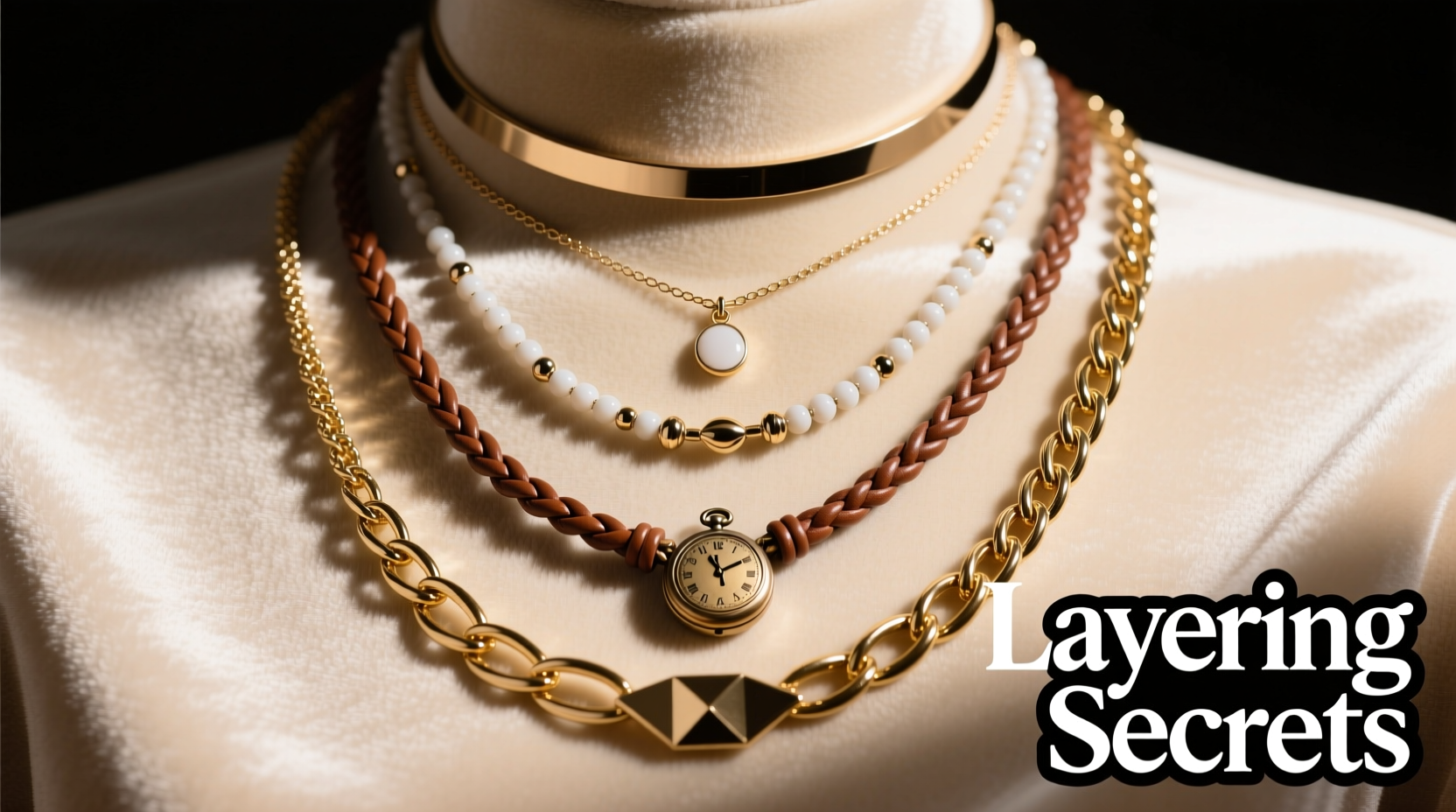
Before layering, it’s essential to know standard necklace lengths and how each sits on the body. This knowledge helps you build intentional combinations that complement your neckline, face shape, and personal style.
| Length (inches) | Name | Sits On | Best For |
|---|---|---|---|
| 14–16 | Choker | Base of the neck | V-necks, off-the-shoulder tops |
| 18 | Princess | Top of the sternum | Most necklines, versatile layering base |
| 20–22 | Matinee | Middle of the chest | Button-downs, crewnecks |
| 24–28 | Opera | Below the collarbone to upper abdomen | Dramatic layering, statement pieces |
| 30+ | Rope | Beyond the bust | Anchoring layers, bohemian styles |
When layering, choose lengths that differ by at least 2 inches to avoid overlapping and crowding. A classic trio might include a 16-inch choker, an 18-inch pendant, and a 24-inch chain. This staggered approach creates clear visual separation while maintaining cohesion.
Balance Materials and Proportions
Clashing doesn’t just come from tangled chains—it often stems from mismatched aesthetics. Combining too many bold elements or conflicting metals can make a layered look feel chaotic rather than curated.
To maintain harmony:
- Limit dominant pieces: Choose one statement necklace per stack. If you’re wearing a large pendant or chunky chain, keep the others delicate.
- Stick to one metal tone: Mixing gold and silver can work, but only if intentionally done with a unifying theme (e.g., vintage industrial). Beginners should stick to one metal family for consistency.
- Vary textures, not thickness: Combine a cable chain with a box chain or a paperclip link, but avoid pairing two thick chains—they compete for attention.
- Align themes: Bohemian layers suit natural stones and mixed metals; minimalist stacks shine with clean lines and geometric pendants.
“Layering is about rhythm, not randomness. Think of it like music—each piece plays a note, but together they form a chord.” — Lena Torres, Jewelry Stylist & Creative Director at Atelier Lune
Step-by-Step Guide to Building a Balanced Stack
- Start with a base: Choose a simple chain at mid-length (18–20 inches) as your anchor. This sets the foundation.
- Add contrast above: Select a shorter chain (14–16 inches), ideally thinner or with a small charm, to sit closer to the neck.
- Extend below: Add a longer piece (22–28 inches) with slightly more presence—perhaps a subtle pendant or textured chain.
- Test movement: Put them on and move your head side to side. If chains constantly overlap or pull, adjust lengths or remove one.
- Finalize with purpose: Ask: Does this enhance my outfit? Is there a focal point? If not, simplify.
Prevent Tangling: Smart Wearing and Storage
Tangled necklaces aren’t just frustrating—they can weaken chains over time. Prevention starts before you put them on and continues after you take them off.
Wearing Tips to Avoid Tangles
- Put on necklaces in order: longest first, shortest last. This reduces friction during dressing.
- Avoid high-collared or tight tops that rub against chains throughout the day.
- If layering three or more, consider using a necklace extender on the middle piece to increase spacing.
Storage Solutions That Work
How you store your necklaces determines their longevity and ease of use. Tossing them into a drawer guarantees knots.
Effective storage options include:
- Jewelry stands: Ideal for frequently worn pieces. Keeps them visible and tangle-free.
- Travel rolls: Fabric rolls with slots prevent chains from crossing during transit.
- Ziplock bags: Store each necklace in a small bag with the clasp threaded through the seal. This locks the chain in place.
- DIY pegboard: Mount small hooks on a painted board for a custom, space-efficient display.
Real-Life Example: The Office-to-Dinner Transition
Sophia, a marketing consultant in Chicago, wanted to wear layered necklaces daily but struggled with professionalism during work hours and tangling by evening events.
She adopted a three-piece system:
- 16-inch rose gold choker with a tiny initial pendant (subtle for meetings).
- 18-inch delicate cable chain with a small diamond accent (adds sparkle without flashiness).
- 24-inch textured bar necklace she clips on after work for dinner outings.
By keeping the longer chain separate until needed, she avoided daytime bulk and nighttime tangles. She stores each in individual fabric pouches labeled “Work,” “Evening,” and “Combo.” Her colleagues began complimenting her polished style, and she no longer spends evenings untangling knots.
This practical approach shows that thoughtful planning—not complexity—makes layering sustainable.
Checklist: Perfect Layering in 7 Steps
Follow this checklist every time you plan a layered look:
- ☐ Choose a maximum of three necklaces for balanced layering.
- ☐ Ensure at least 2 inches difference between each length.
- ☐ Pick one focal point (e.g., a pendant or textured chain).
- ☐ Stick to one primary metal tone unless intentionally mixing.
- ☐ Test the stack in motion—nod, turn, lean—to check for tangling.
- ☐ Match the vibe to your outfit (minimalist, romantic, edgy).
- ☐ Store each piece separately after use to preserve integrity.
Avoid These Common Mistakes
Even experienced jewelry wearers fall into traps that undermine their layered looks.
| Don’t | Do Instead |
|---|---|
| Wear three chunky chains together | Mix one bold piece with two delicate ones |
| Use similar lengths (e.g., 18\", 19\", 20\") | Space lengths by at least 2 inches |
| Leave necklaces in a pile overnight | Hang or compartmentalize immediately |
| Layer heavy pendants that pull | Opt for lightweight charms or none at all |
| Ignore neckline compatibility | Match layers to your top’s cut (e.g., V-neck + vertical layers) |
One frequent error is over-layering. More isn’t always better. A cluttered neckline distracts from your face—the focal point of your appearance. Simplicity with intention wins every time.
Frequently Asked Questions
Can I mix gold and silver necklaces?
Yes, but do so deliberately. Choose one metal as dominant and use the other as an accent. Unify the look with shared design elements—like matte finishes or geometric shapes. Alternatively, use a bi-color connector piece to bridge the two tones seamlessly.
How do I stop my necklaces from twisting?
Twisting often occurs due to chain structure or body movement. Rope, snake, or twisted cables are less prone to rotation than flat or box chains. To minimize twisting, ensure clasps are secure and avoid excessive friction from clothing. Lightweight chains also twist less than heavier ones.
Is it okay to layer necklaces with a collar?
Yes, but be strategic. High collars cover shorter necklaces, so focus on pieces that extend below the collarline (20 inches or longer). Alternatively, wear only one sleek choker that peeks out subtly. Avoid bulky layers that bunch under fabric.
Conclusion: Style With Confidence and Care
Layering necklaces of different lengths is an art rooted in balance, intention, and maintenance. By understanding how lengths interact, selecting complementary materials, and storing pieces properly, you can create stunning combinations that enhance your wardrobe without frustration. Tangling and clashing aren’t inevitable—they’re signs of disorganization, not poor taste. With the right approach, your layered necklaces can become a signature part of your identity: elegant, expressive, and effortlessly put together.




 浙公网安备
33010002000092号
浙公网安备
33010002000092号 浙B2-20120091-4
Comments
No comments yet. Why don't you start the discussion?