
Layering necklaces is one of the most expressive ways to elevate an outfit. Done well, it adds depth, texture, and personality. But when chains tangle or metals clash, the look can quickly go from chic to chaotic. The secret isn’t just in choosing the right pieces—it’s in understanding proportion, material harmony, and smart organization. With the right approach, you can build layered looks that feel intentional, balanced, and effortlessly stylish.
Choose the Right Chain Lengths for Balance
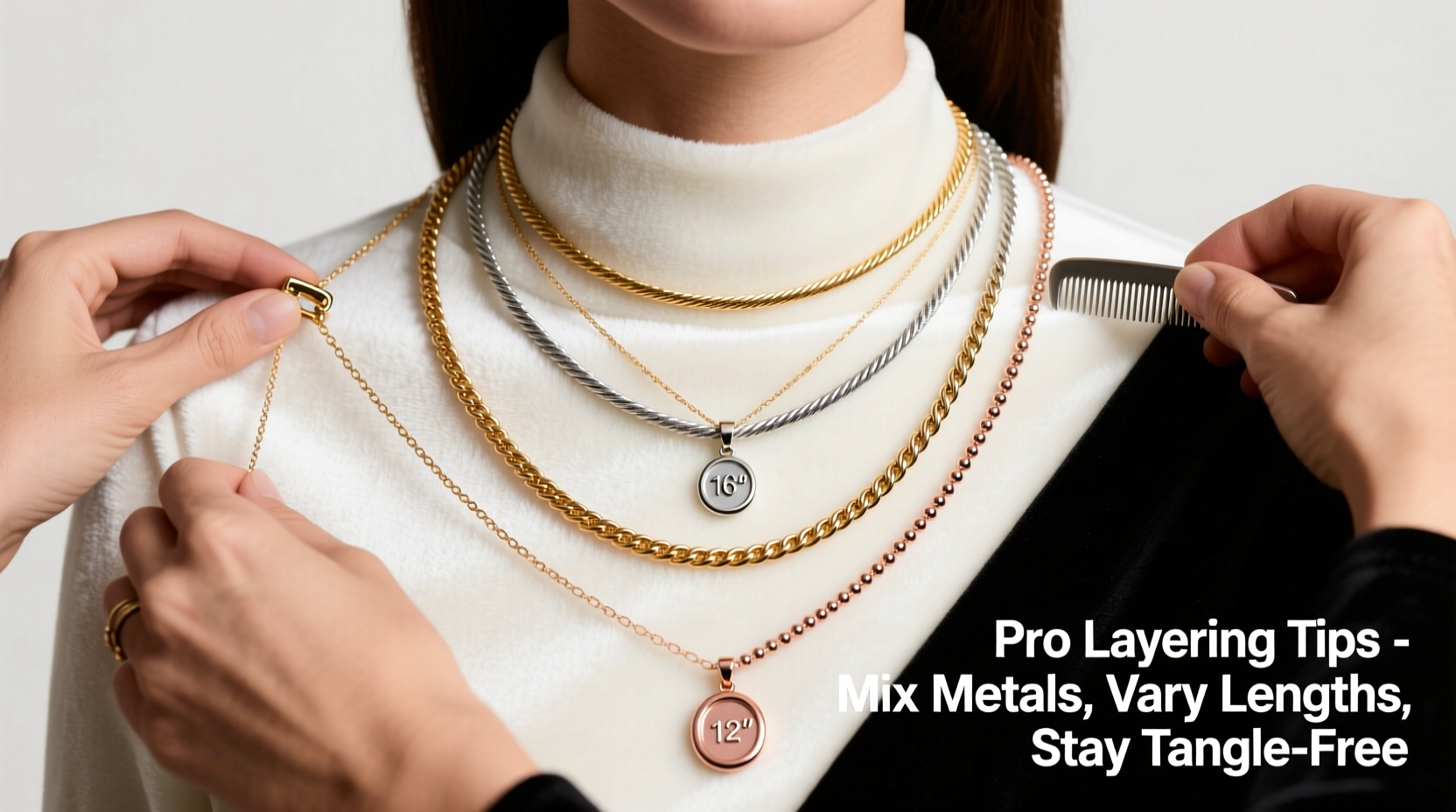
The foundation of a successful necklace stack lies in varying lengths. When all chains are too close in size, they bunch together and tangle easily. Instead, aim for staggered drops that create visual interest and breathing room between each piece.
A classic rule of thumb is to space chain lengths by at least 2 inches. For example:
- Choker: 14–16 inches (sits snugly at the base of the neck)
- Princess: 18 inches (falls just below the collarbone)
- Matinee: 20–24 inches (rests at the top of the bust)
- Opera: 28–30 inches (extends to the breastbone or beyond)
Combining three lengths—say, 16\", 18\", and 22\"—creates a cascading effect that draws the eye downward and elongates the torso. Avoid stacking more than four necklaces unless you’re going for a bold editorial look; too many layers can overwhelm the neckline.
Mix Metals Intentionally, Not Randomly
Gone are the days when you had to match every metal tone perfectly. Today’s fashion embraces mixed metals—but only when done with purpose. The key is cohesion, not chaos.
Start by identifying the dominant metal in your wardrobe or skin tone. Warm undertones often pair better with gold, rose gold, or brass, while cool tones shine with silver, platinum, or white gold. That said, modern jewelry design encourages blending both. The trick? Anchor your look with one primary metal and use the second as an accent.
For instance, if you're wearing a gold pendant as your focal point, add a delicate silver choker and a longer rose gold chain to introduce contrast without overwhelming the eye. Consistency in finish—matte, polished, brushed—also helps unify disparate metals.
“Mixing metals isn’t about throwing everything on—it’s about creating rhythm. Think of it like music: different notes, but in the same key.” — Lila Chen, Jewelry Stylist & Creative Director at Layer Theory Studio
Prevent Tangling with Smart Storage and Wear Techniques
Tangled necklaces aren’t just frustrating—they can damage delicate chains over time. Fine links kink, clasps break, and pendants get caught. Prevention starts long before you put them on.
Storage Solutions That Work
Never toss necklaces loosely into a drawer. Over time, movement causes friction and knotting. Instead, adopt one of these proven storage methods:
- Hanging organizers: Use a wall-mounted rack or a padded jewelry roll with individual hooks.
- Velvet-lined boxes: Compartments keep chains separated and reduce scratching.
- Straw method: Thread each necklace through a drinking straw before closing the clasp. This keeps the chain straight and prevents loops from forming.
- Travel cases: Choose cases with snap-in dividers or elastic loops designed specifically for necklaces.
Wearing Without Tangles
Even with good storage, layering multiple necklaces increases the risk of snags. Follow this simple sequence:
- Lay all chosen necklaces flat on a surface.
- Put on the longest chain first.
- Add middle-length pieces next.
- Finish with the shortest (closest to the neck).
- Adjust pendants so they hang forward and don’t catch on other chains.
Build Your Stack with a Styling Formula
Like a capsule wardrobe, a curated necklace collection should include foundational pieces that work across seasons and outfits. Build your inventory using this formula:
| Role | Example | Material Tips |
|---|---|---|
| Focal Point | Statement pendant or chunky chain | Choose one standout piece per stack; avoid multiple large elements |
| Texture Layer | Cable, box, or snake chain | Mix smooth and textured chains (e.g., rope + curb) for dimension |
| Delicate Accent | Thin chain with small charm or bar | Use fine chains (1–1.5mm) to add lightness without bulk |
| Personal Touch | Nameplate, birthstone, or heirloom | Place closer to the face for visibility |
This structure ensures variety without clutter. Start with two pieces—a delicate choker and a mid-length pendant—then gradually expand. Over time, you’ll develop an intuitive sense of what works together.
Real Example: The Everyday Office-to-Dinner Stack
Sophia, a marketing executive in Chicago, wanted to transition her look from day meetings to evening drinks without changing accessories. She built a three-piece set:
- A 16-inch gold choker with a minimalist bar pendant (personal touch)
- An 18-inch recycled silver cable chain with a tiny moon charm (texture layer)
- A 22-inch rose gold figaro chain (focal point, subtle but present)
The combination worked because the metals shared warm undertones, the lengths were distinct, and the textures varied enough to catch the light differently. At work, she wore just the choker and silver chain; after hours, she added the longer rose gold piece for drama. No tangling, no mismatch—just effortless adaptability.
Do’s and Don’ts of Necklace Layering
To reinforce best practices, here’s a quick-reference guide for dos and don’ts:
| Do | Don't |
|---|---|
| Space lengths by at least 2 inches | Stack chains of nearly identical length |
| Mix metals with a dominant base | Combine high-gloss and matte finishes haphazardly |
| Use a single statement piece per stack | Wear multiple large pendants that compete for attention |
| Store necklaces separately or threaded | Toss all chains into an open compartment |
| Fasten longer chains first when layering | Put on shorter necklaces first and risk snagging |
Step-by-Step Guide to Building Your First Layered Look
Follow this five-step process to create a polished, tangle-free stack—even if you’ve never layered before.
- Assess your existing collection. Pull out all your necklaces and lay them flat. Group by length, metal, and style.
- Select a base chain. Pick one that sits comfortably on your collarbone or slightly below—this becomes your anchor.
- Add contrast. Choose a second piece that differs in length by at least 2 inches and introduces a new texture or subtle metal variation.
- Introduce meaning. Include a third piece with personal significance—a locket, initial, or symbolic charm—to ground the look emotionally.
- Test and adjust. Wear the stack with a crew-neck top and a V-neck blouse. Make sure pendants don’t flip or twist and that chains lie flat.
If any piece feels redundant or causes tangling during movement, remove it. Simplicity often reads as more sophisticated than complexity.
FAQ: Common Questions About Layering Necklaces
Can I layer necklaces with different clasp types?
Yes, but ensure the clasps are secure and similar in weight. Lobster clasps are generally more reliable than spring rings, especially on heavier chains. If mixing clasp styles, keep them in the back for a cleaner front profile.
How do I clean tangled or tarnished necklaces?
For light tarnish, use a microfiber polishing cloth specific to the metal type. For tangles, place the necklace on a soft surface, apply a drop of baby oil to the knot, and gently work it apart with a pin. Never pull hard—this can snap thin chains.
Is it okay to sleep or shower with layered necklaces?
No. Water weakens metal bonds, and lotions or sweat accelerate tarnishing. Sleeping in necklaces increases tangling and stress on solder points. Always remove and store properly before bed or bathing.
Final Checklist Before You Layer
- Are my chain lengths spaced at least 2 inches apart?
- Have I chosen a dominant metal tone?
- Is there one clear focal point?
- Are all clasps secure and functional?
- Am I storing each chain separately or protected?
- Have I tested the stack with actual movement (turning head, bending)?
Conclusion: Own Your Style, One Layer at a Time
Layering necklaces isn’t about following rigid rules—it’s about expressing yourself with confidence and care. When you understand how to balance lengths, harmonize metals, and prevent tangles, your jewelry becomes an extension of your daily narrative. Whether you prefer minimalist symmetry or bold eclecticism, the right combination can transform a simple outfit into a statement.
Start small. Master a two-chain combo. Learn how your favorite pieces interact. Then build from there. With intention and a little practice, you won’t just wear layered necklaces—you’ll style them like a pro.




 浙公网安备
33010002000092号
浙公网安备
33010002000092号 浙B2-20120091-4
Comments
No comments yet. Why don't you start the discussion?