
Layering necklaces is one of the most expressive ways to elevate an outfit. Whether you're dressing up for a night out or adding subtle flair to a casual ensemble, a well-curated stack can transform your entire look. But anyone who's tried it knows the frustration: delicate chains knotting together, clasps twisting, and hours spent untangling what should have taken seconds to put on. The good news? With the right techniques, tools, and understanding of proportion, you can master the art of necklace layering—keeping your pieces tangle-free, beautiful, and ready to wear.
The Science Behind Necklace Tangling
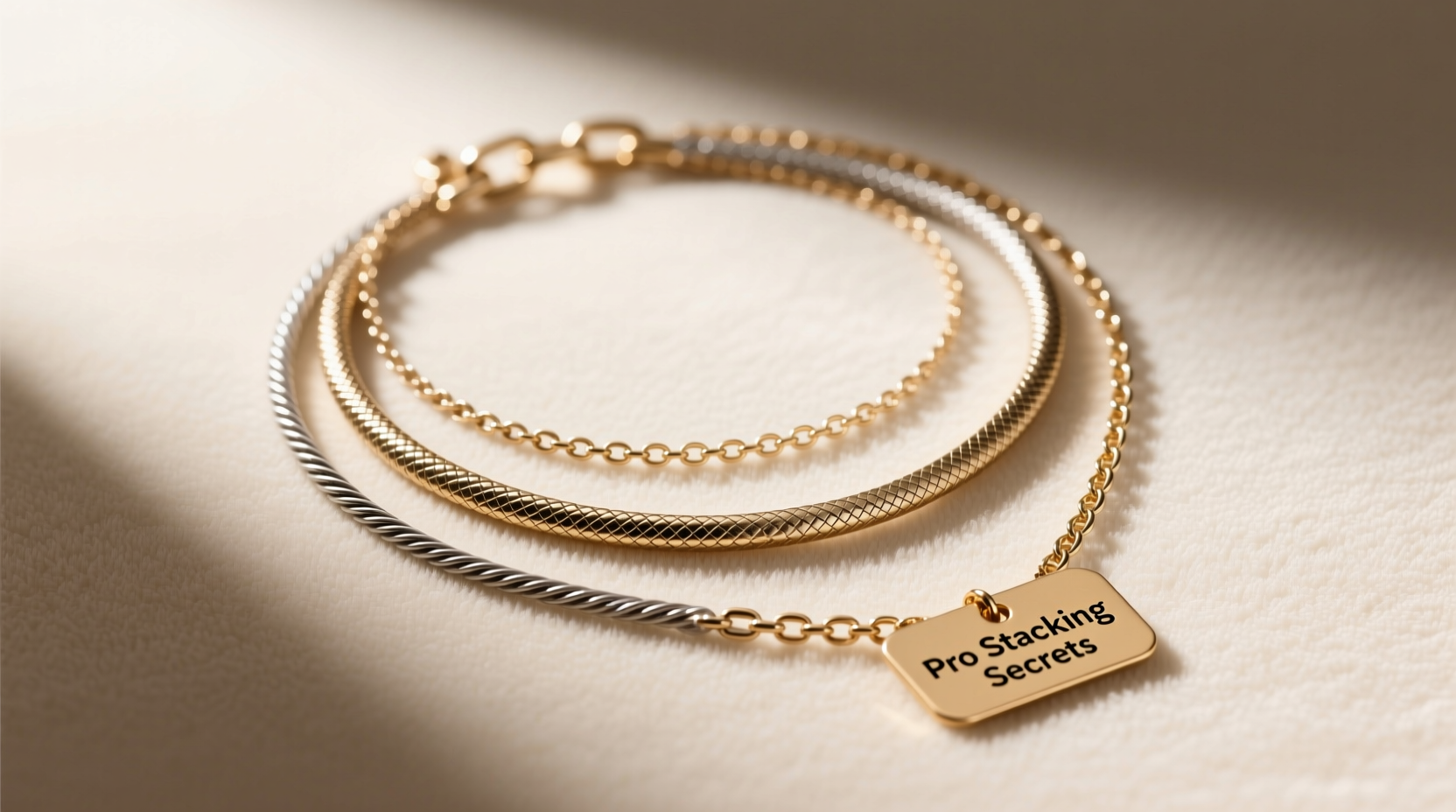
Tangling isn’t just bad luck—it’s physics. When multiple chains move independently around the neck, their links interact, especially when stored together or worn during movement. Thin, flexible chains like cable or snake links are particularly prone because they twist easily. Add different lengths, weights, and closure types into the mix, and the risk multiplies.
But tangling also stems from poor planning. Wearing three 16-inch chains won’t create visual depth—and worse, they’ll rub and knot constantly. The key is intentional variation: in length, texture, weight, and design. This not only prevents physical contact between pieces but also creates a polished aesthetic.
“Most necklace tangles happen before the first wear—during storage. If your jewelry drawer looks like a ball of metal spaghetti, your morning routine will suffer.” — Lila Monroe, Jewelry Stylist & Founder of Layered & Co.
Step-by-Step Guide to Tangle-Free Necklace Layering
Follow this proven sequence to build layered looks that stay smooth, elegant, and knot-free—from selection to storage.
- Start with a base length strategy: Choose necklaces spaced at least 1–2 inches apart in length (e.g., 16\", 18\", 20\"). This prevents overlap and reduces friction.
- Select by texture and thickness: Pair a fine chain with a medium curb or rope chain, then add a bold pendant piece. Varying widths reduce surface contact.
- Anchor with a focal point: Let one necklace—usually the longest or most detailed—serve as the centerpiece. Build outward from there.
- Fasten in order: Always put on the longest necklace first, working upward. This minimizes pulling and snagging during dressing.
- Secure closures properly: Ensure each clasp is fully fastened before adding the next layer. A loose clasp can catch on another chain instantly.
- Test movement: Gently shake your head side to side or simulate walking motion. If chains shift excessively, adjust length or remove one piece.
- Remove in reverse: Take off the shortest necklace first to avoid dragging others through hair or clothing.
Jewelry Stacking Proportions: The Golden Rules
Visual harmony matters as much as physical spacing. Even if necklaces don’t touch, poor proportion can make a stack look cluttered or unbalanced. Here’s how to get it right:
- The Rule of Three: Most stylish stacks use 3–5 pieces. Fewer than three may lack impact; more than five risks chaos unless expertly curated.
- Length Ladder: Create a descending staircase effect. For example: choker (14–16\"), princess (17–19\"), matinee (20–24\"), opera (28–30\"). Each sits clearly below the last.
- Weight Distribution: Heavier pendants should hang lower. A large locket at 16\" will pull upward and swing into shorter chains, increasing tangle risk.
- Mix Metals Strategically: Warm golds and cool silvers can coexist, but limit transitions to two tones max. Match chain styles within each tone group for cohesion.
| Neckline Type | Best Layering Approach | Avoid |
|---|---|---|
| V-neck top | Use a Y-shaped layering pattern—center-aligned pendants that follow the neckline | Bulky horizontal chains that break the line |
| Scoop neck | Wider spread of chains with varied pendants across collarbone | All chains bunched in center |
| Turtleneck | Longer layers (24\"+) so details remain visible over fabric | Chokers hidden under fabric |
| Off-the-shoulder | Delicate chains framing shoulders, with asymmetric balance | Heavy centerpieces that drag downward |
Smart Storage Solutions to Prevent Tangles Before They Start
How you store your necklaces determines 80% of your tangle problems. Tossing them into a pile might save space, but it guarantees knots and potential damage. Instead, adopt professional organizer habits.
Hanging vs. Laying Flat: What Works Best?
Hanging necklaces vertically keeps them separated and tension-free. Wall-mounted racks, over-door organizers, or even a repurposed tie rack work well. However, extremely long or heavy pieces (like opera-length pearls with clasps) should be laid flat to prevent stretching.
D.I.Y. Travel Roll-Up Method
For travel or drawer storage, roll necklaces individually in soft cloth strips. Wrap each chain around a folded square of microfiber, securing the ends. This method isolates each piece while protecting finishes.
Anti-Tangle Drawer Layout
If using a jewelry box, opt for one with individual compartments or padded slots. Place longer chains at the bottom of the box and shorter ones toward the front. Never let chains drape over edges where they can hook onto neighbors.
“I keep my most-worn trio pre-linked with tiny silicone rings—just enough to hold alignment without restricting movement. It cuts my morning routine in half.” — Marcus Tran, Fashion Editor at *Glamour Edit*
Real Example: From Tangled Mess to Signature Style
Sophia, a graphic designer in Portland, used to dread wearing her vintage gold necklaces. She owned a 16\" initial pendant, an 18\" figaro chain, and a 22\" cross—each sentimental, but always ending up knotted after just one wear. Frustrated, she stopped wearing them altogether.
After learning about intentional layering, she restructured her approach. She added a 14\" black choker-style chain for contrast and began storing each piece separately in labeled pouches. She now puts on the 22\" cross first, followed by the 18\" figaro, then the 16\" pendant, finishing with the choker. To prevent shifting, she clips the cross’s excess chain behind her neck using a small gold safety pin disguised under her hairline.
The result? A balanced, personal stack she wears weekly—with zero tangles. Her coworkers started asking for tips, and she recently styled her sister’s wedding party using the same principles.
Do’s and Don’ts of Necklace Layering
| Do | Don't |
|---|---|
| Space lengths by at least 1–2 inches | Stack multiple chains of identical length |
| Mix textures (cable, box, rope) for visual interest | Combine too many highly reflective finishes (can look chaotic) |
| Use a single dominant pendant per stack | Wear three large pendants competing for attention |
| Store necklaces separately or in anti-tangle rolls | Throw all chains into one compartment |
| Clean chains monthly with a polishing cloth | Use alcohol-based cleaners on plated jewelry |
Frequently Asked Questions
Can I layer necklaces made of different metals?
Yes—modern styling embraces mixed metals. The trick is consistency: either blend warm tones (gold, rose gold, brass) or cool tones (silver, white gold, platinum), or use a neutral connector piece like a leather cord or beaded segment to bridge the gap. Avoid pairing yellow gold directly with silver unless intentionally styled for contrast.
How do I untangle a severely knotted necklace?
Stay calm. Lay the chain flat on a well-lit surface. Use a straight pin or toothpick to gently loosen loops—never pull. Apply a drop of baby oil or olive oil to reduce friction, then work slowly outward from the knot. For persistent tangles, take it to a jeweler; most can resolve it in minutes.
Is it safe to sleep in layered necklaces?
No. Sleeping in necklaces increases breakage and tangling risk due to movement. It can also weaken solder points and stress clasps. Reserve layering for waking hours, and always remove before bed.
Checklist: Build Your Perfect Tangle-Free Stack
- ☐ Choose 3–5 necklaces with varying lengths (minimum 1\" difference)
- ☐ Ensure at least one piece has a distinctive pendant or texture
- ☐ Fasten the longest necklace first, shortest last
- ☐ Store each chain separately using hooks, rolls, or compartments
- ☐ Clean each piece monthly with a non-abrasive cloth
- ☐ Test mobility by moving your head and shoulders naturally
- ☐ Remove in reverse order to prevent snags
- ☐ Rotate stacks weekly to reduce wear on specific chains
Final Thoughts: Elevate Your Everyday Style with Confidence
Layering necklaces shouldn’t be a battle against knots and frustration. With a few strategic choices—thoughtful length selection, smart storage, and mindful wearing habits—you can enjoy the full creative freedom of jewelry stacking. The most stylish people aren’t those with the most expensive pieces, but those who wear what they love with intention and ease.
Your jewelry tells a story. Let it unfold smoothly, one tangle-free layer at a time.




 浙公网安备
33010002000092号
浙公网安备
33010002000092号 浙B2-20120091-4
Comments
No comments yet. Why don't you start the discussion?