
Layering necklaces is one of the most expressive ways to elevate a simple outfit into something bold, elegant, or effortlessly chic. Whether you're dressing up for a night out or adding dimension to your everyday look, a well-layered necklace stack can define your personal style. But there's a universal frustration: within minutes of putting them on, chains twist, tangle, and knot into a frustrating mess. This isn’t just annoying—it risks damaging delicate metals and stones. The good news? With the right techniques, materials, and habits, you can wear multiple necklaces confidently, knowing they’ll stay smooth, separated, and stylish from morning coffee to evening cocktails.
Understanding Why Necklaces Tangle
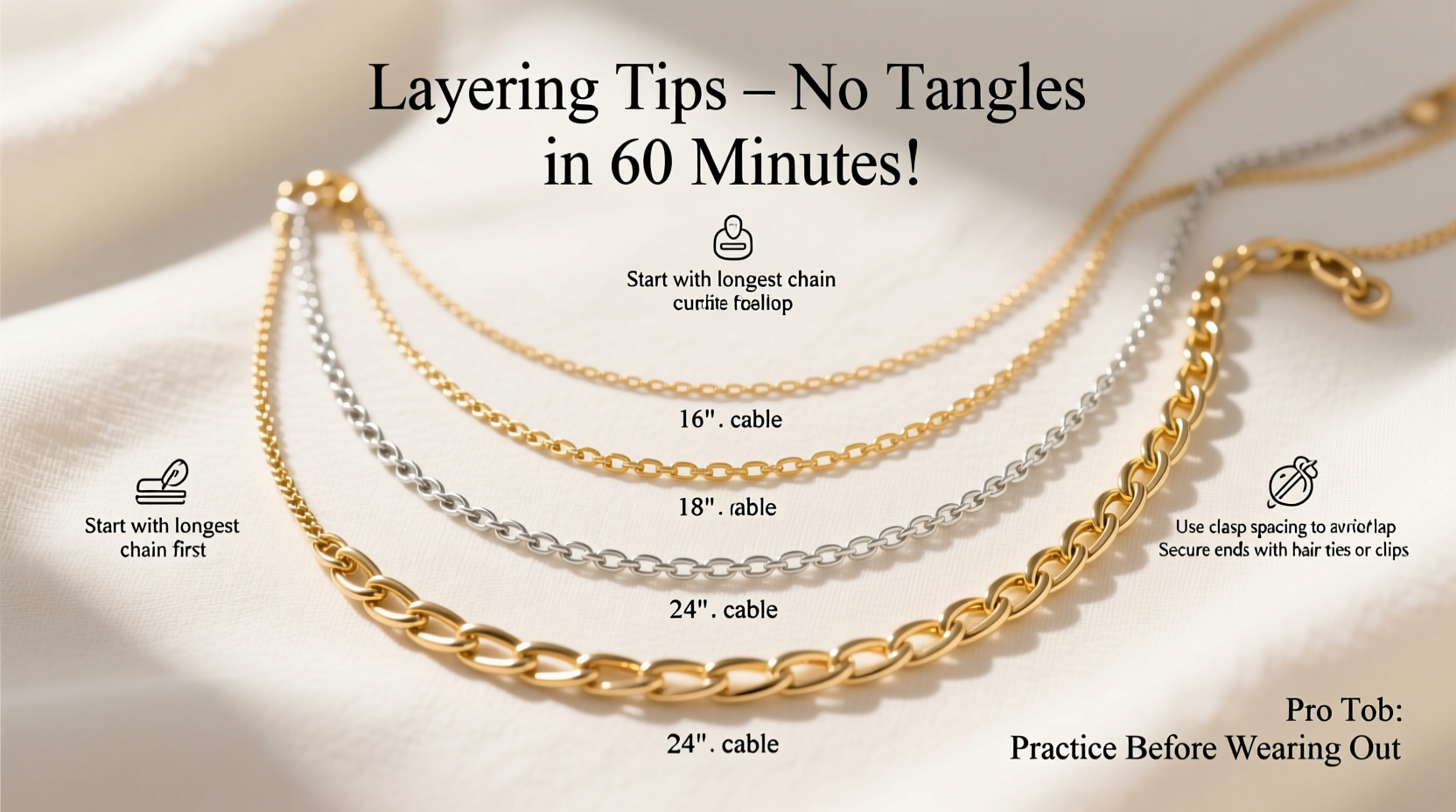
Tangling isn’t random—it’s physics meeting fashion. When chains of different lengths, weights, and textures move against each other during daily activity, friction and motion cause loops to form and catch. Thin chains are especially prone because they’re more flexible and lightweight, making them susceptible to twisting with even minor movements like turning your head or adjusting your collar.
The design of clasps also plays a role. Lobster clasps, while secure, often have bulky ends that snag on adjacent chains. Spring ring clasps can be even worse, catching easily due to their small, rounded shape. Additionally, wearing too many similar-length pieces increases overlap, raising the chance of entanglement.
“Tangles happen when movement, chain gauge, and proximity combine without strategy. A little planning goes a long way.” — Lena Ruiz, Jewelry Stylist & Consultant
Choose the Right Chain Lengths and Proportions
The foundation of a tangle-free layered look is strategic spacing. Avoid stacking necklaces that fall within one or two inches of each other. Instead, create deliberate gaps so each piece occupies its own visual and physical space.
A classic rule is the “+2 inch rule”: increase each successive necklace by at least two inches in length. For example:
- Choker: 14–16 inches
- Princess: 18 inches
- Matinee: 20–22 inches
- Opera: 28–30 inches (can be doubled)
This staggered approach reduces contact points between chains, minimizing friction. A 16-inch pendant and an 18-inch chain will constantly rub; but a 16-inch choker and a 22-inch lariat will drape independently.
Match Materials and Weights Strategically
Not all chains behave the same. Mixing heavy rope chains with delicate box chains invites trouble. Heavier pieces tend to pull downward, dragging lighter ones into twists. To prevent this, group necklaces by weight and structure.
Consider these guidelines:
- Heavy chains (cable, curb, rope): Best worn alone or as the base layer if paired with medium-weight styles.
- Medium chains (figaro, wheat, mariner): Versatile for middle layers, especially when flanked by lighter or heavier pieces with sufficient length difference.
- Fine chains (snake, ball, thin box): Ideal for top layers but vulnerable to snags. Avoid pairing multiple fine chains unless spaced well apart.
Solid metal chains (like herringbone) lie flat and resist tangling better than linked designs. If you love layered daintiness, opt for soldered or fused styles that don’t have moving parts.
Step-by-Step Guide to Layering Without Tangles
Follow this practical sequence every time you put on multiple necklaces:
- Start with the longest chain. Put it on first so it rests closest to your body. This prevents shorter pieces from slipping underneath and catching.
- Let it settle naturally. Adjust the clasp and let the chain drape before adding the next piece.
- Add progressively shorter necklaces. Each new piece should sit visibly above the last, creating a cascading effect.
- Secure clasps carefully. Fasten each clasp at the back, then gently reposition the chain front and sides to avoid pulling.
- Check spacing in the mirror. Turn your head side to side to ensure no chains are overlapping excessively.
- Test movement. Simulate real-life motion—shrug shoulders, turn head, bend slightly—to confirm stability.
This method ensures minimal interference between layers and maximizes control over placement.
Smart Storage Habits Prevent Daily Tangles
How you store your necklaces overnight determines how easily they tangle the next day. Throwing them into a drawer or pile leads to chaos before you even put them on.
Use dedicated solutions:
- Hanging jewelry organizers: Vertical racks with hooks keep chains separated and gravity-straightened.
- Travel rolls with individual slots: Fabric rolls with padded compartments prevent contact during transport.
- Necklace stands: Freestanding displays allow you to pre-layer favorite combinations safely.
Do’s and Don’ts of Necklace Layering
| Do’s | Don’ts |
|---|---|
| Space lengths by at least 2 inches | Wear three 18-inch chains together |
| Use a mix of textures (e.g., smooth + patterned) | Combine multiple delicate chains without spacing |
| Store necklaces hanging or laid flat | Throw them into a cluttered jewelry box |
| Fasten the longest chain first | Put on short necklaces before long ones |
| Choose one statement piece per stack | Wear multiple large pendants that compete |
Following these principles helps maintain both aesthetic harmony and physical integrity.
Real Example: Morning Commute Survival Test
Sophie, a marketing consultant in Chicago, loved her layered gold necklaces—a 16-inch bar choker, an 18-inch initial pendant, and a 22-inch coin chain. Every morning, she’d arrive at work to find the two shorter ones knotted behind her neck. After switching her routine to put on the 22-inch chain first, then the 16-inch, and finally the 18-inch, the tangles stopped. She also replaced the 18-inch chain with a slightly sturdier trace chain, which resisted twisting better than the original delicate cable. Within a week, her stack stayed pristine through commutes, meetings, and lunch breaks.
The change wasn’t about buying new jewelry—it was about rethinking order, fit, and material compatibility.
Minimize Clasp Snagging with Smart Choices
Clasps are silent culprits in tangles. Their shape and size determine how likely they are to catch on adjacent chains. Here’s how to reduce risk:
- Opt for spring ring or bolt ring clasps if you prefer smaller closures—just ensure they’re not overly rounded.
- Lobster clasps are more secure but bulkier; choose low-profile versions for layering.
- Magnetic clasps are easy to use but can snap onto nearby metal—best avoided in stacks.
- Toggle clasps lie flatter but can shift position; pair only with medium-weight chains.
You can also add silicone or plastic clasp guards—tiny sleeves that cover the hook end—to prevent snagging. These are nearly invisible and widely available online.
Pre-Set Your Favorite Combinations
If you regularly wear the same layered look, consider setting it up in advance. Lay the necklaces out on a soft surface in the correct order, connect them temporarily with a soft ribbon or fabric tie at the back, and store them as a unit. This ensures consistent, tangle-free wear and saves time during busy mornings.
For travel, use a hard-shell jewelry case with fixed loops or a fold-over organizer that keeps each chain isolated. Never pack layered necklaces loosely in a bag.
Frequently Asked Questions
Can I wear three necklaces every day without tangling?
Yes, but only if they’re properly spaced in length (e.g., 16\", 20\", 28\") and made of compatible weights. Avoid combining more than two delicate chains. Choose one focal point—like a pendant—and keep others simple.
What if my necklaces keep tangling even with proper layering?
Check your daily movements. Frequent scarf-wearing, high-collared shirts, or active jobs may increase friction. Try switching one chain to a sturdier style or reducing the number of layers during high-motion days.
Is there a way to detangle necklaces quickly if they do knot?
Yes. Lay the necklace flat on a table, use a pin or needle to gently loosen the knot from the outside in, and apply a drop of lubricant like baby oil or dry jewelry cleaner. Never pull forcefully—it can break the chain.
Final Checklist: Tangle-Free Layering in Practice
- ✅ Measure and select necklaces with at least 2-inch length differences.
- ✅ Prioritize one statement piece; keep others minimal.
- ✅ Choose compatible chain weights—avoid mixing ultra-fine with heavy styles.
- ✅ Put on the longest necklace first, then work upward.
- ✅ Secure clasps gently and adjust positioning before adding the next layer.
- ✅ Store necklaces hanging or laid flat in separated compartments.
- ✅ Inspect clasps and replace overly bulky or snag-prone types.
- ✅ Pre-assemble your go-to combinations for faster, safer wear.
Conclusion: Style Shouldn’t Come at the Cost of Sanity
Layering necklaces doesn’t have to mean sacrificing convenience for beauty. With thoughtful selection, intelligent layering order, and smart storage, you can enjoy complex, eye-catching stacks that stay neat from dawn to dusk. The key is intentionality—each chain should have room to breathe, move, and shine without fighting for space. Stop battling knots every few hours. Start building a system that works with your lifestyle, not against it.




 浙公网安备
33010002000092号
浙公网安备
33010002000092号 浙B2-20120091-4
Comments
No comments yet. Why don't you start the discussion?