
Perfume layering—combining multiple fragrances to create a personalized olfactory signature—is a growing trend among fragrance enthusiasts. When done well, it elevates your presence with depth, complexity, and uniqueness. But when executed poorly, it results in a chaotic, overwhelming, or even unpleasant scent cloud. The key lies not in random mixing, but in understanding scent families, volatility, and harmony. This guide breaks down the science and art of perfume layering so you can craft elegant, balanced combinations that reflect your personality—without clashing.
Understanding Fragrance Families and Compatibility
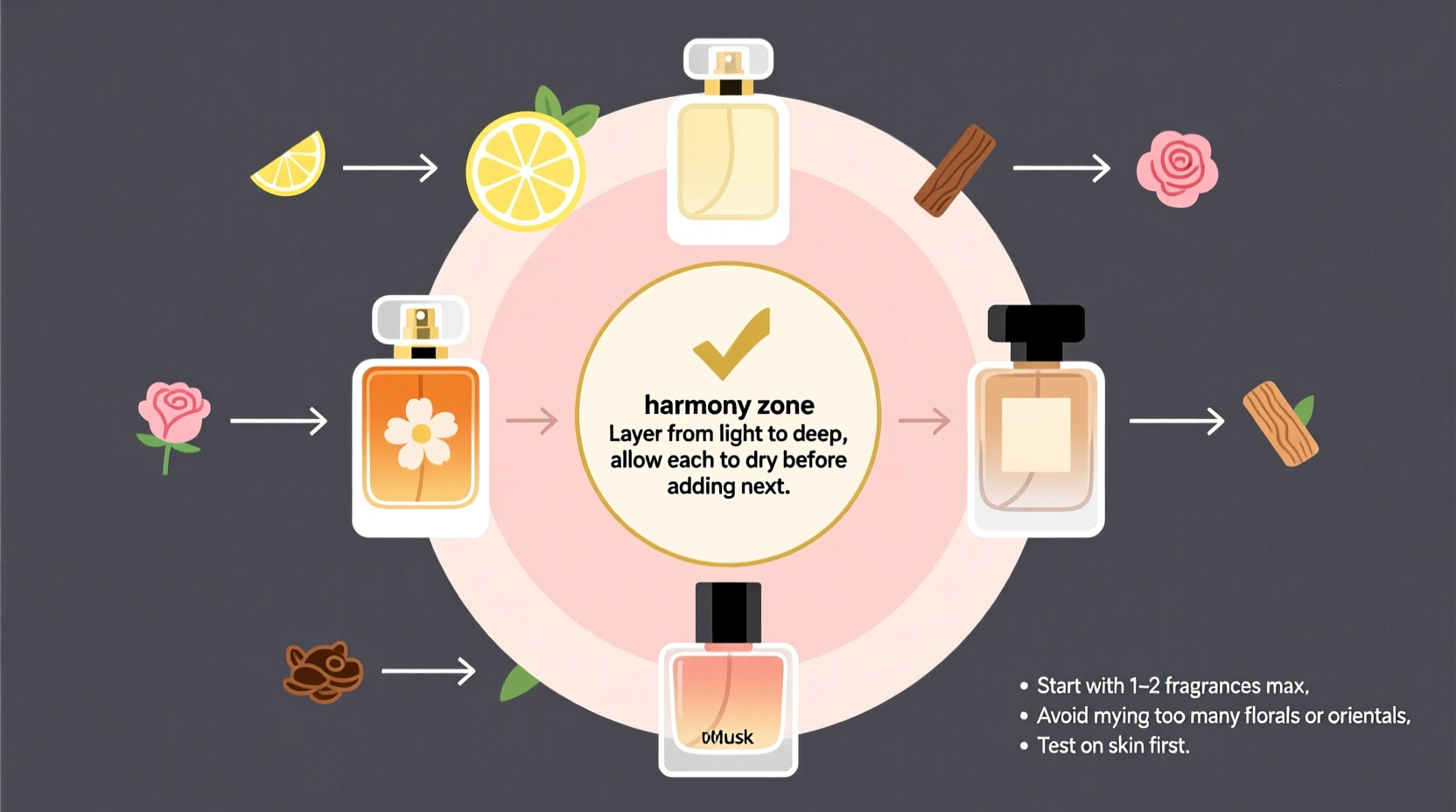
Fragrances are categorized into families based on their dominant accords: floral, oriental, woody, citrus, fresh, gourmand, and green. Each family has distinct characteristics that influence how they interact when layered. For example, pairing a bright citrus eau de cologne with a deep vanilla-based oriental might result in one overpowering the other—or worse, producing an unbalanced, sour clash.
To avoid this, begin by identifying where your perfumes fall within these categories. Here’s a simplified breakdown:
| Fragrance Family | Key Notes | Likely Compatible With |
|---|---|---|
| Floral | Rose, jasmine, lily, peony | Oriental, fresh, soft musk |
| Oriental | Vanilla, amber, spice, incense | Woody, gourmand, floral (in moderation) |
| Woody | Sandalwood, cedar, patchouli | Oriental, fresh, citrus (top only) |
| Citrus/Fresh | Lemon, bergamot, mint, aquatic notes | Floral, green, light woody |
| Gourmand | Caramel, chocolate, tonka bean | Oriental, vanilla-heavy florals |
| Green | Galbanum, cut grass, violet leaf | Floral, citrus, fresh |
Compatibility isn’t just about shared ingredients—it’s about balance. A common mistake is layering two heavy scents, such as a smoky oud and a rich amber, which can suffocate the nose. Instead, pair a strong base note with a lighter top for contrast and clarity.
The Science of Scent Volatility and Layering Order
Fragrances unfold over time through three stages: top, middle (heart), and base notes. Top notes are volatile and evaporate quickly—often citrus or herbal accords. Heart notes emerge after 10–30 minutes and define the character—typically floral or spicy. Base notes linger for hours and provide depth—woods, musks, resins.
When layering, consider not just what each perfume smells like initially, but how it evolves. Applying a long-lasting base note first gives structure, while adding a fleeting top note afterward enhances the opening impression.
“Layering is like composing music—you need a foundation, a melody, and subtle harmonies. Rushing the process leads to dissonance.” — Dr. Lena Moreau, Olfactory Chemist & Perfume Formulator
Follow this order for optimal results:
- Apply the heavier, longer-lasting fragrance first—usually the one with prominent base notes (e.g., sandalwood, vanilla, tobacco). Let it settle for 2–3 minutes.
- Add the lighter, more volatile scent second—such as a citrus or fresh aquatic. This ensures its top notes aren’t drowned out.
- Test skin chemistry by applying to pulse points and waiting 15 minutes before adjusting.
This sequence prevents the stronger scent from masking the delicate one and allows both to integrate naturally.
Step-by-Step Guide to Safe Perfume Layering
Creating a harmonious layered scent requires patience and precision. Follow this methodical approach to minimize risk and maximize success.
Step 1: Choose Your Base Scent
Select a fragrance with a rich base and moderate sillage. Ideal candidates include warm ambers, creamy sandalwoods, or soft musks. These act as anchors. Spray once on your wrist or neck.
Step 2: Pick a Complementary Top Note
Choose a second perfume with a bright, clean opening—like grapefruit, ginger, or green tea. Ensure it shares at least one underlying accord with the base (e.g., both contain bergamot or musk).
Step 3: Apply with Space and Timing
Wait 2–3 minutes after applying the base. Then mist the top note lightly on a different pulse point—opposite wrist, behind ears, or décolletage. Avoid spraying directly over the first scent to prevent chemical saturation.
Step 4: Blend Gently and Wait
Rub wrists together lightly if needed, but avoid excessive friction, which breaks down molecules and alters longevity. Wait 10–15 minutes for the scents to meld on your skin.
Step 5: Evaluate and Adjust
Sniff intermittently. If the blend feels muddy or sharp, wash the area and retry with less of the dominant scent. Never add more than two perfumes at once until you’ve mastered the technique.
Real Example: Building a Balanced Morning-to-Night Scent
Sophia, a marketing executive in London, wanted a fragrance that transitioned seamlessly from office meetings to evening dinners. Her goal was sophistication without heaviness.
She began with Diptyque Philosykos—a green fig and coconut scent with milky wood undertones. It’s fresh enough for daytime but has enough warmth to last. As a base, it provided creaminess and stability.
For lift, she layered Jo Malone Grapefruit Cologne on her collarbone. The zesty citrus cut through the fig’s richness, adding vibrancy without competing. Because grapefruit evaporates quickly, it enhanced the opening without lingering too long.
After testing for a week, Sophia found the combination projected confidence in meetings and evolved into a soft, inviting dry-down by evening. Colleagues commented on her “expensive, natural” scent—exactly the effect she wanted.
The success came from alignment: both scents share green, slightly tropical notes and avoid conflicting spices or florals. She avoided adding a third scent, which could have disrupted the balance.
Common Mistakes That Cause Clashing Scents
Even experienced users make errors when layering. Awareness of these pitfalls can save your olfactory reputation.
- Overlapping too many strong bases: Two resinous or animalic perfumes (e.g., oud and leather) create a pungent, aggressive aura.
- Ignoring concentration levels: Layering an eau de parfum with an extrait de parfum may cause one to dominate unpredictably.
- Mixing synthetic-heavy and natural perfumes: Some niche oils react poorly with alcohol-based sprays, causing sourness.
- Applying too much volume: Excess perfume overwhelms the nose and distorts perception of harmony.
- Not considering environment: A bold layer suitable for winter may feel oppressive in summer heat.
“Less is more in layering. One drop of oil under a sheer spray often achieves more than two full sprays.” — Antoine Bellucci, Master Perfumer at Maison Crivelli
Checklist: How to Layer Perfumes Safely
Use this checklist before attempting any new combination:
- ✅ Identify the fragrance family of each perfume
- ✅ Confirm at least one overlapping note (e.g., both contain vetiver or musk)
- ✅ Test on skin, not paper—skin chemistry changes scent behavior
- ✅ Apply heavier scent first, wait 2–3 minutes
- ✅ Limit to two perfumes per session
- ✅ Start with minimal sprays—one per scent
- ✅ Wait 15+ minutes before judging the blend
- ✅ Reapply only the top note later in the day if needed
Frequently Asked Questions
Can I layer designer perfumes with niche fragrances?
Yes, but proceed with caution. Designer perfumes often use simpler, more diffusive accords, while niche scents may be complex and concentrated. Start by applying the niche fragrance as the base in smaller amounts, then add the designer scent lightly on top. Always test first.
Is it safe to layer perfume oils with alcohol-based sprays?
Generally, yes—but apply the oil first, let it absorb for a minute, then mist the spray. Oils are denser and can trap alcohol molecules, altering projection. Avoid mixing synthetic musks with certain essential oils, as they may curdle or sour.
How do I know if two perfumes clash?
A clashing blend often smells off—either metallic, sour, overly sharp, or muddled. If you experience headaches or nasal fatigue within minutes, it’s likely a sign of imbalance. Step away, cleanse your skin, and revisit the combination another day.
Conclusion: Craft Your Signature Scent with Confidence
Layering perfumes isn’t about following trends—it’s about expressing individuality with intention. By understanding scent families, respecting volatility, and applying methodically, you can create sophisticated blends that evolve beautifully throughout the day. The most memorable fragrances aren’t the loudest; they’re the ones that invite people closer, curious about the story behind the scent.
Start small. Experiment thoughtfully. Keep notes on what works and why. Over time, you’ll develop an intuitive sense of harmony, turning fragrance layering into a personal ritual of self-expression.




 浙公网安备
33010002000092号
浙公网安备
33010002000092号 浙B2-20120091-4
Comments
No comments yet. Why don't you start the discussion?