
Perfume is more than a finishing touch—it's an expression of identity, mood, and moment. As personal as it is powerful, fragrance can elevate confidence, evoke memories, and leave lasting impressions. Yet, many who experiment with combining scents find themselves overwhelmed by dissonance rather than delight. Layering perfumes incorrectly often results in a muddy, chaotic aroma that repels instead of attracts. The solution lies not in restraint, but in understanding. With thoughtful technique, you can create rich, complex olfactory profiles that feel intentional and luxurious.
The key to successful perfume layering isn’t simply wearing two or more scents at once—it’s crafting synergy between them. Just as a skilled chef balances flavors or a composer weaves melodies, fragrance layering requires attention to structure, intensity, and compatibility. Done well, it transforms your scent into something uniquely yours—nuanced, evolving, and unforgettable.
Understand Fragrance Families and Compatibility
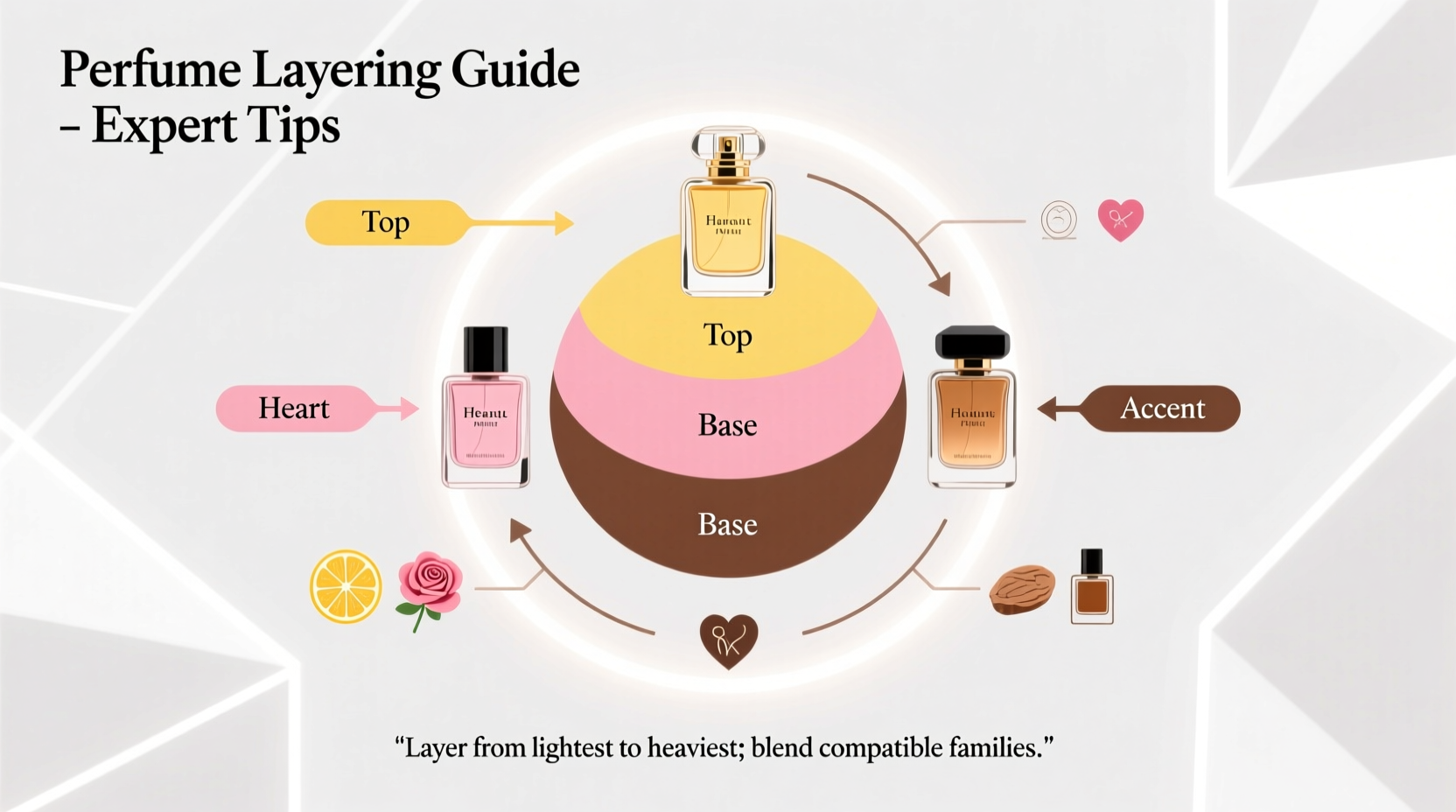
Fragrances are categorized into families based on their dominant notes and overall character. These include floral, oriental, woody, fresh (citrus/aquatic), gourmand, and fougère. When layering, begin by identifying where each of your perfumes fits within this framework. Scents from the same or complementary families typically blend more cohesively.
For example, pairing a warm vanilla-based oriental with a powdery floral creates depth without conflict. Conversely, layering a sharp citrus cologne with a heavy amber-benzoin blend may result in olfactory competition—the bright top notes evaporate too quickly, leaving behind a disjointed base.
Consider these compatible pairings:
- Floral + Woody: A rose perfume layered with sandalwood or cedar adds warmth and longevity.
- Oriental + Gourmand: Vanilla, tonka bean, or caramel accords enhance spicy orientals like patchouli or incense.
- Citrus + Fresh Aquatic: Bergamot or grapefruit layered with marine or ozonic notes amplifies a clean, energizing effect.
Apply the Pyramid Structure Mindfully
Every fragrance follows a pyramid structure: top notes (initial impression), middle/heart notes (core character), and base notes (long-lasting foundation). Successful layering respects this evolution. If both perfumes peak at the same stage—say, two strong top-note citruses—they’ll clash before either has time to develop.
To avoid this, align the pyramids intentionally. Try applying a perfume with a strong base first—like one built on musk, vetiver, or resins—and follow with a lighter, volatile top-heavy scent. This allows the second fragrance to shine early while the first deepens over time.
“Layering is about timing as much as tone. A base note should anchor the experience, not fight for dominance.” — Clara Mendez, Perfume Olfactier at Grasse Institute of Perfumery
Alternatively, reverse the order: use a fleeting citrus or green note first, then add a heart-forward floral. As the top fades, the floral emerges, creating a seamless transition.
Step-by-Step Guide to Harmonious Layering
Follow this five-step process to build a balanced, non-clashing fragrance combination:
- Choose Your Base Scent: Select a perfume with a rich, long-lasting base—amber, sandalwood, or musk work well. Apply this first to pulse points (wrists, neck, inner elbows).
- Wait 30–60 Seconds: Allow the alcohol to evaporate and the initial burst to settle. This prevents immediate note clashes.
- Select a Complementary Top or Heart Scent: Pick a fragrance with contrasting volatility—something brighter or lighter. Citrus, aldehydes, or light florals are ideal.
- Layer Sparingly: Spray the second perfume only on 1–2 pulse points, avoiding overlapping areas unless testing. Less is more; you can always add more later.
- Evaluate After 10 Minutes: Let the scents meld on your skin. Smell subtly—not too close to your nose. Adjust if needed by reapplying the top note lightly.
This method ensures structural balance and gives each scent room to breathe. It also accounts for skin chemistry, which alters how notes interact.
Do’s and Don’ts of Perfume Layering
| Do | Don’t |
|---|---|
| Start with perfumes you already love individually. | Mix more than three scents at once. |
| Use similar concentration levels (e.g., eau de parfum with eau de parfum). | Layer strong gourmands with intense florals without testing. |
| Test combinations on skin, not just blotter strips. | Apply both perfumes directly on top of each other immediately. |
| Keep a scent journal noting what works and why. | Ignore how your body chemistry changes the blend. |
| Refresh with a single top note during the day, not the full layer. | Layer perfumes in hot, humid environments without adjusting quantity. |
Real Example: Building a Signature Evening Scent
Sophia, a marketing executive based in Barcelona, wanted a unique evening fragrance that felt both sophisticated and sensual. She loved her Tom Ford Black Orchid for its opulent richness but found it overwhelming when worn alone. Her go-to daytime scent, Diptyque Philosykos, offered creamy fig and green freshness but lacked staying power at night.
After experimenting, she began layering them strategically: applying Black Orchid to her neck and chest, waiting a minute, then spraying Philosykos lightly on her wrists. The result? A surprising harmony—fig softened the dark patchouli, while coconut and sap notes added a modern twist to the dense floral base. Colleagues noticed the complexity without pinpointing the source. “It smells expensive and mysterious,” one remarked. Sophia now uses this blend exclusively for evening events.
Her success came from respecting contrast: one bold, one subtle; one long-lasting, one ephemeral. By letting each scent occupy its own space, she avoided muddiness.
Use Unscented Products as Neutral Ground
Not all layers need to be perfume. In fact, some of the most elegant combinations begin with unscented or lightly fragranced skincare. A moisturizer or body oil without fragrance provides a neutral canvas that enhances perfume longevity and diffusion.
If you prefer a hint of scent in your base, choose products with minimal, single-note fragrances—like a lotion with just vanilla or almond. These act as subtle enhancers rather than competing elements. For instance, a shea butter cream with a whisper of honey can amplify a warm amber perfume without distorting it.
Avoid heavily scented lotions or shower gels when planning to layer perfumes. Their artificial or overpowering notes can distort even the most refined fragrance.
Checklist: Preparing for Successful Layering
- ✅ Identify the fragrance family of each perfume you plan to use.
- ✅ Ensure both scents are in good condition (not expired or oxidized).
- ✅ Cleanse skin before application to prevent interference from residual odors.
- ✅ Use a consistent application method (spray vs. dab) for predictable results.
- ✅ Test the combination on your skin during the morning and reassess after 4 hours.
- ✅ Keep a small notebook to record successful blends and ratios.
- ✅ Limit layering to special occasions until you master the technique.
Frequently Asked Questions
Can I layer different fragrance concentrations?
Yes, but with caution. An eau de toilette layered under an eau de parfum can create dimension—lighter top notes over a richer base. However, avoid combining extrait-level perfumes with anything else unless highly experienced; their intensity dominates easily.
Why does my layered scent smell different on someone else?
Skin chemistry plays a major role in how fragrance develops. pH levels, diet, hormones, and even medication alter how notes interact. Always test on your own skin and encourage others to do the same before recommending a blend.
Is it safe to mix designer and niche perfumes?
Absolutely. Many niche houses design complex accords specifically for layering (e.g., Le Labo’s “City” series). Designer fragrances often have simpler structures, making them excellent top-note companions. Focus on compatibility, not brand prestige.
Conclusion: Craft Your Olfactory Identity
Layering perfumes isn’t about masking or overpowering—it’s about storytelling through scent. Each fragrance carries emotional weight, and when combined with intention, they form a narrative that evolves throughout the day. Avoiding clashing scents comes down to respect: for the structure of fragrance, for your skin’s uniqueness, and for the subtlety of sensory perception.
Start small. Experiment thoughtfully. Document what works. Over time, you’ll develop a repertoire of personalized blends suited to seasons, moods, and moments. Whether you’re crafting a bold statement for a night out or a soft whisper for a quiet morning, the art of layering empowers you to wear fragrance on your own terms.




 浙公网安备
33010002000092号
浙公网安备
33010002000092号 浙B2-20120091-4
Comments
No comments yet. Why don't you start the discussion?