
The arrival of the holiday season often brings a desire to fill homes with the crisp, invigorating aroma of fresh pine—evoking memories of snow-dusted evergreens and Christmas morning excitement. Scent diffusers offer a subtle, long-lasting way to infuse spaces with fragrance, but combining them with dominant notes like Christmas tree pine requires thoughtful layering. When overdone, pine can dominate a room, creating an artificial or medicinal atmosphere rather than a warm, inviting one. The key lies not in eliminating the pine note, but in balancing it with complementary scents and strategic placement. With careful selection and mindful application, you can create a harmonious olfactory experience that captures the spirit of the season without overpowering your senses.
Understanding Pine as a Scent Note
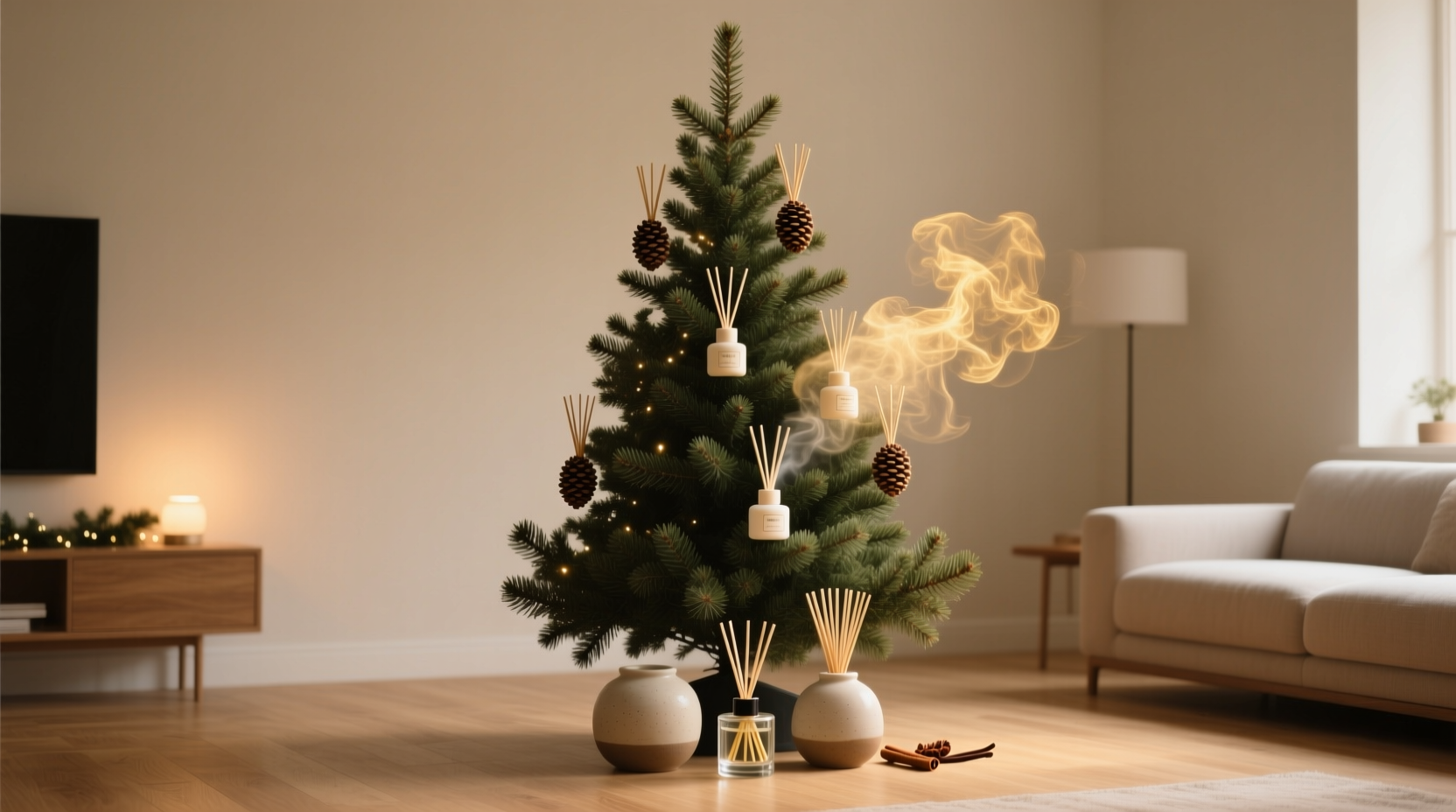
Pine is a top to middle note in perfumery and aromatherapy, meaning it’s among the first scents detected when entering a room. It’s bright, sharp, and resinous—qualities that make it instantly recognizable but also potentially aggressive if not moderated. Natural pine essential oil contains compounds like alpha-pinene and limonene, which contribute to its clean, woodsy character. However, synthetic pine fragrances used in many commercial diffusers can lean toward turpentine-like harshness, especially when concentrated.
To avoid sensory fatigue, consider the strength and origin of your pine scent. Pure essential oils tend to be more nuanced than synthetic blends, offering subtle variations depending on the species—Scots pine, balsam fir, or Douglas fir each have unique profiles. Balsam fir, for instance, carries a sweeter, slightly vanilla-tinged undertone, making it more suitable for blending. Recognizing these differences allows for smarter pairing and prevents clashing or excessive intensity.
“Pine is powerful—it’s nature’s alert signal. In home fragrance, it should evoke freshness, not assault the nose. Balance is everything.” — Lena Moretti, Aroma Consultant & Founder of Scent Logic Studio
Principles of Fragrance Layering with Diffusers
Layering scents isn’t just about combining multiple fragrances; it’s about crafting a narrative through smell. Unlike candles or sprays, reed diffusers release scent slowly and continuously, making their cumulative effect more significant over time. This slow diffusion means missteps are harder to correct—you can’t simply blow out a candle if the scent becomes too strong.
The foundation of successful layering rests on three principles: note harmony, scent strength, and spatial distribution.
- Note Harmony: Pair pine with notes that complement its green, woody profile—citrus, amber, vanilla, or soft musk. Avoid competing top notes like heavy florals or sharp mint unless carefully dosed.
- Scent Strength: Pine is inherently strong. Match it with medium-intensity companions, not other powerhouses like eucalyptus or patchouli, which could create a chaotic blend.
- Spatial Distribution: Place diffusers in areas with natural airflow but away from direct seating zones. Hallways, entryways, and bathrooms work well for stronger scents; living rooms and bedrooms benefit from softer blends.
Step-by-Step Guide to Balanced Pine Layering
Creating a layered scent profile with pine as a focal point involves deliberate choices—from product selection to placement. Follow this sequence to achieve a festive yet refined atmosphere.
- Start with a neutral base. Choose a light, clean scent for high-traffic areas like hallways or kitchens. A linen or rain-inspired diffuser provides a blank canvas that won’t clash with pine.
- Introduce pine in moderation. Use a single pine-based diffuser in a central location, such as a living room console or near the staircase. Opt for a formula that includes supporting notes like cedar or citrus to soften the edge.
- Add warmth with a secondary scent. In adjacent spaces, place a diffuser with vanilla, amber, or sandalwood. These base notes ground the sharpness of pine and add coziness.
- Enhance with seasonal accents. In smaller doses, introduce cinnamon, clove, or orange via a short-term diffuser (e.g., a 7-day travel size) during gatherings. Remove afterward to prevent lingering intensity.
- Monitor and adjust. After 24 hours, assess the overall impression. If the space feels “too foresty,” reduce the number of reeds in the pine diffuser or move it to a less central spot.
Recommended Scent Combinations and Placement Strategy
The right pairings can transform pine from a standalone note into part of a richer aromatic story. Below is a guide to effective combinations based on room function and desired mood.
| Room | Primary Scent | Supporting Scent | Placement Tip |
|---|---|---|---|
| Entryway | Balsam Fir & Citrus | Cotton Linen | Place on a bench or table near the door; limit to 5 reeds |
| Living Room | Pine & Cedar | Vanilla Musk | Position on a side table across from seating; avoid coffee tables |
| Bedroom | Fir Needle (low concentration) | Lavender & Amber | Use only one diffuser; keep away from pillows |
| Bathroom | Pine & Eucalyptus (mini diffuser) | None (use alone) | Place on counter; remove after guest visits |
This structured approach ensures that pine enhances the environment rather than dominates it. By assigning roles—pine as the accent, warmth as the anchor, and freshness as the background—you maintain balance across your home.
Avoiding Common Mistakes
Even with good intentions, it’s easy to overdo pine during the holidays. Here are frequent errors and how to sidestep them.
- Using too many pine diffusers. One strong pine diffuser is enough for most homes. Multiple units compound the scent unnaturally.
- Ignoring reed count. More reeds mean stronger scent. Start with 3–5 reeds and increase only if needed.
- Placing diffusers near vents or fans. Forced airflow spreads scent too quickly, increasing intensity beyond control.
- Mixing pine with other strong greens. Combining pine with rosemary, sage, or eucalyptus creates a medicinal or spa-like effect unsuitable for cozy holiday ambiance.
- Leaving diffusers running year-round. Seasonal scents lose impact when overused. Store pine diffusers until late November.
Mini Case Study: The Over-Pine Living Room
Sarah, a homeowner in Vermont, loved the outdoorsy feel of pine and placed three different evergreen-scented diffusers in her open-concept living area before Thanksgiving. Within two days, guests began commenting on the “campfire lodge” smell, and Sarah noticed headaches after spending extended time in the room. She consulted a local aromatherapist who suggested simplifying: removing two diffusers, replacing the third with a balsam-citrus blend, and adding a vanilla-sandalwood unit in the adjacent dining nook. Within 48 hours, the space felt festive but breathable. Sarah now uses a single pine diffuser during daytime hours and swaps it for a spiced apple version in the evenings during gatherings.
This real-world example underscores that less is often more. Sensory comfort trumps thematic intensity—especially in shared living environments.
Fragrance Layering Checklist
Before setting up your holiday scent profile, run through this checklist to ensure balance and longevity.
- ☐ Assess current diffusers—remove any expired or overly strong units.
- ☐ Select one primary pine-based diffuser with supporting notes (e.g., citrus, cedar).
- ☐ Choose one warm, grounding scent (vanilla, amber, musk) for layering.
- ☐ Identify optimal placement zones—avoid bedrooms and direct seating areas for pine.
- ☐ Start with 3–5 reeds per diffuser; adjust after 24 hours.
- ☐ Flip reeds weekly, not daily, to control intensity.
- ☐ Monitor feedback from household members or guests.
- ☐ Rotate or remove diffusers after holiday events to prevent olfactory fatigue.
Frequently Asked Questions
Can I mix pine with cinnamon or clove diffusers?
Yes, but cautiously. Cinnamon and clove are potent spices that can amplify pine into an overwhelming blend. Use them in separate rooms or on a rotating basis—pine during the day, spice at night during gatherings. Never combine all three in one space.
How do I know if the pine scent is too strong?
If you notice headaches, eye irritation, or the scent lingers heavily on clothing, it’s too strong. Another sign: visitors comment immediately upon entering. A well-balanced scent should be noticeable but not dominant—like background music, not a shout.
Are there alternatives to pine that still feel Christmassy?
Absolutely. Consider firs (balsam, silver), cypress, or juniper, which offer similar evergreen qualities with softer edges. Blends labeled “forest walk,” “winter woods,” or “holiday market” often include pine subtly within a broader aromatic palette.
Conclusion: Create Festive Ambiance with Intention
The magic of the holiday season lives in the details—the flicker of lights, the texture of wrapping paper, and yes, the scent that greets you at the door. But true hospitality means considering not just your own preferences, but the comfort of everyone who enters your space. Layering scent diffusers with Christmas tree pine doesn’t require eliminating the note altogether; it calls for restraint, strategy, and a bit of creativity. By treating fragrance like interior design—with layers, balance, and flow—you can evoke the crisp beauty of a winter forest without turning your home into a pine-scented capsule.
This season, resist the urge to saturate. Instead, curate. Choose one standout pine diffuser, support it with warmth and freshness, and place it with care. Let the scent unfold gradually, revealing itself in moments rather than announcing itself all at once. Your nose—and your guests’—will thank you.




 浙公网安备
33010002000092号
浙公网安备
33010002000092号 浙B2-20120091-4
Comments
No comments yet. Why don't you start the discussion?