
There’s something deeply evocative about the scent of pinecones beneath a Christmas tree—the crisp resinous aroma, the rustic texture against velvet or burlap, the quiet warmth of cinnamon or clove-infused wood. Yet many holiday decorators hesitate to use them, not because they lack charm, but because they’ve heard warnings: “Pinecones carry mites.” “They attract ants and pantry moths.” “That vanilla oil you sprayed? It’s basically a dinner bell for beetles.” These concerns are grounded in real entomological fact—but they’re also entirely manageable with informed preparation. Scented pinecones don’t have to be a trade-off between ambiance and infestation. When treated correctly, stored properly, and layered with intention, they become a safe, sustainable, and sensorially rich foundation for your tree skirt—free from unintended guests.
Why Pinecones *Can* Attract Bugs (and Why Most Warnings Are Overstated)
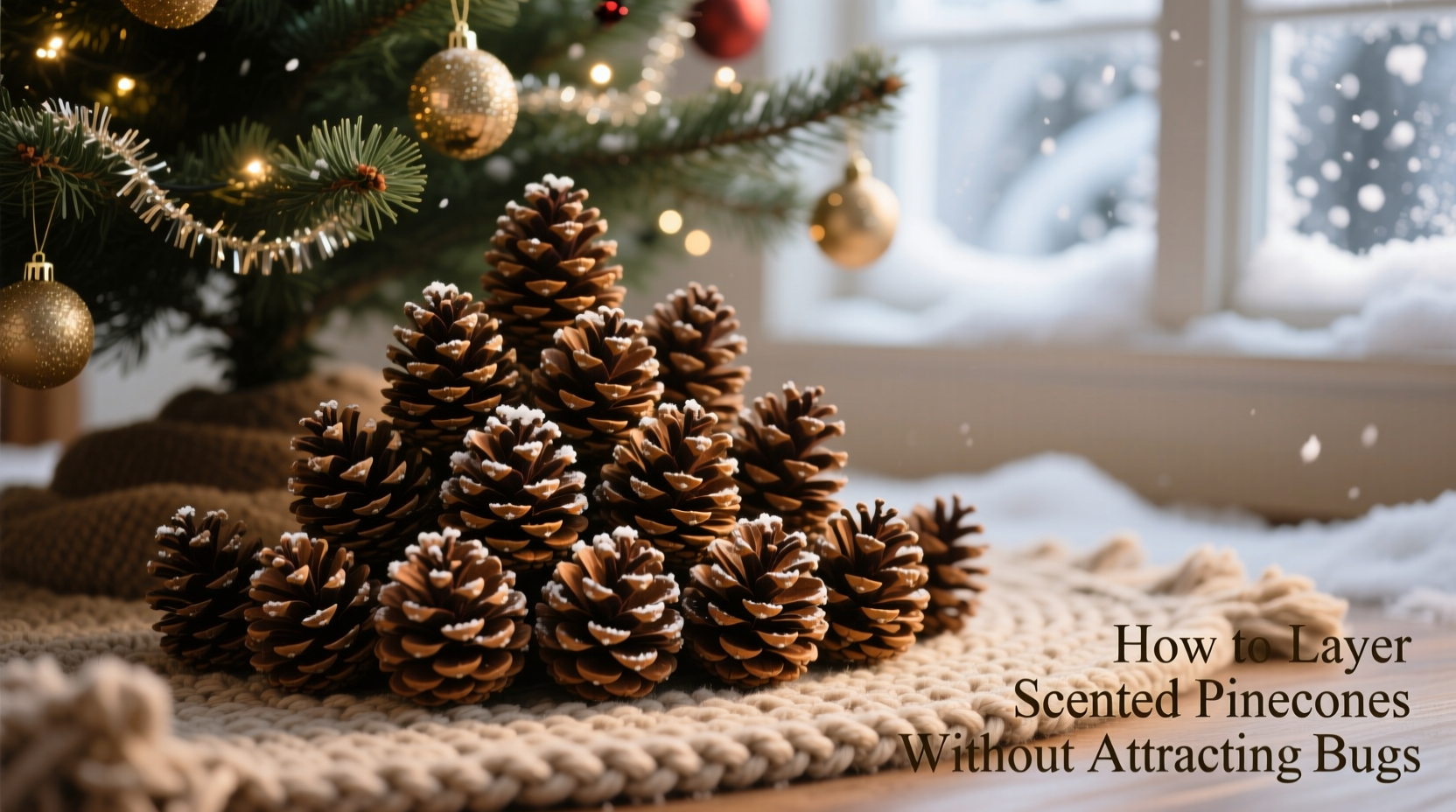
Pinecones themselves aren’t inherently “buggy.” What attracts insects is not the cone, but what may be clinging to it—or what we add to it. Wild-harvested pinecones collected from forest floors or damp yards often harbor dormant insect eggs, spider mites, or scale nymphs tucked into crevices. More commonly, though, the real culprits are post-collection factors: residual sap that ferments into sugary residue; essential oils or extracts with volatile compounds that mimic pheromones; or improper drying that leaves internal moisture—creating microhabitats for mold mites or fungus gnats.
Entomologists at the University of Vermont Extension emphasize that most indoor pest incidents linked to pinecones stem from inadequate pre-treatment—not the pinecones themselves. Dr. Lena Torres, Integrated Pest Management Specialist, explains:
“A single, thoroughly heat-treated pinecone poses less risk than an unsealed jar of dried cranberries left on your counter. Insects seek moisture, food sources, and shelter. Eliminate those three, and you eliminate the attraction.”
This distinction matters: it shifts responsibility from avoidance to preparation. You don’t need to skip pinecones—you need to treat them like any other natural material brought indoors: respectfully, methodically, and with ecological awareness.
Step-by-Step: The Bug-Safe Pinecone Preparation Protocol
Follow this sequence precisely. Skipping steps—even one—can leave viable insect life or moisture behind.
- Source wisely: Collect only from dry, sun-exposed branches—not from damp leaf litter, fallen logs, or areas near compost bins. Avoid cones with visible webbing, holes larger than a pinhead, or sticky sap residue.
- Rinse & inspect: Under cool running water, gently scrub each cone with a soft-bristle brush. Use a magnifying glass or smartphone macro mode to check fissures for movement or specks (mite eggs appear as translucent dots).
- Bake for sterilization: Preheat oven to 200°F (93°C). Place cones in a single layer on a parchment-lined baking sheet. Bake for 45 minutes—no more, no less. This temperature kills insect eggs, larvae, and mites without cracking cones or releasing volatile resins. Do not exceed 225°F: higher heat volatilizes terpenes, creating airborne irritants and increasing flammability risk near lights.
- Air-dry fully: Transfer baked cones to a wire rack in a low-humidity room (ideally <40% RH) for 72 hours. Turn daily. They must feel completely weightless and sound hollow when tapped.
- Scent deliberately: Apply fragrance only after full drying. Use alcohol-based sprays (not oil-based), or embed scent via cotton pads tucked *beneath* the base layer—not directly on cones. See the “Scenting Safely” section below.
Scenting Safely: What Works (and What Invites Trouble)
Fragrance is where most well-intentioned efforts backfire. Oils like almond, coconut, or olive act as lipid carriers—preserving moisture and providing nutrients for microbes and mites. Likewise, glycerin-based sprays retain humidity, turning cones into miniature terrariums. The safest scent delivery systems prioritize volatility and rapid evaporation.
| Fragrance Method | Bug Risk Level | Why It’s Safe (or Not) |
|---|---|---|
| Alcohol-based essential oil spray (e.g., 10 drops cedarwood + 2 oz 70% isopropyl alcohol) | Low | Alcohol evaporates in under 90 seconds, leaving no residue. Cedarwood has documented insect-repellent properties. |
| Cotton pad infused with dried botanicals (cinnamon sticks, orange peel, star anise) placed *under* the pinecone layer | Very Low | No direct contact with cones; scent diffuses upward without adding moisture or lipids. |
| Vanilla extract (alcohol-based, not imitation) | Moderate | Contains sugar alcohols—low risk if used sparingly and allowed to dry fully before placement. |
| Coconut oil + cinnamon powder paste brushed onto cones | High | Oil retains moisture for days; sugar feeds microbes; paste traps dust and organic debris—ideal for mold mites. |
| Commercial “scented pinecone” products with synthetic fragrances | Variable | Check labels: avoid propylene glycol or PEG compounds, which retain moisture. Opt for products listing ethanol as primary solvent. |
Crucially, scent should never be reapplied once pinecones are under the tree. Reapplication introduces fresh moisture and compounds, resetting the risk clock. One thorough, pre-placement treatment is all that’s needed—and scientifically sufficient for 3–4 weeks of consistent fragrance diffusion.
Layering Strategy: Creating a Pest-Resistant Base
How you arrange pinecones matters as much as how you prepare them. A dense, piled heap traps heat and moisture from tree stand water, lights, and ambient humidity—creating thermal and hygrometric conditions insects love. Instead, design for airflow, visibility, and separation.
- Use a breathable barrier: Line the floor beneath the tree stand with undyed, unbleached linen or hemp fabric—not plastic, vinyl, or synthetic felt. Natural fibers wick moisture away and allow air circulation.
- Anchor with elevation: Place pinecones on a shallow, open-weave basket (willow or seagrass) or a vintage wooden tray. This lifts them 1–2 inches off the floor, preventing condensation buildup.
- Arrange radially, not densely: Position cones in concentric circles, spaced at least 3 inches apart. Fill gaps with dried white sage bundles or eucalyptus stems—both naturally insect-deterrent and visually cohesive.
- Exclude high-risk zones: Never place pinecones within 6 inches of the tree stand reservoir or directly under light strings. Heat + moisture = ideal breeding microclimate.
“Structure prevents infestation more effectively than chemistry. An open, elevated, low-moisture arrangement disrupts the very conditions pests require—even if a single untreated cone slips through.” — Dr. Aris Thorne, Urban Entomology Lab, NC State University
Real-World Example: The Portland Living Room Incident
In December 2022, a Portland-based interior stylist named Maya prepared 80 pinecones for her client’s 9-foot Fraser fir. She followed online tutorials: boiled cones for 20 minutes, coated them in melted beeswax mixed with clove oil, and arranged them tightly around the stand. Within five days, tiny black beetles—identified by Oregon State Extension as Stegobium paniceum (drugstore beetles)—were found in kitchen cabinets and bookshelves.
Investigation revealed two failures: boiling didn’t penetrate deep fissures where eggs hide, and the beeswax-clove mixture created a lipid-rich film that retained ambient humidity. Crucially, the tight layering trapped heat from LED tree lights (which still emit 2–3°C above ambient). When Maya repeated the project using the 200°F bake protocol, alcohol-based cedar-sage spray, and radial spacing on a willow tray, zero insects appeared over four weeks—and guests consistently complimented the “clean, forest-floor freshness” of the scent.
Essential Do’s and Don’ts Checklist
Your Pre-Tree Pinecone Safety Checklist
- ✅ Collected only from dry, elevated branches (not ground level)
- ✅ Rinsed and inspected under magnification for eggs or webbing
- ✅ Baked at exactly 200°F for 45 minutes on parchment paper
- ✅ Air-dried for 72+ hours on a wire rack in low-humidity air
- ✅ Scented using alcohol-based spray or indirect botanical infusion
- ✅ Arranged radially on a breathable, elevated surface—not packed densely
- ❌ Did NOT use oils, glycerin, or sugar-based extracts
- ❌ Did NOT place cones within 6 inches of tree stand or light strings
- ❌ Did NOT reapply scent after placement
Frequently Asked Questions
Can I reuse scented pinecones next year?
Yes—if stored correctly. After the holidays, brush off dust, inspect for cracks or residue, and store in a ventilated cardboard box (never plastic) in a cool, dry closet (<30% RH). Add a silica gel pack to absorb ambient moisture. Discard any cone showing discoloration, stickiness, or musty odor—these signal microbial growth.
Are “pest-free” pinecones sold online truly safe?
Reputable vendors (like those certified by the National Christmas Tree Association) do heat-treat and test batches, but verify their process: ask for documentation of 200°F/45-min baking or equivalent steam sterilization. Avoid sellers who only state “cleaned” or “washed”—water rinsing alone removes less than 12% of embedded mite eggs, per UVM lab trials.
What if I find a bug under the tree—do I need an exterminator?
Almost certainly not. Isolate the affected pinecone, discard it outdoors, and vacuum the area with a HEPA-filter vacuum. Monitor for 72 hours. True infestations require sustained presence across multiple locations (e.g., pantry, baseboards, windowsills). A single incidental insect is evidence of incomplete prep—not systemic failure.
Conclusion: Celebrate Nature, Not Compromise
Layering scented pinecones under your Christmas tree shouldn’t feel like navigating a minefield of entomological risk. It should feel like honoring winter’s quiet resilience—the way conifers hold scent in their scales, how dried botanicals deepen atmosphere without synthetic overload, and how thoughtful human intervention can coexist with ecological integrity. You don’t need artificial alternatives or sterile substitutes. You need precision: the right temperature, the right timing, the right spacing, and the right respect for natural materials.
Start small this season. Treat just 12 pinecones using the 200°F bake method. Layer them with intention—not abundance. Notice how the scent evolves: sharp and green on day one, softer and woodier by day ten, faintly sweet and earthy by day twenty. Watch how light catches their scales, how they anchor the tree’s presence without demanding attention. And know that every cone beneath your tree is there by choice—not chance—and free from hidden guests.




 浙公网安备
33010002000092号
浙公网安备
33010002000092号 浙B2-20120091-4
Comments
No comments yet. Why don't you start the discussion?