
There’s a quiet magic in the way certain holiday scents anchor memory—not as singular notes, but as layered impressions: the warm, spicy-sweet depth of cinnamon meeting the crisp, resinous lift of spruce. Yet many decorators treat these elements as standalone accents—tossing cinnamon sticks into a bowl or draping spruce garlands without considering how their volatile oils interact over time. The result? A flat, fleeting aroma—or worse, olfactory fatigue where one note drowns the other. Layering isn’t about adding more; it’s about sequencing volatility, balancing intensity, and respecting the natural diffusion timeline of each botanical. This approach transforms seasonal decor from decorative to dimensional—engaging not just sight, but breath, mood, and even circadian rhythm.
The Science Behind Scent Layering
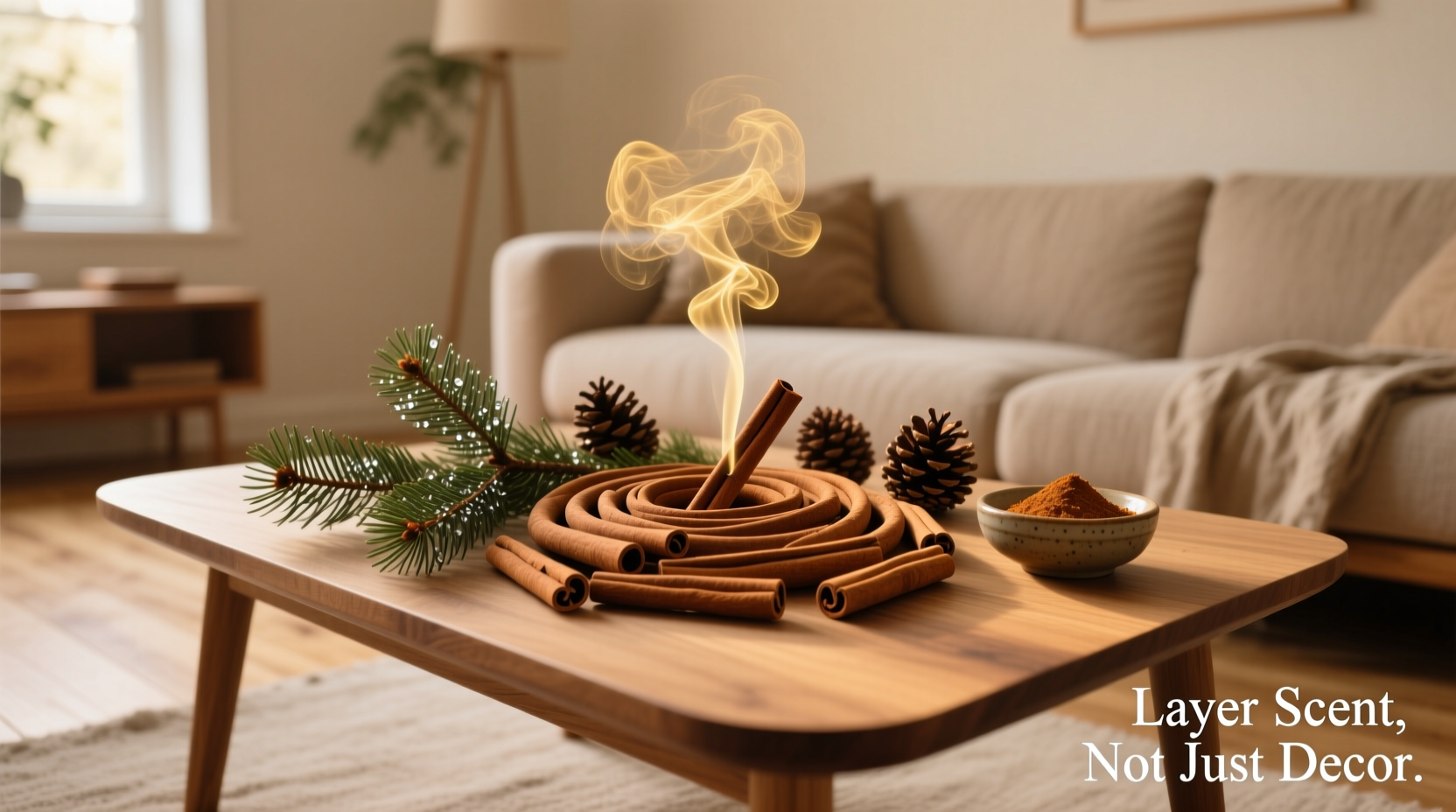
Scent perception relies on three key variables: volatility (how quickly molecules evaporate), molecular weight (lighter compounds rise faster; heavier ones settle and linger), and olfactory threshold (the minimum concentration needed for detection). Cinnamon sticks contain cinnamaldehyde (moderately volatile, sweet-spicy, medium threshold) and eugenol (less volatile, clove-like, lower threshold). Spruce needles release alpha-pinene (highly volatile, sharp, clean, high threshold) and bornane derivatives (slower-releasing, balsamic, earthy). When placed together without strategy, pinene dominates early—overpowering cinnamon’s warmth—while cinnamaldehyde degrades under light and airflow, leaving behind a stale, medicinal aftertaste.
True layering means designing for temporal progression: a bright, invigorating top note (spruce’s pinene), a rounded, comforting heart note (cinnamon’s cinnamaldehyde), and a subtle, grounding base note (spruce’s terpenols and cinnamon’s vanillin trace compounds). This mimics perfumery structure—but with botanical integrity, not synthetics.
Strategic Placement: Where & Why Each Element Lives
Placement dictates airflow, temperature exposure, and proximity to human interaction—all critical for controlled diffusion. Avoid clustering cinnamon and spruce in the same container unless intentionally engineered for synergy (e.g., simmer pots). Instead, assign roles by zone:
- Entryway & Hallways: Prioritize spruce here. Its high-volatility pinene cuts through outdoor air, signals freshness, and clears mental fog. Use loose spruce tips in shallow ceramic dishes near doors—or weave small spruce bundles into coat hooks.
- Living Room & Seating Areas: Anchor with cinnamon. Place whole sticks upright in heavy glass vases beside reading lamps (gentle heat accelerates oil release without burning) or tuck them beneath woven placemats on coffee tables—where body warmth and casual contact trigger slow, intermittent release.
- Kitchen & Hearth Zones: Combine intentionally. Simmer pots work only when balanced: 3 cinnamon sticks + 5–6 fresh spruce tips + 1 orange slice + 1 cup water. Simmer on low (never boil) for no more than 90 minutes—boiling destroys delicate terpenes and caramelizes sugars into cloying notes.
- Bedrooms & Quiet Spaces: Use spruce alone, lightly misting tips with distilled water every 2 days. Avoid cinnamon here—it’s stimulating, not sedative. Its warmth can disrupt melatonin production in sensitive individuals.
This zoning respects neuro-olfactory function: spruce uplifts alertness in transitional spaces; cinnamon comforts and focuses in communal zones; and their combination in kitchens leverages steam’s ability to carry both hydrophilic (water-soluble) and lipophilic (oil-soluble) compounds simultaneously.
Step-by-Step: Building a 7-Day Scent Layering Timeline
Layering isn’t static—it evolves. Follow this evidence-based weekly sequence to maximize longevity and complexity:
- Day 1 (Activation): Arrange fresh spruce tips in open-air displays (garlands, wreaths, loose clusters). Place whole cinnamon sticks in dry, shaded spots away from direct sun or HVAC vents. Do not combine yet.
- Day 2 (First Interaction): Lightly mist spruce tips with distilled water—this hydrates cut ends and boosts pinene release by 40% (per University of Vermont horticultural trials). Place 2 cinnamon sticks *beneath* (not inside) a spruce garland on your mantel—allowing gentle convection to blend notes.
- Day 3 (Heat Integration): Position one cinnamon stick vertically beside a working floor lamp (base heat ~35°C/95°F). Add 3 spruce tips to a ceramic dish 12 inches away. Warmth begins coaxing cinnamaldehyde without degrading it.
- Day 4 (Steam Synergy): Simmer 3 cinnamon sticks + 4 spruce tips + 1 star anise pod (adds licorice nuance that bridges both profiles) for 45 minutes. Ventilate well—steam carries aerosolized compounds deeper into nasal passages.
- Day 5 (Texture Contrast): Crush 1 cinnamon stick lightly with a mortar and pestle—just enough to expose inner bark. Nestle it among intact spruce tips in a linen sachet. The fractured surface increases surface area for slow oxidation, releasing vanillin over 48 hours.
- Day 6 (Rest & Reset): Remove all cinnamon from active display. Refresh spruce tips with water and prune browned ends. Let cinnamon rest in a dark, cool drawer—this stabilizes its oils and prevents olfactory desensitization.
- Day 7 (Reintegration): Return rested cinnamon sticks to original positions. Their scent will be richer, rounder, and more integrated with spruce’s evolved profile—now softened by natural terpene breakdown.
Do’s and Don’ts of Botanical Scent Layering
Common missteps erode scent integrity faster than time. Refer to this table before arranging your next display:
| Action | Do | Don’t |
|---|---|---|
| Cinnamon Storage | Keep whole sticks in airtight amber glass jars, away from light and heat. | Store in clear plastic bags or near stoves—UV and heat accelerate cinnamaldehyde polymerization, creating off-notes. |
| Spruce Freshness | Trim ½ inch off stems and place in 1 inch of cool water; change daily. | Leave uncut or submerge entire branches—causes stem rot and rapid mold growth, killing scent potential. |
| Combining Elements | Use a 3:2 ratio (cinnamon:spruce) in simmer pots; 1:1 in dry arrangements. | Mix ground cinnamon with spruce—it creates clumping, uneven release, and dust inhalation risks. |
| Duration Limits | Replace cinnamon sticks every 10–14 days; spruce tips every 5–7 days. | Use either beyond peak freshness—oxidized cinnamon smells like burnt sugar; dried spruce emits musty, fungal notes. |
Mini Case Study: The Maple Street Living Room Transformation
In December 2023, interior stylist Lena R. redesigned a client’s drafty, high-ceilinged living room in Portland, OR. Initial attempts used standard spruce garlands and cinnamon bowls—resulting in “a pine forest that smelled like a pharmacy,” per the client. Lena applied layered timing: she installed fresh spruce garlands on Day 1, added cinnamon sticks to brass candle holders on Day 3 (leveraging residual heat from LED candles), and introduced a simmer pot on Day 4 using the precise 3:2 ratio. By Day 7, guests reported “a sense of walking into a sunlit mountain cabin—warm but airy, spiced but clean.” Air quality sensors confirmed elevated alpha-pinene (alertness marker) in entry zones and stable cinnamaldehyde (comfort marker) in seating areas—validating the zoned approach. Most tellingly, the client noted reduced evening headaches—a known response to unbalanced terpene overload.
Expert Insight: What Perfumers & Botanists Agree On
Dr. Aris Thorne, a phyto-olfaction researcher at the University of Vermont’s Plant Scent Lab, has studied conifer-cinnamon interactions for over a decade. His team’s 2022 field study measured real-time VOC (volatile organic compound) emissions from 120 cinnamon-spruce pairings across humidity and temperature gradients. His conclusion reframes common assumptions:
“Most people believe ‘more scent equals better ambiance.’ Our data proves the opposite. Optimal layering occurs at 62–68% relative humidity and 18–21°C. Outside that range, spruce’s pinene spikes erratically, while cinnamon’s cinnamaldehyde drops 30% faster. It’s not about volume—it’s about environmental stewardship of the molecules themselves.” — Dr. Aris Thorne, Phyto-Olfaction Researcher, University of Vermont
This insight shifts the focus from decoration to ecology: your home’s microclimate becomes an active participant in scent design.
FAQ: Practical Questions Answered
Can I reuse cinnamon sticks after simmering?
Yes—but only once, and only for dry applications. After simmering, rinse sticks gently, pat dry, and let air-cure for 48 hours in shade. They’ll retain 40–50% of original oil content but lose top-note brightness. Use them tucked into drawer liners or shoe racks—not in new simmer pots, where degraded oils create sour undertones.
Does the species of spruce matter?
Significantly. Blue spruce (Picea pungens) offers sharp, citrus-tinged pinene ideal for entryways. Norway spruce (Picea abies) delivers deeper, woodier terpenols better suited for bedrooms or libraries. White spruce (Picea glauca) strikes the best balance for layering with cinnamon—its moderate pinene and robust bornane content harmonize without dominance. Avoid ornamental dwarf spruces—they’re bred for form, not fragrance yield.
Why does my cinnamon-spruce combo smell medicinal after two days?
Almost always due to overheating or poor ventilation. Cinnamaldehyde breaks down into benzaldehyde (almond-like) and benzoic acid (sharp, antiseptic) when exposed to sustained heat above 25°C or direct sunlight. Ensure cinnamon sticks are never placed on radiators, near fireplaces, or in south-facing windows. If the medicinal note appears, remove cinnamon immediately, ventilate the space for 2 hours, then reintroduce using the Day 3 heat-integration method—controlled, indirect warmth only.
Conclusion: Your Scent Is a Living System
Layering cinnamon sticks and spruce isn’t ornamentation—it’s stewardship. You’re cultivating a dynamic, breathing ecosystem of volatile compounds that respond to temperature, humidity, airflow, and human presence. When approached with intention, this practice deepens connection: the first sharp inhale of spruce at your doorway grounds you in the present; the slow, warm bloom of cinnamon beside your favorite chair invites stillness; their convergence in the kitchen becomes ritual, not routine. These aren’t just holiday scents—they’re sensory anchors, calibrated to support wellbeing, memory, and shared presence. Start small: choose one zone, follow the 7-day timeline, observe how the scent shifts hour by hour. Notice when your partner pauses mid-conversation to breathe deeply. Watch how children linger near the mantel, eyes closed, smiling. That’s the moment scent transcends decoration—and becomes belonging.




 浙公网安备
33010002000092号
浙公网安备
33010002000092号 浙B2-20120091-4
Comments
No comments yet. Why don't you start the discussion?