
Skincare layering is both an art and a science. When done correctly, it enhances the performance of your products, delivering hydration, brightening, anti-aging benefits, and protection. But when layered improperly, even high-end serums and moisturizers can pill, ball up, or simply fail to absorb—leaving you with wasted product and irritated skin. Pilling isn’t just frustrating; it signals that your routine isn’t working as intended. The good news: with the right techniques, ingredient awareness, and timing, you can build a seamless, effective regimen that maximizes every drop.
Understanding Why Pilling Happens
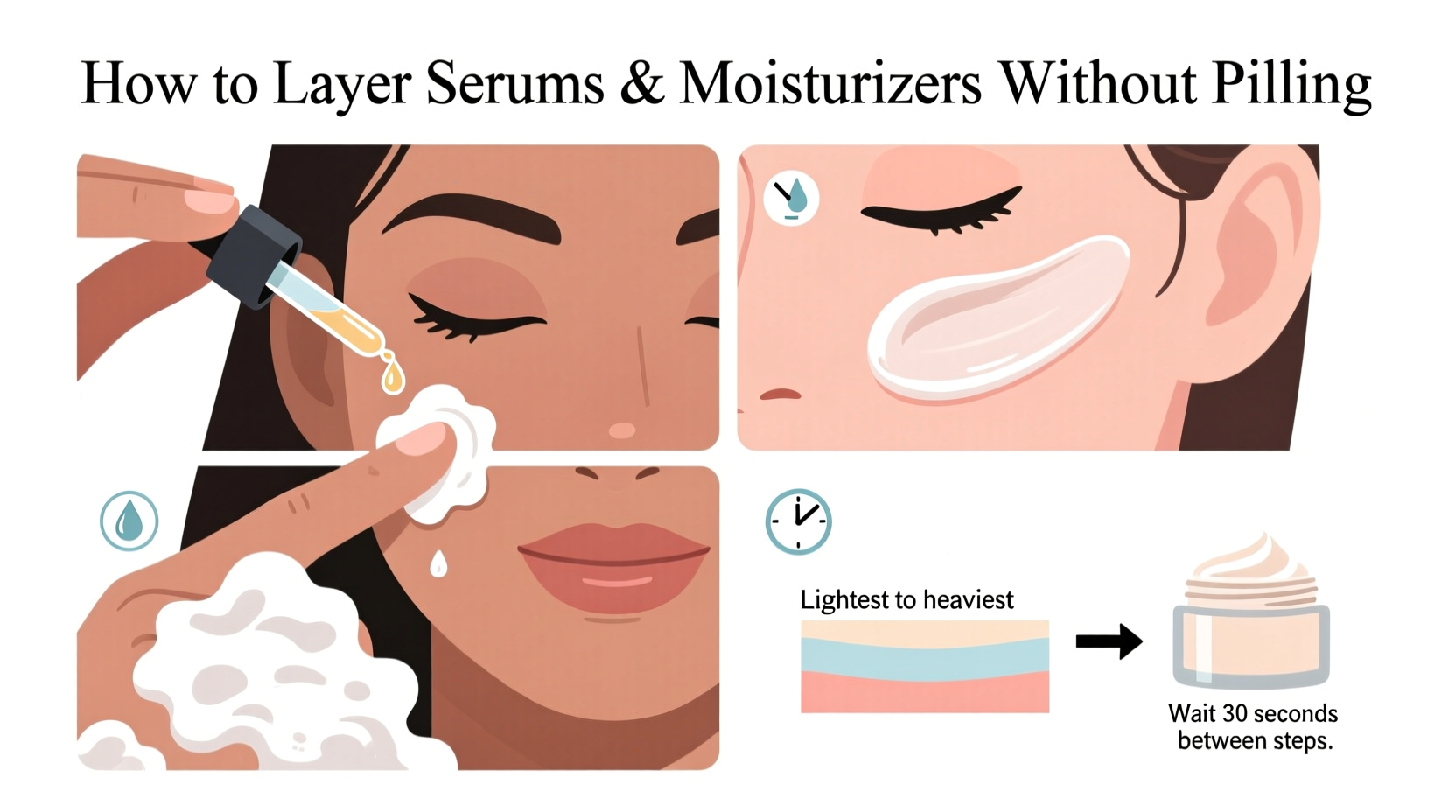
Pilling occurs when skincare products don’t fully absorb into the skin and instead form small, rolled-up clumps on the surface. This is often mistaken for dry flakes, but it’s actually undissolved product mixing with dead skin or friction from rubbing too hard. Several factors contribute:
- Ingredient incompatibility: Certain polymers, silicones, or thick emollients can repel water-based formulas if applied in the wrong order.
- Over-application: Using too much of any product overwhelms the skin’s ability to absorb it.
- Rushing layers: Applying the next product before the previous one has absorbed leads to lifting and separation.
- Mechanical friction: Rubbing or tugging during application can physically agitate semi-absorbed products into forming pills.
- Exfoliation imbalance: Buildup of dead skin cells prevents absorption and creates a rough surface where products catch.
“Pilling is rarely about a single ‘bad’ product—it’s usually a sign of poor formulation layering or technique.” — Dr. Lena Park, Board-Certified Dermatologist
The Right Order: Building a Smart Layering Sequence
Layering by texture—from thinnest to thickest—is the golden rule. This ensures water-based ingredients penetrate first, while occlusive agents seal them in. Deviating from this order traps lighter formulas on top of heavier ones, preventing absorption and increasing the risk of pilling.
A standard morning and evening sequence should follow this structure:
- Cleanser
- Toner or essence (optional)
- Water-based serums (e.g., vitamin C, hyaluronic acid)
- Thicker serums or treatments (e.g., niacinamide, peptides)
- Face oil (if used)
- Moisturizer
- Sunscreen (AM only)
Each layer must be given time to absorb—typically 30 to 60 seconds—before the next is applied. Patting gently with fingertips supports absorption better than rubbing.
When Actives Complicate Layering
Some active ingredients require special attention. For example, L-ascorbic acid (vitamin C) works best at a low pH and may destabilize when layered under alkaline formulas. Similarly, retinoids can cause irritation if sandwiched between potent acids or heavy occlusives.
To avoid conflicts:
- Wait 1–2 minutes after applying acidic toners before adding vitamin C.
- Buffer retinoids with a light moisturizer if your skin is sensitive—apply moisturizer first, then retinoid, then another layer of moisturizer (“sandwich method”).
- Avoid combining exfoliating acids (like AHAs/BHAs) with direct vitamin C unless your skin is acclimated.
Choosing Compatible Products: A Formula Guide
Not all serums and moisturizers play well together. Some combinations are inherently prone to pilling due to conflicting base formulations. Understanding key ingredients helps you predict compatibility.
| Ingredient Type | Common In Products | Potential Conflicts | Tips for Use |
|---|---|---|---|
| Silicones (e.g., dimethicone, cyclopentasiloxane) | Moisturizers, primers, some serums | Can block water-based serums if applied first | Apply after water-based layers; avoid overuse |
| Polymers (e.g., acrylates) | Firming serums, makeup primers | Form film-like layers that resist absorption | Use sparingly; apply last or alone |
| Oil-soluble actives (e.g., retinol, bakuchiol) | Anti-aging serums | May separate from watery textures | Apply after hydrating serums, before moisturizer |
| Humectants (e.g., glycerin, hyaluronic acid) | Hyaluronic acid serums, gel moisturizers | None, but need water to work | Apply to damp skin for optimal absorption |
One common mistake is pairing a silicone-heavy moisturizer with a sticky, polymer-laden serum. The result? A slippery, non-absorbent layer that pills easily. Opt for water-based serums followed by cream moisturizers free of heavy silicones when layering multiple treatments.
Step-by-Step Routine: Preventing Pilling in Practice
Follow this detailed timeline to build a pilling-free routine, whether you're using two products or ten.
- Cleanse on damp skin: Rinse face with lukewarm water. Apply cleanser with wet hands to avoid stripping natural oils.
- Pat dry, don’t rub: Leave skin slightly damp—this primes it for humectant absorption.
- Apply hydrating toner or essence (optional): Pour a few drops into palms, press onto face. Wait 30 seconds.
- Layer water-based serums: Start with the most fluid formula (e.g., hyaluronic acid), then move to thicker ones (e.g., niacinamide). Use pea-sized amounts. Press gently—don’t rub.
- Wait 60 seconds between layers: This allows penetration and prevents mixing incompatible bases.
- Apply treatment serums: Retinol, vitamin C, or brightening agents go next. Again, use minimal product.
- Add facial oil (if using): Oils lock in moisture but should not interfere with serum absorption. Use only 2–3 drops. <8> Finish with moisturizer: Apply evenly using upward motions. Creams should feel smooth, not greasy or tacky.
- Wait before sunscreen or makeup: Allow at least 2–3 minutes for the final layer to set before applying SPF or foundation.
This sequence minimizes friction, maximizes absorption, and respects the chemistry of each formula. Skipping wait times or doubling up on heavy products invites pilling.
Real Example: Fixing a Problematic Routine
Sophie, 32, used a popular hyaluronic acid serum followed by a peptide moisturizer. Every morning, her cheekbones would develop tiny white balls within minutes of applying sunscreen. Frustrated, she reduced serum usage and still saw no improvement.
Upon checking labels, she discovered her moisturizer contained high concentrations of dimethicone and acrylates—film-forming agents that prevent proper absorption of watery serums. She switched to a gel-cream moisturizer with fewer silicones and began applying her serum to damp skin. Within two days, the pilling stopped. She also cut her serum amount in half, realizing she’d been using three times the recommended dose.
Sophie’s experience highlights two key points: product compatibility matters more than brand prestige, and less is often more.
Checklist: Avoid Pilling and Waste
Use this checklist to audit your current routine and make immediate improvements:
- ✅ Cleanse gently and leave skin slightly damp before serums.
- ✅ Apply products from thinnest to thickest consistency.
- ✅ Use a pea-sized amount of serum per application—no dripping.
- ✅ Wait 30–60 seconds between layers to allow absorption.
- ✅ Avoid rubbing or dragging skin during application.
- ✅ Exfoliate 1–3 times weekly to remove dead skin buildup.
- ✅ Check ingredient lists for silicones and polymers in moisturizers.
- ✅ Store serums properly (cool, dark place) to maintain stability.
- ✅ Patch-test new combinations before full-face use.
- ✅ Reassess every 6 weeks—skin needs change with seasons and age.
Frequently Asked Questions
Why does my serum pill only in certain areas, like around my nose?
Pilling in specific zones often indicates dryness or textured skin. The nose and forehead tend to accumulate more sebum and dead cells, creating uneven surfaces. Try gentle exfoliation and ensure you're applying product evenly with pressing motions, not rubbing.
Can I mix my serum with moisturizer to prevent pilling?
Mixing can work for compatible formulas—especially if you’re using a sticky serum that pills under a heavy cream. However, avoid mixing unstable actives (like vitamin C or retinol) with alkaline or antioxidant-rich moisturizers, as this may degrade efficacy. Test on a small area first.
Does skin type affect pilling?
Yes. Oily skin may experience pilling due to excess sebum interfering with absorption, while dry skin lacks the moisture needed for humectants to function. Dehydrated skin often overproduces oil as compensation, creating a cycle of imbalance. Tailor your layering to your skin’s actual needs, not just its type.
Expert Insight: What Dermatologists Recommend
Board-certified dermatologists emphasize simplicity and patience. “Most patients come in using too many products, too quickly,” says Dr. Alan Wu of Pacific Skin Institute. “The skin isn’t a sponge—it can only absorb so much. Focus on quality over quantity, and let time do the work.”
“The number-one cause of pilling I see in clinic? People applying moisturizer while their serum is still wet. Give it a minute. Your skin will thank you.” — Dr. Maya Torres, Cosmetic Dermatologist
Experts also warn against chasing “10-step routines” popularized online. More steps don’t equal better results. A streamlined routine with well-layered, compatible products outperforms a complex one riddled with friction and waste.
Final Thoughts: Skincare Is Personal, Not Prescriptive
There’s no universal formula for perfect layering—only principles that guide smart choices. What works for one person may fail for another due to differences in skin biology, climate, and product chemistry. The goal isn’t to replicate someone else’s shelfie, but to create a routine that feels smooth, absorbs completely, and delivers visible results without waste.
Start by simplifying. Audit your products. Pay attention to texture, ingredient order, and application habits. Make one adjustment at a time and observe the results. Over time, you’ll develop an intuitive sense of what your skin truly needs—and how to deliver it efficiently.




 浙公网安备
33010002000092号
浙公网安备
33010002000092号 浙B2-20120091-4
Comments
No comments yet. Why don't you start the discussion?