
Skincare layering is more than just applying multiple products—it’s about sequencing them correctly so each ingredient can penetrate effectively, deliver results, and avoid triggering sensitivity or breakouts. Too often, people stack serums, moisturizers, and actives haphazardly, leading to pilling, redness, or diminished benefits. Understanding the science behind formulation textures, pH levels, and ingredient compatibility transforms your routine from chaotic to strategic. When done right, layering amplifies hydration, brightens tone, strengthens the skin barrier, and prevents irritation—especially crucial for those with sensitive, acne-prone, or reactive skin.
The Science Behind Skincare Layering
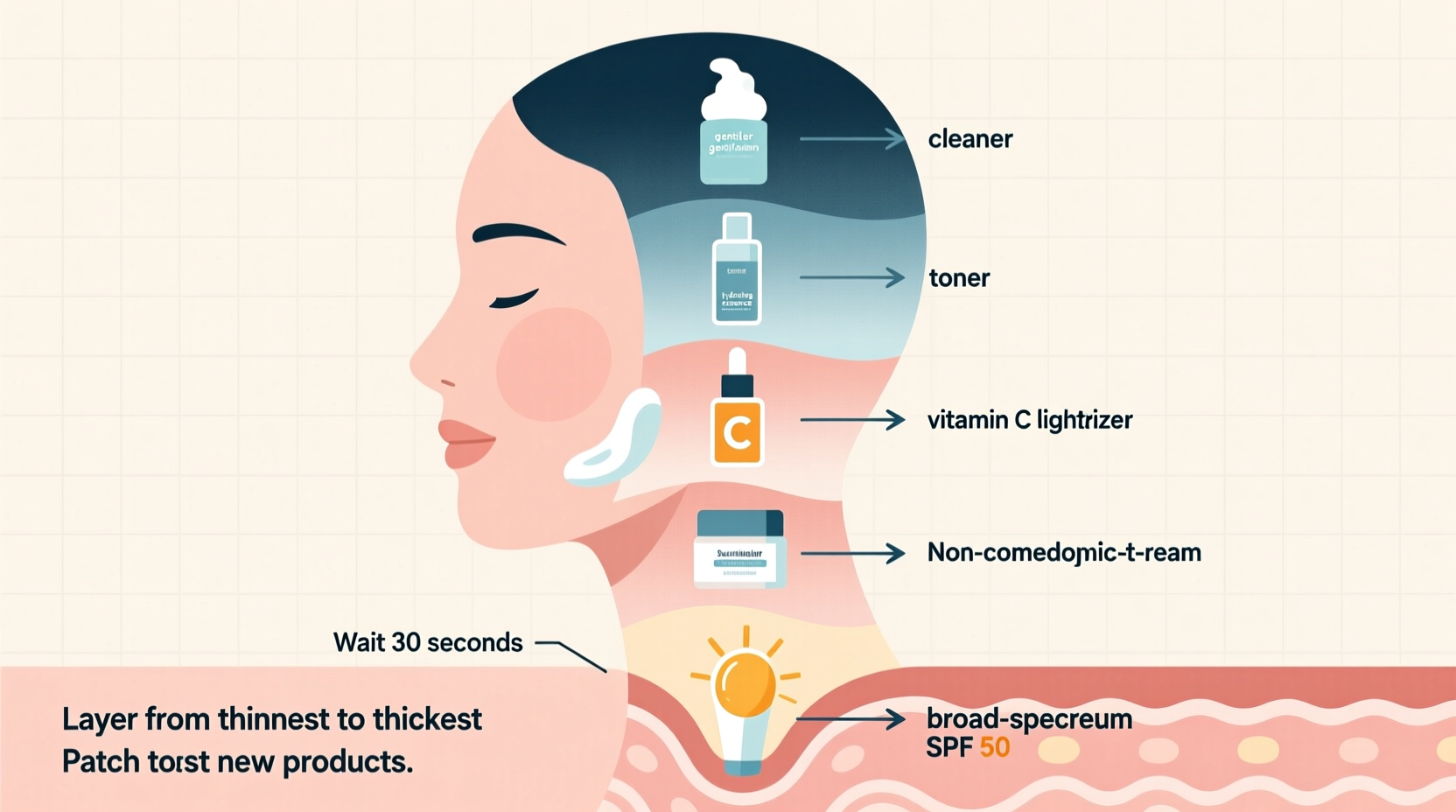
Skin doesn’t absorb all products equally. Its outermost layer—the stratum corneum—acts as a selective barrier. Ingredients must be small enough and compatible with skin’s lipid structure to pass through. Applying products in the wrong order blocks deeper penetration. For example, slathering on a thick cream before a water-based serum traps the serum on the surface, rendering it ineffective. The golden rule: lightest to thickest consistency.
Additionally, certain active ingredients require specific pH environments to work. Vitamin C (L-ascorbic acid), for instance, needs a low pH (around 3.5) to remain stable and effective. If followed by an alkaline product, its potency drops significantly. Similarly, niacinamide performs best at a slightly higher pH. Mixing incompatible formulations can neutralize benefits or cause flushing and stinging.
“Layering isn’t about quantity—it’s about intelligent sequencing. A well-ordered routine with five thoughtfully chosen products will outperform ten slapped-on ones.” — Dr. Lena Patel, Board-Certified Dermatologist
Step-by-Step Guide to Proper Skincare Layering
Follow this chronological framework both morning and night, adjusting based on your skin’s needs. Allow 30–60 seconds between layers for absorption—this prevents pilling and ensures each product settles into the skin.
- Cleanse: Start with a gentle cleanser suited to your skin type. Avoid stripping oils unless you’re double-cleansing in the evening. Clean skin provides a neutral base for subsequent products.
- Toner or Essence: Apply immediately after cleansing while skin is still damp. These watery formulas prep the skin for better absorption of later layers. Look for hydrating toners with hyaluronic acid or fermented ingredients.
- Treatment Serums (Lightest First): Begin with the thinnest serums. Common sequence:
- Vitamin C (AM only)
- Niacinamide
- Hyaluronic Acid
- Brightening or Antioxidant Serums
- Exfoliants (2–3 Times Weekly): Use chemical exfoliants like AHAs (glycolic, lactic acid) or BHAs (salicylic acid) after toning but before heavier serums. Never mix with vitamin C unless formulated together. Avoid if skin feels tight or irritated.
- Eye Cream: Dab gently with ring finger. Since eye area skin is thin, apply before heavier creams to ensure delivery without dragging.
- Moisturizer: Lock in hydration with a cream or gel-cream. Oily skin may prefer lightweight gels; dry skin benefits from ceramide-rich balms.
- Face Oil (Optional): Seal everything with 2–4 drops of facial oil. Ideal for compromised barriers or dry climates. Not recommended for acne-prone skin unless non-comedogenic (e.g., squalane).
- Sunscreen (AM Only): Always the final step in the morning. Reapply every two hours if exposed to sunlight.
Common Layering Mistakes and How to Avoid Them
Even experienced skincare enthusiasts make errors that compromise results. Here are frequent missteps and their solutions:
- Mixing incompatible actives: Combining retinoids with high-strength acids or vitamin C can cause peeling and inflammation. Space them out—use acids at night one day, retinol the next.
- Overloading actives: Using too many potent ingredients daily overwhelms the skin barrier. Limit strong treatments to 1–2 per routine, max.
- Skipping wait times: Rushing layers leads to pilling and reduced efficacy. Let each product absorb fully before proceeding.
- Ignoring product pH: Layering high-pH cleansers after low-pH serums disrupts stability. Choose pH-balanced cleansers (around 5.5) for daily use.
- Using expired or oxidized products: Vitamin C turns brown when oxidized and becomes irritating. Discard if color changes or scent alters.
Do’s and Don’ts of Ingredient Pairing
| Combination | Safe? | Notes |
|---|---|---|
| Vitamin C + Hyaluronic Acid | ✅ Yes | Hydration enhances vitamin C penetration. Ideal AM pairing. |
| Niacinamide + Zinc | ✅ Yes | Effective for oily, acne-prone skin. Reduces sebum and inflammation. |
| Retinol + AHA/BHA | ❌ No (same routine) | Increases irritation risk. Alternate nights or use buffered formulas. |
| Vitamin C + Niacinamide | ✅ Yes (modern formulas) | Old myth debunked. Stable combinations exist. Avoid if using pure L-ascorbic acid + high % niacinamide separately. |
| Peptides + Moisturizer | ✅ Yes | Peptides need occlusion to work. Follow with moisturizer or oil. |
| Benzoyl Peroxide + Retinoids | ❌ No | Inactivates retinoids and causes extreme dryness. Use benzoyl in AM, retinoid at night. |
Real Example: Transforming Reactive Skin Through Smart Layering
Sophie, 29, struggled with persistent redness and breakouts despite using high-end products. Her routine included a glycolic acid toner, vitamin C serum, retinol cream, and heavy balm—all applied nightly. She assumed more products meant faster results. Instead, her skin became sensitized, flaky, and prone to flare-ups.
After consulting a dermatologist, she simplified and reordered her routine:
- Night 1 & 3: Gentle cleanse → hydrating toner → niacinamide serum → moisturizer
- Night 2 & 4: Double cleanse → 5% lactic acid (once weekly) → soothing serum → ceramide cream
- Night 5, 7: Cleanse → retinol (0.2%) → moisturizer
- Nights 6 & off-retinol: Recovery night with only barrier-supportive products
Within six weeks, Sophie noticed less reactivity, improved texture, and fewer breakouts. By spacing out actives, prioritizing hydration, and respecting absorption order, her skin regained balance. This case illustrates that less—when layered wisely—can be more effective than aggressive regimens.
Checklist: Build Your Irritation-Free Layering Routine
Use this checklist to audit and optimize your current routine:
- ☑️ Am I starting with the lightest (water-based) product?
- ☑️ Are my actives spaced out or used on alternate days?
- ☑️ Do I wait 30–60 seconds between layers?
- ☑️ Is my sunscreen the last step in the morning?
- ☑️ Have I patch-tested new products for 48 hours?
- ☑️ Am I using only one potent active per session (e.g., retinol OR AHA)?
- ☑️ Does my moisturizer create a seal over treatment serums?
- ☑️ Have I eliminated known irritants (fragrance, alcohol denat.) if I have sensitive skin?
Frequently Asked Questions
Can I layer multiple serums?
Yes, but follow the consistency rule: water-based first, then thicker emulsions. Limit to 2–3 serums max to avoid overload. For example: hydrating toner → vitamin C → hyaluronic acid → niacinamide → moisturizer.
How long should I wait between skincare layers?
Wait 30–60 seconds between products. This allows absorption and prevents pilling. If a product remains tacky after a minute, it may be incompatible with the next layer or too rich for your skin type.
Is it safe to mix prescription topicals (like tretinoin) with OTC products?
Proceed with caution. Tretinoin increases photosensitivity and irritation risk. Avoid combining with exfoliating acids or harsh cleansers. Use only gentle, fragrance-free companions and always apply sunscreen daily. Consult your dermatologist before introducing new products.
Final Tips for Sensitive and Acne-Prone Skin
Those with reactive or acne-prone skin must be especially deliberate in layering. Focus on barrier support rather than aggressive treatment. Replace foaming cleansers with milky or balm types. Introduce one new product at a time, waiting 7–10 days before adding another. Prioritize ingredients like centella asiatica, panthenol, and ceramides to reinforce resilience.
If irritation occurs, scale back to a minimalist routine: cleanse, hydrate, moisturize. Resume actives only when skin calms. Remember, glowing skin isn’t built overnight—it’s sustained through consistent, thoughtful care.
Conclusion: Master Your Routine, Maximize Results
Layering skincare isn’t about complexity—it’s about precision. When you align product order with skin biology, you unlock deeper absorption, enhanced efficacy, and long-term resilience. Whether you're targeting aging, dullness, or sensitivity, the foundation of success lies in thoughtful sequencing and restraint. Avoid the temptation to pile on every trendy serum. Instead, curate a streamlined regimen that respects your skin’s limits and supports its natural function.




 浙公网安备
33010002000092号
浙公网安备
33010002000092号 浙B2-20120091-4
Comments
No comments yet. Why don't you start the discussion?